


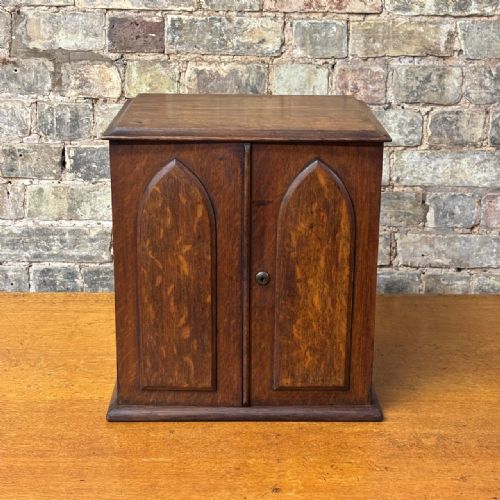


Tabletop Oak Cupboard
These tabletop oak cupboards are compact timber storage pieces designed to sit securely on counters or desks.
Tabletop Oak Cupboard
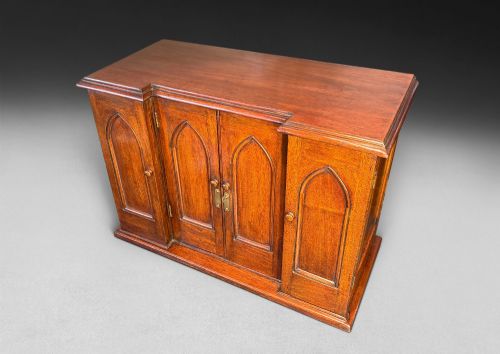
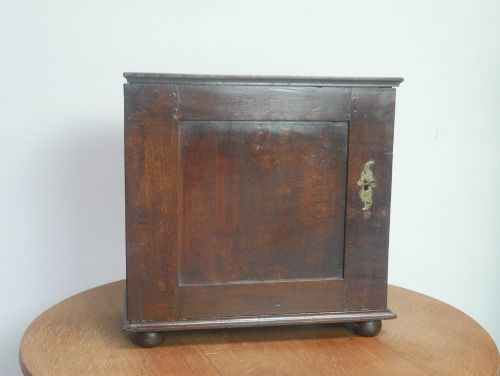
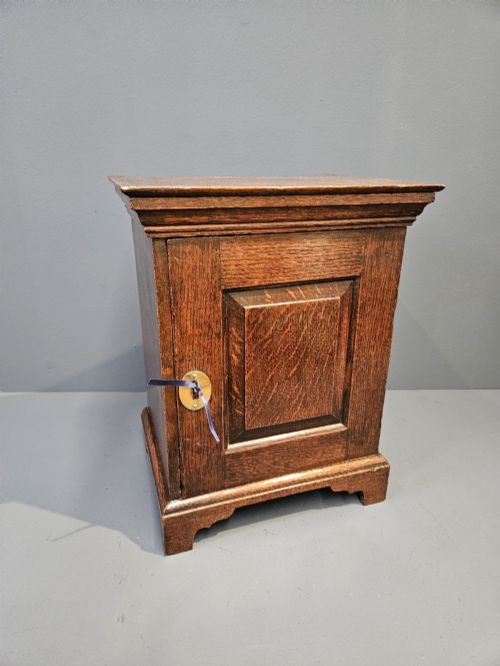
A tabletop oak cupboard satisfies the demand for practical, small-scale timber storage that sits upon counters, desks, or larger pieces of furniture rather than standing independently on the floor. When you search for a tabletop oak cupboard, you encounter a variety of forms including spice cupboards, miniature court cupboards, collectors cabinets, and countertop display units.
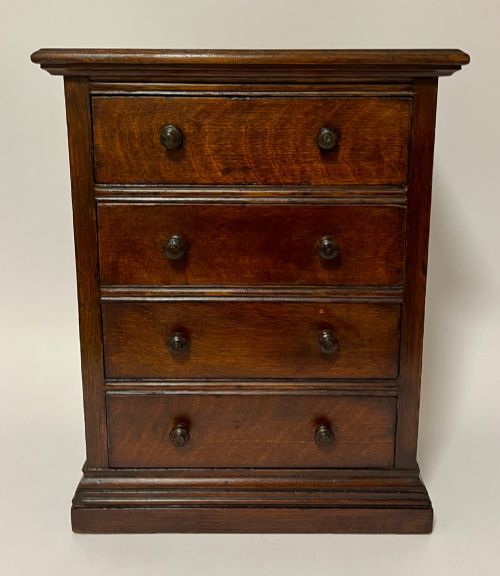
The pieces listed here span several centuries and design traditions, reaching from the seventeenth century through the Georgian era and into the twentieth century. Earlier examples tend to take the form of spice cupboards with panelled doors, whilst later twentieth-century iterations often serve commercial or specialised purposes such as watchmaker storage or counter display.
While many specimens originate from British workshops, the selection also includes French and Dutch variants alongside specific stylistic revivals like Gothic Revival and George II interpretations. Buyers frequently select these items to store small collections, spices, or everyday desk accessories while adding period timber character to a room.
How they were made
The construction of these pieces relies primarily on solid oak, selected for its durability and strong grain, occasionally paired with brass hinges, keyplates, and handles. Glass panels appear in doors designed for display cabinets, allowing contents to be viewed safely from the exterior.
Joinery methods vary according to the period of manufacture, utilising traditional pegged framing and panel construction in earlier centuries and transitioning to more commercial assembly techniques in twentieth-century examples. Carving, applied mouldings, and panel detailing provide surface decoration on specific stylistic variants.
The listings span multiple centuries, ranging from seventeenth-century spice cupboards to 1930s commercial watchmaker drawers.
What varies in quality
Quality in these timber pieces rests upon the integrity of the original construction, the selection of the oak stock, and the crispness of any hand-carved or panelled details. Finer examples retain their original brass hardware, working locks with keys, and unaltered interior shelving or drawers.
The proportion and balance of the miniature scale dictate the visual success of the piece, separating carefully proportioned cabinetmaking from simpler utilitarian boxes. Signs of heavy alteration or replacement timber diminish the integrity of historical specimens.
Manoah Rhodes & Sons Ltd
The Tabletop Oak Cupboard Glossary
- Spice cupboard
- A small wall-mounted or tabletop timber cabinet traditionally used for storing culinary spices and herbs in domestic kitchens. These typically feature a single panelled door concealing small internal drawers.
- Miniature court cupboard
- A scaled-down version of a large Elizabethan or Jacobean hall cupboard, executed in oak with tiered levels and decorative carvings. Cabinetmakers often produced these as apprentice pieces or display items.
- Collectors cabinet
- A specialised tabletop case fitted with multiple small drawers or glass-fronted compartments designed to house specimens such as coins, shells, or insects. These prioritize internal organisation and security.
- Watchmaker cabinet
- A specialised countertop chest containing numerous shallow drawers built to hold delicate watch parts, tools, and clock movements. These date primarily to the interwar period.
- Apprentice chest
- A small-scale chest of drawers constructed by a woodworker in training to demonstrate mastery of joinery techniques to a guild. These miniature pieces display the same dovetail and panel construction as full-sized furniture.
Tabletop Oak Cupboard: Frequently Asked Questions
What were tabletop oak cupboards used for originally?
These compact cabinets served diverse practical storage functions in homes, shops, and workshops depending on their specific form. Spice cupboards held valuable culinary ingredients, whilst collectors cabinets protected delicate specimens and watchmaker chests organised tiny mechanical components.
Other variants functioned as desktop stationery depositories or commercial countertop display units for retail goods. Their portable nature allowed valuable items to be secured and moved easily.
How do I date an antique oak tabletop cabinet?
Dating relies upon examining the construction methods, timber preparation, and stylistic vocabulary present in the piece. Seventeenth and eighteenth-century examples display hand-sawn timber marks, pegged joints, and traditional period mouldings characteristic of those eras.
Later Victorian, Edwardian, and 1930s pieces often incorporate machine-cut elements, standardised hardware, and commercial manufacturing traits. Comparing the lock mechanisms, hinges, and overall proportions to known period examples clarifies the age.
Where should I place a tabletop oak cupboard at home?
These versatile pieces sit securely on sturdy horizontal surfaces such as sideboards, desks, console tables, or kitchen counters. Their modest footprint allows them to add focal interest to empty wall spaces without requiring floor area.
Collectors often position glass-fronted display versions where natural light illuminates the interior contents. Positioning away from direct heat sources and strong sunlight protects the antique oak and internal finishes.
Are these cabinets suitable for everyday use?
Many solid oak tabletop cabinets remain robust enough for daily storage of small items like keys, stationery, or jewellery. The drawers and doors function much as they did originally, provided the timber has not suffered from extreme humidity changes.
Delicate display variants or pieces with fragile antique glass require more gentle handling during daily interaction. Regular dusting and occasional wax maintenance keep the wood surfaces conditioned for continued use.