

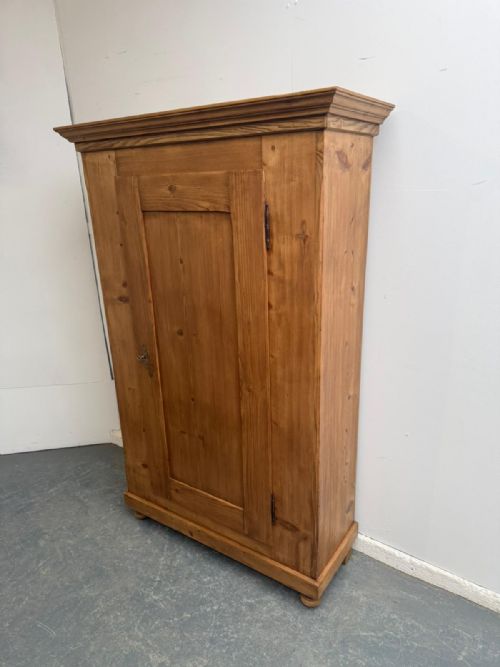
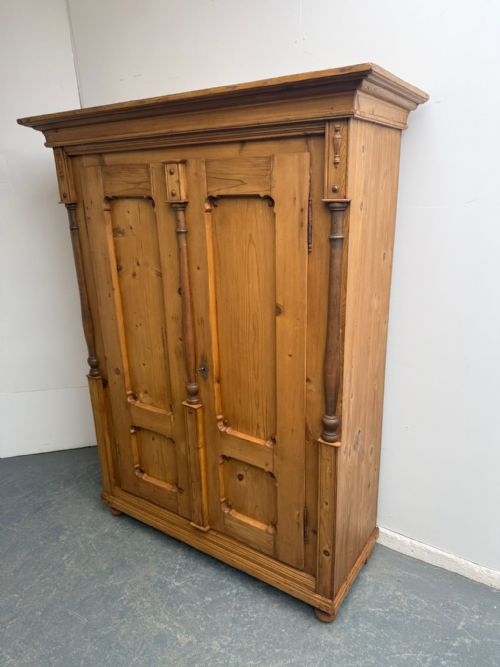

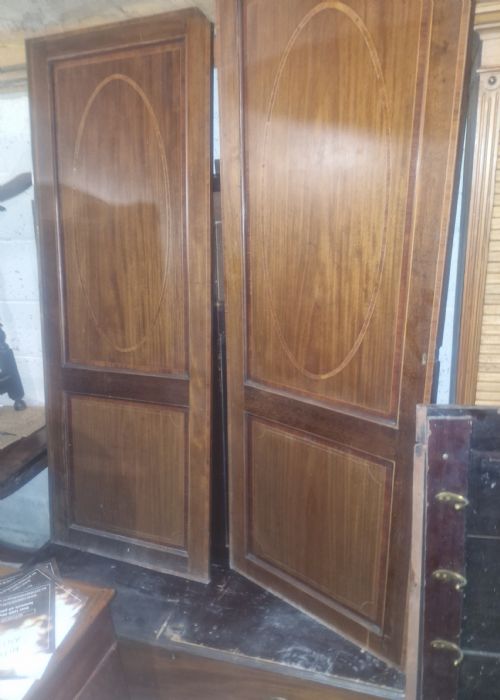


Georgian Hall Wardrobe
A georgian hall wardrobe offers generous hanging space and timeless timber character, bringing disciplined symmetry and practical storage to an entranceway.
Georgian Hall Wardrobe
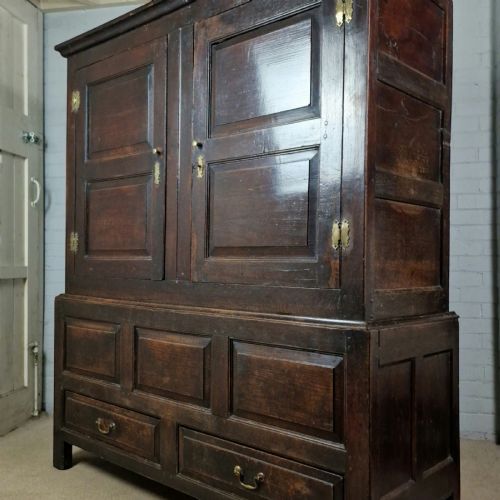
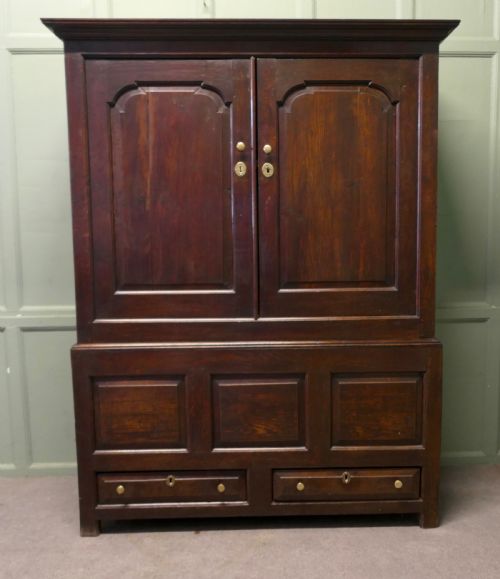
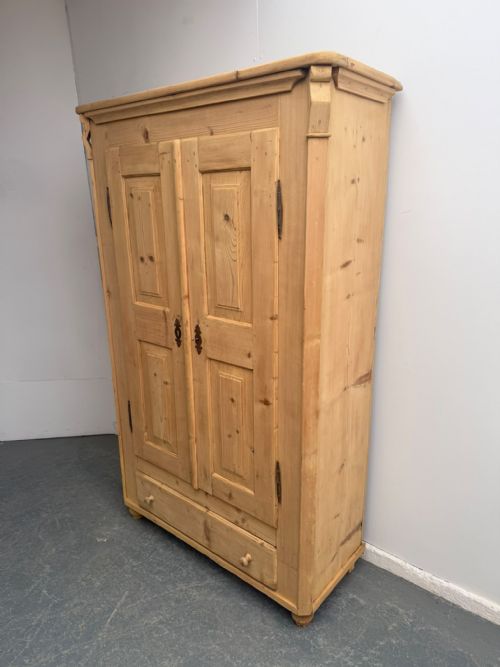
A georgian hall wardrobe provides substantial entranceway storage through tall cabinet forms designed for coats, cloaks, and linens. These pieces frequently appear as one-piece pine or oak structures, often originating from regional workshops in Britain, Hungary, Sweden, and Germany.
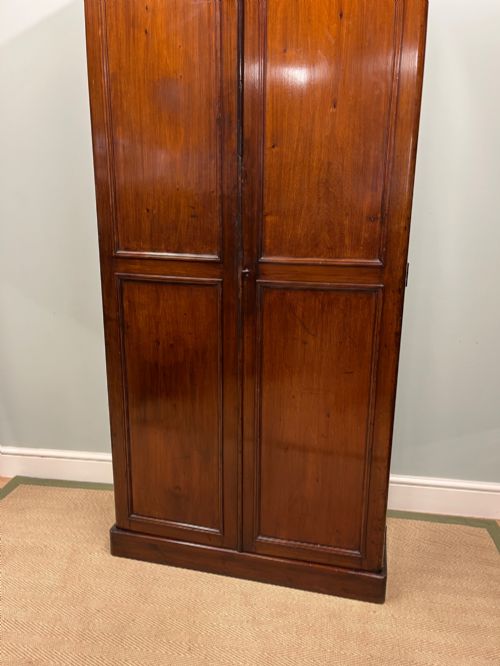
Buyers encountering this category will frequently find single-door or two-door painted pine wardrobes alongside polished mahogany and dark oak housekeepers cupboards. Regional variations include shallow proportions suited to narrow hallways, panelled facades, and traditional wax or paint finishes.
The selection ranges from mid-18th century oak livery cupboards and press combinations to later nineteenth-century mahogany examples and continental provincial armoires. Each piece balances domestic utility with the architectural presence characteristic of the period.
How they were made
Cabinetmakers constructed these wardrobes using solid native and imported timbers, relying on sturdy oak, dense mahogany, and versatile pine for the main body and carcase. Iron hinges, brass escutcheons, and traditional wooden pegs secured the heavy doors and internal hanging rails.
Surface treatments varied from clear wax polish to highlight the natural grain of oak and mahogany to decorative painted finishes in white, grey, black, and green on pine carcases. Regional joinery methods determined whether a cupboard disassembled into sections or remained a solid single piece.
Several pine wardrobes carry historical paint layers that hint at generations of domestic life in Hungarian and Swedish farmhouses.
What varies in quality
The distinction between standard utility cupboards and finer examples lies in the selection of timber and the sophistication of the joinery. Superior pieces display carefully matched grain patterns, crisply carved panels, and original hardware rather than later replacements.
Proportion and scale significantly influence the desirability of a wardrobe, particularly where shallow depths suit modern hallways without sacrificing internal capacity. The integrity of the original surface, whether polished wood or early layered paint, determines the visual depth of the piece.
The Georgian Hall Wardrobe Glossary
- Livery Cupboard
- A traditional storage cabinet originally used for food, wine, and household liveries before evolving into general clothing storage. These early pieces are predominantly constructed from solid oak.
- Press Cupboard
- A dual-purpose piece featuring hanging space or shelving above a chest of drawers base. They frequently served housekeepers for storing linens and garments.
- Armoire
- A large continental wardrobe with doors enclosing hanging space or shelves. European examples often exhibit distinct regional provincial styling.
- Escutcheon
- A protective plate surrounding a keyhole, usually fashioned from brass or iron. They protect the surrounding timber from wear caused by the key.
- Carcase
- The main structural body or frame of a wardrobe, excluding the doors and removable cornices. Its construction stability dictates the longevity of the piece.
Georgian Hall Wardrobe: Frequently Asked Questions
What is a georgian hall wardrobe used for today?
These cabinets provide practical hanging space and deep shelving for coats, shoes, and everyday garments in modern hallways or bedrooms. Their tall, narrow proportions allow them to fit into spaces where modern wardrobes would prove too bulky.
Beyond functional clothing storage, they serve as focal points that introduce period architectural character and natural timber textures to an interior scheme.
How do I tell pine examples from hardwood ones?
Pine carcases are lighter in weight and typically feature painted finishes or warm wax coatings over a soft, straight-grained softwood. Hardwood versions in oak or mahogany display dense grain patterns, heavier construction, and polished surfaces that deepen in tone over centuries.
Hardwood pieces generally date to British workshops, while many pine examples originate from regional continental provinces including Sweden, Germany, and Hungary.
Will a one-piece wardrobe fit in my hallway?
Many provincial pine wardrobes and shallow hall cupboards are built as single solid units without disassembly options. Buyers must carefully measure ceiling heights, doorway clearances, and turning angles in narrow corridors before delivery.
Some larger press cupboards and armoires were constructed to separate into upper and lower sections, making transit through tight spaces more manageable.
How do I care for the wax or paint finish?
Waxed timber surfaces benefit from occasional applications of natural beeswax to nourish the wood and maintain a soft sheen. Painted pine requires gentle dusting with a dry cloth and protection from direct sunlight and excessive moisture to prevent flaking.
Avoiding chemical polishes ensures the historic patina of the paint or wax remains undisturbed and stable over time.