
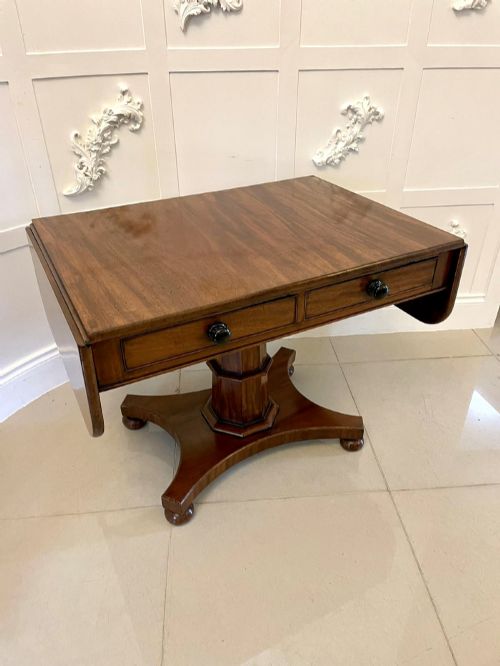
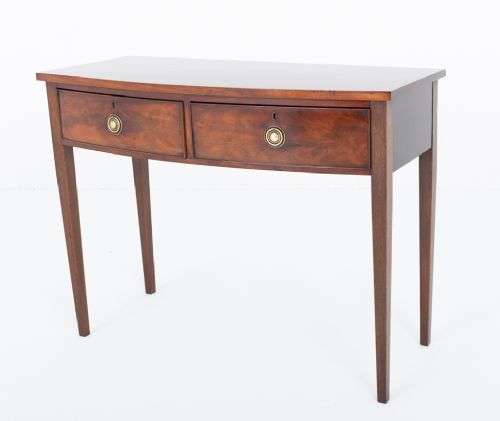
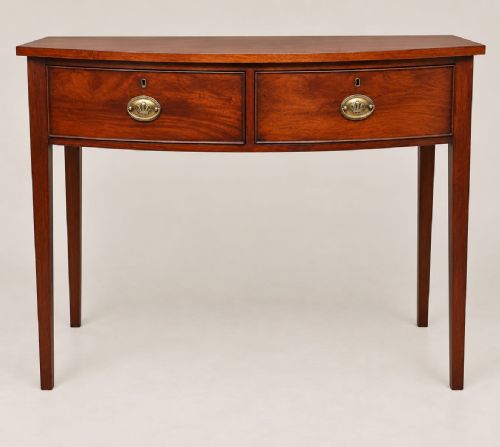
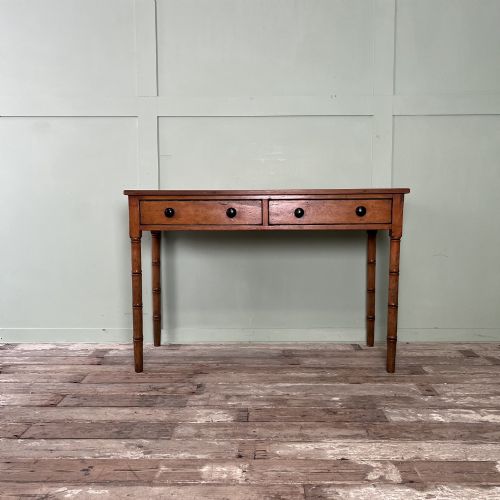
Georgian Hall Console
When you search for a georgian hall console, you are looking at timber furniture made to stand against a wall in an entranceway.
Georgian Hall Console
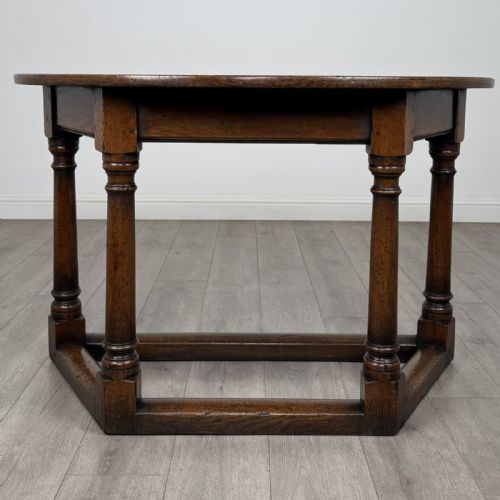
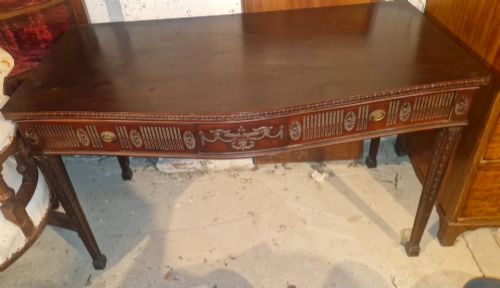
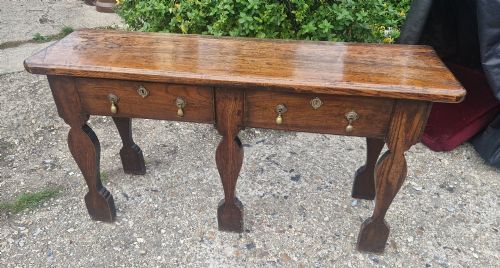
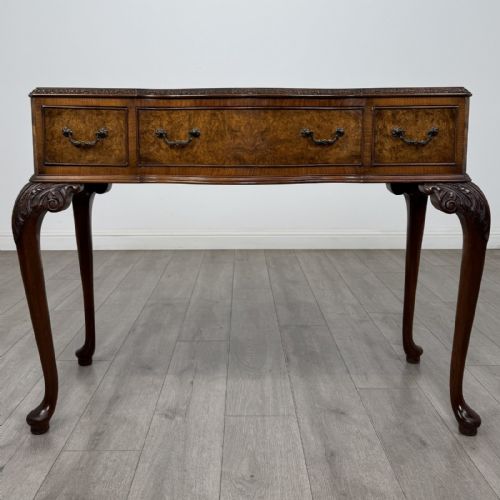
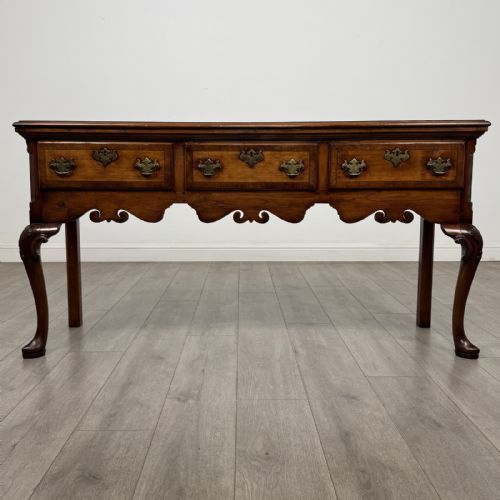
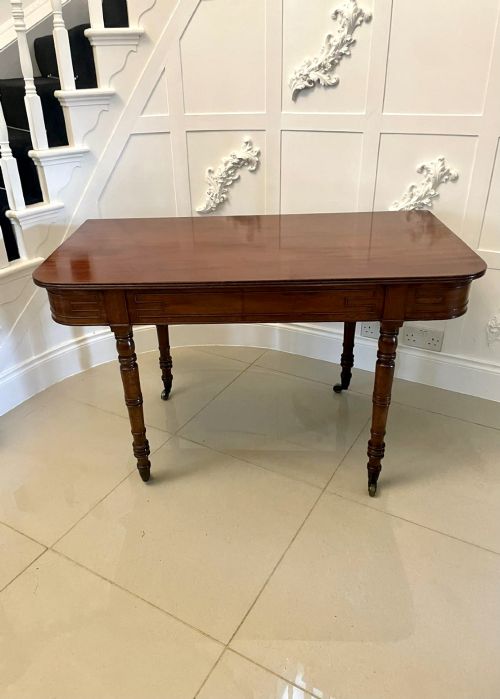
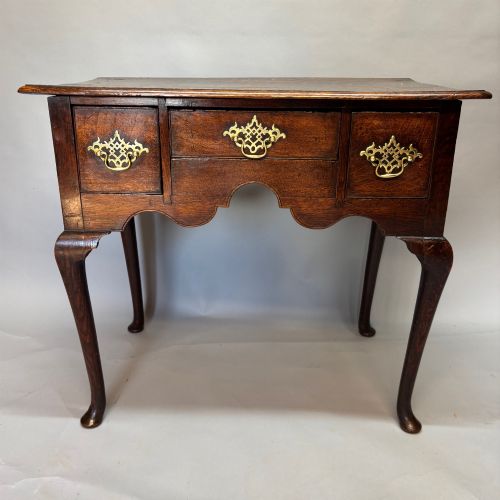
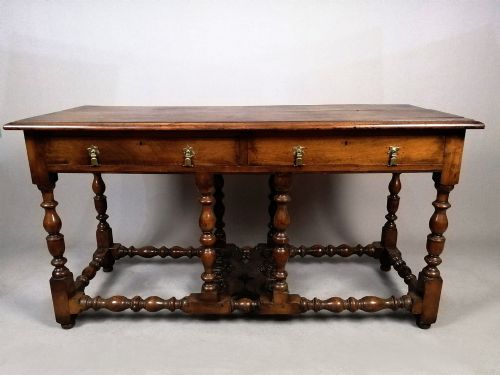
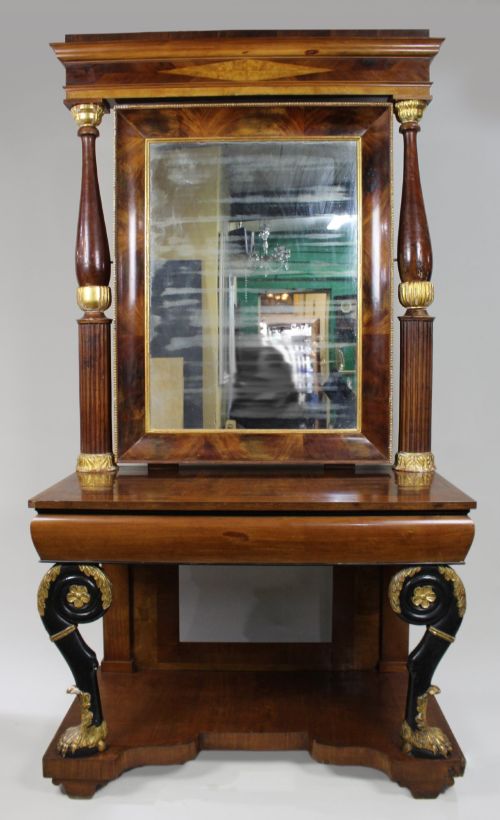
A georgian hall console serves as a narrow surface for an entranceway, originally designed to stand flat against a wall. The selections here include demi-lune shapes, rectangular side tables, and lowboys spanning periods from the eighteenth century into the nineteenth.
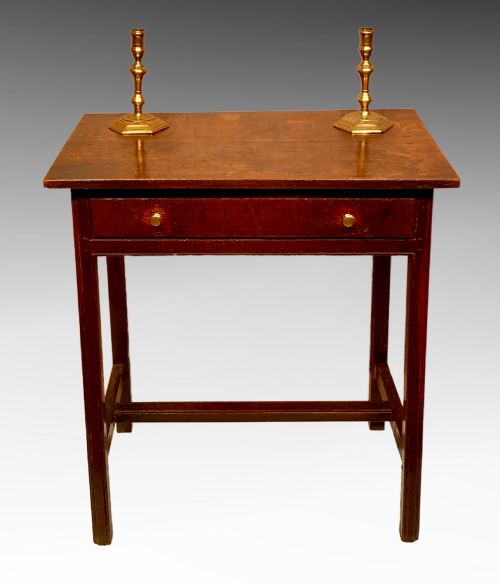
Makers often built these tables to pair up, resulting in matching sets intended for grand reception rooms. Alongside formal mahogany pieces, regional variations appear in sturdy oak, elm, and fruitwood.
Forms overlap with writing tables, card tables, and serving tables, reflecting a time when furniture served multiple functions in a domestic interior. You will also find later revival pieces created in the twentieth century adopting earlier Georgian and Regency designs.
How they were made
Cabinetmakers constructed these tables using solid native and imported hardwoods like mahogany, oak, and walnut, frequently applying figured wood veneers to flat surfaces and tabletops. Marquetry, inlay, and painted faux bamboo finishes also appear across the selection.
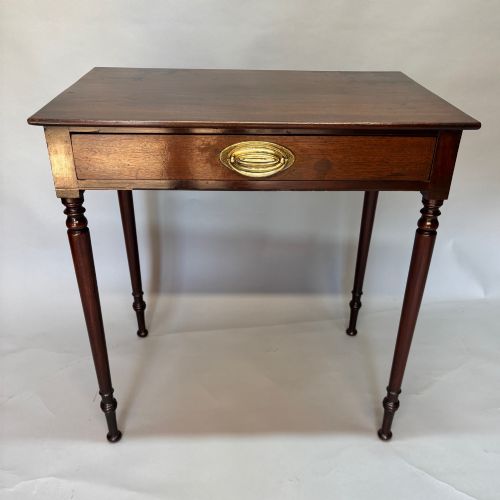
Tabletops often feature shaped marble inserts or hinged fold-over leaves for card and tea use. Joinery relies on traditional methods, supporting structural elements such as cabriole legs, tapering legs, and turned supports.
Country house examples occasionally retain ink stains in the drawers from centuries of household accounts.
What varies in quality
The choice of timber creates a primary distinction, as highly figured mahogany, burr walnut, and matched veneers elevate a piece above standard utility furniture. Grain selection and symmetry on demi-lune tops show the maker's intent.
Construction details dictate lasting stability, visible in the precision of the drawer linings, the sharpness of carved details like cabriole legs, and the integration of secondary timbers. Original surfaces and minimal alterations preserve the integrity of the piece far better than heavily restored examples.
W Williamson And Sons
The Georgian Hall Console Glossary
- Demi-lune
- Having a half-moon shape designed to sit flush against a wall. These tables often came in pairs to form a full circle when joined.
- Lowboy
- A small oak or walnut table featuring one or more drawers, typically raised on four legs. They served variously as dressing tables, writing desks, or side tables.
- Marquetry
- Decorative veneer patterns formed by fitting together small pieces of wood, shell, or ivory. Craftsmen used this technique to ornament tabletops and drawer fronts.
- Sofa table
- A rectangular occasional table with drop leaves on either side, traditionally placed in front of a sofa. They frequently incorporate end supports connected by a stretcher.
- Washstand
- A functional piece designed to hold a basin and pitcher for personal washing. Many examples feature tiered surfaces or splashbacks.
Georgian Hall Console: Frequently Asked Questions
Where did people put a hall console?
These tables stood in entrance halls, corridors, and reception rooms to hold lamps, letters, or decorative items. Their shallow depth allowed them to fit into narrow circulation spaces without blocking passage.
In larger houses, matched pairs flanked doorways or sat beneath tall mirrors to create a formal impression upon entry.
How do I tell a true Georgian piece from a later copy?
Examination of the secondary timbers inside drawers and underneath the top reveals the age of the construction methods. Hand-cut dovetails and timber shrinkage patterns provide reliable indicators of eighteenth-century manufacture.
Revival pieces made during the Edwardian period or the twentieth century often use machine-cut elements and standardised fixings despite adopting Georgian styles.
Can I use a card table as a console?
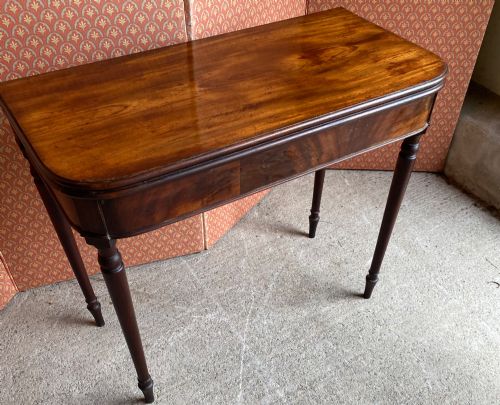
Many fold-over card and tea tables function well as console tables because their closed tops offer a narrow profile against a wall. Opening the top reveals a baize-lined surface originally intended for games.
This dual functionality makes them adaptable for modern rooms where surface space is limited until guests arrive.
What woods were used for these tables?
Mahogany dominated formal eighteenth-century production, valued for its rich colour and ability to hold crisp carved details. Oak and elm appeared frequently in country houses and regional workshops.
Walnut, satinwood, and maple also featured prominently, especially in veneered surfaces designed to display striking grain patterns.