


Irish Carved Console Table
An irish carved console table brings robust cabinet-making and deep timber figures into a hallway or drawing room.
Irish Carved Console Table
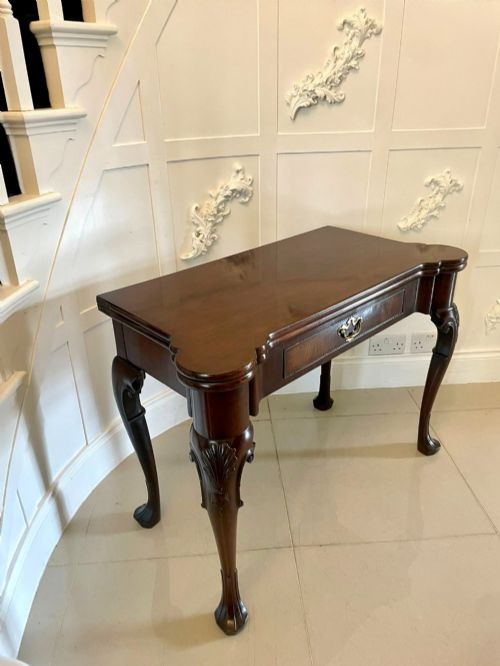
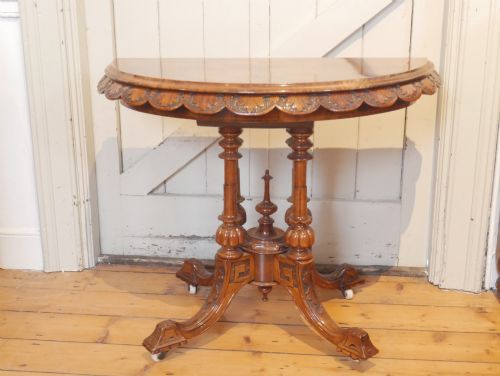
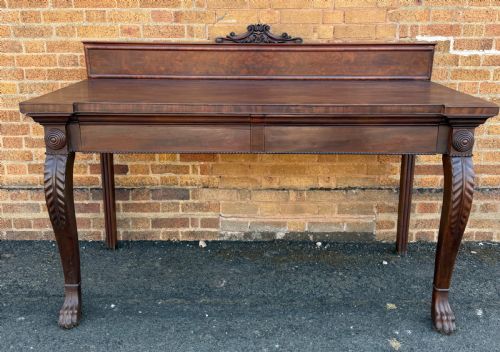
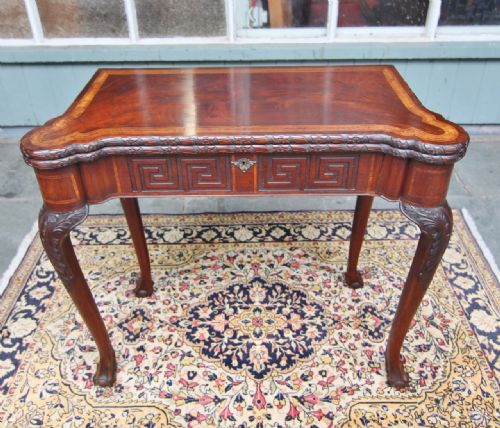
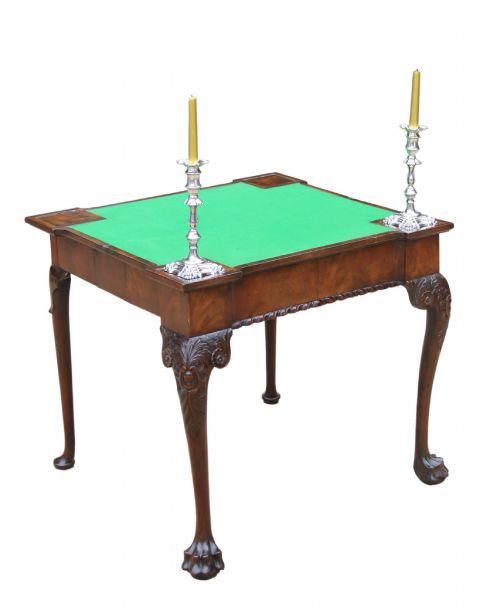
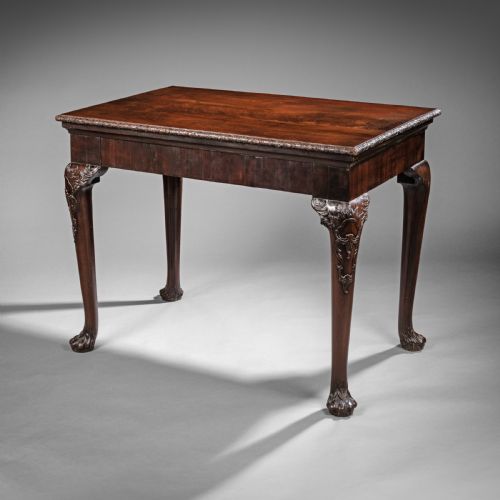
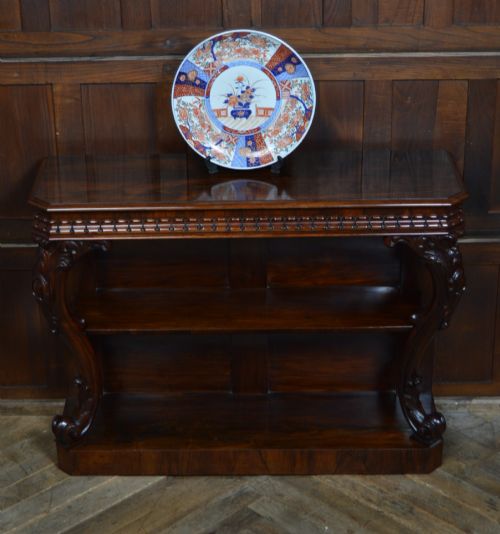
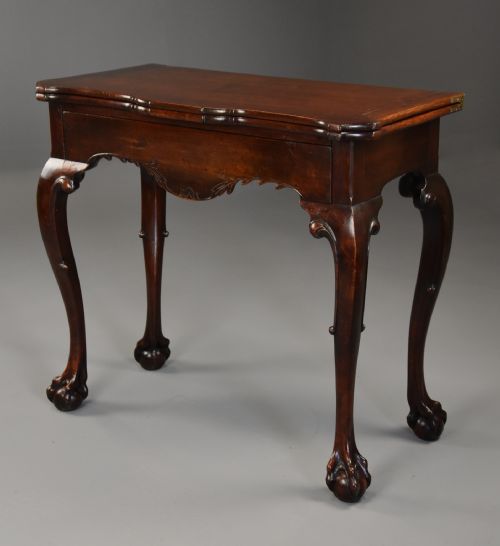
An irish carved console table emerges in forms such as serving tables, side tables, and card tables across the eighteenth and nineteenth centuries. These pieces display distinct regional design traits, notably bold carving and substantial proportions rooted in Georgian, Victorian, and Regency periods.
The versions most frequently met on this page span the eighteenth century and the Victorian era, utilising dense native and imported hardwoods. Makers often applied these timbers to console, serving, and games formats intended for formal reception spaces.
Makers utilised specific structural layouts like concertina actions for card tables and heavy console frames designed to stand against drawing room walls. The variety spans walnut, mahogany, and oak examples shaped by cabinet-makers working in Dublin and provincial workshops.
Materials and Technique
Craftsmen built these tables primarily from solid mahogany, walnut, and oak, often selecting boards with rich grain patterns and deep patinas. Secondary woods provide internal framing for concertina actions and rule joints on folding card tables.
Carving serves as the primary decorative vocabulary, executed directly into the dense timbers to form lion masks, paw feet, and scrolling foliage. Joinery techniques include precise dovetailing for drawer frames and tenon joints for heavy console legs.
Makers working in Dublin during the nineteenth century signed their serving and library tables with distinctive cabinet-maker stamps.
Judging Quality
Quality rests upon the crispness of the timber carving and the depth of the natural patina developed across the centuries. Superior examples display three-dimensional relief work on masks and feet rather than shallow, mechanical incisions.
The choice of primary timber and the integrity of the structural joints dictate the tier of a piece. Finer examples retain original marble tops, unblemished walnut or mahogany surfaces, and robust framework without extensive replacement timber.
Robert Strahan·Mack Williams and Gibton·Gillingtons of Dublin·Hicks of Dublin·Williams and Gibton
The Irish Carved Console Table Glossary
- Concertina action
- An expanding frame mechanism used on card tables that allows the table top to open square on a uniform frieze. This system ensures the table remains supported evenly on all four corners when extended.
- Demi lune
- A half-moon shape characteristic of certain card and tea tables designed to sit flush against a wall when closed. The pivoting top opens to form a full circle for play or display.
- Patina
- The deep surface sheen and colour acquired by hardwoods through age, light exposure, and handling. This condition develops naturally over generations and indicates untouched surfaces.
- Lion mask
- A carved decorative motif depicting the face of a lion, frequently applied to the knees of cabriole legs on eighteenth-century tables. It anchors heavy corner structures with bold sculptural weight.
- Serving table
- A large fixed-frame table placed against a dining room wall for food and plate placement. These pieces often feature marble tops or robust carved mahogany aprons.
Irish Carved Console Table: Frequently Asked Questions
Where should I place a console table?
These tables suit hallways, drawing rooms, and dining spaces where their carved aprons and timber surfaces can be seen against a wall.
Their shallow depth allows them to fit narrow passageways without blocking movement while providing a surface for lamps or decorative objects.
How do I identify an eighteenth century table?
Examine the construction methods, timber choice, and the hand-carved details on the legs and aprons. Eighteenth-century pieces typically show dense mahogany or walnut with hand-cut joinery and heavy patination.
Look for specific regional design motifs such as deep relief carving on lion masks and robust claw and ball or paw feet.
How do I care for antique walnut furniture?
Maintain walnut surfaces by keeping them away from direct sunlight and sudden temperature changes that dry out the timber. Regular dusting with a soft cloth preserves the natural finish without needing heavy waxes or modern polishes.
Apply a traditional beeswax sparingly only when the wood appears dry to maintain the historic patina.