

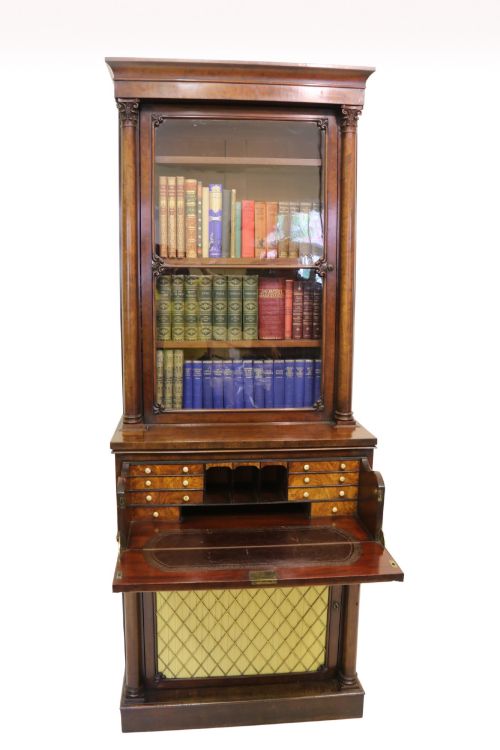
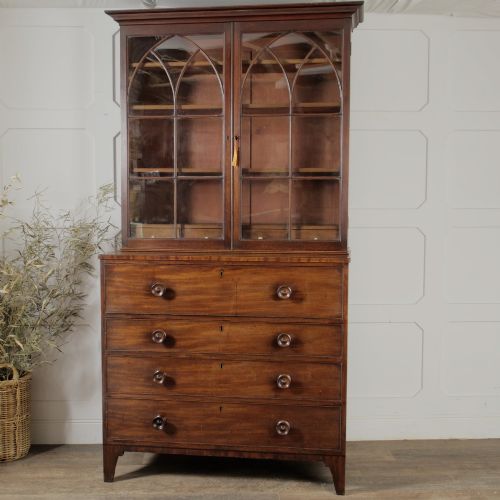

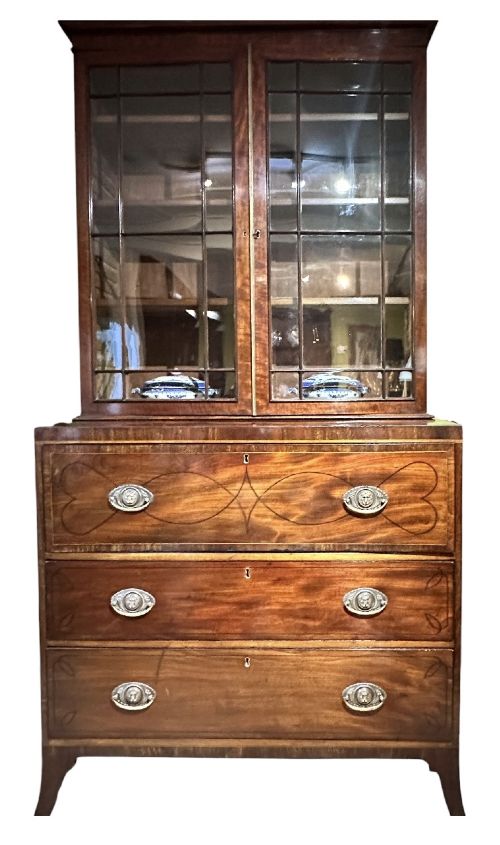
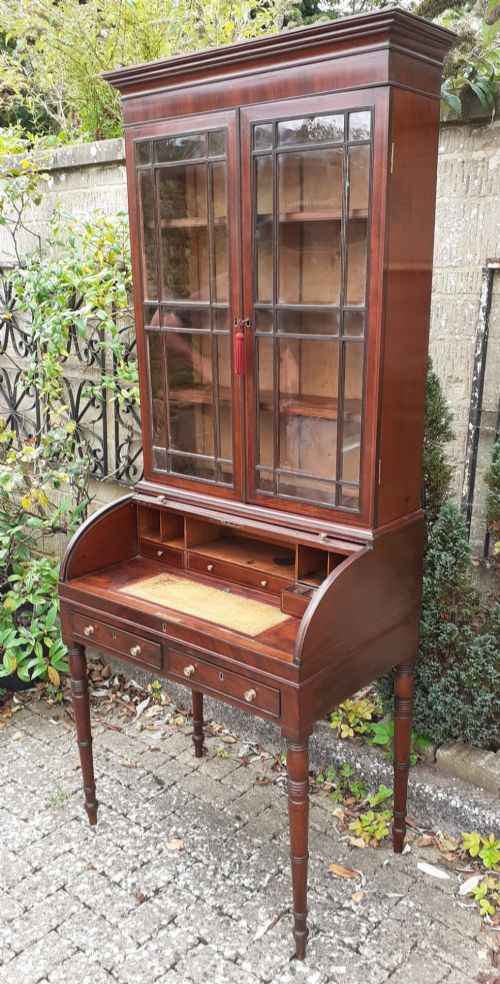
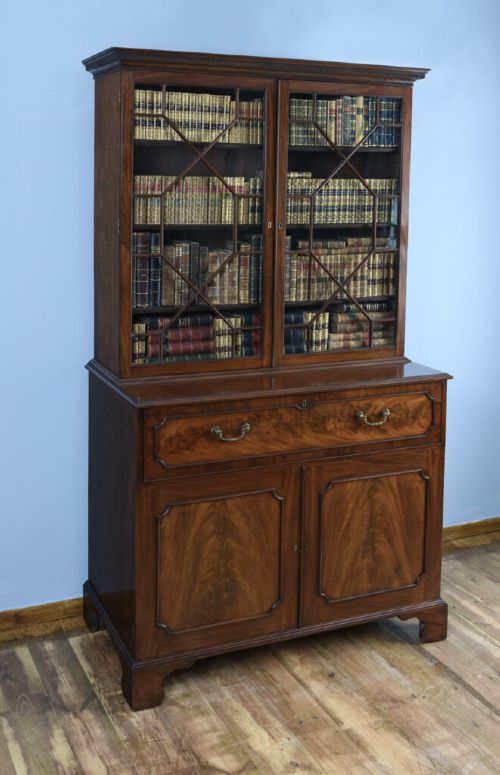
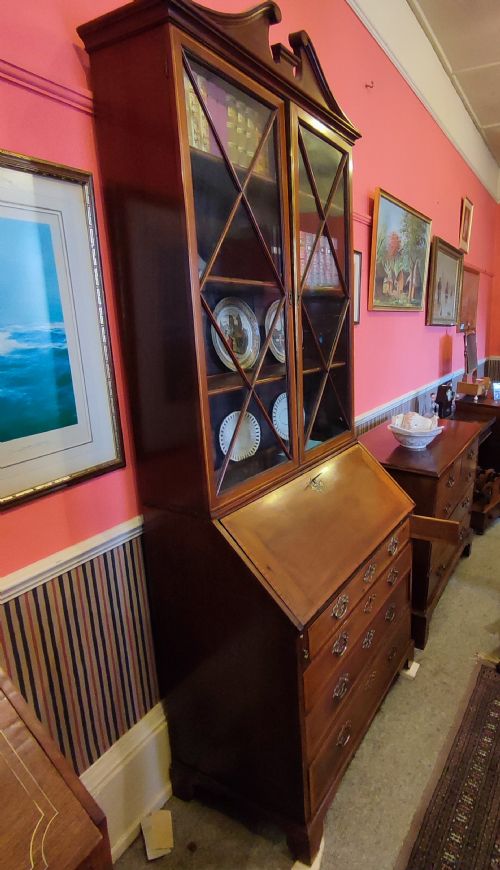


Georgian Glazed Door Bureau
A georgian glazed door bureau combines a fitted writing drop-front with upper shelving behind glass, offering serious storage and a disciplined workspace.
Georgian Glazed Door Bureau
A georgian glazed door bureau brings together a lower writing section and upper display shelving enclosed by glass panels. Most examples found here sit firmly within the Georgian, Regency, and nineteenth-century periods, constructed primarily as tall bookcase forms.
Materials and construction
Makers relied heavily on mahogany, alongside figured and Cuban mahogany variants, complemented by satinwood accents and marquetry inlay. Brass hardware secures the doors and drawers, while leather surfaces often line the interior writing slopes.
Joinery methods of the period prioritized structural stability in large timber carcasses, utilising solid secondary woods for internal drawer linings. Glass panes were individually glazed within wooden muntins to create the signature upper display doors.
Georgian Glazed Door Bureau Retail Price Guide 2026
Typical asking prices for georgian glazed door bureau among the pieces listed under this phrase on Sellingantiques today, from the lower quarter to the upper quarter. They describe what is for sale here now, not the wider market.
Listings span multiple eras from the eighteenth century through the nineteenth century, with later examples dating from the nineteen-twenties.
Judging build and design
Quality rests in the selection of timber figures, particularly the grain pattern of the mahogany and the crispness of any inlaid marquetry. Finer examples display meticulous interior joinery within the fitted writing compartments and well-proportioned glazing bars.
The integration of the bureau desk mechanism with the upper bookcase carcass dictates the overall architectural harmony. Later revival pieces from the Edwardian era or the nineteen-twenties reflect different standards of cabinetmaking compared to eighteenth-century originals.
Tudor & Burrey Shrewsbury
The Georgian Glazed Door Bureau Glossary
- Bureau bookcase
- A tall furniture form combining a slant-front writing desk below and glazed shelving above. This piece served both study and display functions in period homes.
- Secretaire
- A writing drawer or cabinet section that pulls down or drops open to reveal a fitted interior. It often replaces a standard chest of drawers top section.
- Glazed doors
- Timber-framed doors inset with glass panes to protect books from dust while keeping titles visible. Muntins divide the glass into smaller geometric sections.
- Cuban mahogany
- A dense, dark timber prized for its rich grain and heavy weight. Cabinetmakers used it extensively for high-status furniture during the eighteenth century.
- Marquetry inlay
- Decorative patterns formed by fitting contrasting veneers into timber surfaces. It adds visual complexity to drawer fronts and pediments.
Georgian Glazed Door Bureau: Frequently Asked Questions
What is a georgian glazed door bureau?
It is a tall combination cabinet featuring a drop-front writing desk in the lower portion and glass-fronted shelving above.
Cabinetmakers designed these pieces to store library collections behind glass while providing a concealed, organised space for correspondence.
How do I use one today?
These pieces function well in studies, living rooms, or hallways as both a working desk and a bookcase.
The upper glass doors protect displayed books or ceramics, and the drop-front desk provides a surface for writing or laptop use.
How do I date a bureau bookcase?
Dating relies on timber choices, construction methods, and stylistic details such as glazing bar thickness and inlay types.
Eighteenth-century examples typically feature hand-cut dovetails and Cuban mahogany, while later revival pieces from the twentieth century show different secondary wood usage.
What woods were used?
Mahogany is the dominant timber seen across these listings, often specified as figured or Cuban mahogany.
Secondary decorative elements include satinwood and detailed marquetry inlay, paired with brass handles and leather writing surfaces.