


Georgian Glass Bottle Set
These Georgian glass bottle sets bring together cut glass vessels and precious stands for the table, offering both utility and decorative presence.
Georgian Glass Bottle Set
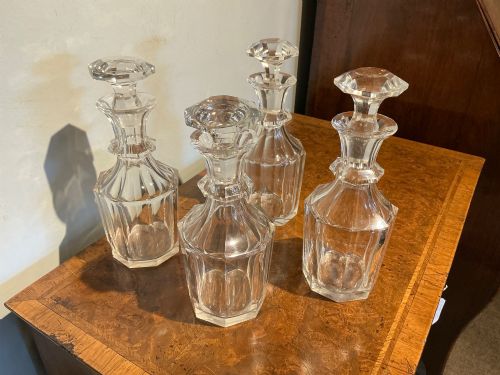
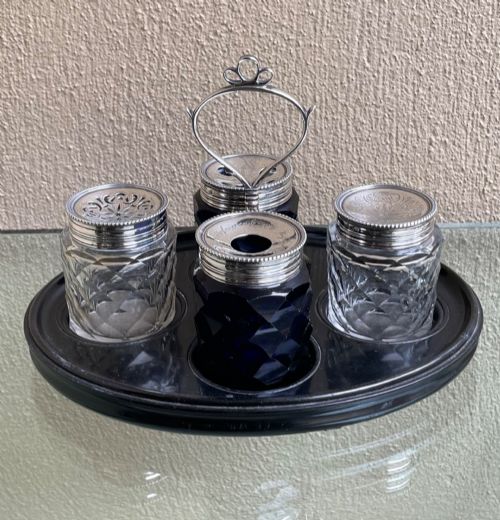
A georgian glass bottle set comprises fitted glass containers housed within stands of silver, silver plate, mahogany, or ebonised wood. These pieces range from cruet sets holding condiment bottles and casters to liqueur decanter sets and dressing table arrangements.
The selections on this page span the eighteenth and nineteenth centuries, including George III examples alongside later Victorian and Edwardian interpretations. Buyers encounter multi-bottle frames designed for dining tables alongside compact travelling cases and desk inkstands fitted with glass bottles.
Cruet sets dominate the material evidence, often pairing cut glass bottles with sterling silver frames made in London. Alongside these, liqueur sets and dressing table bottles demonstrate the variety of forms collected under this heading.
How they were made
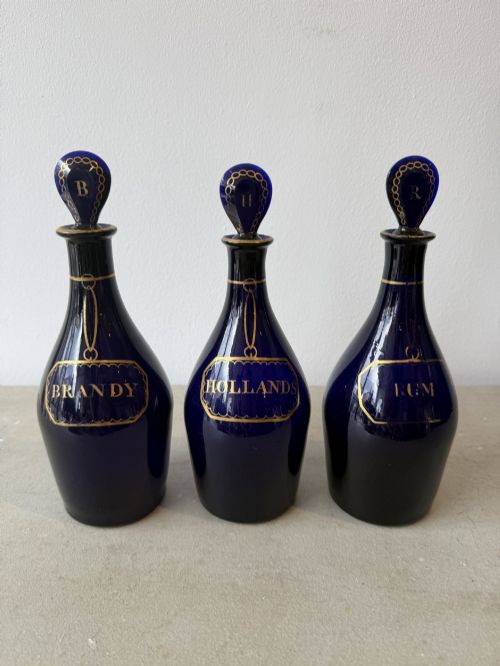
Makers shaped the vessels from clear, Bristol blue, or cut crystal glass, combining mould-blowing with hand-cutting techniques. Metal stands relied on silversmithing skills, employing hallmarks, engraving, and Sheffield plating over a base metal core.
Wooden components utilised mahogany, kingwood, ebony, and ebonised timber, frequently lined with velvet or accented with gold leaf. Fitted boxes and etuis incorporated tortoiseshell and specialised internal compartments to secure delicate glass scent bottles and tools.
The listings on this page span the 18th, 19th, and early 20th centuries, featuring cut glass, sterling silver, mahogany, and tortoiseshell.
What varies in quality
Quality rests in the harmony between the glass bottles and their supporting frame, whether cast in sterling silver or turned in precious wood. Uniformity among the set's bottles and the crispness of the glass cutting separate standard items from finer works.
The presence of crisp hallmarks, maker marks such as those by Charles Thomas Fox or Hester Bateman, and original fitted interiors elevate an object. Craftsmanship in auxiliary elements like crest engraving, silver mounts, and fine cabinetwork determines the standing of each piece.
Charles Thomas Fox·Hester Bateman·Jonathan Douglas
The Georgian Glass Bottle Set Glossary
- Cruet set
- A matched collection of glass bottles or casters held in a metal or wooden stand for condiments at the dining table. They frequently include receptacles for oil, vinegar, mustard, and pepper.
- Decanter
- A stoppered glass vessel designed to hold and serve wine or spirits. In these sets, they appear as smaller liqueur decanters or larger campaign examples.
- Inkstand
- A desk tray fitted with inkwells, pounce pots, and pen recesses, often combining silver and ebony. These desk accessories incorporate glass bottles for ink and sand.
- Etui
- A small ornamental case holding tweezers, bodkins, and scent bottles. They are typically covered in tortoiseshell or leather with precious metal mounts.
- Sheffield Plate
- A fused composite material made by melting a thin sheet of silver to a thicker copper core. It was widely used for cruet stands and decanter frames before electroplating.
Georgian Glass Bottle Set: Frequently Asked Questions
What is a Georgian glass bottle set used for?
These sets served functional roles at the dining table, dressing table, or writing desk, containing condiments, perfumes, or ink.
Owners displayed them to demonstrate hospitality and refinement during meals and social calls.
How do I distinguish between periods?
Georgian pieces often display simpler neoclassical lines or heavy George III silver mounts, whereas later nineteenth-century examples incorporate more ornate Victorian detailing.
Examining hallmarks, wood types, and the depth of glass cutting helps narrow down the decade of manufacture.
Are the bottles in these sets original?
Many sets retain their matched period bottles, though replacement glass is common given the fragile nature of blown and cut vessels.
Matching the glass tint, wear patterns, and fit within the stand indicates whether the components belong together.
How should I care for antique glass and silver?
Clean glass gently with warm soapy water, avoiding harsh abrasives that might damage old surfaces or cut facets. Polish metal frames sparingly with appropriate cloths to preserve the underlying silver and plating.