






Georgian Giltwood Console Table
A georgian giltwood console table brings architectural presence and gilded warmth to a grand room, prized for its carved detail and marble top.
Georgian Giltwood Console Table
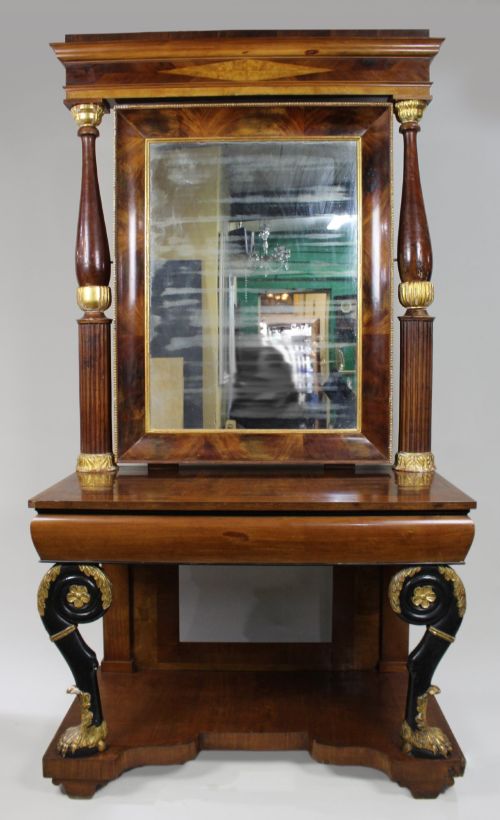
A georgian giltwood console table stands against a wall as a focal point, often paired with a matching pier mirror above it. These pieces take various forms including demi-lune shapes and rectangular tops supported by elaborate frames.
The pieces on this page span the eighteenth and nineteenth centuries, alongside later revivals from the early twentieth century. You will encounter English and Italian origins reflecting neoclassical, rococo, and regency styles.
Makers and workshops of these periods utilised timber frames finished with gold leaf, gesso, and paint. Many examples feature inset marble surfaces in white or rouge tones.
How they were made
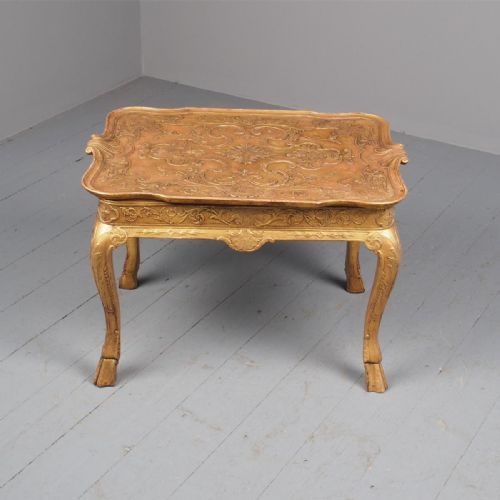
Carpenters carved the structural timber frames from woods such as oak, rosewood, and satinwood before applying layers of gesso to build up crisp decorative relief. Artisans then laid fine sheets of gold leaf over the prepared surfaces to achieve a brilliant metallic sheen.
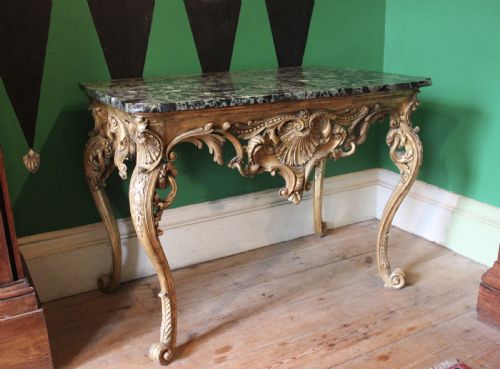
Many tables incorporate heavy marble slabs cut to fit the exact contours of the wooden frame, particularly on demi-lune and neoclassical formats. Paint finishes and hand-painted details frequently complement the gilding on Italian and English pieces alike.
Georgian Giltwood Console Table Retail Price Guide 2026
Typical asking prices for georgian giltwood console table among the pieces listed under this phrase on Sellingantiques today, from the lower quarter to the upper quarter. They describe what is for sale here now, not the wider market.
Listings feature pieces spanning the eighteenth century, the regency era, and early twentieth-century revivals, utilising giltwood, marble, and hand-painted wood.
What varies in quality
The depth and crispness of the wood carving separate standard joinery from exceptional craftsmanship. Superior examples show deeply undercut foliage, scrolls, and figures rather than shallow moulded decoration.
The application of gold leaf and the preservation of the original gesso foundation determine the visual richness of the surface. Finer pieces retain their original gilding patination without excessive modern re-finishing obscuring the underlying work.
The Georgian Giltwood Console Table Glossary
- Giltwood
- Timber carved and coated with gold leaf over a prepared gesso ground. This finish provides the characteristic bright metallic appearance found on formal eighteenth and nineteenth-century furniture.
- Console table
- A wall-mounted or bracket-supported table designed to stand against a vertical surface. These tables often feature prominent front legs while relying on the wall for structural stability.
- Demi-lune
- Half-moon shape in plan, featuring a flat back edge to sit flush against the wall and a curved front. This silhouette proved particularly popular for neoclassical side and console tables.
- Gesso
- A plaster-like mixture applied to wood frames to create a smooth surface for gilding. It allows craftsmen to achieve sharp, detailed relief carving before applying gold leaf.
- Pier mirror
- A tall mirror designed to hang on the pier wall between two windows, frequently positioned directly above a matching console table. Together they formed a unified decorative scheme in grand interiors.
Georgian Giltwood Console Table: Frequently Asked Questions
Where should a console table go?
These tables find their natural home in entrance halls, formal reception rooms, and drawing rooms against a flat wall. Placing a mirror or large artwork directly above the table completes the traditional arrangement.
Because many examples feature finished backs or sit flush against the wall, they anchor the room without obstructing pathways. Ensure the proportions match the scale of the wall space and surrounding furniture.
How do I care for giltwood?
Giltwood requires gentle maintenance to protect the delicate gold leaf and underlying gesso layers from damage. Dust the carved surfaces softly with a dry, lint-free cloth rather than using liquid polishes or abrasive cleaners.
Keep these tables away from direct sunlight and excessive moisture fluctuations to prevent the wood from expanding and the gesso from cracking. Professional handling is recommended for any structural repairs.
What is the difference between neoclassical and rococo styles?
Neoclassical pieces feature straight lines, symmetry, classical motifs like urns and swags, and architectural restraint. They reflect an eighteenth-century revival of Greek and Roman design principles.
Rococo design embraces asymmetry, curving C-scrolls, and exuberant naturalistic motifs such as shells and foliage. This earlier decorative movement prioritises theatrical movement over classical order.
Are marble tops original?
Many formal console tables were specifically designed to carry heavy marble slabs, which provided a durable and luxurious surface for display. Rouge and white marble tops are frequently contemporary with the wooden bases on eighteenth and nineteenth-century pieces.
When examining a table, look at how the marble rests within the wooden frame and check for edge profiles consistent with the period. Replacement tops do occur due to accidental breakage over centuries of use.