





Pair of Wall Tables
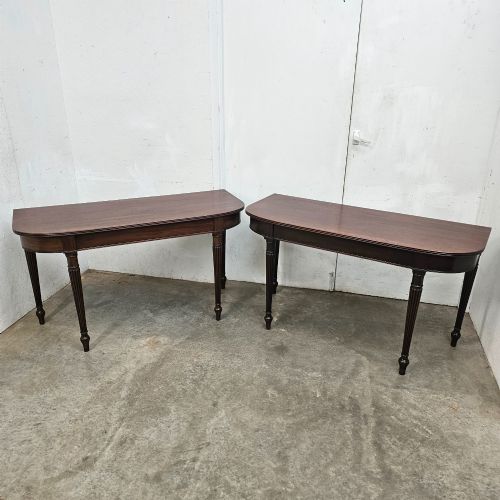
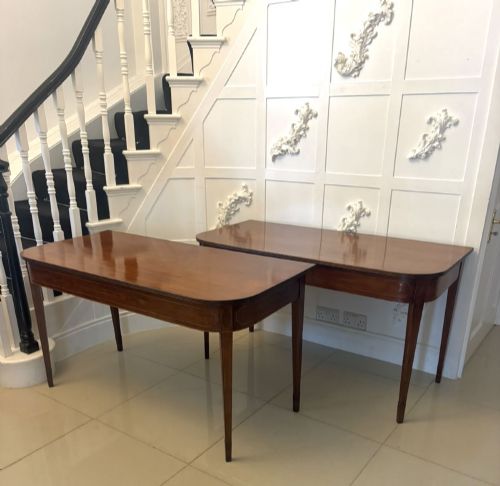
These pair of wall tables bring balance and symmetry to an interior, functioning primarily as decorative console supports.
Pair of Wall Tables
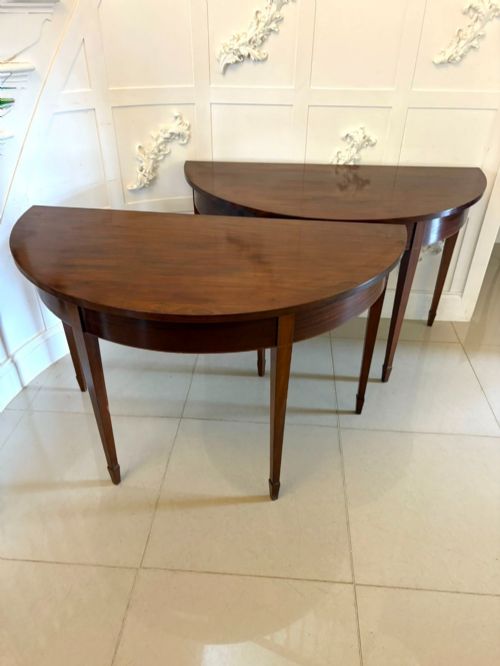
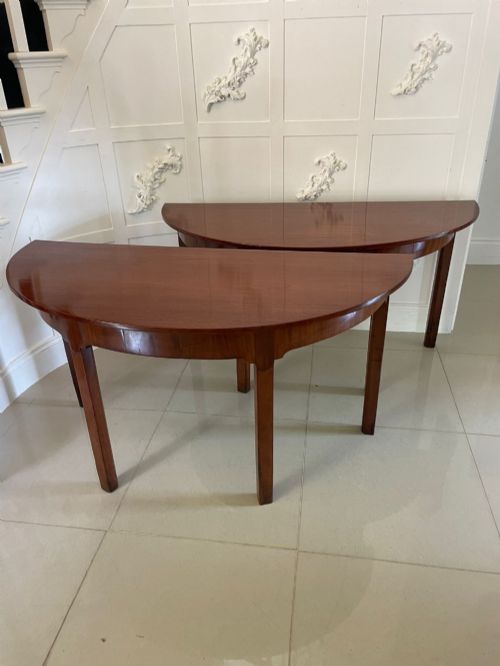
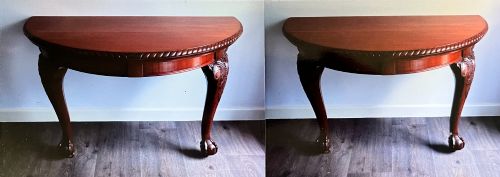
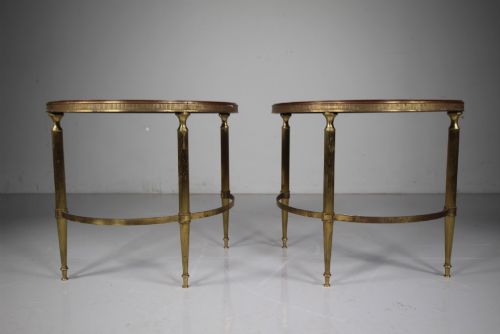
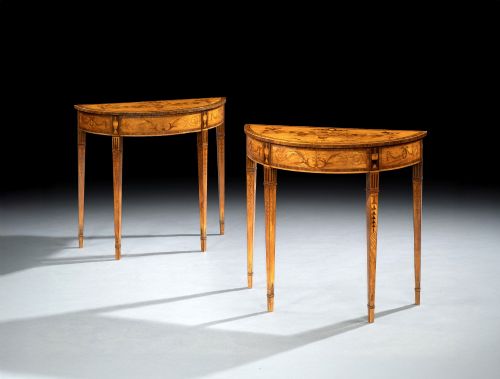
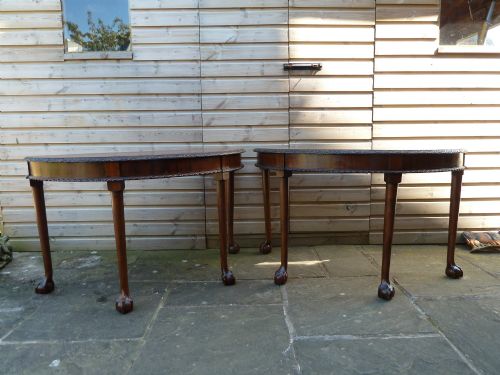
When searching for a pair of wall tables, a buyer encounters semi-circular demi-lune consoles designed to sit flush against a vertical surface, frequently accompanied by matching mirrors.
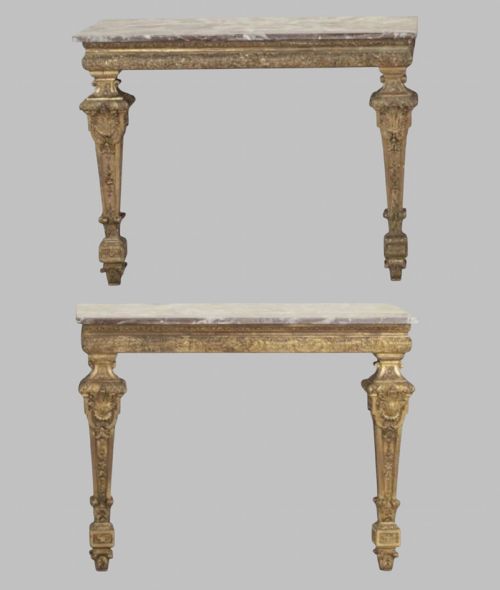
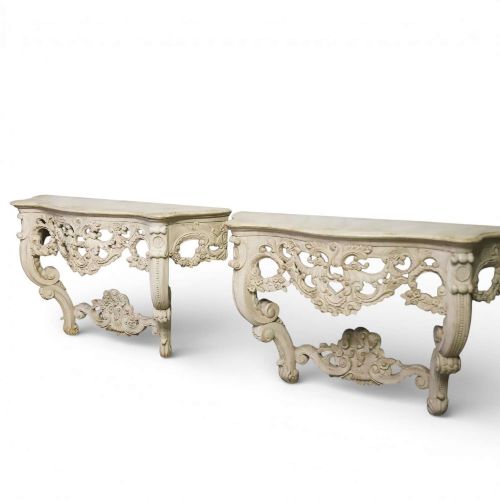
The selections span from the eighteenth century through the 1930s, featuring George III proportion, French giltwood, and Swedish painted finishes.
Console tables and wall-mounted brackets dominate the inventory, offering twin supports that anchor a hallway or reception room.
How they were made
Cabinetmakers utilised timber frameworks of figured mahogany, walnut, oak, and pine, often finished with hand-carved giltwood or painted surfaces.
Satinwood veneer and intricate marquetry decorate the top surfaces of eighteenth-century examples, while heavier architectural forms incorporate Breccia marble tops.
Wall-mounting requires sturdy structural brackets or rear attachments, distinguishing these pieces from standard freestanding side tables.
Pair of Wall Tables Retail Price Guide 2026
Typical asking prices for pair of wall tables among the pieces listed under this phrase on Sellingantiques today, from the lower quarter to the upper quarter. They describe what is for sale here now, not the wider market.
Marble-topped French console tables frequently feature wall-mounting fixtures designed for formal nineteenth-century salons.
What varies in quality
The refinement of the timber figure, such as highly figured mahogany or burr walnut, dictates the initial visual appeal of the woodwork.
Carving depth and crispness on giltwood mounts and leg supports separate standard production from master craftsmanship.
The integrity of inset marble slabs and the precision of inlaid marquetry panels determine the enduring standard of the piece.
W.A.S. Benson·Alexander Rosell·Jean Joseph Chapuis
The Pair of Wall Tables Glossary
- Demi-lune
- A half-moon shape characteristic of side and console tables designed to stand against a wall. This form allows the furniture to project minimally into a corridor or room.
- Console table
- A table supported by wall brackets or front legs, traditionally fixed against a wall. They frequently hold decorative objects or pair with matching hanging mirrors.
- Giltwood
- Wood that has been coated with gold leaf or gold paint. This technique creates a luminous, reflective surface popular in ornate eighteenth and nineteenth-century interiors.
- Marquetry
- The art and craft of applying pieces of veneer to a structure to form decorative designs. Cabinetmakers use contrasting timbers to achieve pictorial or geometric patterns.
- Breccia marble
- A composite rock made of broken fragments of minerals cemented together by a fine-grained matrix. It provides a heavily patterned, multi-coloured top for formal console tables.
Pair of Wall Tables: Frequently Asked Questions
How do I hang a wall console?
Wall-mounted tables require secure fixing into masonry or adequate wooden studs using appropriate heavy-duty brackets. The structural weight of marble tops demands professional installation to ensure stability.
Many period consoles incorporate rear fixing points or rely on front legs combined with a wall anchor. Consulting a specialist ensures the weight distribution is safely managed.
Where should I place these tables?
These pieces traditionally anchor hallways, reception rooms, and dining spaces where symmetry enhances the architecture. Placing them beneath a matching mirror or painting creates a balanced focal point.
Because they project less than standard tables, they suit narrow circulation spaces while offering a surface for lamps or decorative items.
How do I care for marble tops?
Marble surfaces require gentle cleaning with mild, pH-neutral soap and warm water to avoid damaging the stone polish. Acidic substances like citrus or wine etch the surface quickly and need immediate wiping.
Applying a specialist stone wax periodically protects the historical patina without altering the natural appearance of the Breccia or white marble.
What defines the George III style?
George III furniture is characterised by classical proportions, refined mahogany timbers, and sophisticated inlay work. The style spans the latter half of the eighteenth century, showing restraint and elegance.
Pieces from this era often feature straight tapered legs or delicate demi-lune shapes that reflect neoclassical influences popularised by designers of the period.