




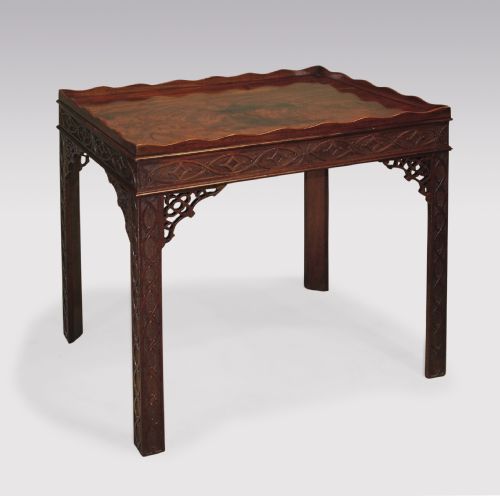


Georgian Fretwork Accent Table
These georgian fretwork accent table pieces bring crisp timber carved detail to a room, offering genuine utility and period character.
Georgian Fretwork Accent Table
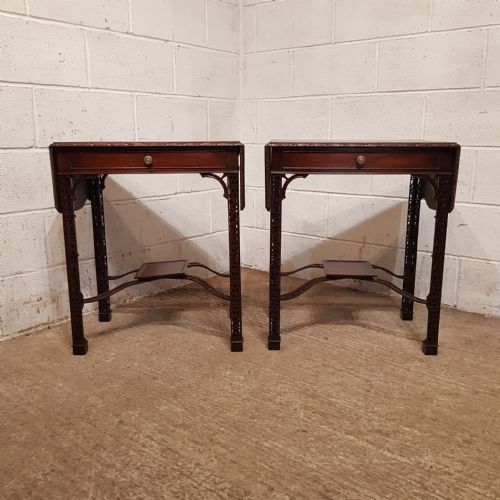
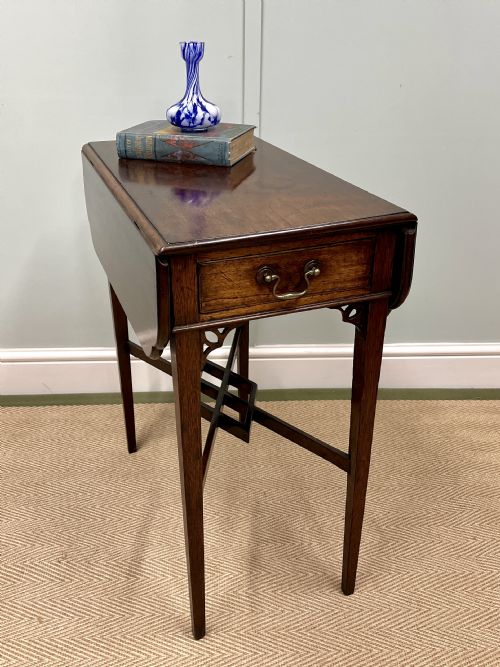
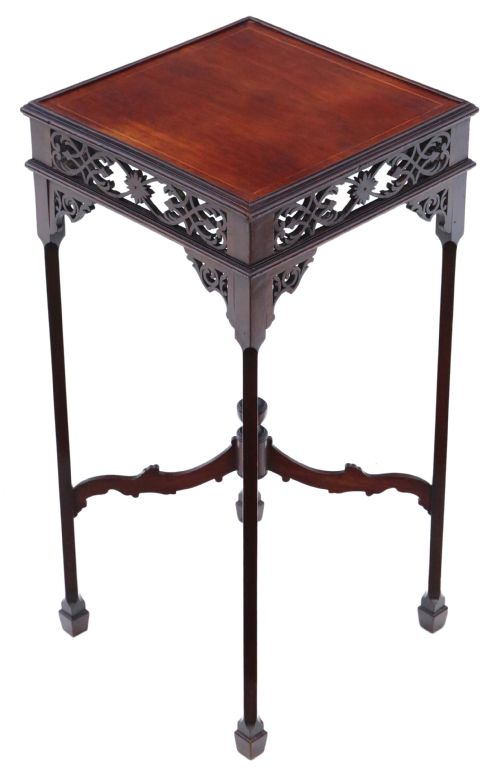
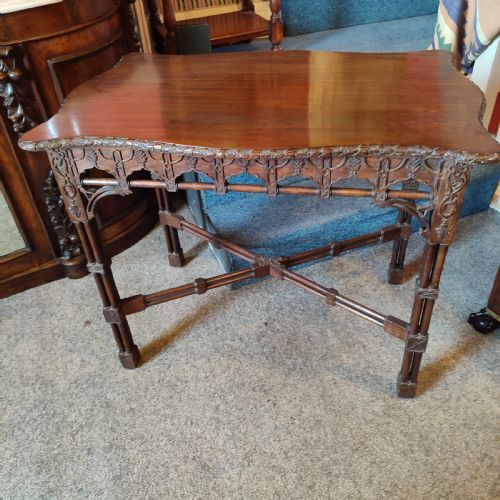
A georgian fretwork accent table encompasses forms such as Pembroke tables, side tables, wine tables, occasional tables, candlestands, silver tables, and centre tables. You will encounter genuine eighteenth century examples alongside later revival pieces spanning the nineteenth and early twentieth centuries.
The selection ranges from simple tripod candle stands to sophisticated Pembroke tables featuring display shelf stretchers and serpentine edges. Mahogany remains the dominant timber across these diverse functional forms.
How they were made
Cabinet makers utilised solid mahogany and flame mahogany veneer, shaping timber through traditional joinery and hand carving. Selected pieces incorporate brass hardware to accent the structural design.
Craftsmen applied carved fretwork details in the Chippendale manner, shaping edges and supports to combine decorative flourish with daily utility.
The inventory spans the Georgian period through nineteenth century revival work and early twentieth century cabinet making.
What varies in quality
The standard of carving distinguishes exceptional examples from simpler items, particularly in the crispness of fretwork and the depth of relief on legs and rails. Timber selection also plays a role, with striking flame mahogany veneer elevating the visual impact.
Proportion and period integrity separate genuine eighteenth century pieces from later revival items, though quality craftsmanship appears across both periods.
The Georgian Fretwork Accent Table Glossary
- Pembroke table
- A small occasional table with hinged drop leaves on either side, often fitted with a single drawer. They served varied domestic functions in Georgian interiors.
- Chippendale revival
- A style popular in the nineteenth and early twentieth centuries that reinterprets the mid eighteenth century designs of Thomas Chippendale. These pieces often feature characteristic carved fretwork and cabriole legs.
- Silver table
- A specialised form of side table designed to display silver tea services or porcelain. They frequently incorporate pierced fretwork galleries and stretchers.
- Candlestand
- A small, tall table intended to hold a single candlestick for illumination. They typically stand on a slender pillar with tripod legs.
Georgian Fretwork Accent Table: Frequently Asked Questions
What is a georgian fretwork accent table used for?
These tables served various practical functions in historic interiors, from holding tea services to supporting candlesticks or displaying decorative objects.
Today they function effectively as occasional tables, bedside stands, or accent pieces in living spaces.
How do I date a mahogany table?
Dating relies on examining construction methods, timber characteristics, and stylistic details such as carved fretwork or leg design. Eighteenth century pieces show specific hand-tool marks and structural wear consistent with age.
Revival pieces from the Victorian and Edwardian eras often combine earlier stylistic motifs with later joinery techniques.
What is flame mahogany veneer?
Flame mahogany veneer is a thin slice of wood cut from the fork of the mahogany tree where branches join the trunk. This produces a distinctive, fiery flame-like grain pattern.
Cabinet makers used it on prominent surfaces like tabletop centres to create visual depth.
Are drop leaf tables sturdy?
Drop leaf tables provide flexible surface area through hinged flaps supported by pivoted wooden brackets or swing legs. When extended properly, the leaves offer stable support for daily use.
Care should be taken not to overload the unsupported edges of the leaves.