

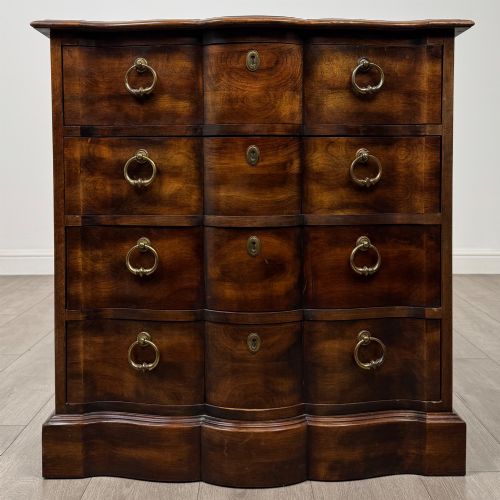
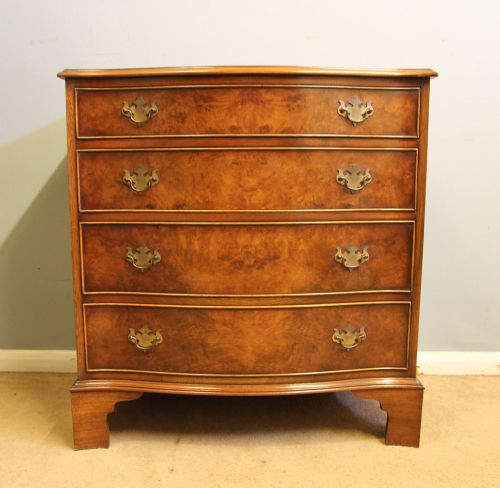
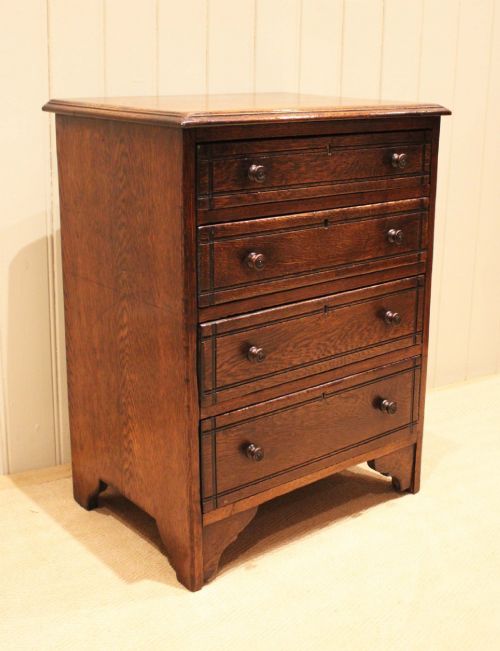
Georgian Four Drawer Dresser
A georgian four drawer dresser combines timber craftsmanship with practical storage, offering deep proportions and period character for any interior.
Georgian Four Drawer Dresser
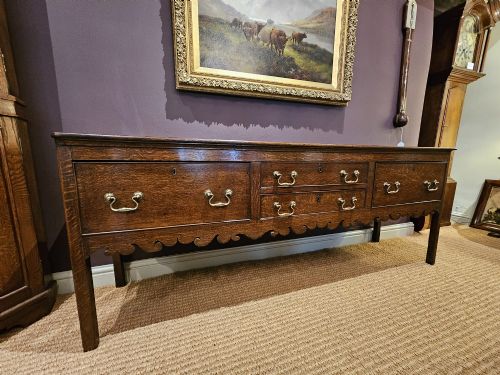
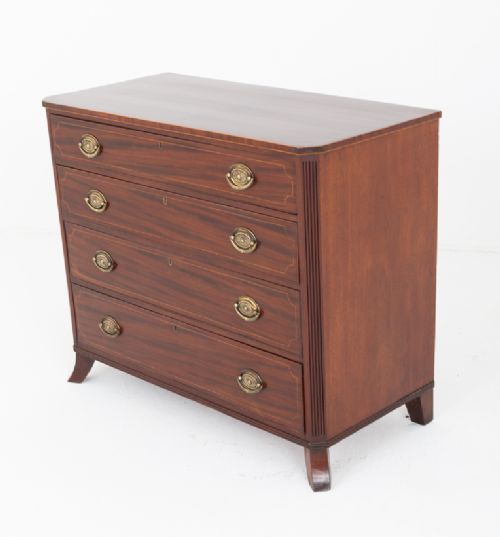
When you search for a georgian four drawer dresser, you are looking at substantial case furniture designed for domestic storage, encompassing both tall chests of drawers and long low dresser bases. The examples appearing here span centuries of British cabinet-making, though the core of the selection relies on eighteenth-century and nineteenth-century pieces alongside later revivals.
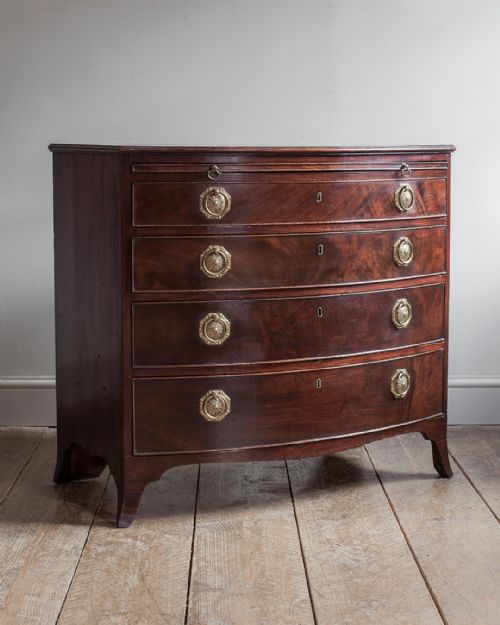
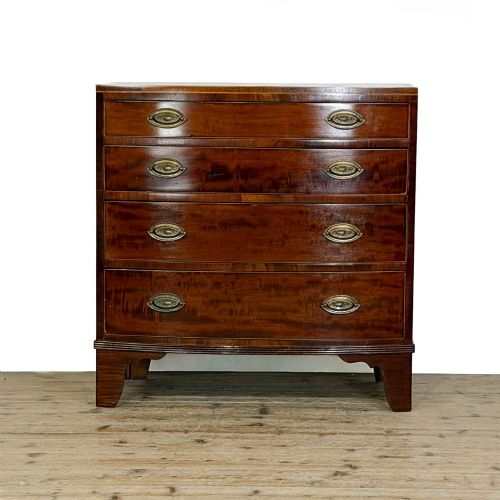
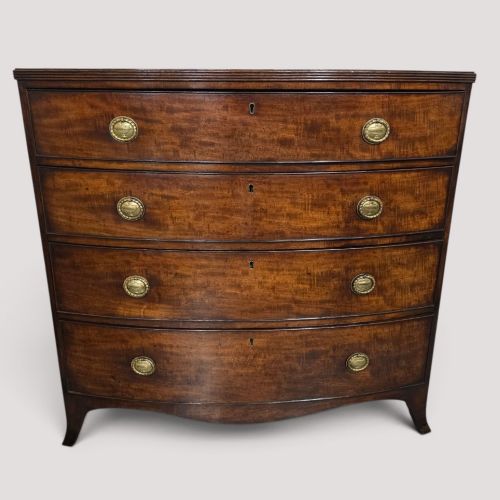
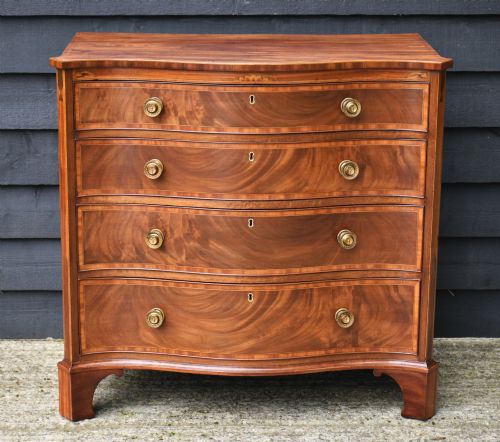
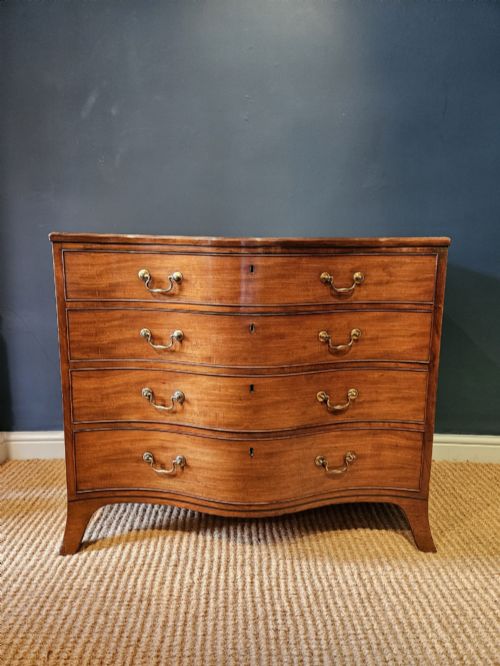
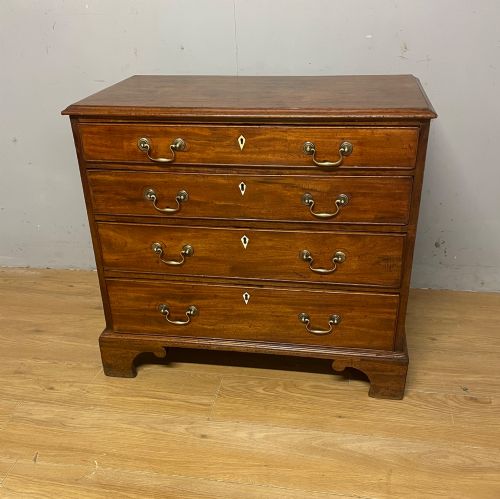
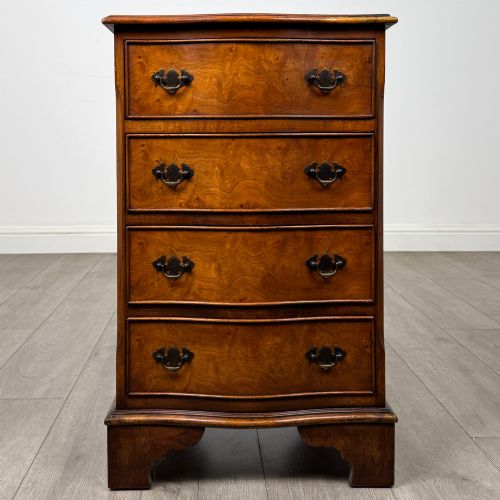
The dominant material format is mahogany or oak, often configured with four graduated drawers arranged vertically in a chest or horizontally in a low sideboard base. Many incorporate additional functional elements such as brushing slides, serpentine fronts, or bow fronts that alter the visual weight of the piece.
The periods represented stretch from George II and George III eras through Regency designs up to Edwardian interpretations and twentieth-century revivals. Buyers seeking these items will encounter everything from country house painted timber to formal figured mahogany with brass hardware.
How They Were Made
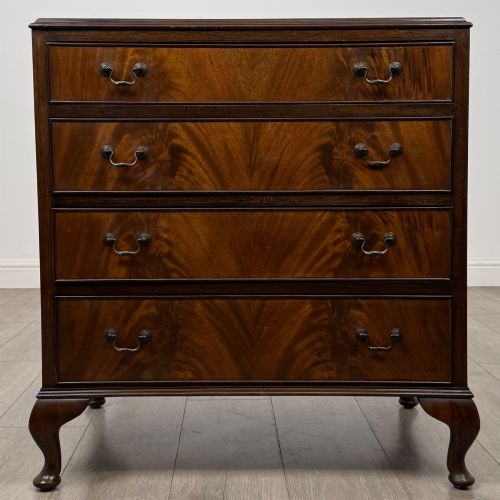
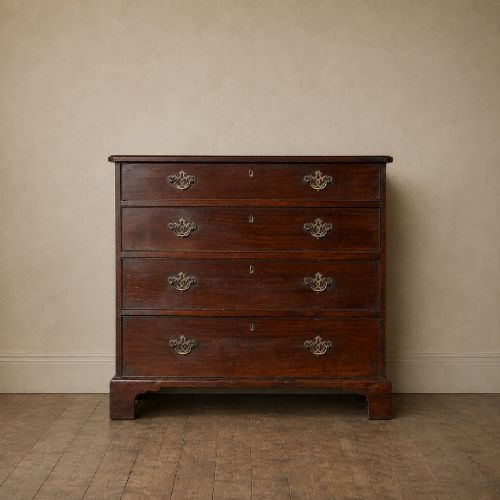
Cabinet-makers relied heavily on dense timbers such as mahogany, oak, and walnut, frequently selecting figured veneers or solid planks depending on regional traditions and the intended formality of the piece. Drawer construction typically utilised hand-cut dovetails, oak linings, and side-hung runners designed to withstand daily use over centuries.
Secondary elements included cast brass drop handles, escutcheons, and bracket feet or ogee feet that elevated the timber off damp floors. Surface finishes were built up through hand-applied polishes and waxes, developing a deep patina on the wood grain over time.
At least one piece preserves its original paint, proving that not every historical cabinet-maker was obsessed with polished brown wood.
What Varies in Quality
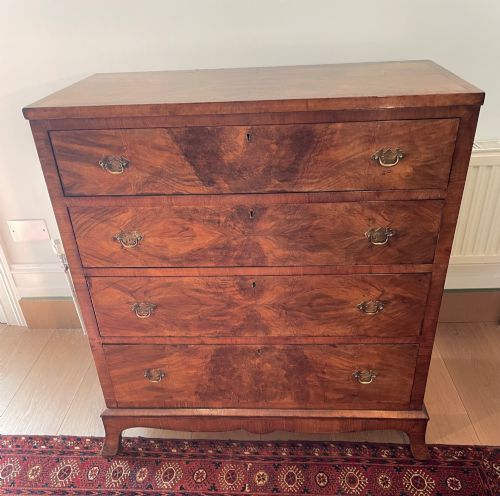
The distinction between ordinary and superior pieces rests on the choice of timber and the precision of the joinery. Figured mahogany or burr walnut veneers applied to drawer fronts indicate higher workshop status, whereas plain oak or painted deal generally point to utilitarian country origins.
Proportion and decorative restraint dictate the visual success of the piece. Crisp mouldings, well-figured drawer linings, original brass hardware, and unaltered carcase structures separate exceptional examples from heavily restored or later revival items.
Druce & Co
The Georgian Four Drawer Dresser Glossary
- Serpentine front
- A convex central section flanked by two concave curves, creating a flowing undulating shape across the drawer fronts. This configuration required advanced woodworking skill to execute properly.
- Bow front
- A convex curved front elevation that projects outward from the corners, popular during the late eighteenth and early nineteenth centuries. It softens the hard angles of standard rectangular case pieces.
- Dovetail
- A joint formed by interlocking wedge-shaped fingers, securing drawer corners without relying on metal fasteners. Hand-cut variations help indicate the age and origin of the cabinet-maker's work.
- Dresser base
- A low wooden sideboard featuring multiple drawers arranged horizontally rather than vertically. These pieces originate primarily from regional country houses and dining spaces.
Georgian Four Drawer Dresser: Frequently Asked Questions
What is a brushing slide?
A brushing slide is a pull-out wooden shelf located just beneath the top surface or above the uppermost drawer. It provided a clean temporary surface for folding clothes or writing notes.
Craftsmen integrated these boards to maximise utility in domestic settings without altering the external footprint of the chest.
Were these used in bedrooms?
These pieces served multiple rooms depending on their exact form and the household's layout. Chests with four drawers commonly furnished bedrooms for storing garments and linens.
Longer low bases functioned effectively in dining spaces or hallways for storing tableware and serving provisions during meals.
What is a serpentine front?
A serpentine front describes a cabinet face curved in a continuous wave pattern, featuring a convex centre flanked by concave sides. This shape required precise shaping of the timber.
Cabinet-makers reserved this demanding technique for their more expensive and formally styled commissions.