

18th Century Kitchen Rack
An 18th century kitchen rack organises domestic pottery and utility wares, bringing functional historic charm into modern interiors.
18th Century Kitchen Rack
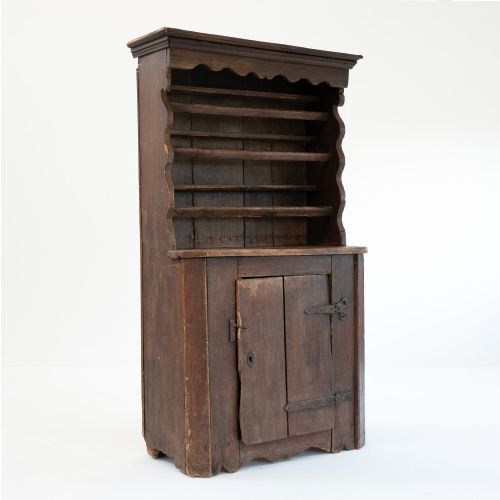
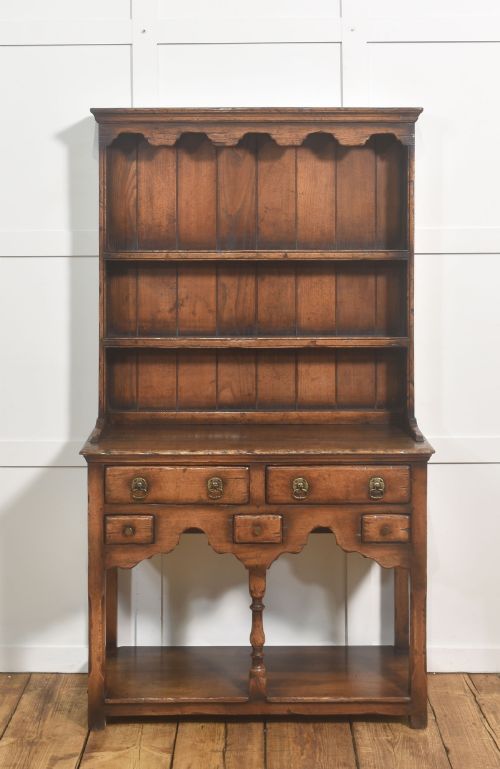
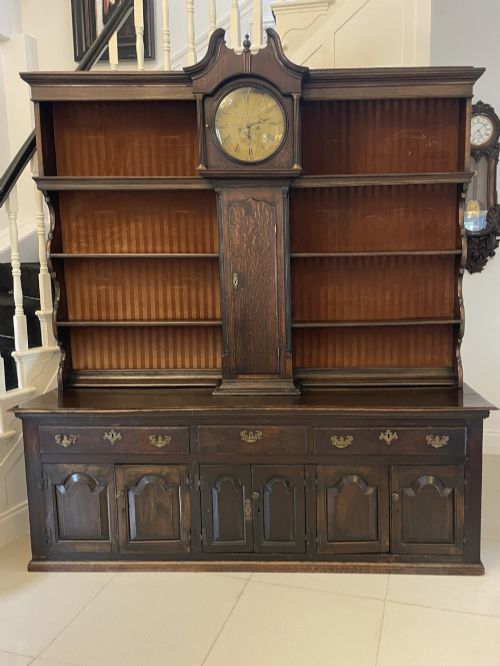
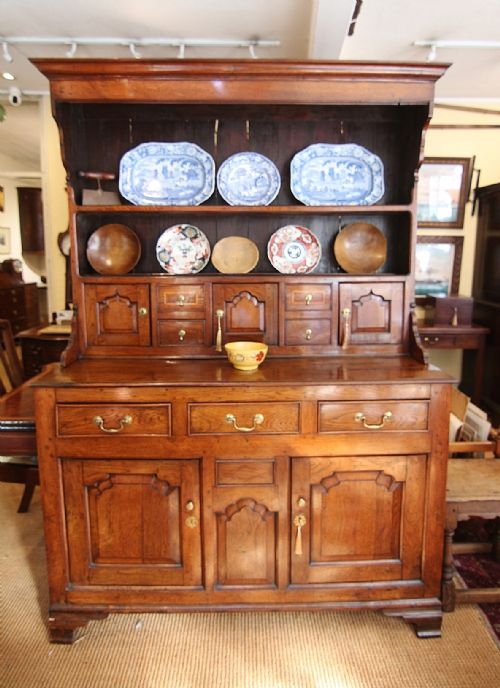
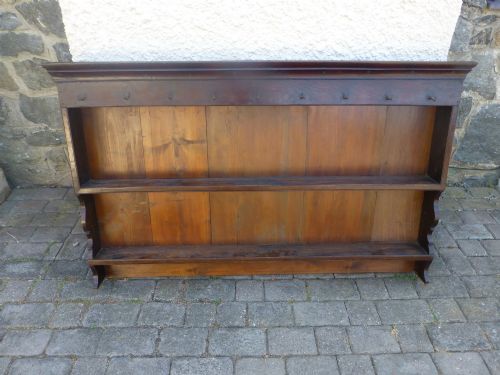
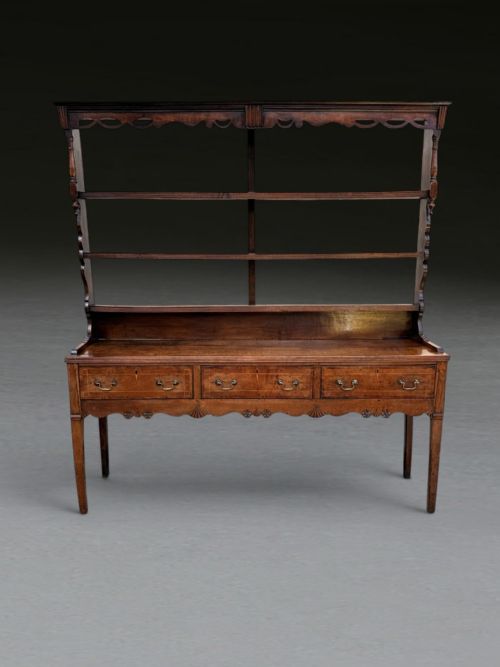
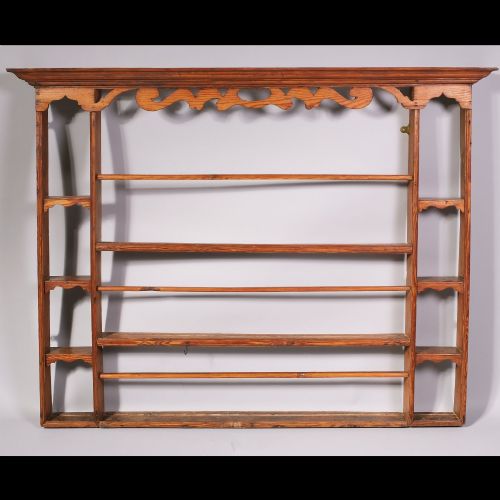
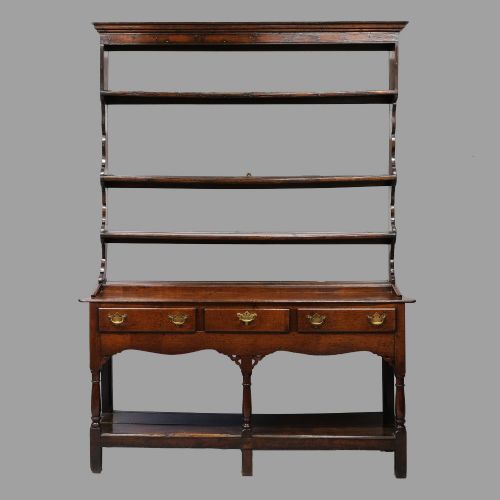
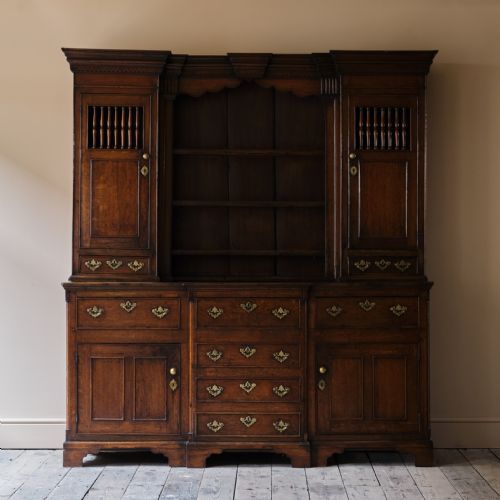
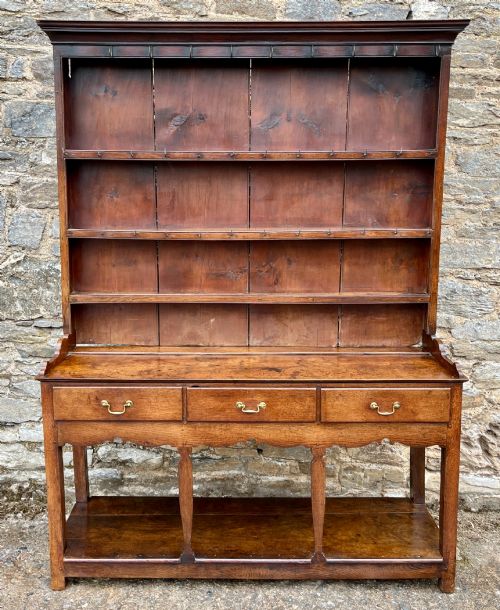
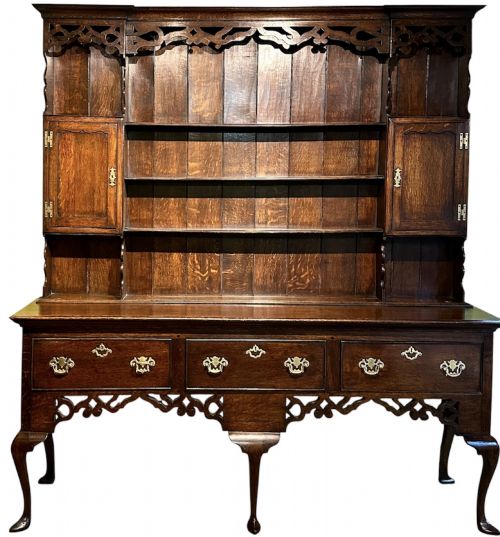
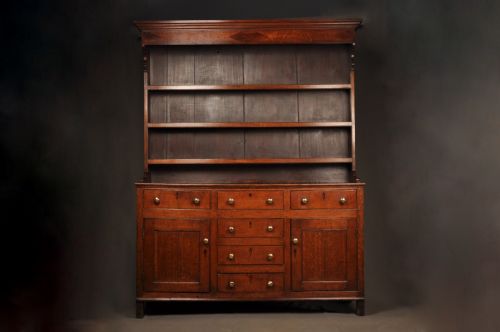
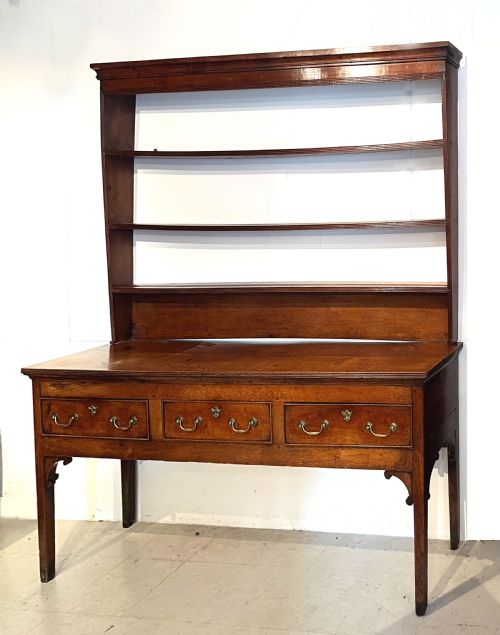
An 18th century kitchen rack typically forms part of a larger dresser assembly, integrating open shelving for plates and platters above a storage base. Buyers searching this phrase most frequently encounter oak examples originating from English and Welsh country workshops, often displaying open-backed or boarded upper plate shelves.
The regional variations visible in these listings range from Snowdonia and Llanrwst formats to broader Georgian farmhouse designs. Many pieces combine a lower potboard or cupboard base with upper plate rails designed to display ceramic delftware and pewter.
Materials and Construction
Cabinetmakers built these kitchen fixtures primarily using native solid oak, supplemented occasionally by regional pine, elm, and walnut for secondary components or specific country variants. Boards were hand-planed and joined using traditional pegging methods rather than modern fixings.
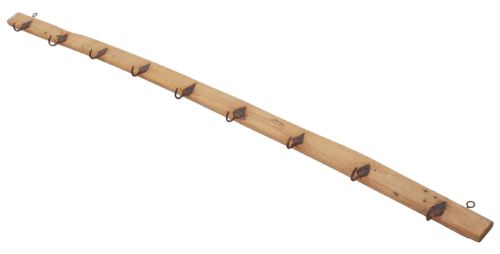
Metal elements such as wrought iron hooks, brass fittings, and meat skewers appear alongside the timber framework to facilitate hanging domestic utensils and game. Surface finishes developed naturally through decades of daily use and waxing rather than applied factory coatings.
Materials documented across the inventory span native oak, pine, elm, and walnut, paired with wrought iron and brass hardware.
Judging Quality and Proportion
Quality in these pieces rests upon the retention of original upper racks matched correctly to their lower bases, as many components became separated over centuries. The harmony of proportions between the upper plate shelves and the lower potboard or cupboard dictates the visual success of the piece.
Finer examples display regional decorative touches such as subtle inlay wood work, pegged joints, and well-proportioned cornice mouldings rather than plain utility framing. The integrity of the timber surfaces and the presence of original brass or iron hardware further distinguish superior specimens.
The 18th Century Kitchen Rack Glossary
- Potboard
- A low slatted or solid shelf positioned near the floor between the lower legs of a dresser, originally intended for storing heavy pots and pans. This lower tier provides structural stability to the entire carcass.
- Delftware
- Tin-glazed earthenware commonly displayed upon open plate racks during the Georgian period. These imported or domestically produced plates added colour to farmhouse kitchens.
- Vernacular
- Architecture and furniture made by local craftsmen following regional traditions rather than metropolitan academic designs. These pieces utilise local timbers and practical construction methods.
- Cornice
- The ornamental moulding running around the topmost edge of a dresser rack. It frames the upper elevation and sometimes incorporates hooks for hanging cups.
- Belly
- A curved or swelled profile on the lower cabinet doors or drawer fronts of specific regional dressers. This characteristic shaping distinguishes certain Welsh vernacular styles.
18th Century Kitchen Rack: Frequently Asked Questions
What is an 18th century kitchen rack?
An 18th century kitchen rack is a wooden shelving unit, usually part of a dresser, designed to hold plates and dishes vertically against a wall.
These fixtures were mounted above a work surface or integrated directly onto a dresser base to keep everyday ceramics accessible in busy domestic spaces.
How do I clean an old oak rack?
Dust the timber regularly with a dry cloth and apply a traditional beeswax sparingly to nourish the dry wood surface.
Avoid modern liquid polishes or water, which can damage the historic patina and lift the grain of ancient oak.
Are these racks attached to dressers?
Most surviving examples combine the plate shelves and the lower storage cabinet into a single integrated dresser unit.
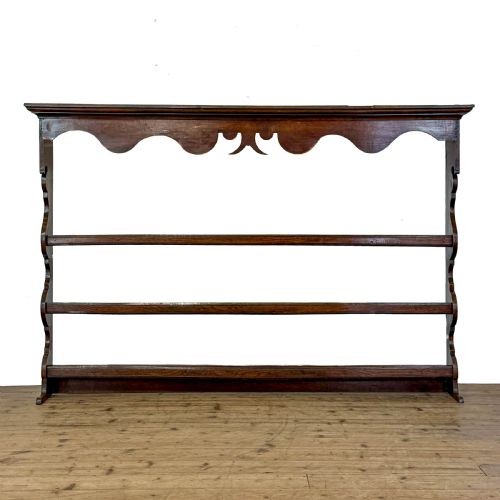
Some smaller standalone plate racks were hung directly onto kitchen walls, though many listings combine the upper shelves with a potboard base.
Where were these kitchen racks made?
These pieces originate primarily from country workshops across England and Wales, with specific regional styles from areas like Snowdonia.
Local joiners utilised native hardwoods such as oak and pine to build sturdy furniture suited to farmhouse kitchens.