
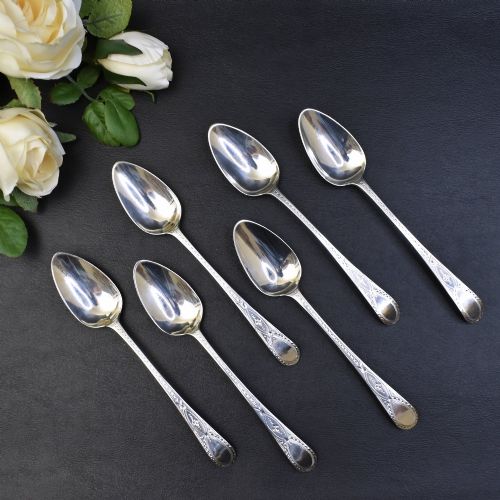
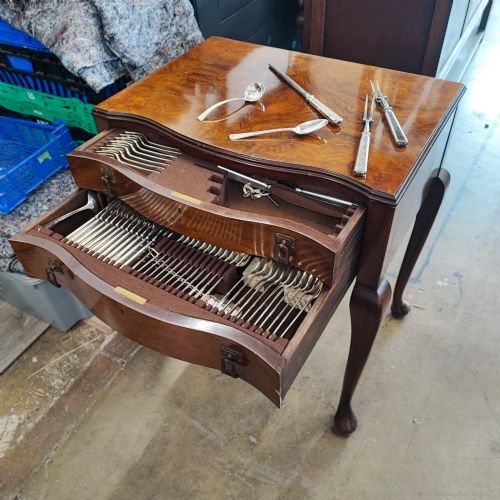


Georgian Flatware Set
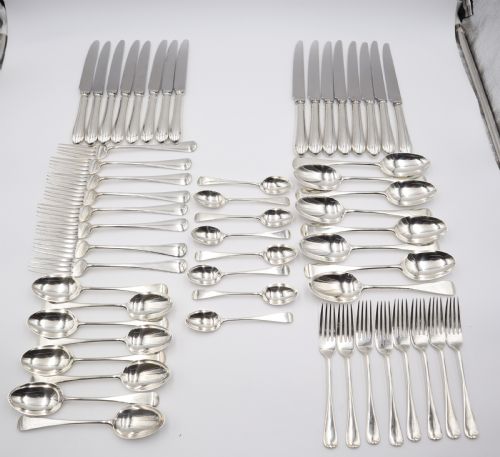
A georgian flatware set brings the distinct weight of sterling silver and period craftsmanship directly to the dining table.
Georgian Flatware Set
The configurations range from small boxed pairs of dessert forks and fruit knives to larger canteens intended for twelve persons. Pieces often reflect specific regional makers from London, Edinburgh, or Dublin, alongside distinct patterns such as Hanoverian, Old English, and bright-cut engravings.
Materials and construction
The primary material is sterling silver, frequently accompanied by steel for knife blades and occasionally mother-of-pearl for handles. Items are often housed in fitted cases lined with velvet, silk, or leatherette over wood or leather.
Silversmiths shaped the metal through hammering and casting, applying detailed hand-engraving like bright-cut designs and family crests. Joints and tines, such as three-pronged dessert forks, demonstrate traditional forging techniques of the period.
Listings feature periods spanning from the eighteenth century through the 1930s, incorporating sterling silver, steel, and mother-of-pearl.
Factors of quality
Quality rests upon the crispness of the original hallmarks, the depth and clarity of hand-engraving, and the retention of the maker's intended form through centuries of use. Substantial gauge silver maintains its strength and balance in the hand without excessive thinning at the bowl or tines.
The cohesion of a matched set and the integrity of any original fitted case contribute significantly to the standing of the pieces. Superior examples exhibit clear maker marks, such as those by recognised silversmiths, alongside well-preserved surface finishes.
Hamilton & Inches·E Coker·John Locker·P A W Bateman
The Georgian Flatware Set Glossary
- Sterling silver
- A silver alloy containing 92.5 percent pure silver by mass and 7.5 percent other metals, usually copper. This standard composition provides the durability required for functional cutlery.
- Hallmark
- An official stamp applied to precious metals indicating the standard of purity, the assay office, and the date letter. These marks allow collectors to verify the exact origin and year of manufacture.
- Bright-cut
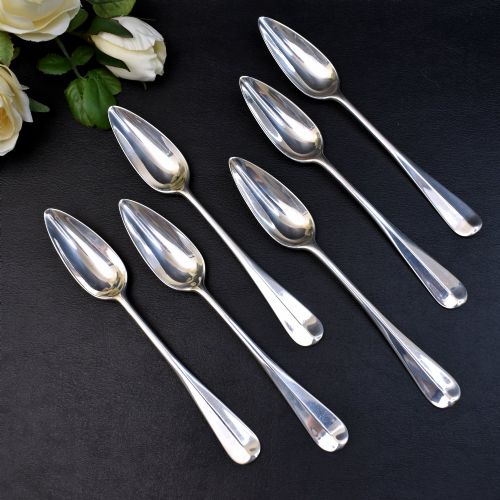
- An engraving technique utilising faceted V-cut grooves that reflect light to create a sparkling geometric border. It is frequently seen on late eighteenth-century teaspoons and tablespoons.
- Hanoverian pattern
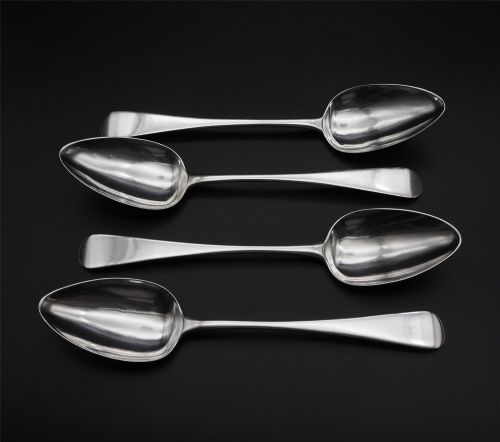
- A popular eighteenth-century spoon design featuring a ridge down the centre of the stem and a upturned terminal. It preceded the widespread adoption of the Old English pattern.
- Basting spoon
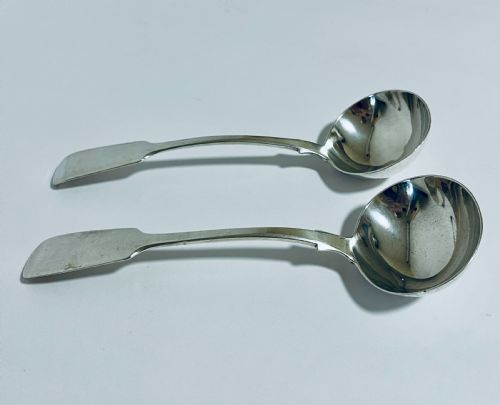
- A large serving utensil designed for gathering and pouring juices over roasting meat. These oversized spoons are among the heavier hollowware pieces found in period collections.
Georgian Flatware Set: Frequently Asked Questions
How do I clean antique silver flatware?
Wash the pieces gently in warm soapy water using a soft cloth, then dry them thoroughly immediately afterwards. Avoid abrasive dips or harsh scrubbing brushes that can wear away hand-engraving and hallmarks.
Store the items in a dry environment, preferably within a lined canteen or anti-tarnish cloth, to minimise exposure to sulfur compounds in the air that cause dark oxidation.
Can I use these sets for daily dining?
Many collectors and enthusiasts enjoy using sterling silver flatware for everyday meals to appreciate the tactile weight and historical connection. Hand washing is essential, as the high heat and harsh detergents of modern dishwashers will damage antique steel blades and handle materials.
Care should be taken with softer silver tines and older knife joints, avoiding very hard foods that might bend or strain the antique metal.
What is a matched silver set?
A matched set consists of individual pieces produced by the same silversmith or sharing identical decorative patterns, gathered together after initial manufacture. Dealers and collectors assemble these groups to provide a functional number of matching forks or spoons for modern use.
Matched collections often display minor variations in weight or length due to their individual origins, while still presenting a unified appearance on the dining table.
How do I identify a Georgian hallmark?
Georgian hallmarks typically include a lion passant indicating sterling standard, a maker's mark initials stamp, a city mark such as the leopard's head for London, and a sequential date letter. These tiny stamped impressions are usually found on the reverse of spoon stems or the backs of fork tines.
Reference tables of assay office date cycles allow you to cross-reference the specific letter stamp to determine the exact year of production.