
Georgian Flame Mahogany Server
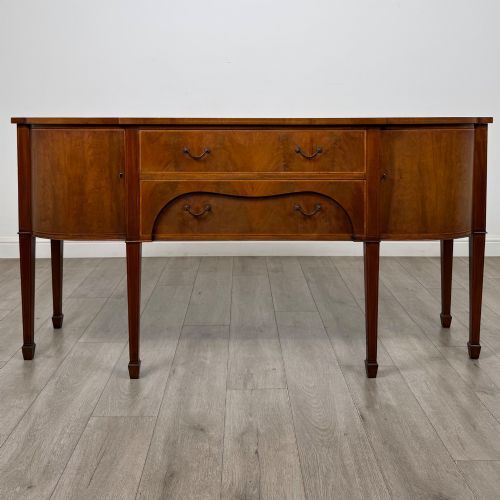
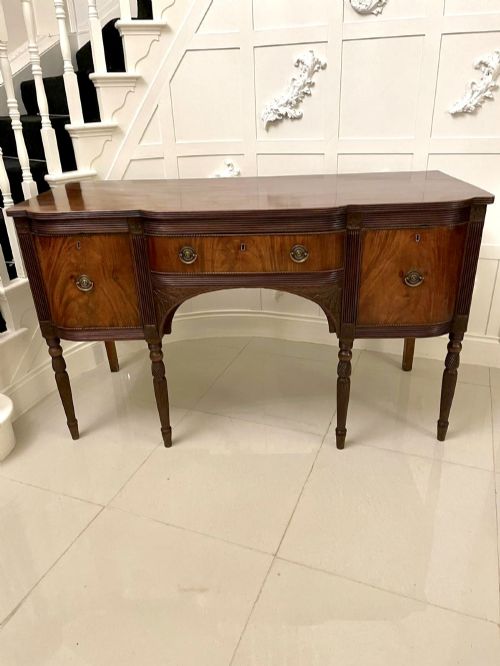
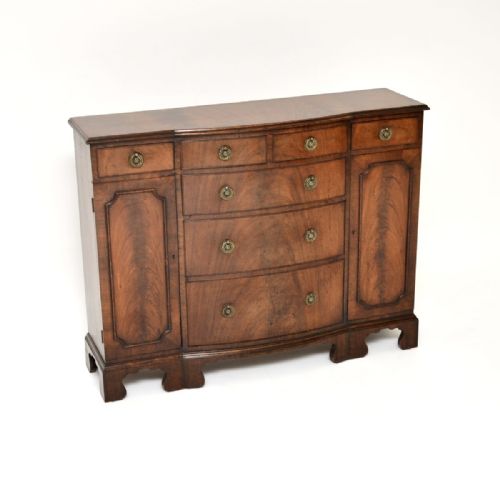
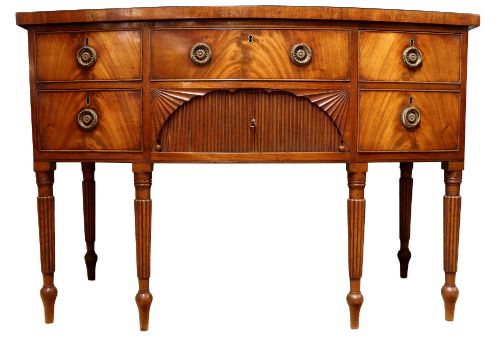
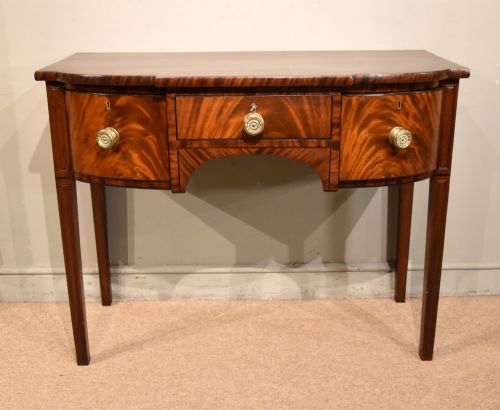
A georgian flame mahogany server brings dramatic grain and stately proportions to a dining room.
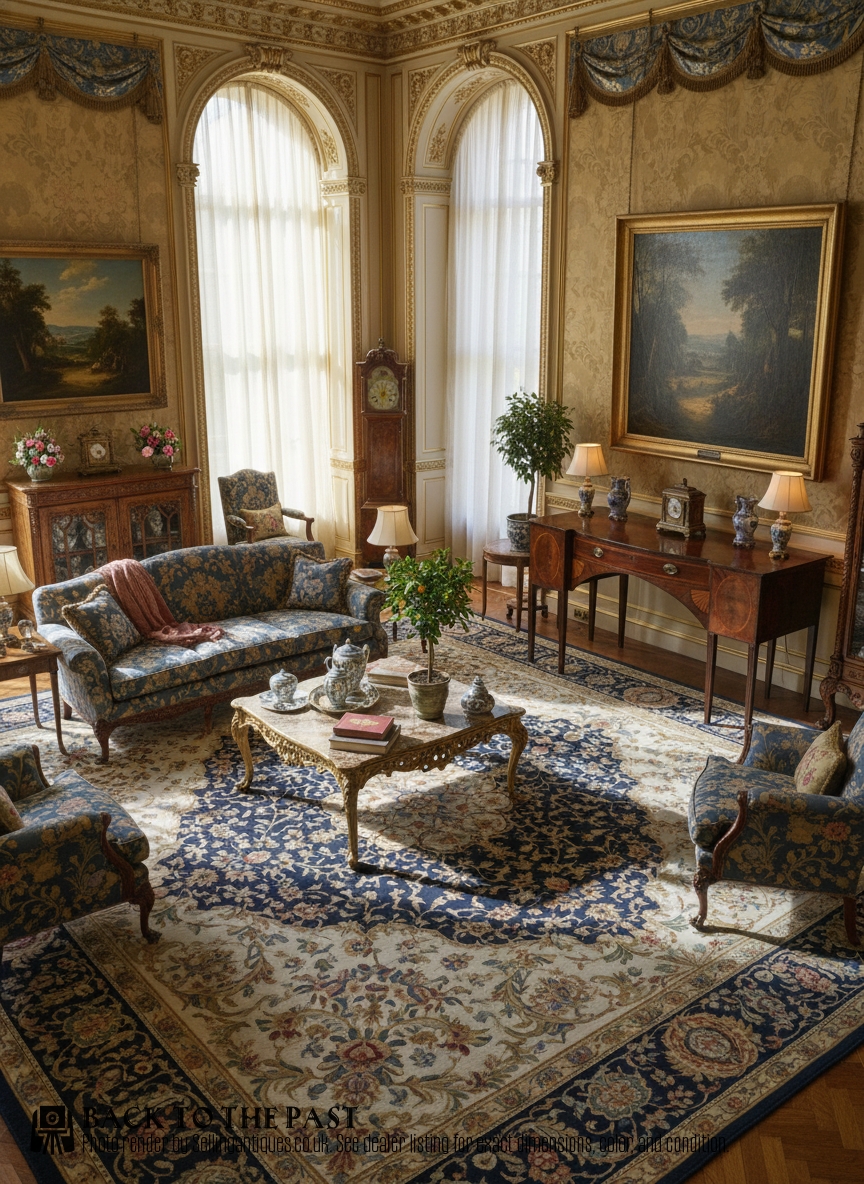
Georgian Flame Mahogany Server
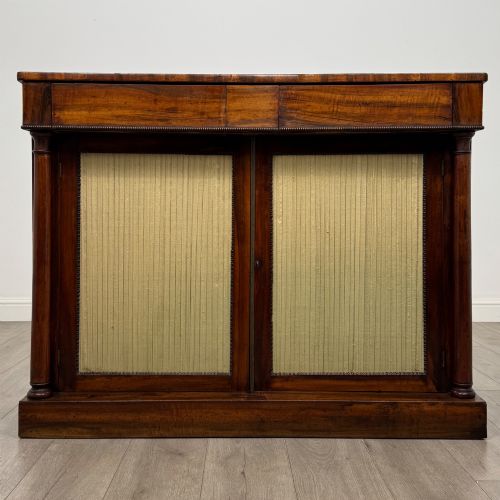
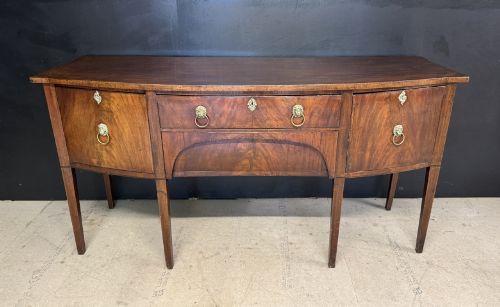
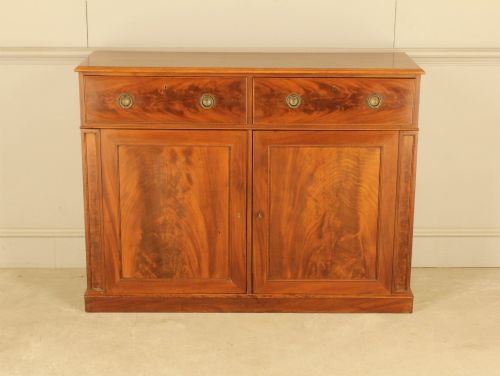
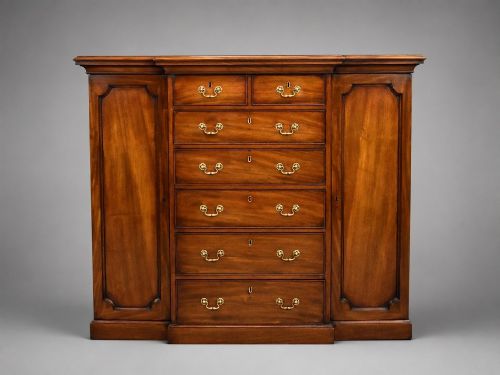
A georgian flame mahogany server is a substantial dining room furnishing designed for holding service ware and dishes. These pieces appear as sideboards, serving tables, and breakfronts originating primarily from the Georgian, Regency, and 19th Century periods.
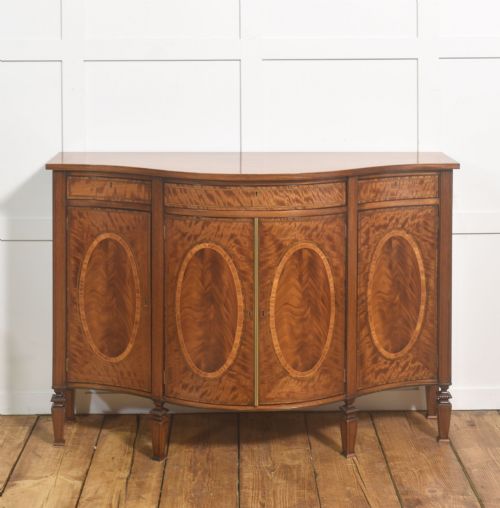
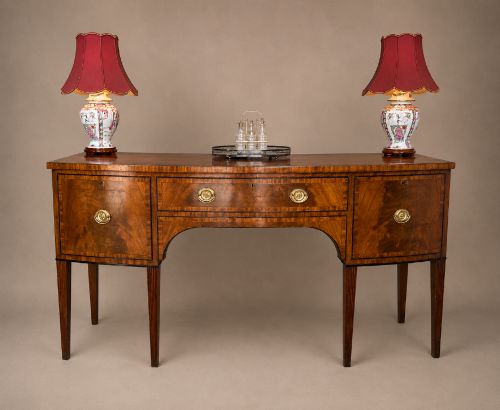
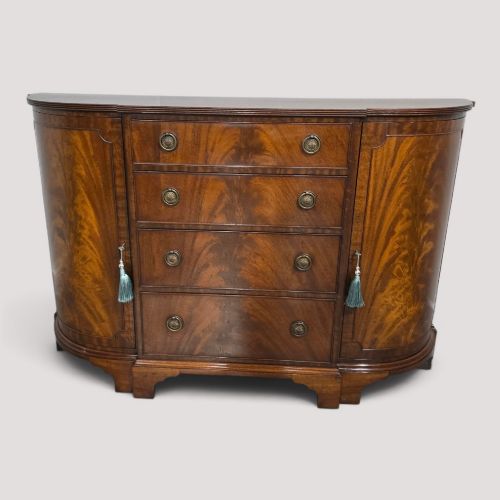
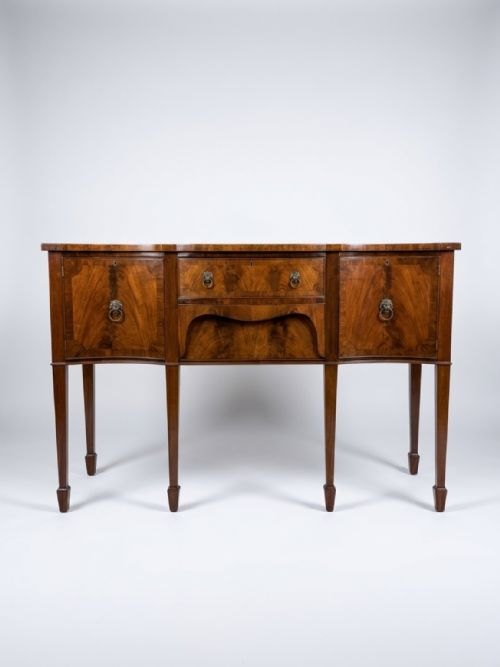
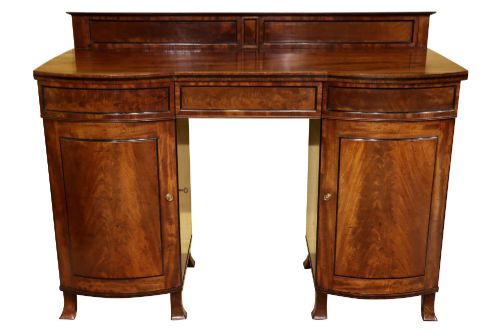
You are most likely to encounter bow front and serpentine forms finished with striking veneer patterns. Many examples incorporate pedestals, brass galleries, or inlaid details reflecting George III and Sheraton Revival influences.
Materials and construction methods
Cabinet makers utilised solid wood frames overlaid with flame mahogany veneer to achieve the characteristic undulating grain patterns. Secondary woods and decorative stringing in boxwood or satinwood provided contrast along drawer fronts and borders.
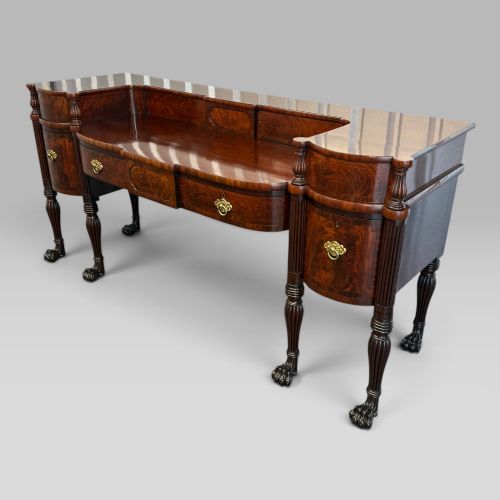
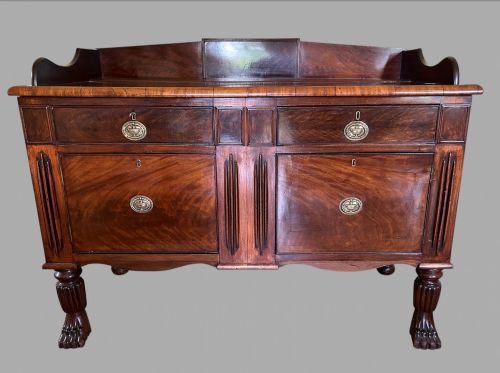
Structural hardware relied on cast brass fittings, handles, and occasional galleries mounted to the upper surface. Lion paw feet and inlaid banding further defined the surface ornamentation of these serving tables and sideboards.
Six carved lion paw feet anchor one particularly fierce Regency sideboard, standing ready to pounce on the dining room carpet.
Distinctions in craftsmanship
The visual impact of a georgian flame mahogany server depends heavily on the symmetry and depth of the veneer selection. Superior pieces display bookmatched figuring across the primary surfaces without disruption.
Subtleties in the joinery, the crispness of carved details such as lion paw feet, and the integrity of the original brass hardware separate standard regional production from master workshop output.
Gillows
The Georgian Flame Mahogany Server Glossary
- Flame mahogany veneer
- A thin slice of wood cut from the fork of the tree where branches join the trunk. This method yields a fiery, swirling pattern prized by cabinet makers.
- Serpentine
- A shape characterised by a gently undulating front with a convex centre flanked by concave curves. It requires precise woodworking to execute properly on a large sideboard.
- Bow front
- A convex, outward-curving front profile popular on sideboards and serving tables. This design softens the corners of the room while increasing interior storage capacity.
- Pedestal sideboard
- A form featuring distinct flanking cabinet pedestals joined by a central table section. These configurations often date from the Regency period.
- Brass gallery
- A low decorative rail mounted along the rear top edge of a serving table. It kept items from sliding off during busy dining service.
Georgian Flame Mahogany Server: Frequently Asked Questions
What is a flame mahogany server?
A flame mahogany server is a large dining room console or sideboard built with highly figured veneer. It provides surface area for food service and internal storage for linens and dining accessories.
These pieces combine functional capacity with decorative cabinet work, serving as a focal point in traditional dining spaces.
How do I identify a Georgian server?
Georgian servers are identified by their proportion, classical lines, and timber characteristics. Look for hand-cut dovetails, substantive weight, and period-appropriate hardware.
Stylistic cues such as serpentine fronts, bracket feet, and subtle inlay help distinguish these pieces from later revival items.
Where were these servers used?
These servers were positioned in formal dining rooms and reception spaces of large country houses and town residences. They held platters, silverware, and decanters during meals.
In modern interiors, they function equally well in dining rooms, large hallways, or living spaces as storage credenzas.