
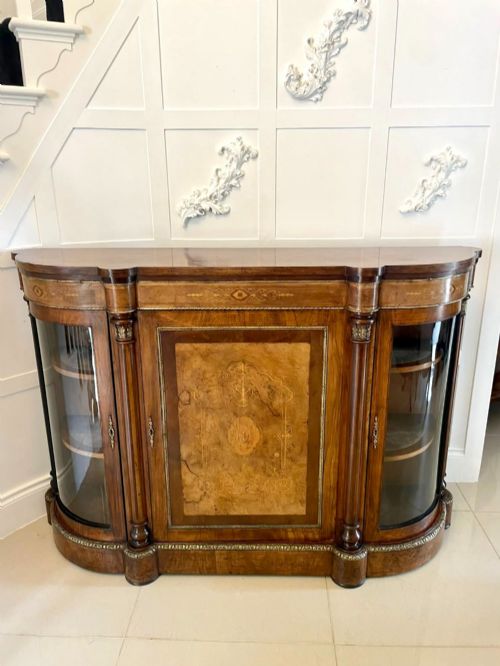
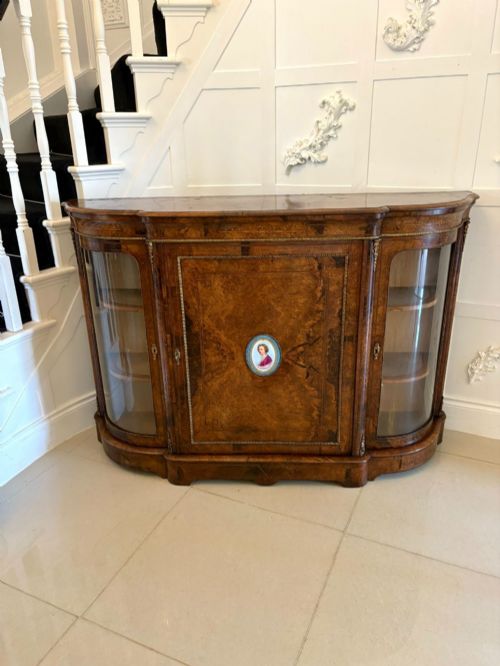
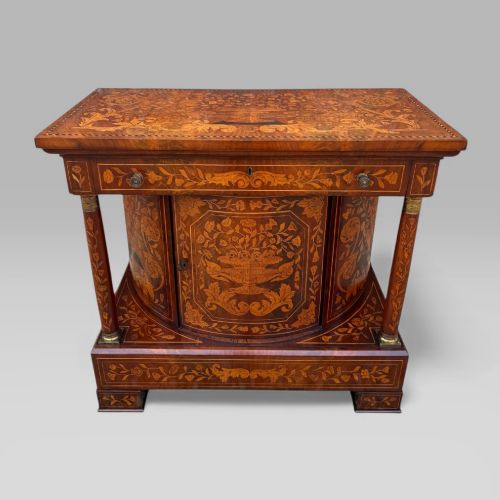
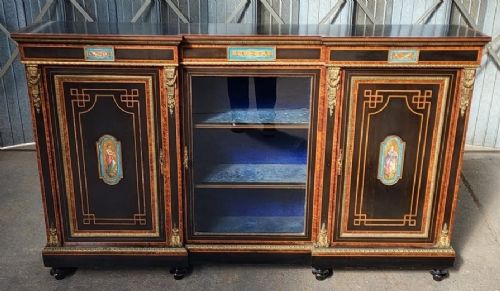

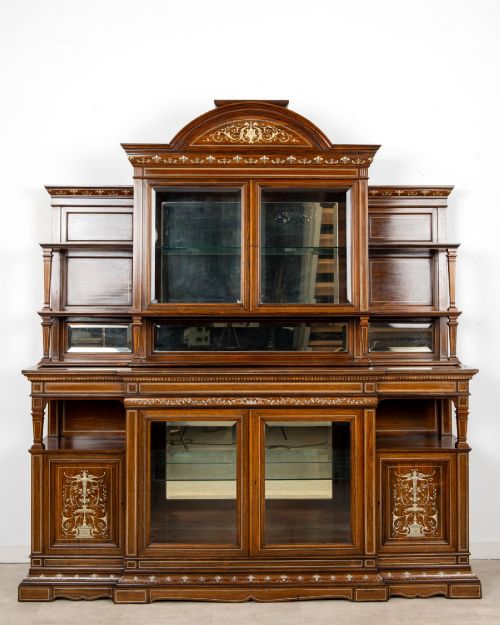
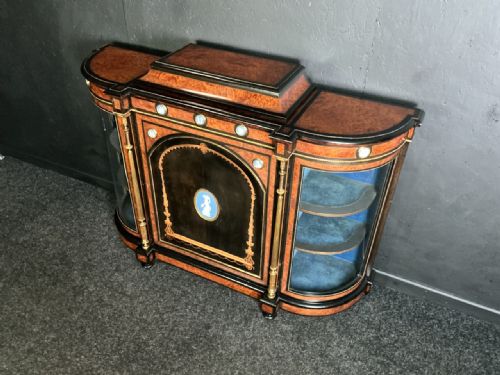
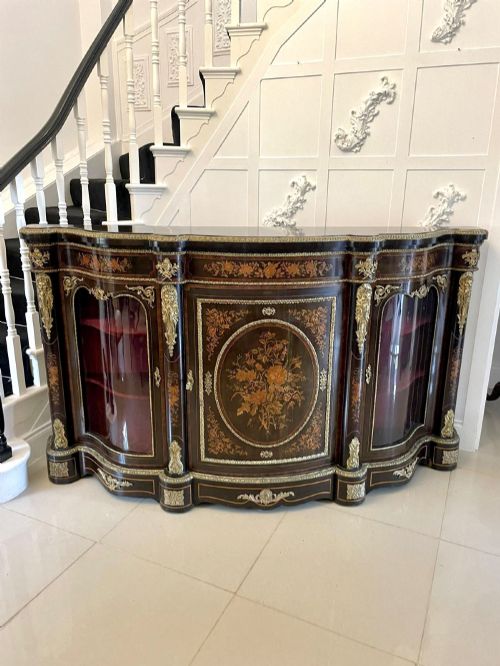
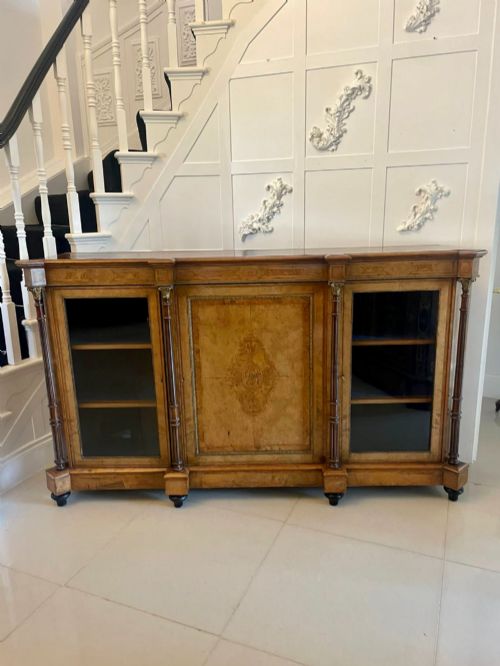
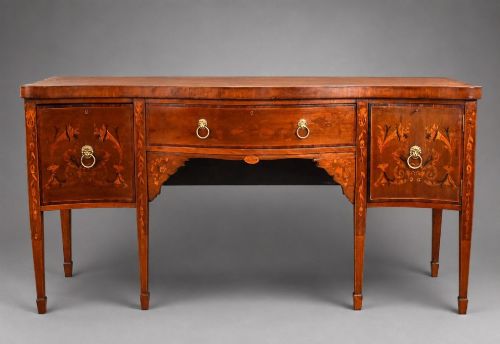
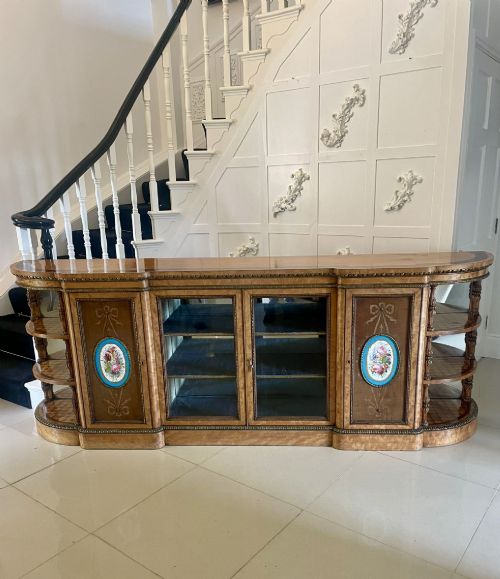
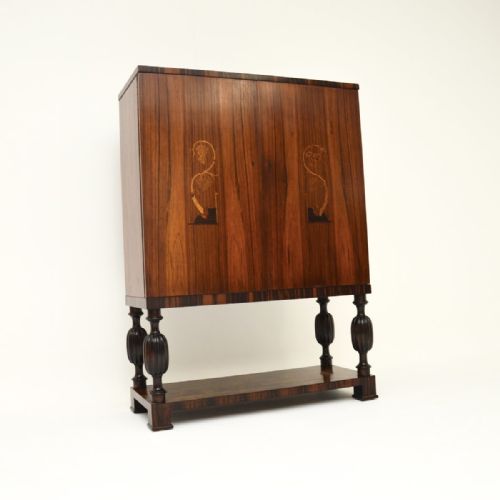
Marquetry Inlaid Sideboard Cabinet
When you handle a marquetry inlaid sideboard cabinet, you see the convergence of complex timber work and grand nineteenth-century interior display.
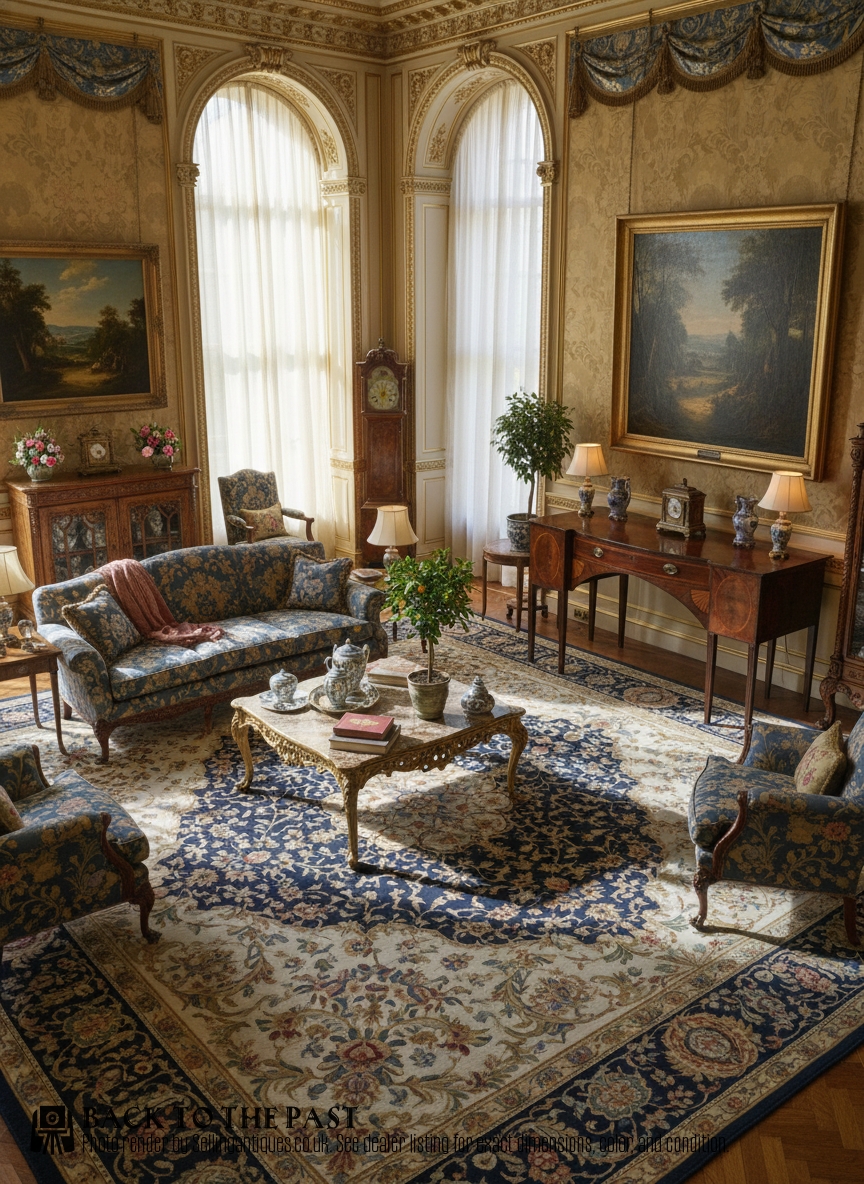
Marquetry Inlaid Sideboard Cabinet
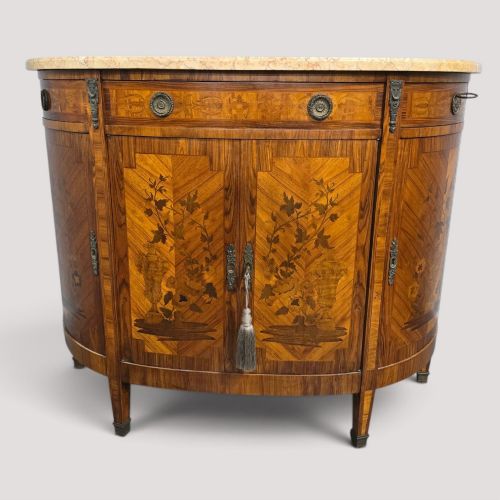
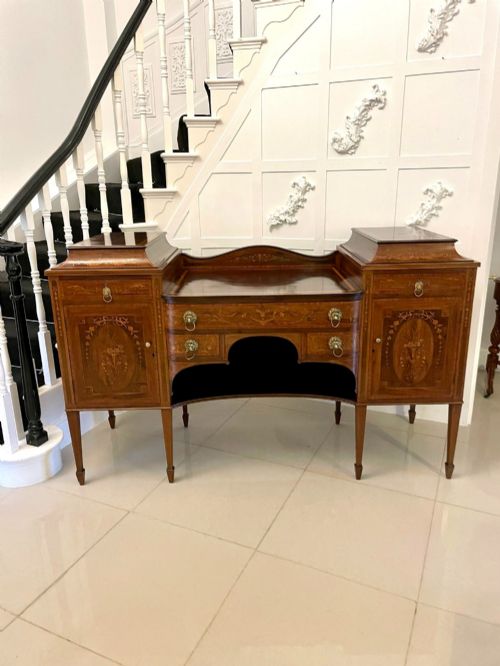
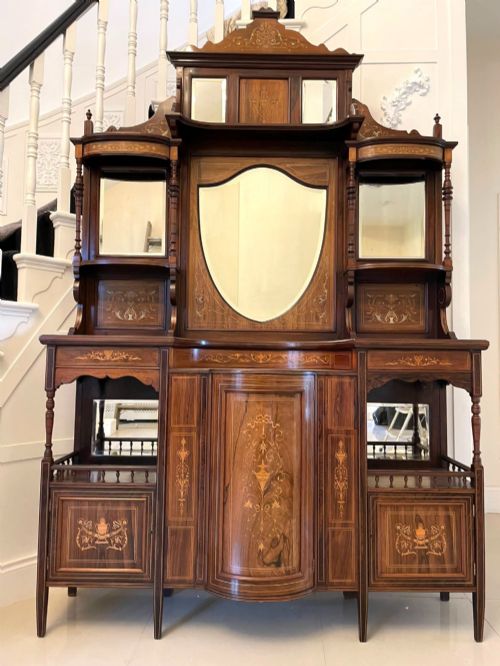
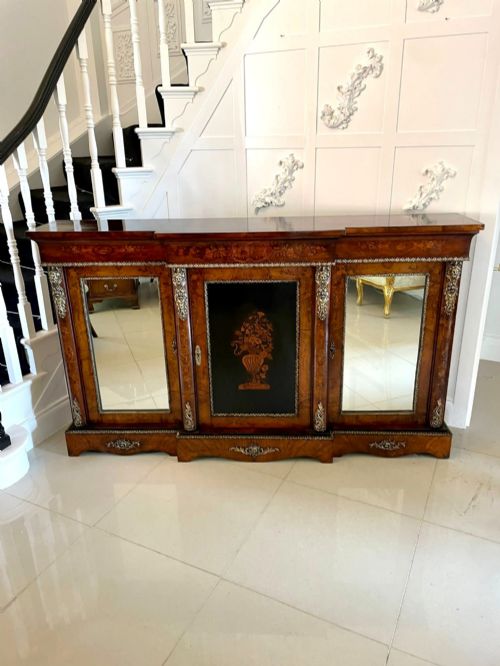
A marquetry inlaid sideboard cabinet serves as a grand storage and display piece, drawing together diverse forms such as credenzas, pier cabinets, and commodes. You encounter these primarily from the Victorian period, alongside earlier eighteenth-century Dutch examples and later Edwardian interpretations.
The primary forms balance enclosed cupboards with open shelving or glass-fronted display sections, often shaped in serpentine or demi-lune silhouettes. These pieces originate from British workshops as well as continental makers in France, Austria, and Sweden.
Makers utilise terms interchangeably across records, grouping credenzas, sideboards, and side cabinets under overlapping headings. The core function remains storing dining plate or displaying decorative porcelain within a formal reception room.
How they were made
Craftsmen construct carcases from solid foundational timbers like mahogany and walnut, then veneer the exterior surfaces in burr walnut, satinwood, and rosewood. This method provides stable structural integrity while exposing rich, figured grain patterns across large cabinet doors and top surfaces.
Workshops apply intricate marquetry inlay using contrasting light and dark woods, forming floral and geometric motifs that sit flush with the carcase. Artisans mount gilt bronze or ormolu mounts, brass details, and glass panels to punctuate the wooden surfaces.
Listings feature walnut, mahogany, satinwood, and rosewood timbers alongside brass, ormolu, and glass components.
What varies in quality
The refinement of the marquetry cutting separates standard cabinet work from exceptional exhibition pieces, where botanical details show precise shading and tight joints. The selection of timber veneers dictates the visual depth, with highly figured burr walnut and satinwood commanding greater presence.
Mounting hardware ranges from simple brass stringing to heavy, finely chased ormolu mounts and inserted porcelain plaques. The integration of serpentine shaping and complex curved glass demonstrates superior joinery skill in the underlying frame.
Hewetsons London·Collinson and Lock·Gillows·August Ungethüm·Maison Gagneau·James Hicks·Edwards and Roberts
The Marquetry Inlaid Sideboard Cabinet Glossary
- Marquetry
- The technique of applying decorative veneer pieces to a structural surface to form pictorial or geometric patterns. Craftsmen cut contrasting timbers together to ensure tight, seamless joints.
- Credenza
- A low cabinet designed for dining rooms or reception spaces, frequently featuring central cupboards flanked by glass-fronted side display compartments. Victorian examples often incorporate extensive ormolu mounts and porcelain plaques.
- Ormolu
- Gilded bronze mounts applied to furniture edges, feet, and friezes for decorative accent. The term derives from the French for milled gold.
- Pier Cabinet
- A narrow display cabinet built to stand against the wall space between windows. These upright pieces typically house glazed doors protecting books or porcelain.
- Burr Walnut
- Timber taken from the abnormal growth of a walnut tree, yielding swirling, knotty grain patterns. Cabinetmakers prize this wood for high-end veneer work.
- Serpentine
- A furniture front or top shaped with a double-curved line, curving outward in the centre and inward at the ends. This contour requires advanced carpentry to execute correctly.
Marquetry Inlaid Sideboard Cabinet: Frequently Asked Questions
What is a marquetry inlaid sideboard cabinet?
These furniture pieces function as low storage units and display surfaces, combining cupboard space with decorative woodwork. They appear in diverse forms including credenzas, commodes, and glass-fronted cabinets.
Cabinetmakers built them primarily during the nineteenth century using rich veneers like burr walnut and mahogany. The surface decoration relies on contrasting wood inlay arranged in floral or geometric designs.
Where were these cabinets used?
Victorian households placed these pieces in formal reception rooms, dining rooms, and drawing rooms. They served to display imported porcelain, silver, and decorative objects behind glass doors.
The enclosed lower sections held table linen, serving platters, or books. Their decorative fronts made them focal points along drawing-room walls.
How do I identify a Victorian piece?
Victorian examples frequently utilise burr walnut or rosewood veneers combined with elaborate floral marquetry. Many incorporate ormolu mounts and curved serpentine fronts typical of mid-nineteenth-century revival styles.
Later Victorian items often show Sheraton Revival influence with satinwood and lighter stringing. Construction methods involve solid mahogany or oak carcases supporting thin decorative veneers.
How do I care for inlaid wood?
Keep these cabinets away from direct sunlight and heat sources to prevent the wood veneers from drying and lifting. Maintain a stable room temperature and humidity level.
Apply high-quality beeswax sparingly and buff gently with a soft cloth. Avoid commercial liquid polishes that contain silicone, which can penetrate old finishes.