



Georgian Fireplace Tools
Georgian fireplace tools are essential hearth furniture that bring period character and functional heritage to a room.
Georgian Fireplace Tools
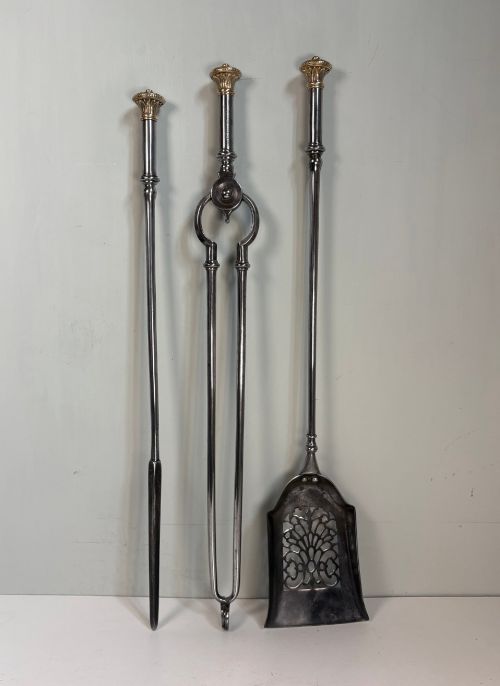
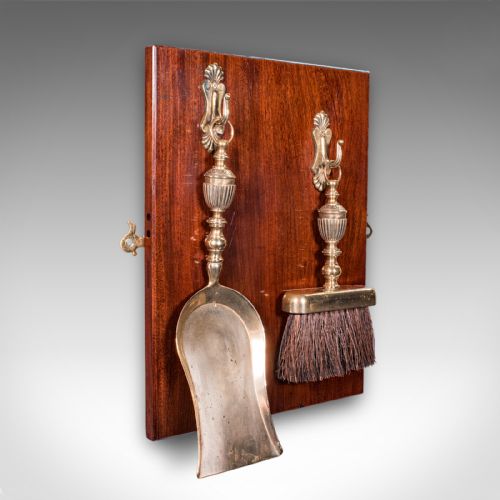
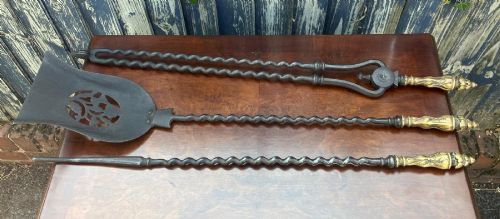
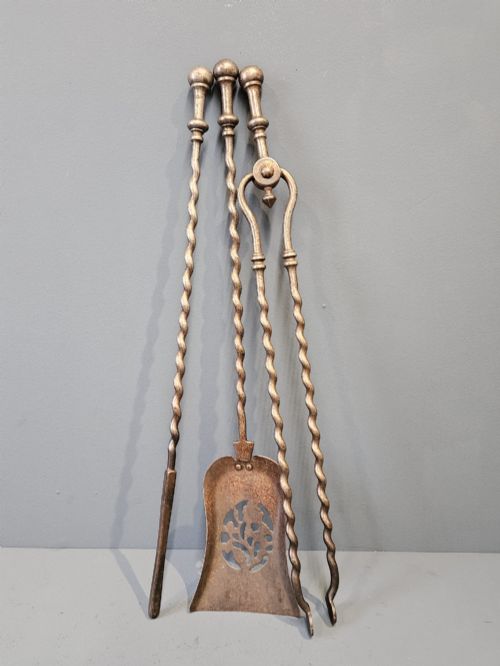
When you search for georgian fireplace tools, you encounter a specialised array of hearth equipment designed to tend a coal or wood fire. These objects include fire irons, shovels, tongs, poker sets, and companion sets fashioned during the Georgian era and closely related periods.
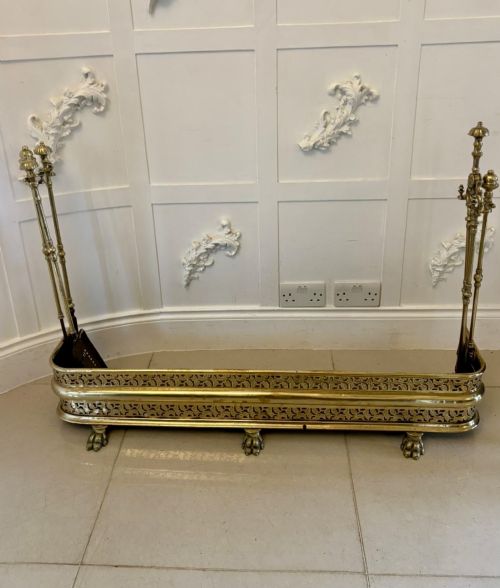
The pieces you meet most frequently on this page span the eighteenth and nineteenth centuries, often categorised under broader styles such as Regency, George III, and George IV. They include complete sets of three irons, individual pokers, and related accessories like fenders and toasting forks.
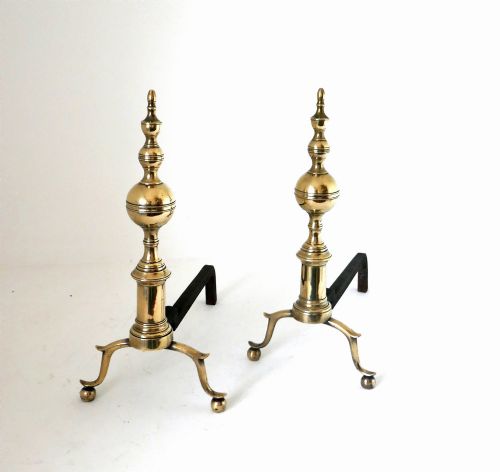
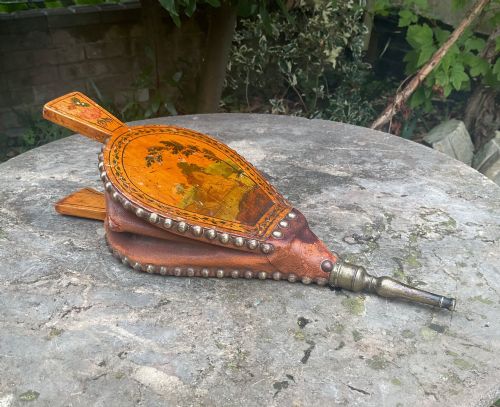
Many of these utilitarian items survive alongside related fireside items such as brass and iron andirons, mechanical bellows, and polished steel companion sets. Their survival reflects the central role of the hearth in period domestic life.
Materials and construction
Blacksmiths and metalworkers fabricated these tools using robust metals such as iron, wrought iron, and steel, alongside decorative accents in brass, cast brass, and gilt brass. Polished steel and burnished steel provided a bright, reflective finish prized for formal drawing rooms.
Makers combined different metals within single sets, pairing steel shafts with brass handles or mounting polished steel blades on iron stems. Wooden elements, including mahogany and yew wood, appear on items such as bellows and toasting forks, secured with metal fittings.
Georgian Fireplace Tools Retail Price Guide 2026
Typical asking prices for georgian fireplace tools among the pieces listed under this phrase on Sellingantiques today, from the lower quarter to the upper quarter. They describe what is for sale here now, not the wider market.
Listings combine iron, steel, and brass with wood elements like mahogany and yew.
Distinctions in quality
The distinction between standard utility items and finer examples lies in the handling of the metal and the sophistication of the design. Superior sets display carefully turned handles, balanced proportions, and high levels of finish, such as burnished steel or detailed cast brass mountings.
Workmanship is evident in the execution of functional details, from the spring in the ember tongs to the precise shaping of shovel blades and poker points. Pieces that retain matching components and original companion stands represent a higher grade of survival.
The Georgian Fireplace Tools Glossary
- Andirons
- Supports used to hold logs in an open fireplace, frequently made of iron or brass.
- Companion set
- A coordinated group of fireplace tools, usually comprising a shovel, poker, and tongs.
- Gilt brass
- Brass coated with a thin layer of gold, providing a bright decorative surface.
- Wrought iron
- Iron beaten into shape while hot by a blacksmith, showing characteristic fibrous textures.
- Bellows
- A device constructed to pump air into a fire through an expanding and contracting chamber.
Georgian Fireplace Tools: Frequently Asked Questions
What tools come in a standard set?
A standard set typically includes three essential implements for managing an open fire: a poker, a shovel, and a pair of tongs. These were designed to break up coal, clear ash, and reposition fuel safely.
Historically, these iron or brass tools hung on a fender or stood in a dedicated companion stand beside the hearth for immediate access.
How do I distinguish steel from iron?
Polished steel generally exhibits a brighter, more reflective surface and finer grain than traditional forged iron. Iron tends to have a darker, more textured appearance resulting from the blacksmith's hand-hammering process.
In period listings, burnished and polished steel pieces often indicate a more formal drawing-room origin compared to utilitarian kitchen ironware.
Were brass and steel used together?
Yes, makers frequently combined metals to balance durability with decorative appeal. Steel was chosen for the working shafts and tips due to its strength, while brass was utilised for decorative handles and mounts.
This mixed-metal construction allowed tools to withstand intense heat while presenting an ornate appearance in the room.
How should I clean polished steel tools?
Polished steel requires careful maintenance to prevent oxidation and preserve the bright finish achieved by period metalworkers. Gentle dusting and occasional light protection are standard preservation methods.
Avoid abrasive cleaners that can damage the historical surface or remove remaining traces of the original burnishing.