


Georgian Extendable Table
A georgian extendable table brings adaptable dining capacity and period cabinet-making into a room through clever mechanisms and rich timber.
Georgian Extendable Table
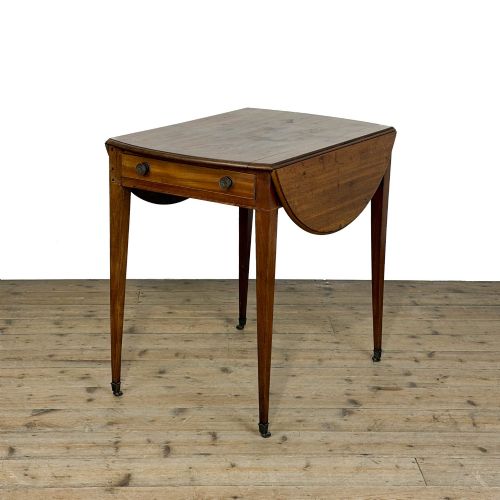
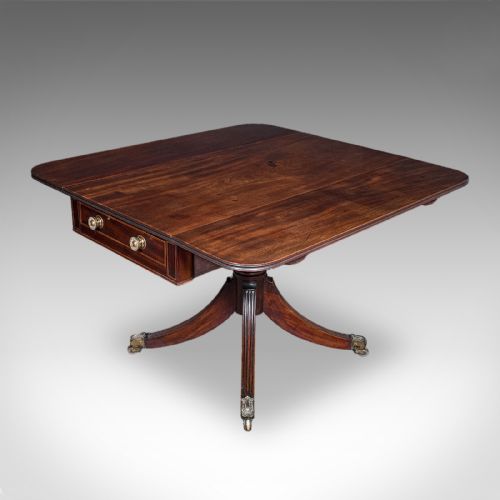
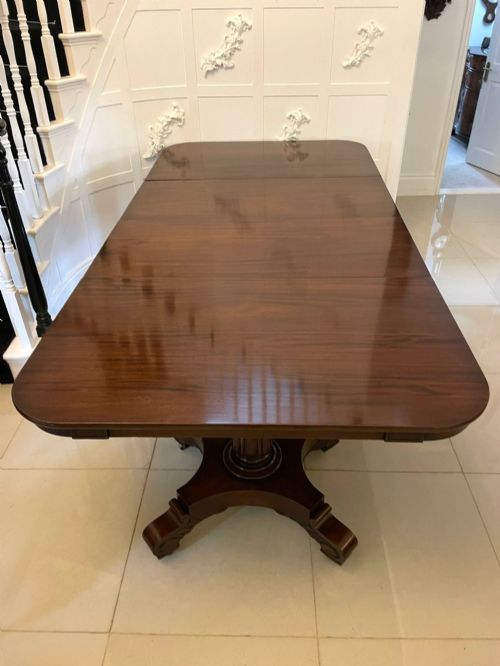
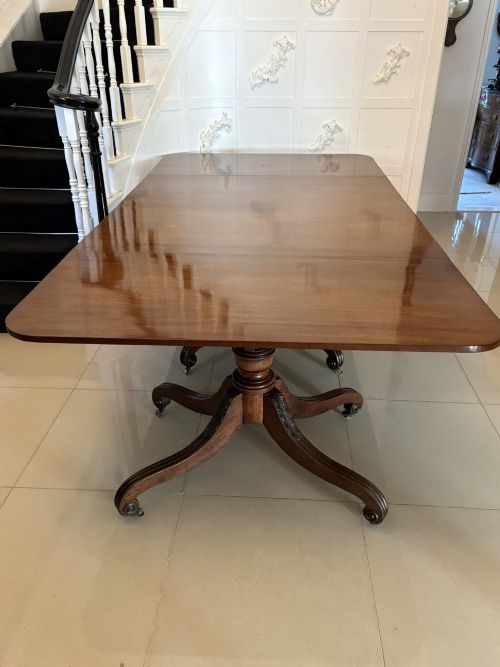
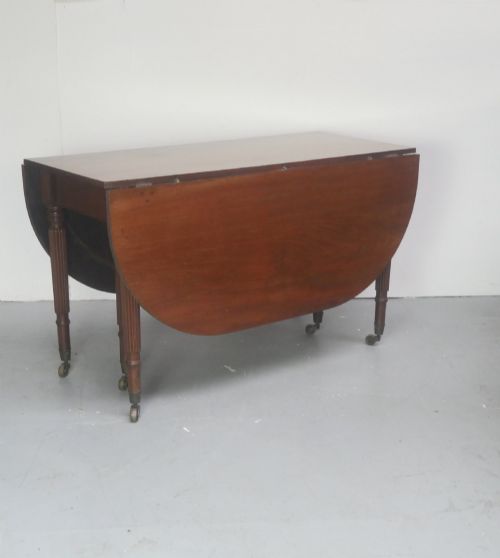
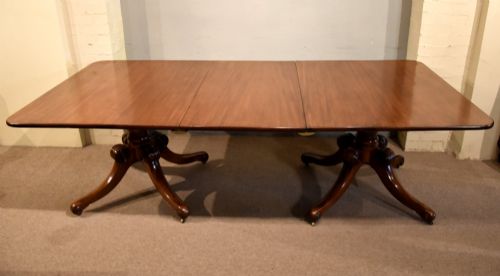
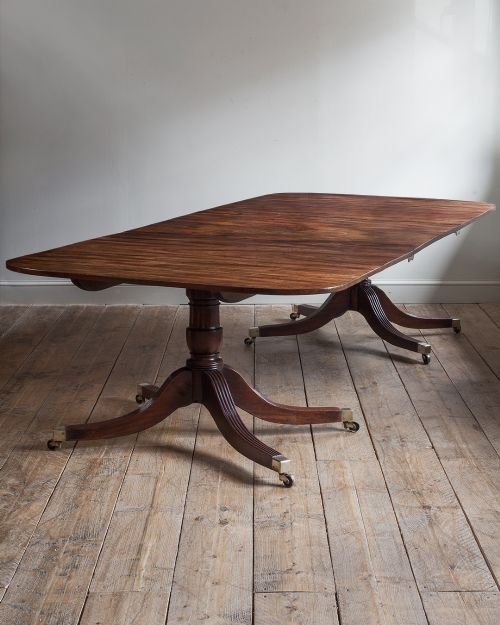
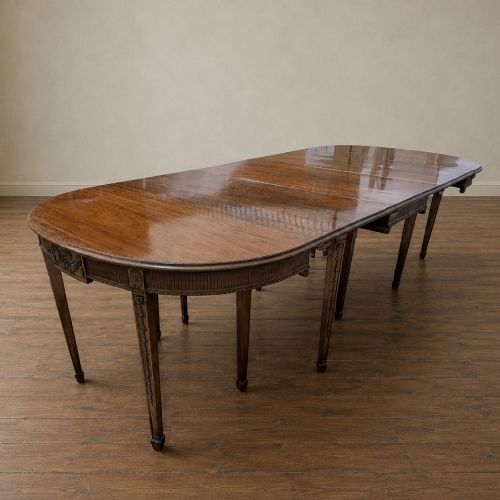
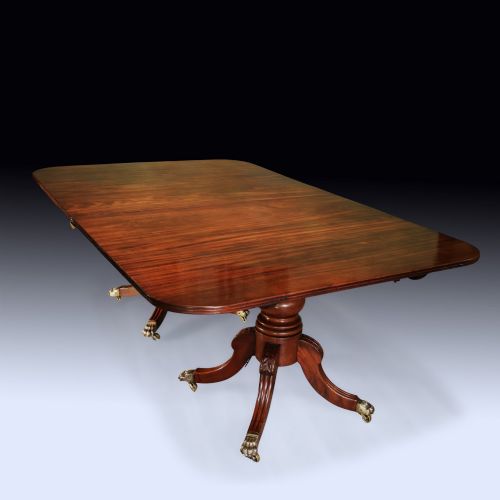
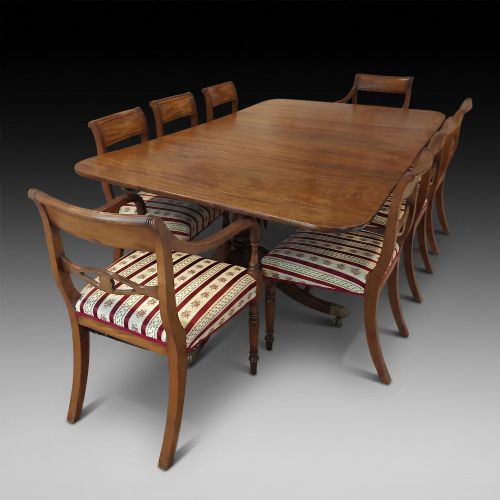
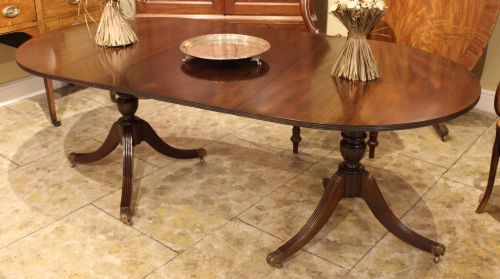
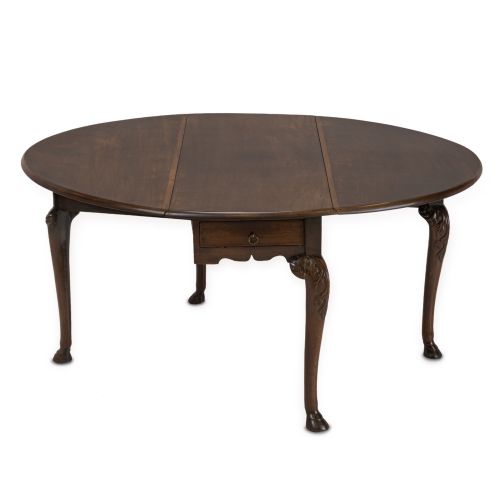
A georgian extendable table is primarily found in forms such as twin or triple pedestal dining tables, D-end tables, and drop-leaf formats designed to adapt seating capacity.
The pieces appearing here span the Georgian, Regency, and nineteenth-century periods, alongside later revival examples constructed from similar traditional timbers.
Buyers encounter formats ranging from four-seat Pembroke tables up to large multi-pedestal dining tables capable of seating sixteen people.
Materials and construction
Cabinet-makers relied heavily on mahogany, including Cuban flame mahogany and figured variations, alongside occasional use of oak and walnut for earlier pieces.
Hardware components frequently incorporated brass castors and fittings, while related dining accessories utilised Sheffield plate and copper.
Construction techniques involved drop-leaf mechanisms, gateleg frames, extending pedestal pillars, and drop-in extra leaves to manage the table length.
Some telescopic candlesticks are engineered to grow taller as the evening progresses and the conversation deepens.
What separates the best examples
Quality rests upon the choice of timber figure, such as richly grained Cuban flame mahogany, and the precision of the extending mechanism and pedestal carving.
Superior examples exhibit original brass castors, well-fitted extra leaves, and balanced proportions across multi-pillar formats built by accomplished cabinet-makers.
Gillows
The Georgian Extendable Table Glossary
- Pedestal
- A central support pillar, often fluted or reeded, carrying legs that spread outward to support larger dining surfaces. These pillars frequently sit on brass castors.
- Drop-leaf
- A table design featuring a fixed central section with hinged flaps on either side that rise and are supported by swing legs or brackets.
- D-End
- A table section terminating in a semicircle resembling the letter D, often used at the ends of extending dining tables to create a rounded profile.
- Sheffield plate
- A composite material made by fusing a thin layer of silver to a copper base, commonly found on period candlesticks and hardware.
- Gateleg
- A table construction where hinged legs swing outward like a gate to support folding leaves.
Georgian Extendable Table: Frequently Asked Questions
How do twin and triple pedestal tables extend?
These tables pull apart along a central runner system to allow the insertion of extra drop-in leaves. This mechanism adjusts the length to accommodate differing numbers of guests.
Pillars remain stable at each end while the central sections expand securely to hold the additional weight.
What timber was used for these tables?
Mahogany is the dominant timber seen across these listings, including figured and Cuban flame varieties. Oak and walnut also appear in specific eighteenth-century gateleg formats.
Cabinet-makers favoured mahogany for its strength, deep colour, and suitability for high-polish finishes.
How do D-end tables function?
D-end sections form semicircular ends when closed or placed against a wall as side tables. When pulled apart, middle leaves insert between these curved ends to create a long dining surface.
This modular design allowed dining rooms to serve multiple functions between meals.
How can I distinguish period styles?
George III and Georgian pieces often display classic rectilinear proportions and fine timber grain, while Regency and William IV examples introduce bolder pillar supports and reeded details.
Later nineteenth-century and revival pieces continue these architectural vocabulary traits using traditional construction methods.