


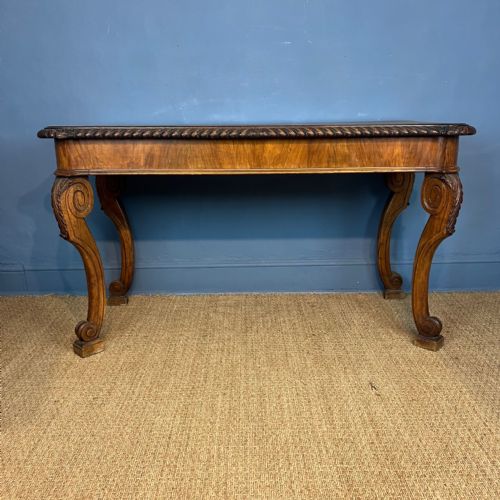


Georgian Entryway Table
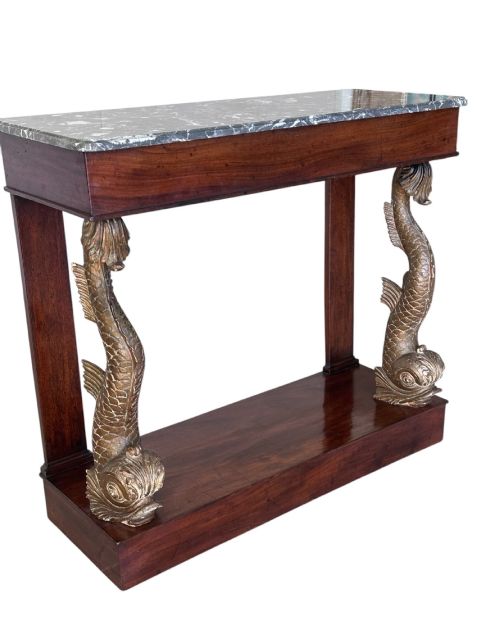
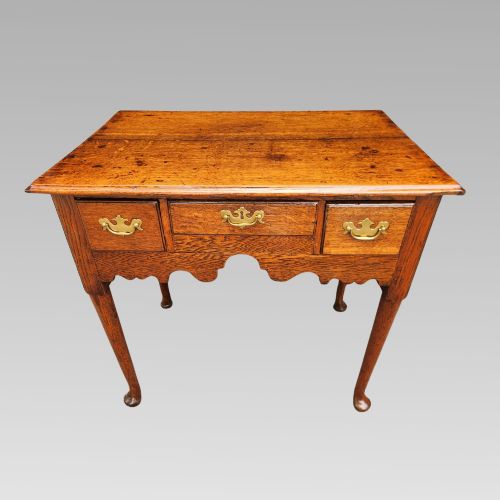
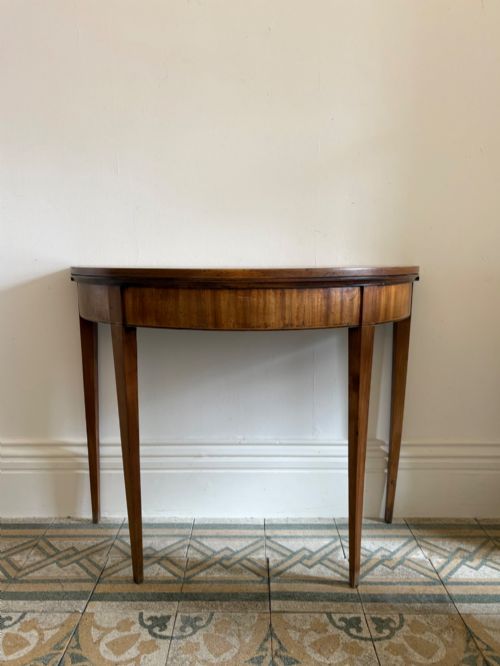
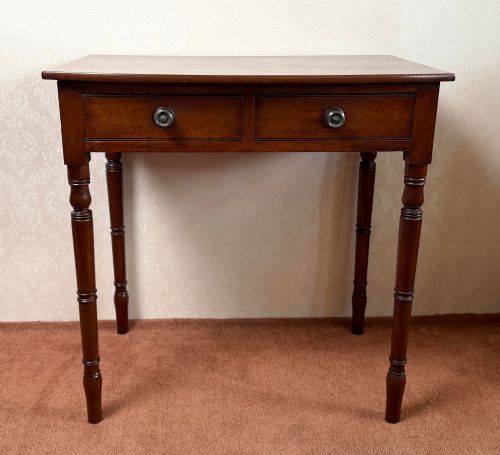
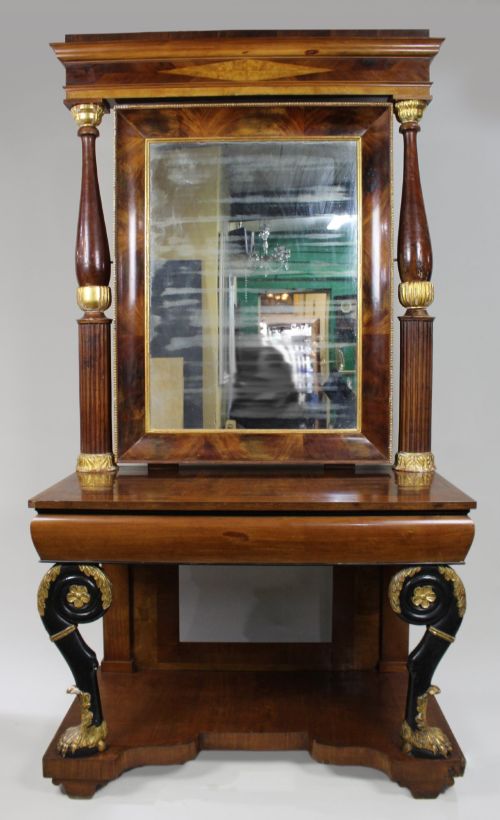
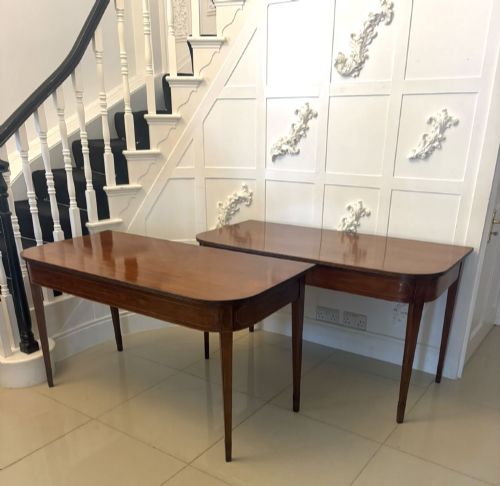
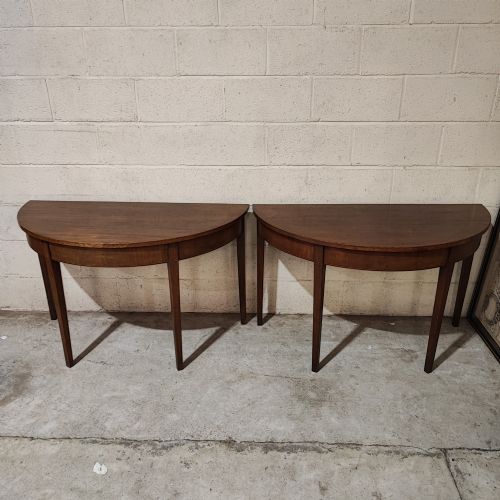
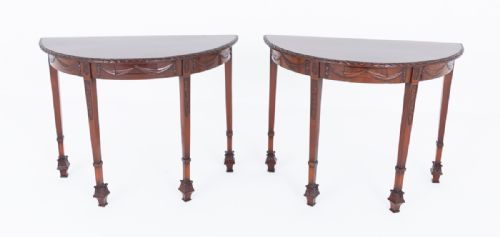
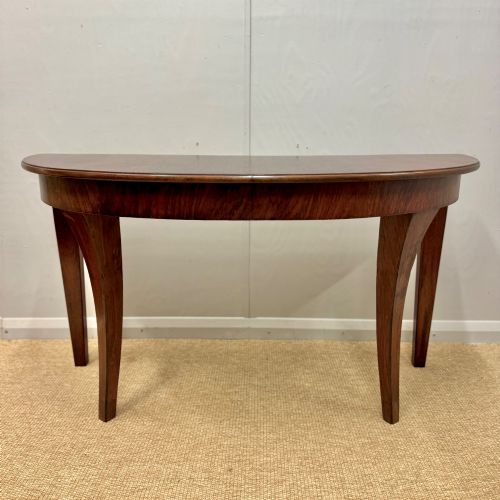
A georgian entryway table commands a hallway with solid mahogany, curved demi-lune shapes, and refined neoclassical lines.
Georgian Entryway Table
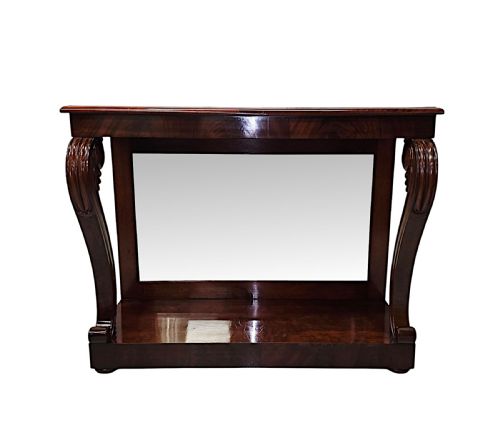
When buyers search for a georgian entryway table, they encounter console tables, side tables, and centre tables designed for narrow spaces like halls and corridors. These forms serve as functional surfaces for lamps or decorative objects while establishing a formal tone near an entrance.
The pieces appearing on this page span the Georgian, Regency, and George III periods, alongside later revival styles from the nineteenth and early twentieth centuries. Mahogany remains the dominant wood, appearing in bowfront, D-shaped, and demi-lune formats that fit neatly against a wall.
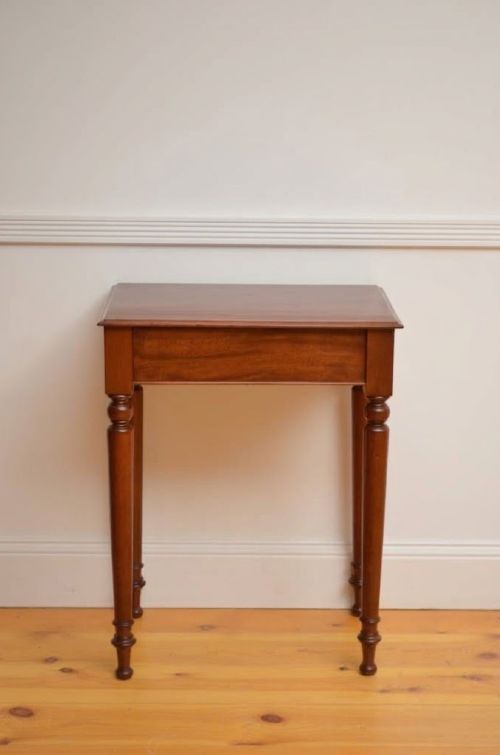
Makers and workshops constructed these tables to anchor entryways with architectural presence, utilising clever geometry like drop leaves or fold-over tops to save space. Side tables and hall tables from this tradition offer slender proportions suited to domestic corridors both historic and modern.
Materials and Construction
Cabinetmakers relied heavily on figured mahogany, often enhancing the timber with satinwood crossbanding, delicate inlay, and parcel gilt highlights. These surfaces display rich grain patterns shaped by skilled hands using traditional hand-planing and joining methods.
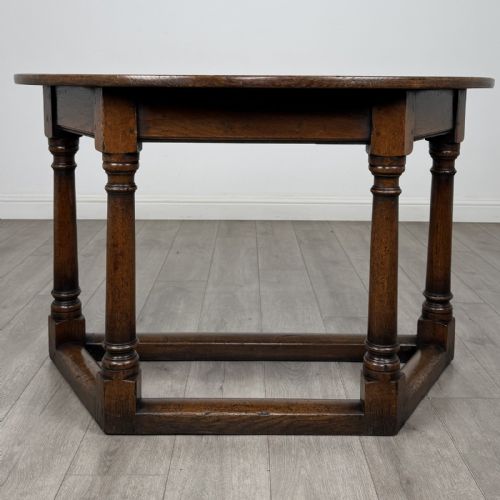
Some examples incorporate alternative hardwoods like rosewood, walnut, pollard oak, and painted wood, occasionally paired with heavy marble tops. Brass details, carved mahogany foliage, and concave or turned legs provide structural support and ornamental contrast.
Georgian Entryway Table Retail Price Guide 2026
Typical asking prices for georgian entryway table among the pieces listed under this phrase on Sellingantiques today, from the lower quarter to the upper quarter. They describe what is for sale here now, not the wider market.
Listings feature mahogany, satinwood, rosewood, and marble across Georgian, Regency, and nineteenth-century periods.
Distinguishing Quality
Quality rests in the selection of timber figures, such as highly figured mahogany veneers and crisp satinwood crossbanding that catch the light. Superior examples display sharp, hand-carved details along the frieze and legs rather than soft, moulded substitutes.
Proportion and structural integrity define the upper tier of these tables, where balanced demi-lune or bowfront shapes meet robust internal framing. The integration of decorative elements like parcel gilding or marble tops elevates certain pieces above standard utilitarian furniture.
Gillingtons of Dublin
The Georgian Entryway Table Glossary
- Demi-lune
- Half-moon shape. These tables sit flush against a wall to maximise floor space in narrow halls.
- Crossbanding
- A strip of veneer applied perpendicularly to the grain of the main surface. It creates a contrasting border around tabletops.
- Bowfront
- A convex curved front facade. This shape softens the corners of furniture placed in passage areas.
- Console table
- A table supported by wall brackets or console legs. It is designed specifically for display against a wall.
- Parcel gilt
- Partially gilded with gold leaf. This technique highlights carved wooden details and mouldings.
Georgian Entryway Table: Frequently Asked Questions
What is a georgian entryway table?
A georgian entryway table is a narrow console, hall, or side table designed to furnish corridors and entrance spaces during the eighteenth and nineteenth centuries.
These pieces typically feature shallow depths, flat backs for wall placement, and decorative wood surfaces like mahogany or satinwood.
How were these tables used?
Original homes utilised these tables in hallways to hold lighting, visiting card trays, or decorative ornaments upon arrival.
Today, they serve a similar purpose in modern homes, providing a surface for keys and lamps without blocking narrow thoroughfares.
How do I tell periods apart?
Georgian and George III pieces generally showcase classical mahogany construction with understated elegance and restrained carving. Later Regency and nineteenth-century interpretations introduce bolder elements like rosewood, pollard oak, brass inlay, and marble tops.
Revival pieces from the twentieth century often replicate these earlier proportions while utilising updated finishing techniques.
Will a demi-lune table fit a small hall?
Demi-lune tables feature a semi-circular top and flat back, allowing them to project minimally into room space. Their curved fronts eliminate sharp corners in tight entryways.
Checking the specific depth measurements ensures the table clears surrounding doors and foot traffic.