





Georgian Entryway Console Table
A georgian entryway console table brings historic proportion to a hall, offering a narrow surface designed specifically for compact spaces.
Georgian Entryway Console Table
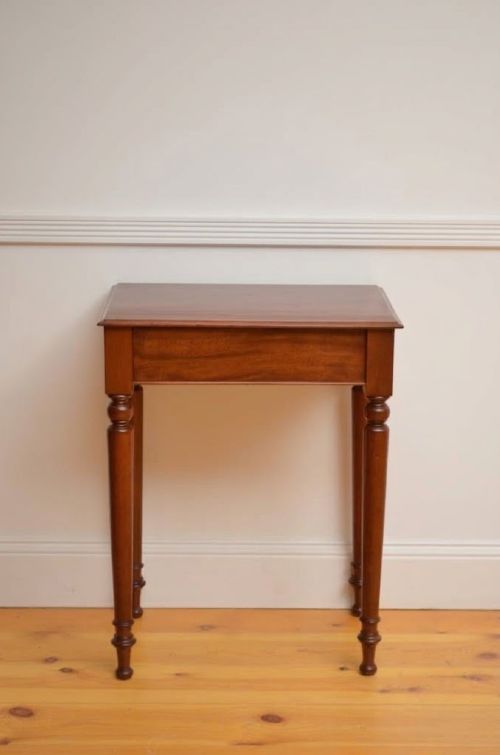
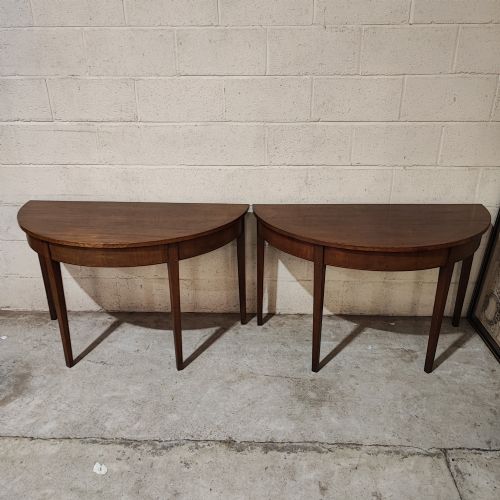
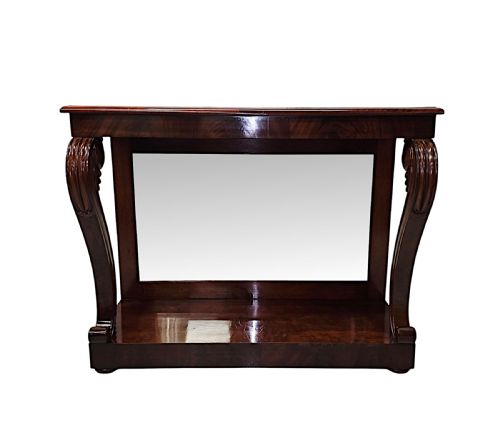
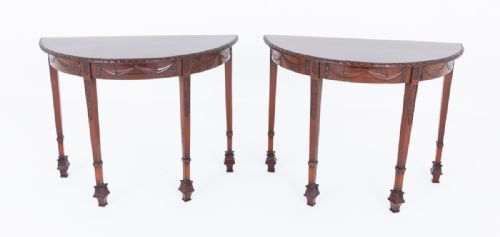
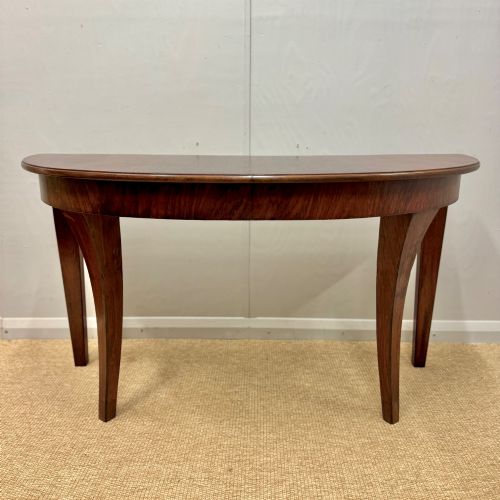
A georgian entryway console table takes several distinct shapes across the period, most commonly appearing as demi-lune, D-shaped, or bowfront forms designed to stand flush against a wall. These pieces frequently function as side tables, hall tables, or tea tables within domestic interiors.
The pieces on this page span the Georgian, George III, and Regency eras, alongside later revivals from the nineteenth and twentieth centuries. Mahogany forms dominate the selection, accompanied by variations in satinwood, oak, walnut, and painted wood.
Makers and designers of the broader period sometimes followed specific regional interpretations, such as Irish variants or styles attributed to workshops like Gillingtons of Dublin. Buyers encounter both authentic eighteenth-century examples and later interpretations built in the Georgian and Regency styles.
Materials and Construction
Cabinetmakers utilised dense timbers like mahogany, walnut, and oak as the structural base, often applying finely grained satinwood veneers and decorative crossbanding to top surfaces. Brass fittings and marble tops appear on select Regency and nineteenth-century variants.
Surface decoration relies on natural wood figures, painted finishes, and carved details rooted in Neoclassical and George III design vocabularies. Fold-over mechanisms and D-end configurations demonstrate the precise joinery required for adaptable table designs.
Listings feature mahogany as the dominant wood, alongside satinwood, oak, walnut, brass, marble, and painted finishes.
Assessing Quality and Execution
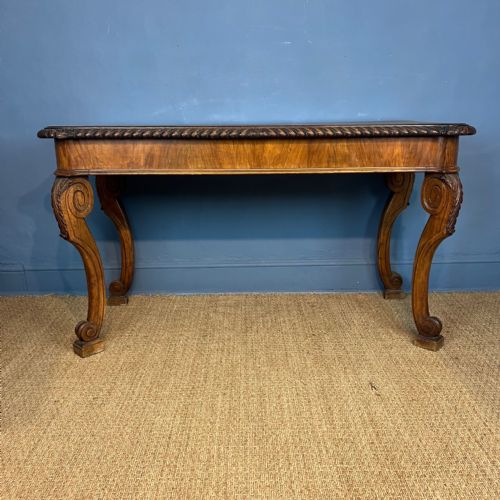
The distinction between standard pieces and exceptional examples rests upon the choice of timber figure, such as highly figured mahogany or intricate satinwood crossbanding. Finer tables exhibit crisp carving, well-proportioned concave or turned legs, and harmonious proportions.
Construction integrity distinguishes original period furniture from later revivals, visible in the handling of internal framing, joints, and secondary woods. The refinement of decorative details like inlay, giltwood accents, and marble inserts further separates standard production from top-tier workshop output.
Gillingtons of Dublin
The Georgian Entryway Console Table Glossary
- Demi-lune
- Half-moon shape. This semi-circular profile allows the table to sit flat against an entryway wall while occupying minimal floor space.
- Crossbanding
- A strip of veneer applied to the border of a tabletop. The grain runs perpendicular to the main surface to create a framed visual effect.
- Bowfront
- A convex curving front edge. This configuration softens the rectangular geometry typical of standard hall tables.
- D-end
- A table end shaped like the letter D. Pairs of these tables can be separated or joined together depending on the room layout.
- Giltwood
- Wood carved and covered with a thin layer of gold leaf. This finish appears frequently on high-status Regency console tables.
Georgian Entryway Console Table: Frequently Asked Questions
How do I style a console table in a small hallway?
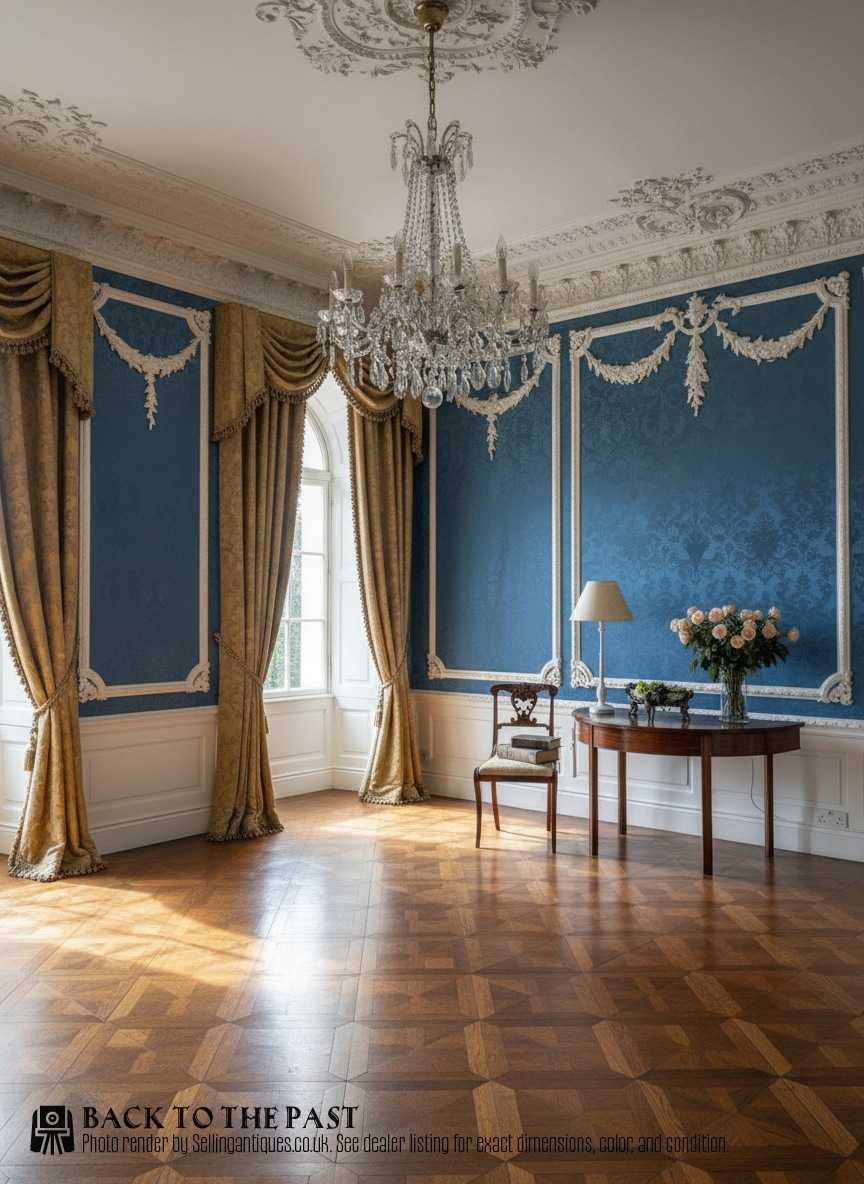
Select a demi-lune or bowfront shape with a shallow depth to ensure clear passage through the entryway. Pair the table with a simple mirror or lamp to balance the vertical space.
Allow the timber grain and form to remain the primary focus by keeping surface decoration minimal.
Were these tables originally used in entryways?
Period console and side tables served multiple reception rooms, including dining spaces, drawing rooms, and grand hallways. Their narrow profiles made them naturally suited for transitional areas where floor space was restricted.
Over time, modern domestic habits redefined these surfaces specifically for entryway use.
How do I tell an original Georgian table from a later revival?
Examine the construction methods, secondary timbers, and wear patterns underneath and inside the frame. Eighteenth-century examples display hand-cut joinery and ageing consistent with daily use.
Nineteenth- and twentieth-century revival pieces often utilise machine-sawn components and standardised hardware.
What is the difference between a console table and a side table?
Console tables traditionally required wall attachment or specific leg placement designed to stand flat against a vertical surface. Side tables often featured four freestanding legs and greater mobility.
In modern cataloguing, the terms frequently overlap due to shared forms like the demi-lune.