
Georgian Engraved Wine Glass
A georgian engraved wine glass brings the subtle craft of eighteenth-century drinking vessels directly to the modern table.
Georgian Engraved Wine Glass
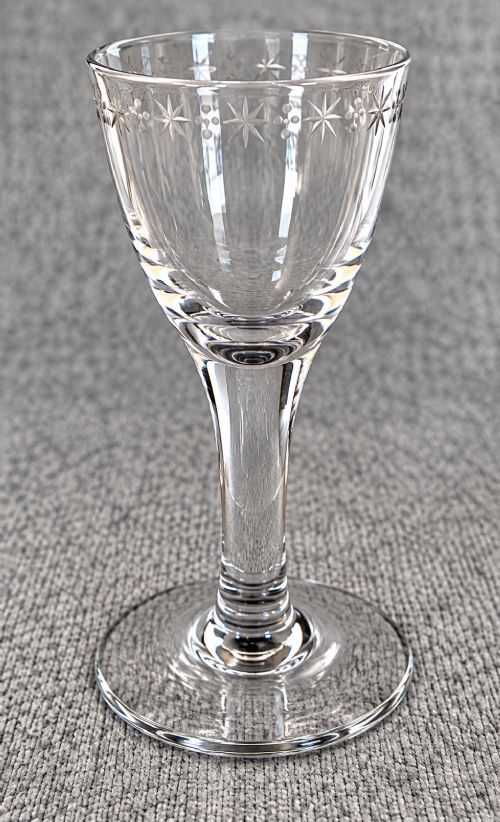
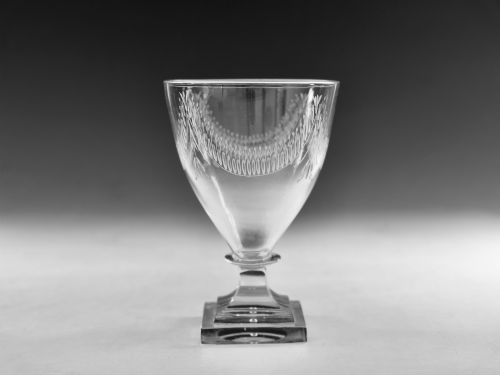
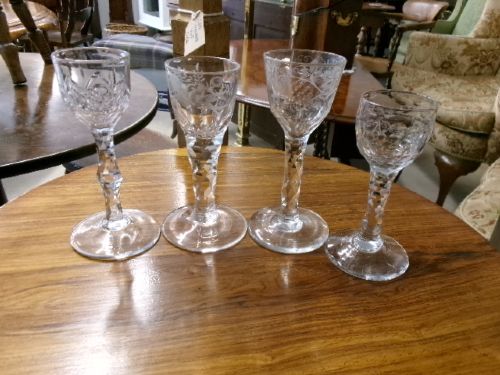
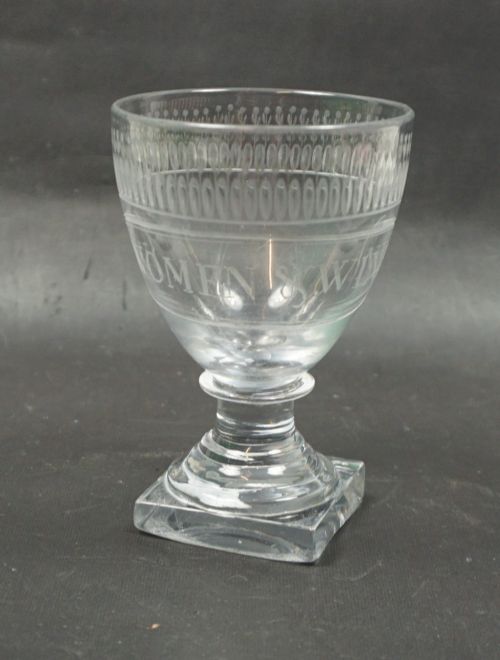
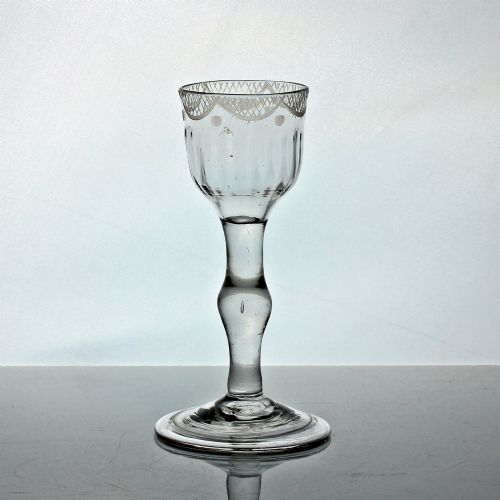
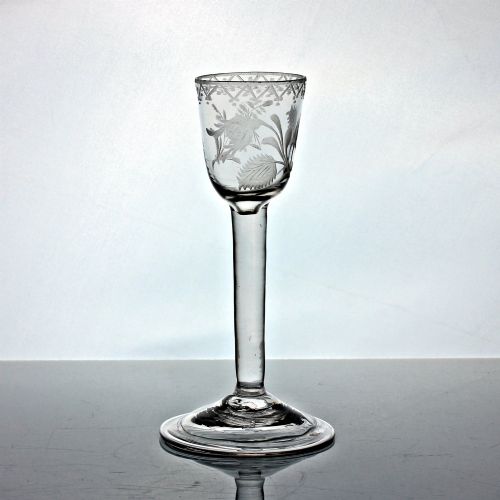
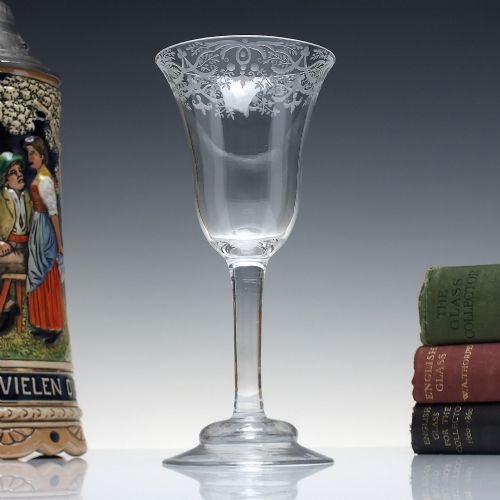
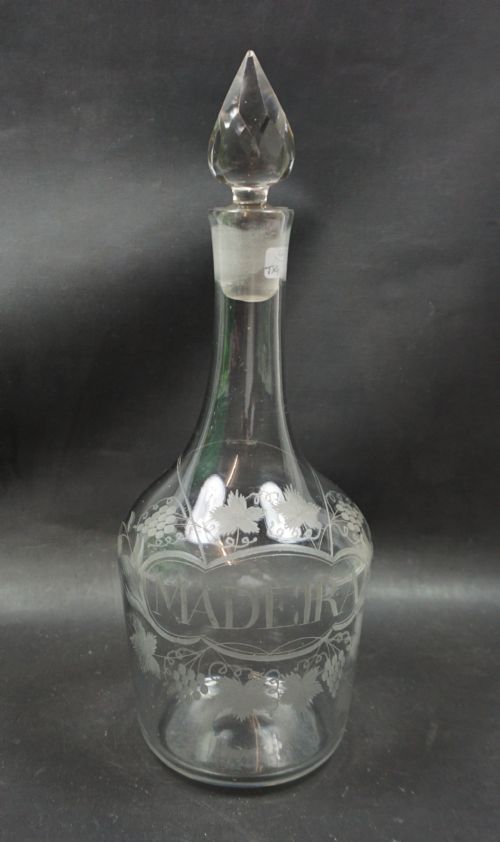
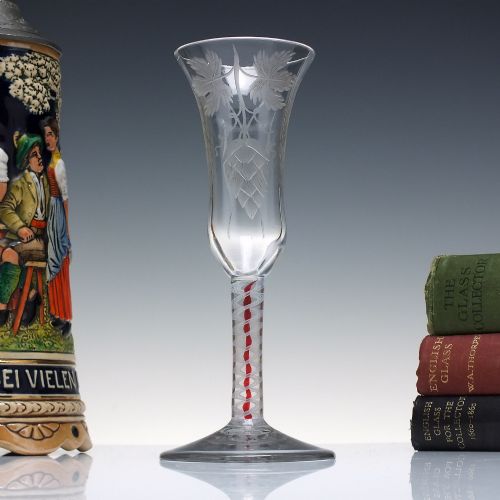
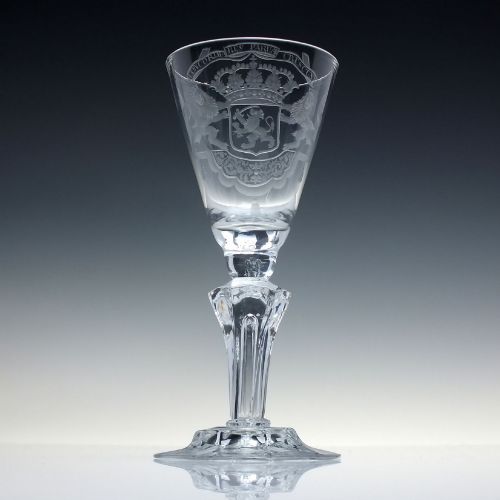
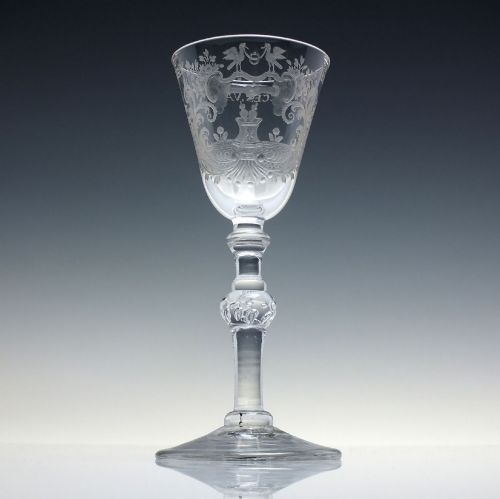
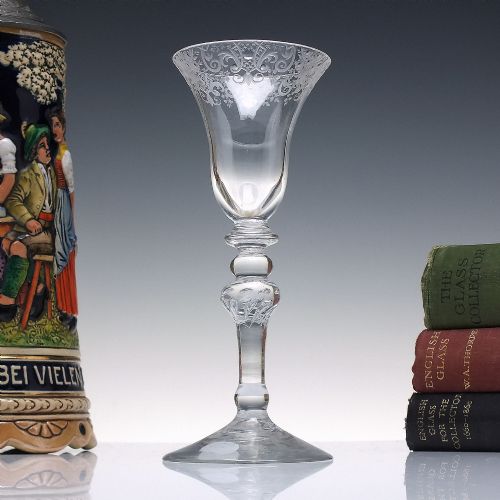
A georgian engraved wine glass encompasses drinking vessels produced primarily during the eighteenth and early nineteenth centuries, taking forms from plain stem wine glasses to heavy rummers and decanters. Buyers encounter pieces featuring diverse bowl shapes, including ogee, rounded funnel, and pan top formats resting upon square bases or folded feet. The selection reflects domestic and ceremonial use across England, spanning periods from early balusters to later facet cut stems.
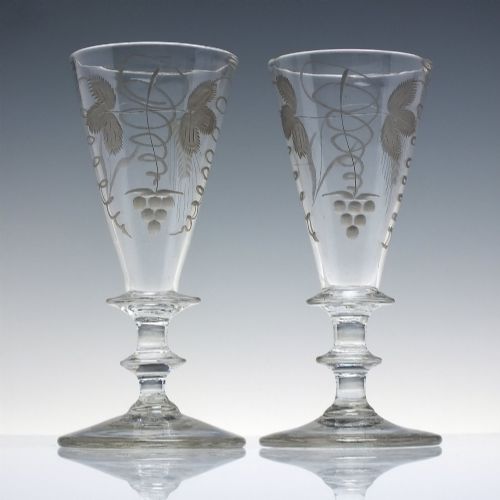
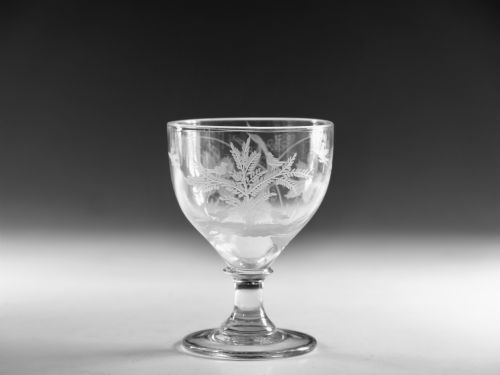
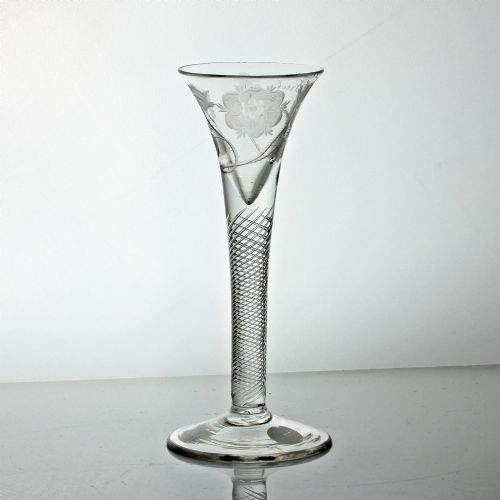
Engraved ornamentation on these glasses ranges from symbolic Jacobite motifs and armorials to floral sprays and hunting scenes. Examples include balustroid stems, air twists, and opaque twists that demonstrate the varied output of British glasshouses. Rummers, dram glasses, and heavy goblets appear alongside slender wine glasses and decanters.
The material composition primarily involves lead glass and clear crystal, sometimes incorporating coloured glass variants like amethyst, green, or red. Pieces from the Regency era and around eighteen hundred sit alongside mid-eighteenth-century work, showing continuity in British glassware production.
Materials and Techniques
Makers utilised lead glass and flint glass, mixing lead oxide into the batch to increase brilliance and weight. This heavy crystal allowed artisans to form thick bases, robust stems, and resonant bowls capable of holding intricate surface decoration.
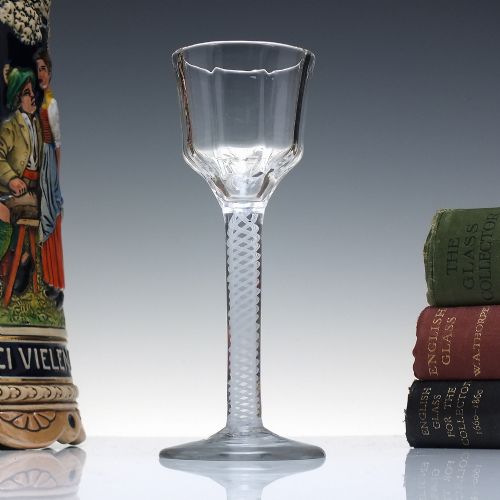
Stems were shaped using various techniques, including air twist and opaque twist methods where trapped air or white enamel threads formed spirals inside the glass. Other pieces relied on plain stems, baluster forms, or faceted cutting.
Decoration was applied using diamond point engraving or copper wheel engraving to incise floral patterns, portraits, and inscriptions into the surface of the bowl. Nut moulding and rib moulding further shaped the glass body while it was hot.
Some glasses were engraved with hidden political toasts that only revealed their true loyalties under a steady flame.
Standards of Execution
Quality in a georgian engraved wine glass rests on the clarity of the metal and the precision of the stem formation. Superior pieces display smooth, unblemished crystal without excessive internal bubbles or cloudiness.
The crispness and depth of the wheel engraving determine the artistic success of the vessel. Finer examples exhibit confident, detailed lines in complex armorials, portraits, or botanical sprays rather than shallow, hesitant scratching.
Proportion and balance dictate the integrity of the form, from the weight distribution in a heavy baluster to the alignment of facet cuts on a stem. The symmetry of the foot and the finish of the rim complete the assessment of the piece.
James Giles
The Georgian Engraved Wine Glass Glossary
- Air twist
- A glass stem containing spiral channels of trapped air created during the drawing process. This technique gives the stem a shimmering internal pattern.
- Opaque twist
- A stem containing white or coloured enamel glass threads twisted into intricate internal opaque threads. These threads create linear patterns inside clear lead glass.
- Baluster
- A heavy, swelling stem shape reminiscent of architectural pillars found on eighteenth-century drinking vessels. Such stems often feature knops and collar rings.
- Facet cut
- Geometric surface cutting applied to stems and bowls to catch and refract light. This method became popular in the later eighteenth and Regency periods.
- Rummer
- A large, sturdy drinking glass with a capacious bowl used for ale, wine, or punch. These vessels often sit on square lemon squeezer bases or heavy foot rings.
Georgian Engraved Wine Glass: Frequently Asked Questions
What is an air twist stem?
An air twist stem contains elongated bubbles drawn into spirals inside the glass. Makers achieved this effect by puncturing a hot glass lump with air before stretching and twisting the metal.
This technique produced delicate internal patterns that caught the candlelight during eighteenth-century dining. Collectors value these stems for their lightness and optical movement.
How do I identify a Jacobite glass?
Jacobite glasses feature covert political symbolism supporting the exiled Stuart dynasty. Common motifs include the six-petal rose, buds, oak leaves, and inscriptions like Fiat.
These symbols allowed secret toasts to be drunk safely among sympathisers. The engraving style requires careful examination against known historical examples.
What is a rummer used for?
A rummer is a large, heavy drinking glass designed for ale, wine, or punch during the Georgian period. Their capacity and sturdy construction suited tavern and domestic hospitality alike.
Most rummers feature wide bowls supported by short stems and thick foot bases. They represent the more robust side of eighteenth-century glassware.
Why does lead crystal matter?
Lead crystal contains added lead oxide which increases the density, refractive index, and resonance of the glass. This formulation allowed makers to fashion thicker walls and sharper cut facets.
Objects made from lead glass feel heavier in the hand and produce a clear bell-like ring when tapped gently. This material defined the golden age of British glassmaking.