

Engraved Crystal Glass
Engraved crystal glass brings tactile weight and sharp wheel-cut detail to the table, spanning Georgian rummers to Victorian decanters.
Engraved Crystal Glass
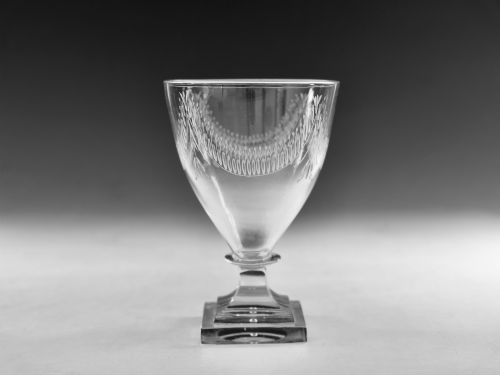
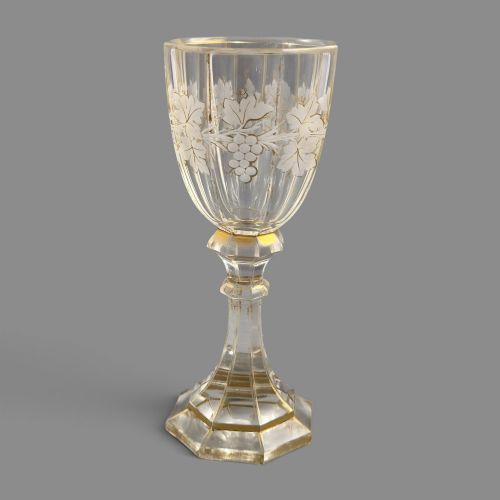
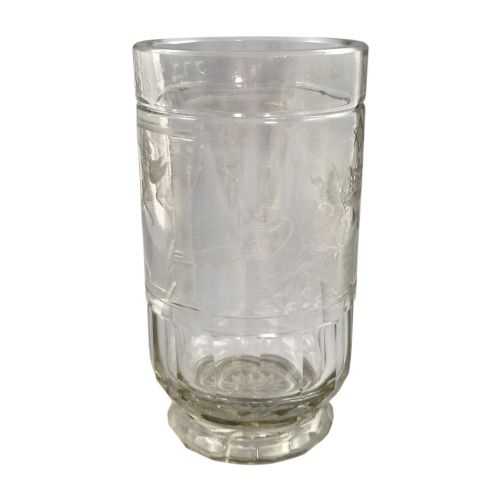
When you search for engraved crystal glass, you encounter functional tablewares and display vessels shaped from heavy lead-infused metal. The selection spans utilitarian serving pieces and drinking vessels originating across England, Bohemia, and France.
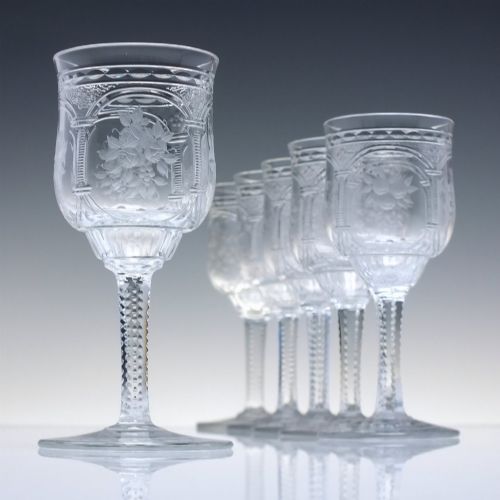
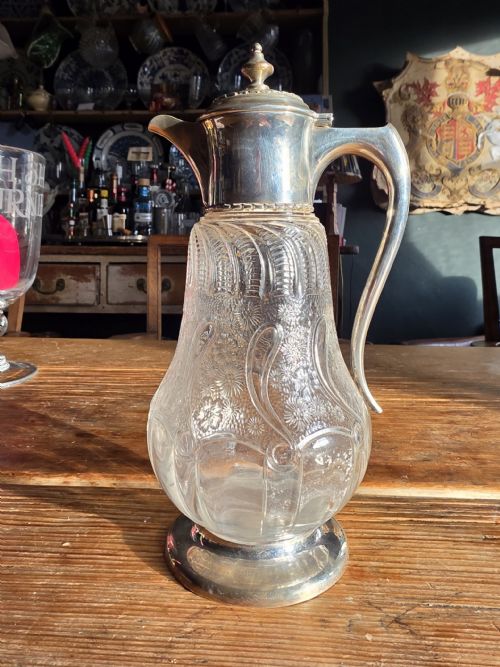
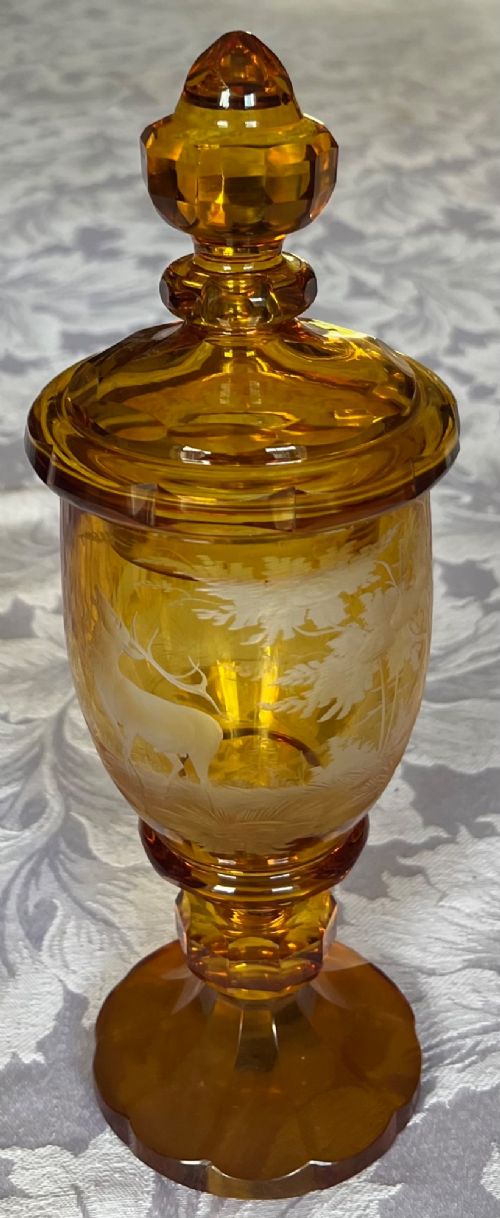
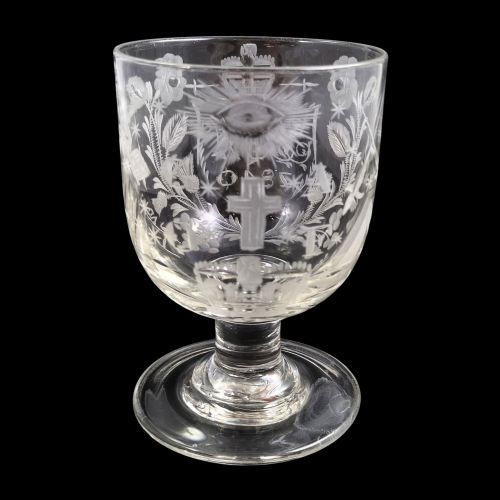
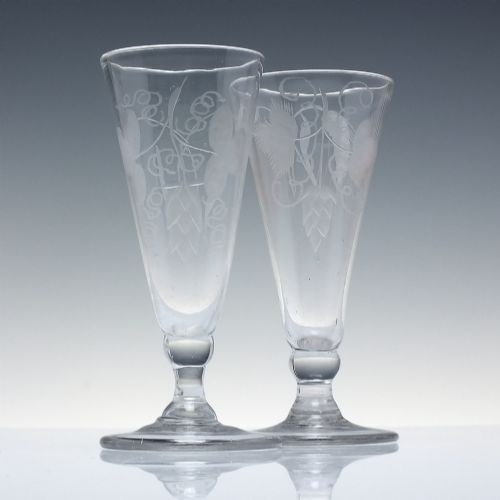
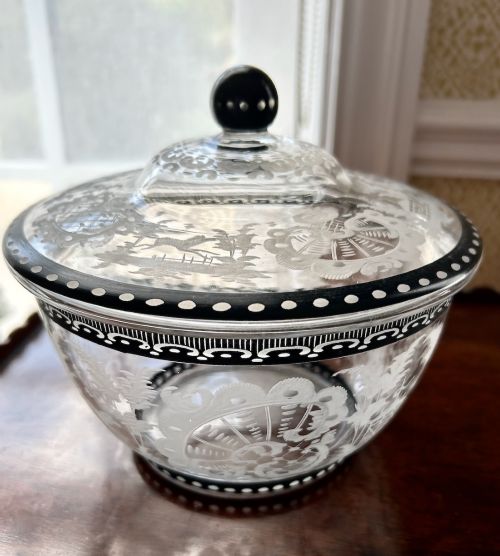
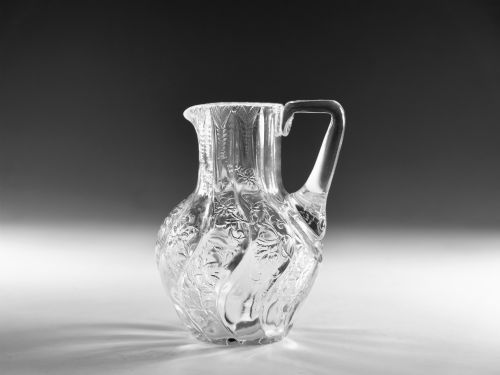
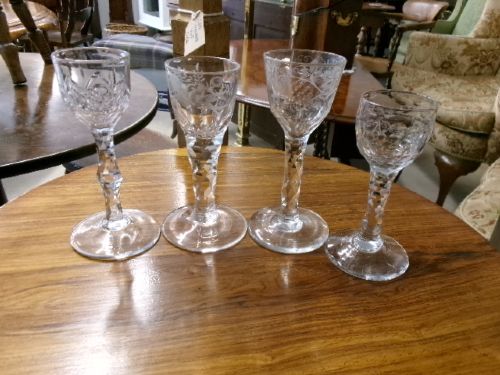
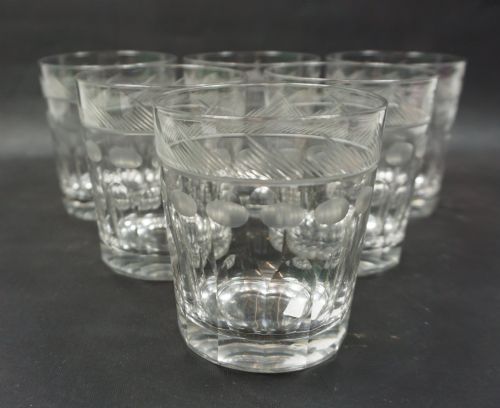
Most examples you meet on this page date from the Georgian and Victorian eras, alongside Edwardian and later twentieth-century productions. Common forms include decanters, claret jugs, rummers, wine glasses, goblets, and lidded jars.
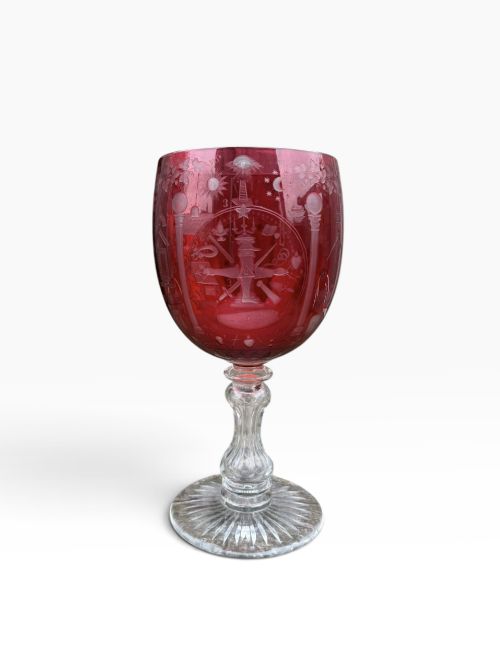
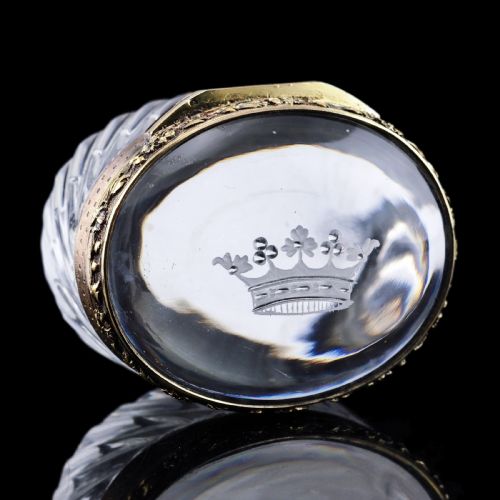
Makers utilised clear glass, coloured cranberry glass, and heavy crystal foundations, decorating the surfaces with wheel-engraving, intaglio work, and facet cutting. These items served practical dining and ceremonial functions, ranging from tavern ale consumption to formal hosting.
What varies in quality
The distinction between ordinary and superior pieces rests on the depth and precision of the wheel-engraving, alongside the clarity of the crystal metal itself. Crisp, sharply defined motifs indicate skilled handwork by accomplished cutters.
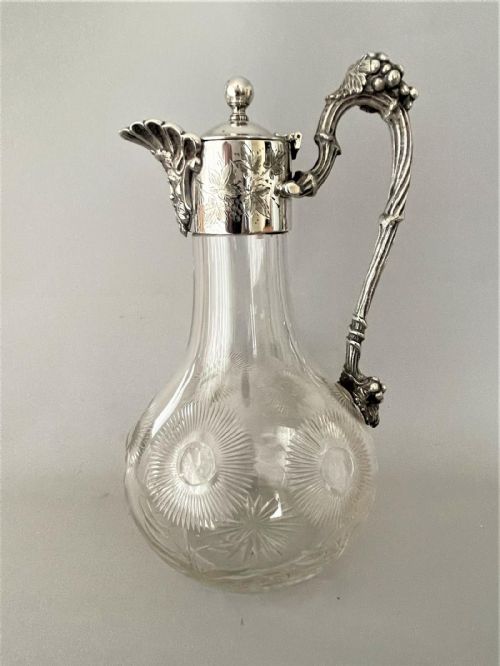
Weight distribution, metal purity, and the integration of silver-plated or solid silver mounts determine the standing of individual decanters and jugs. Intricate decorative suites and intact matched pairs command greater regard than single, heavily worn vessels.
Some eighteenth-century vessels bear secret anti-Jacobite toasts etched into the glass to test loyalties over wine.
Asprey and Co. Ltd·Stevens and Williams·Moser·Webb Corbett
The Engraved Crystal Glass Glossary
- Lead Crystal
- A heavy glass variant containing lead oxide, which increases brilliance, softness for engraving, and overall weight.
- Rummer
- A large, sturdy drinking glass popular in the Georgian and Victorian periods, typically used for ale or wine.
- Intaglio
- A technique where the design is carved into the surface of the glass rather than raised above it.
- Claret Jug
- A pouring vessel designed for wine, frequently fitted with silver-plate or silver mounts, handles, and hinged lids.
- Air Twist
- An internal spiral thread of tiny air bubbles trapped within the stem of an eighteenth-century drinking glass.
Engraved Crystal Glass: Frequently Asked Questions
How do I clean old crystal?
Wash pieces by hand using warm water and mild detergent, avoiding sudden temperature changes that can crack historical glass.
Dry them immediately with a lint-free cloth to prevent water spots on the cut and engraved surfaces.
Were these glasses used daily?
Georgian and Victorian households utilised these vessels for formal dining, toasts, and tavern gatherings depending on their size and form.
Heavier rummers and decanters served practical hosting duties, while delicate air-twist wine glasses were reserved for dining tables.
How do I date a glass?
Examine the manufacturing traits, such as pontil marks, stem construction, and the specific composition of the lead metal.
Engraving styles and mount hallmarks also provide reliable chronological markers for distinguishing Georgian pieces from later Victorian work.
What is intaglio engraving?
Intaglio engraving involves sinking the decorative pattern below the outer plane of the glass using small rotating wheels.
This technique creates deep, tactile motifs that catch the light differently than superficial surface etching.