
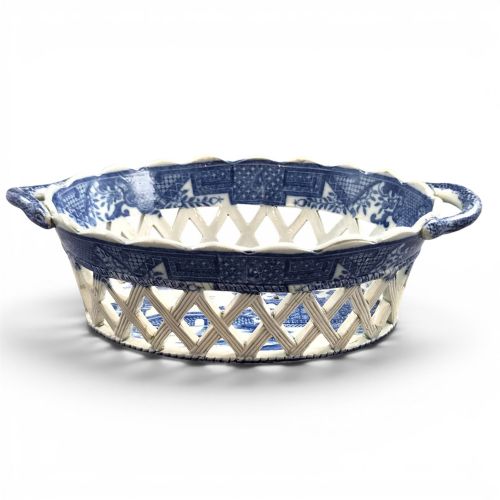


Georgian English Earthenware
Georgian english earthenware brings robust utility and hand-painted charm to the table, spanning tin glaze, creamware, pearlware and transfer-printed ironstone.
Georgian English Earthenware
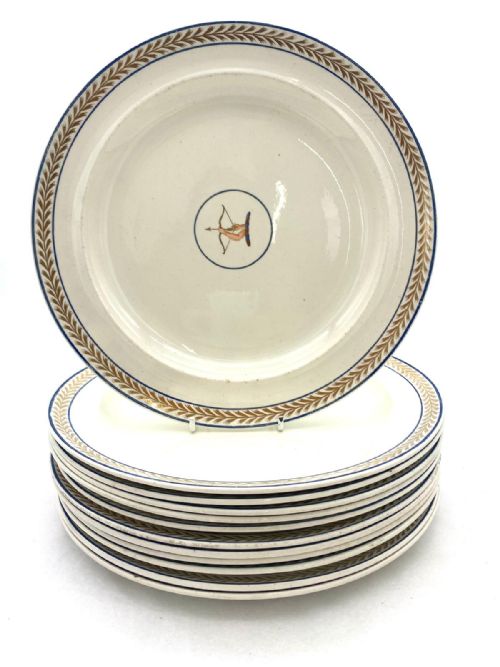
When you search for georgian english earthenware, you meet a utilitarian and decorative domestic pottery tradition spanning the eighteenth and nineteenth centuries. These pieces cover everything from everyday creamware plates and pearlware figures to large tin-glazed chargers and transfer-printed tureens.
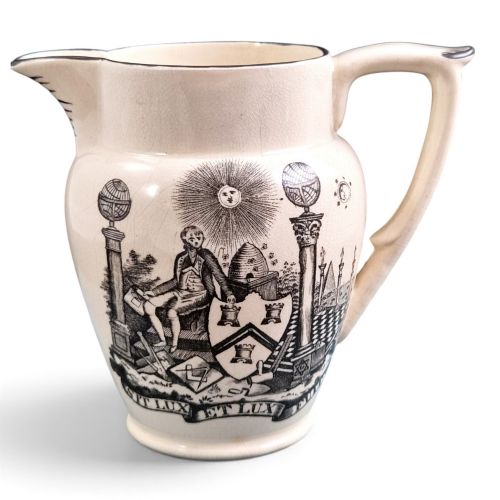
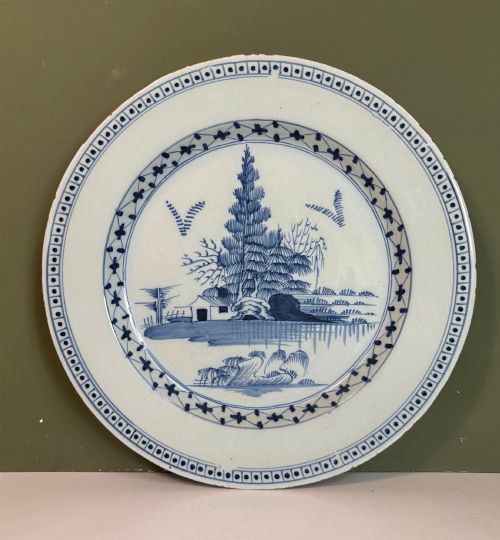
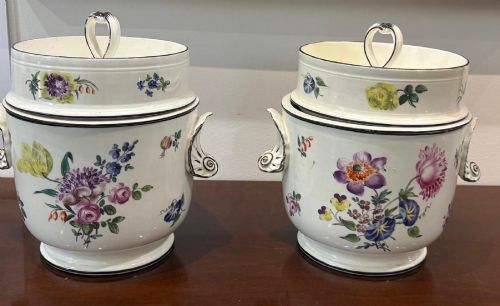
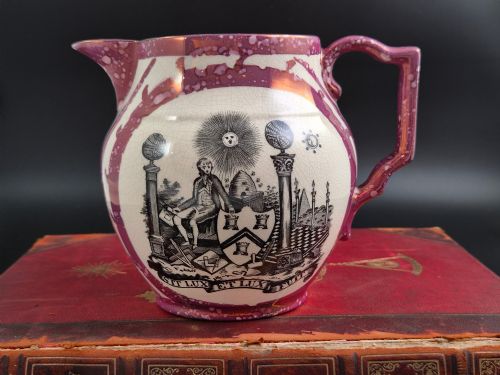
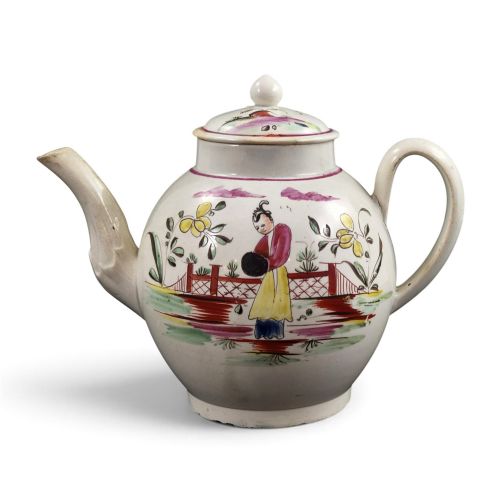
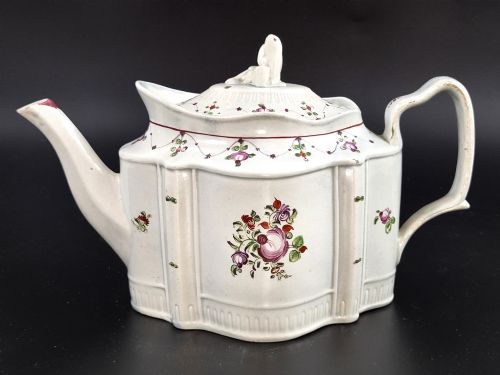
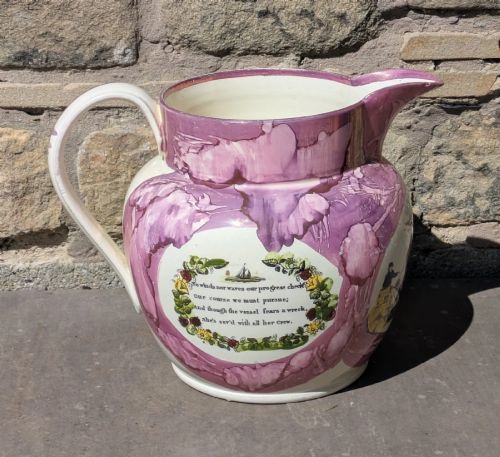
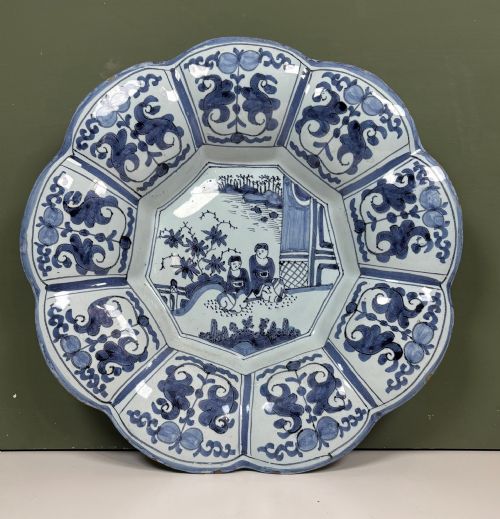
The objects on this page lean heavily toward utilitarian forms like jugs, teapots, dishes, and chestnut baskets alongside decorative figures and chargers. Many bear specific motifs such as masonic symbols, maritime scenes, armorial bearings, and chinoiserie landscapes.
Most examples originate from Staffordshire potteries and associated regional factories, reflecting the rapid industrialisation and refinement of British ceramic bodies during the Georgian and Regency periods. The variety includes slipware, ironstone, and specialist wares produced for both domestic dining and display.
How they were made
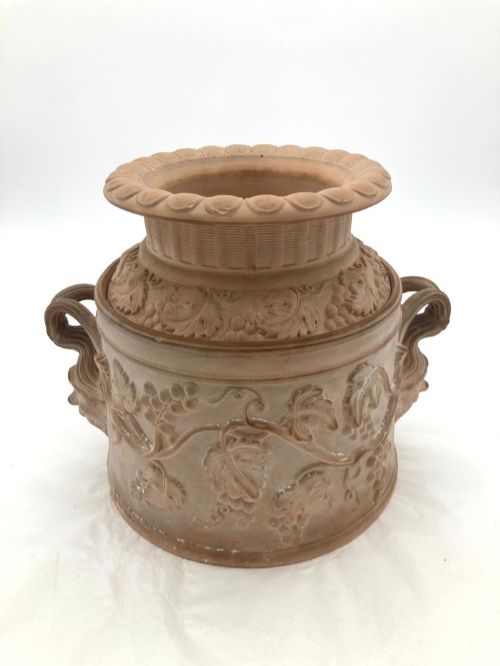
Potters shaped these vessels from refined earthenware bodies, utilising creamware, pearlware, and terracotta before applying specialised glazes such as tin glaze or pink splash lustre. The surfaces were then hand-painted in polychrome or decorated using copper-plate transfer printing in blue, magenta, or black.
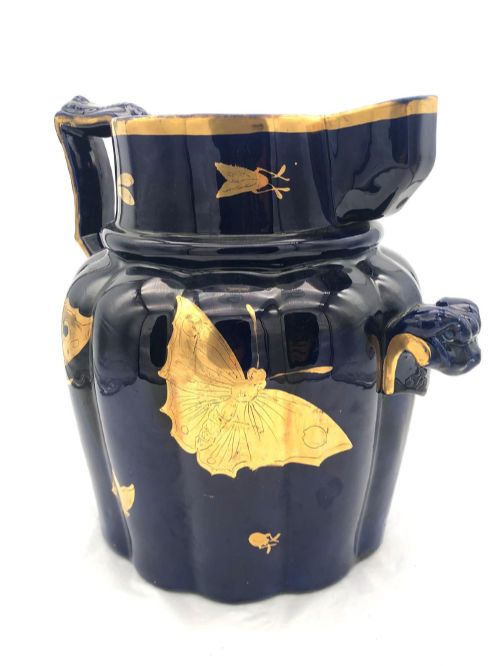
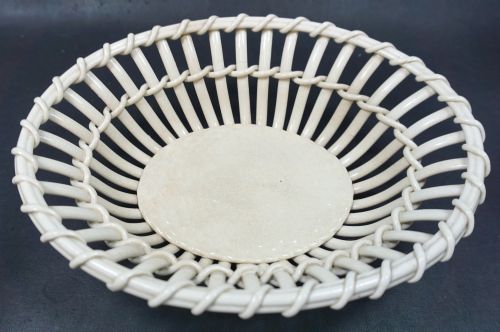
Complex forms like chestnut baskets, reticulated ice pails, and footbath jugs involved piercing, moulding, and assembly by hand before kiln firing. Specialist vessels often incorporated moulded details such as widow finials, applied figures, or internal surprise elements like frogs.
Object forms span functional tableware like chestnut baskets and hot-water plates alongside commemorative masonic and maritime jugs.
What varies in quality
Quality rests in the crispness of the moulded relief and the clarity of the transfer print or hand-painted brushwork. Superior pieces display precise registration in multi-coloured designs and careful finishing of reticulated or pierced rims.
The refinement of the earthenware body itself separates standard domestic items from exhibition pieces, with finer creamware and pearlware bodies showing thin, even walls and smooth, consistent glaze application.
Davenport·Wedgwood·Spode·Robert Hamilton·John Rogers and Son·Stubbs·J and R Clews·John and Richard Riley
The Georgian English Earthenware Glossary
- Creamware
- A refined, pale yellow earthenware perfected by Josiah Wedgwood and other Staffordshire potters during the eighteenth century.
- Pearlware
- An earthenware body with a bluish-tinted glaze designed to mimic Chinese export porcelain, introduced in the late eighteenth century.
- Transfer printing
- A decoration technique where an engraved copper plate transfers a design onto paper, which is then stamped onto the ceramic body.
- Tin glaze
- An opaque white glaze containing tin oxide, used on delftware to provide a smooth ground for hand-painted cobalt and polychrome decoration.
- Reticulated
- Pierced or openwork decoration cut into the clay before firing, commonly found on chestnut baskets and dessert service plates.
Georgian English Earthenware: Frequently Asked Questions
Were these earthenware pieces used daily?
Many items like dinner plates, pudding bowls, and teapots saw active service in Georgian dining rooms and kitchens. Other forms, such as large armorial jugs and decorative figures, served primarily for display or ceremonial use.
Utilitarian pieces often show the minor wear of domestic service alongside their decorative appeal.
What is a frog mug?
A frog mug is a drinking vessel featuring a small ceramic frog modelled inside the base or clinging to the rim as a surprise for the drinker. These were popular in taverns and social gatherings during the Georgian period.
The trick relied on the drinker discovering the creature only as the liquid emptied.
How should I care for antique earthenware?
Wash these pieces gently by hand in warm water using mild soap, avoiding harsh detergents and modern dishwashers entirely. Earthenware can be porous if crazed, so prolonged soaking should be avoided.
Display them away from direct heat sources and sudden temperature changes to protect the historic glaze.