



Georgian Drop Front Secretary
A Georgian drop front secretary brings architectural presence and practical writing space into a room, offering clever compartments behind a sloping or falling lid.
Georgian Drop Front Secretary
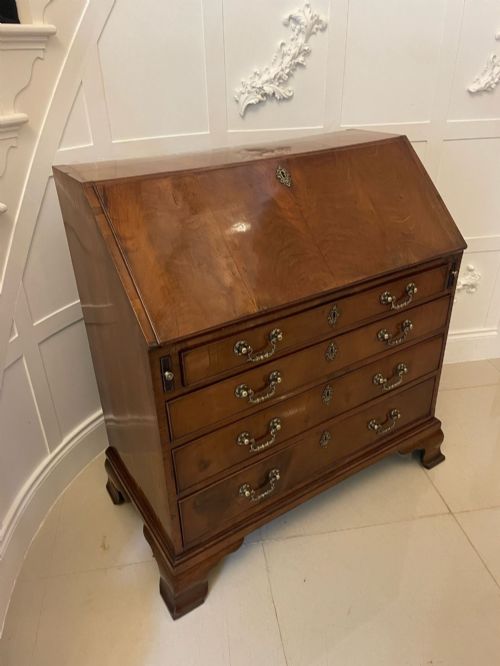
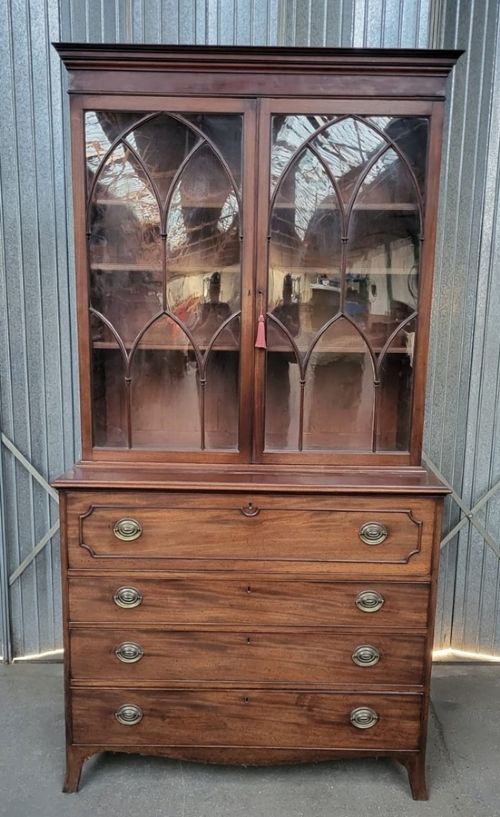
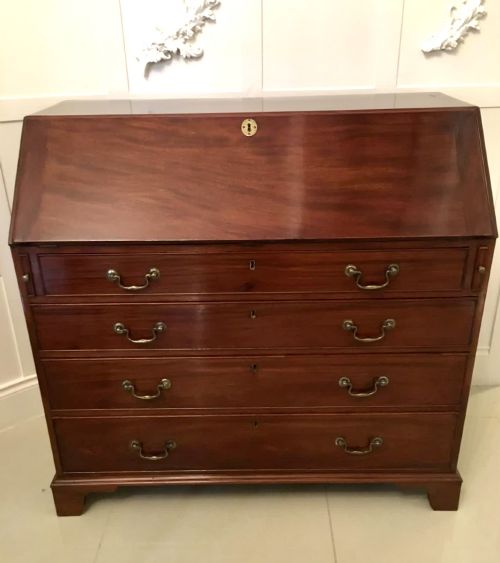
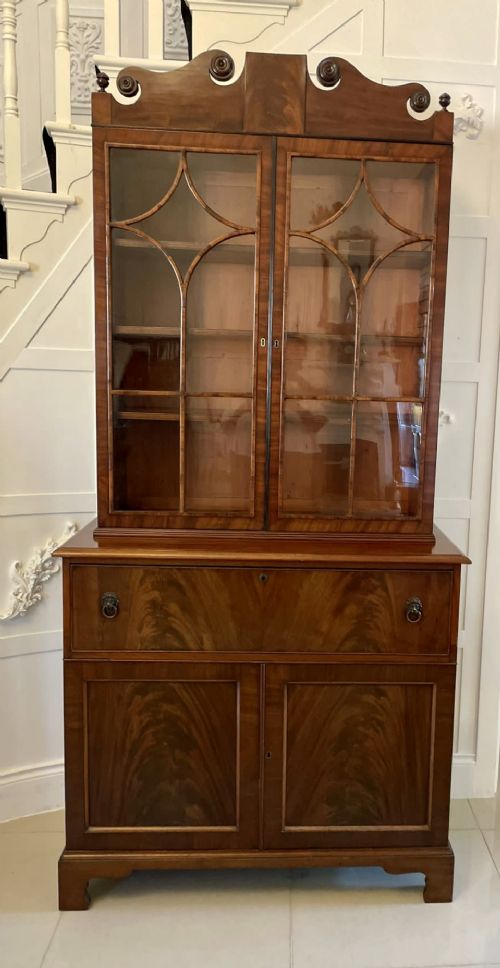
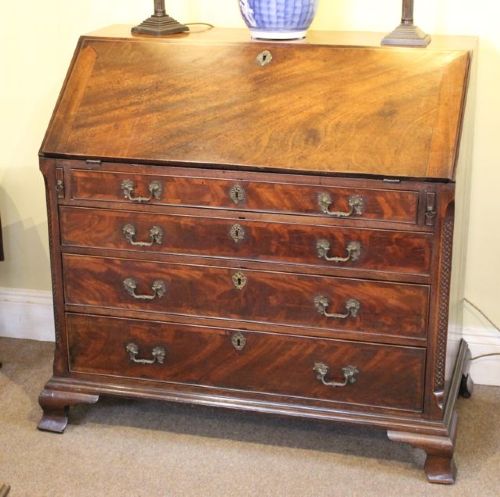
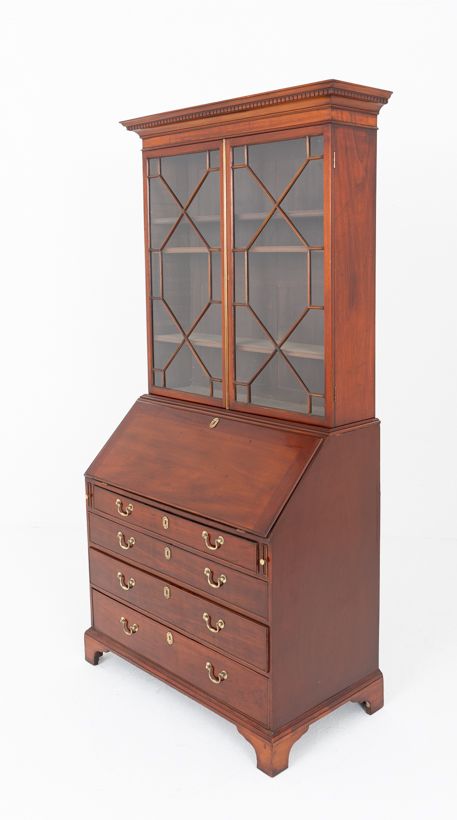
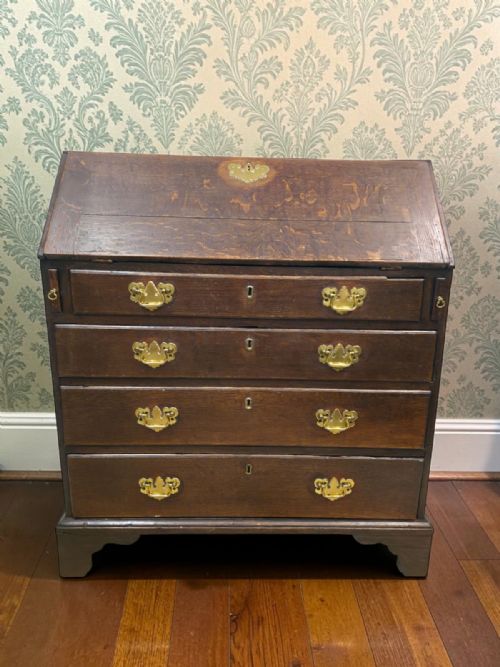
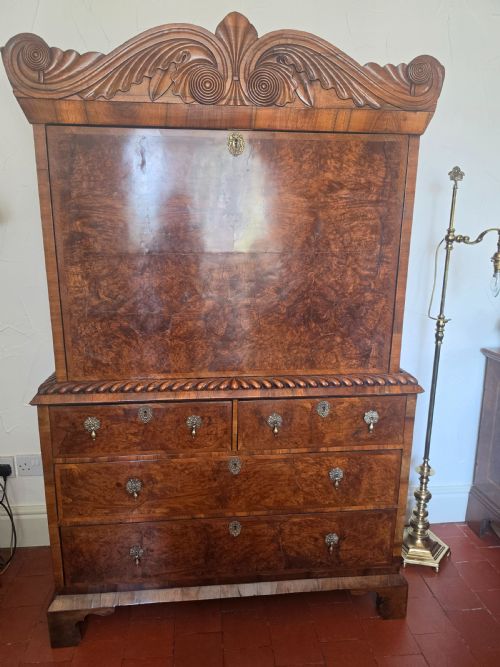
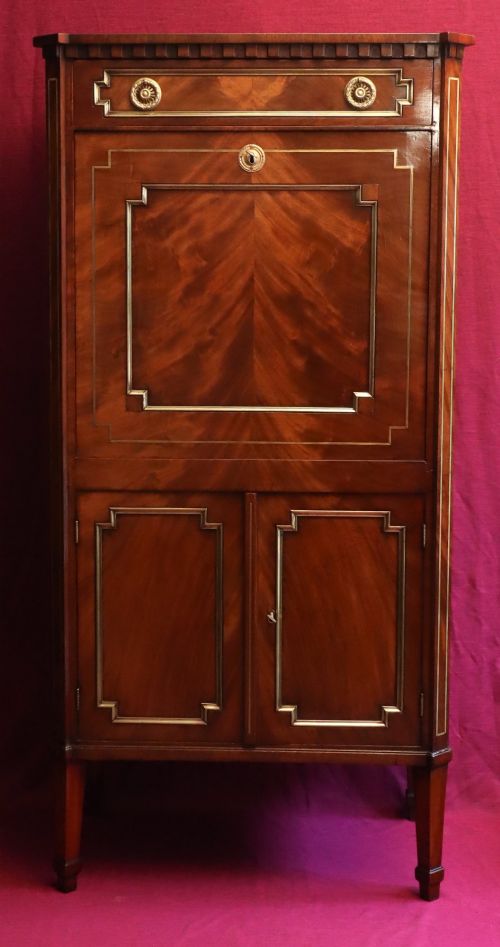
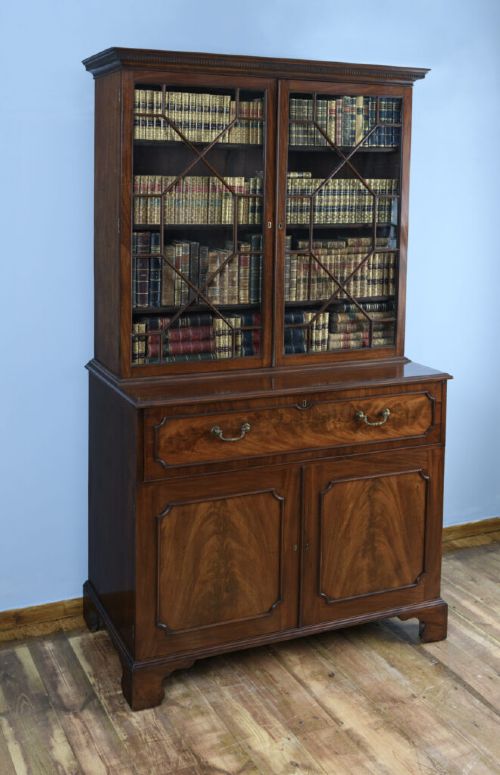
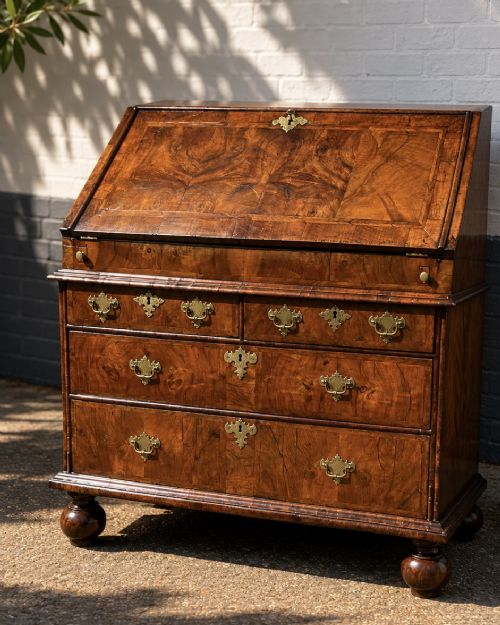
When you search for a georgian drop front secretary, you encounter a range of writing furniture spanning simple fall-front desks to towering bureau bookcases. The pieces appearing here predominantly date from the Georgian and Regency periods, alongside later revival interpretations.
The primary forms include compact bureaux, larger bureau bookcases with glazed upper cabinets, and taller escritoires. Oak and walnut examples represent earlier 18th-century making, while mahogany dominates the later Georgian decades.
Materials and construction methods
Cabinet makers utilised dense hardwoods including mahogany, oak, and walnut, frequently selecting burr veneers and satinwood for contrasting interior details. Solid timber forms the structural carcases, while fine veneers create figured surfaces on the primary writing flaps and drawer fronts.
Brass hardware such as escutcheons, drop handles, and hinges provides functional contrast to the timber. Glass appears in the upper cabinet doors of taller bookcase variants, allowing the display of books and papers.
Many drop front secretaries conceal tiny secret drawers operated by hidden spring releases, designed to guard family letters and household secrets.
Distinguishing quality across pieces
Quality rests upon the selection of timber figures, the precision of cabinet joinery, and the complexity of the internal arrangement. Pieces featuring finely figured mahogany, burr walnut, or delicate satinwood inlay demonstrate superior material choice.
The interior layout defines the standard of craftsmanship, separating basic compartments from sophisticated tiers of pigeonholes, small drawers, and secret compartments behind a central door.
Gillows of Lancaster
The Georgian Drop Front Secretary Glossary
- Bureau
- A writing desk featuring a sloping fall-front flap that opens to reveal a fitted interior of drawers and pigeonholes.
- Secretaire bookcase
- A tall cabinet combining a lower writing section with an upper bookcase enclosed by glazed doors.
- Escritoire
- A standing writing cabinet characterised by a vertical fall-front writing surface rather than an angled flap.
- Fall front
- The hinged writing flap that drops down to a horizontal position to provide a flat surface for writing.
- Bureau on stand
- A form where a compact writing bureau sits upon a separate table-like base with legs.
Georgian Drop Front Secretary: Frequently Asked Questions
How do I identify a George III bureau bookcase?
George III pieces generally display straight-grained or figured mahogany construction, often paired with astragal glazed doors on the upper bookcase section. The interior drawers within the fall-front frequently show meticulous secondary timbers like oak.
Proportions remain balanced and classical, reflecting the dominant design idioms of the later 18th century without excessive ornamentation.
Where were these secretaries placed in a period home?
These pieces found homes in private studies, libraries, and principal bedchambers where correspondence and estate management took place. The lockable drop front kept private papers secure from household staff and visitors.
Their dual function as storage cabinets and writing desks made them essential furnishings for domestic administration.
How do walnut and mahogany pieces differ in age?
Walnut furniture frequently points to the earlier 18th century, particularly the reigns of Queen Anne and George I, utilising rich burr veneers. Mahogany largely superseded walnut as the favoured cabinet timber from the mid-18th century onward under George III.
This transition in primary materials helps establish the chronological evolution of these writing cabinets.