



Georgian Dressing Box
A georgian dressing box brings personal grooming equipment together on a table in mahogany, walnut or rosewood.
Georgian Dressing Box
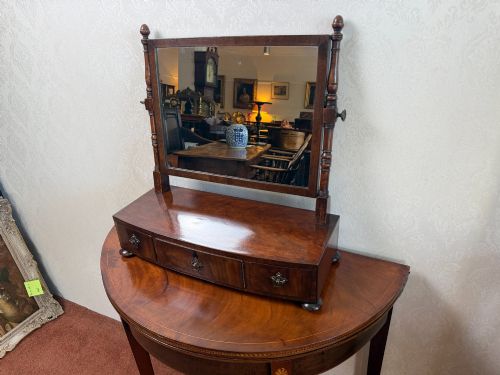
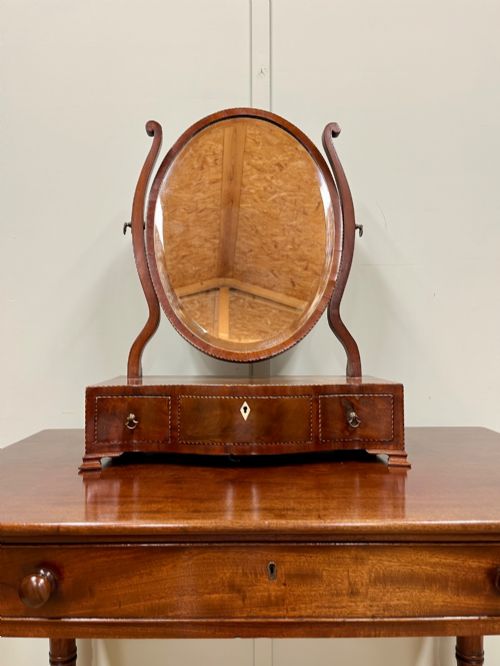
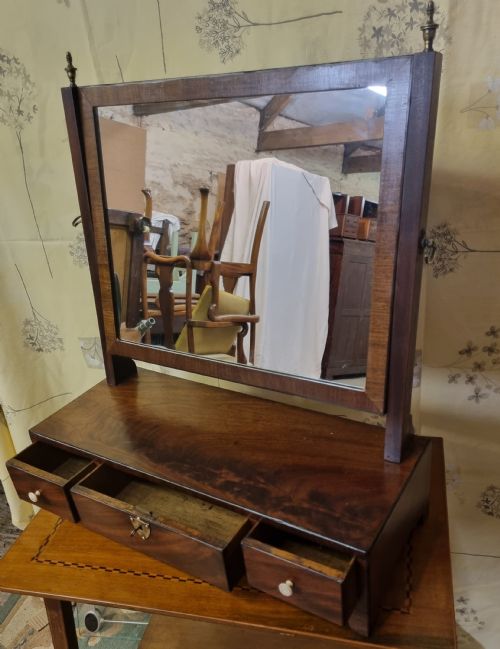
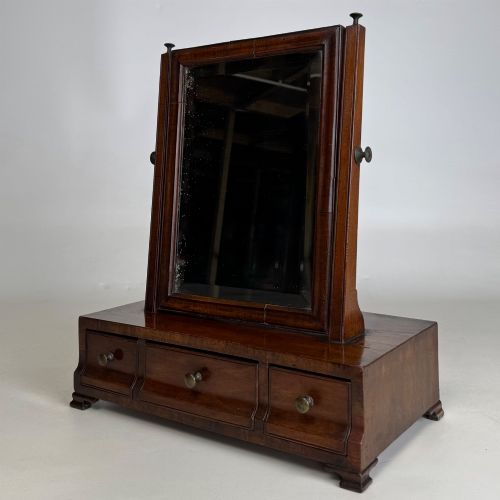
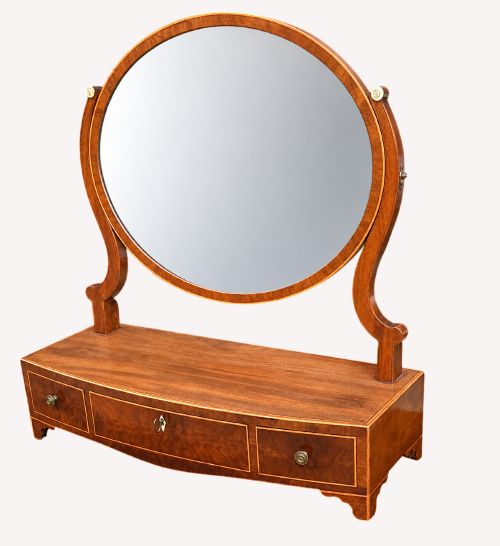
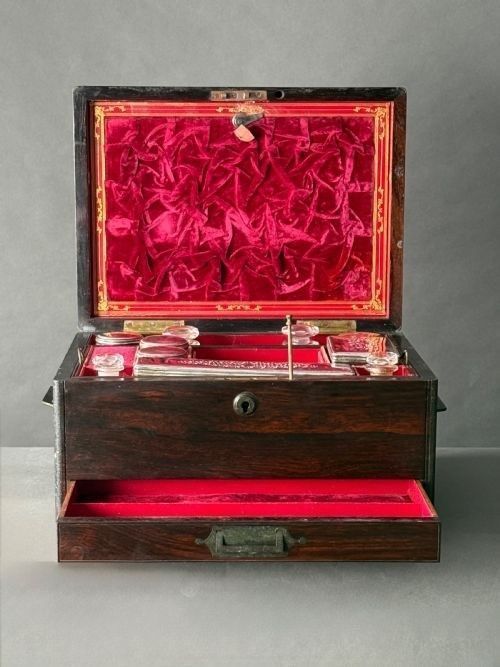
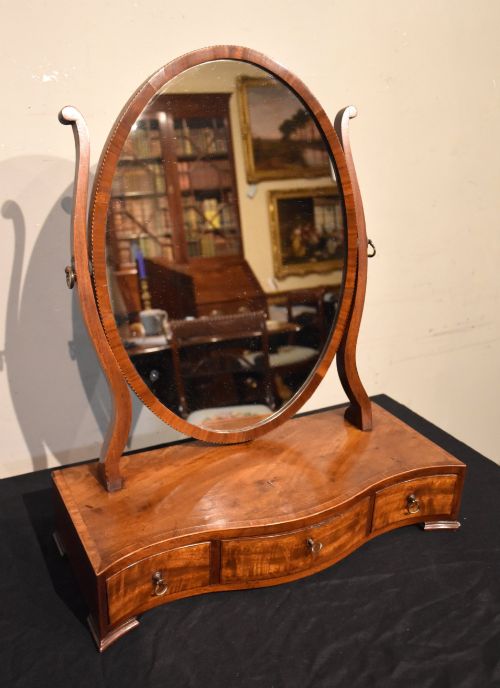
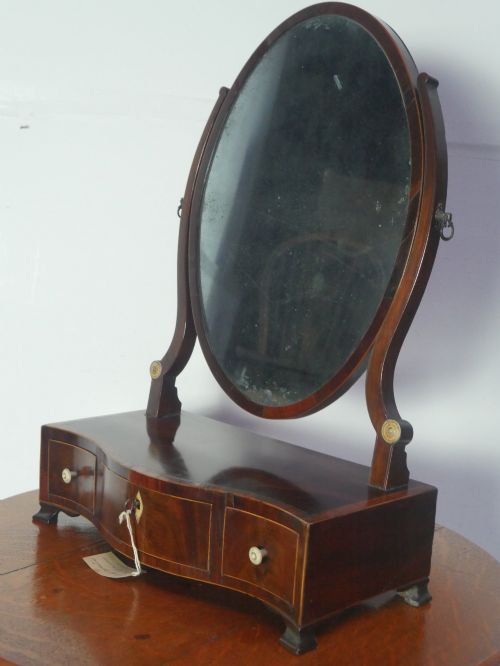
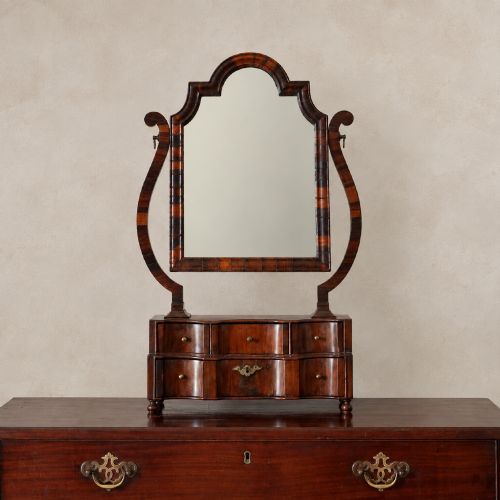
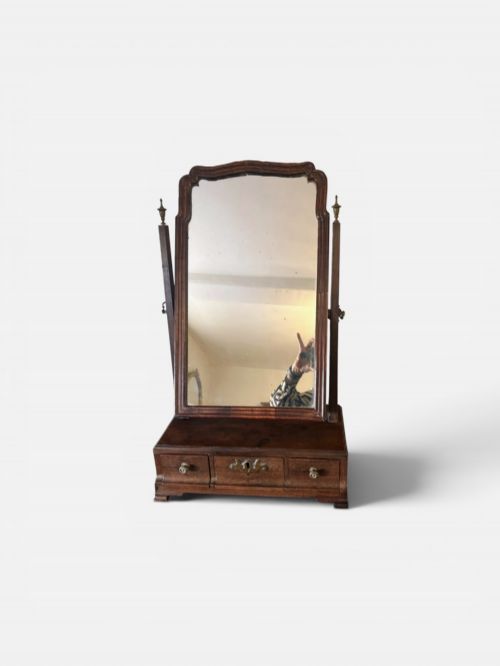
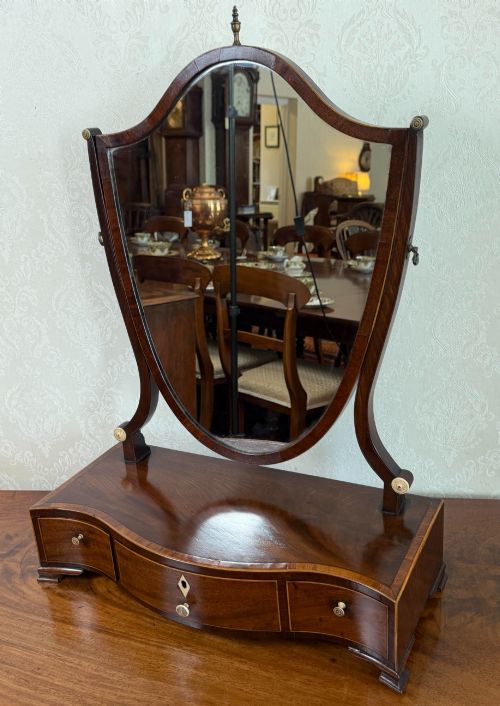
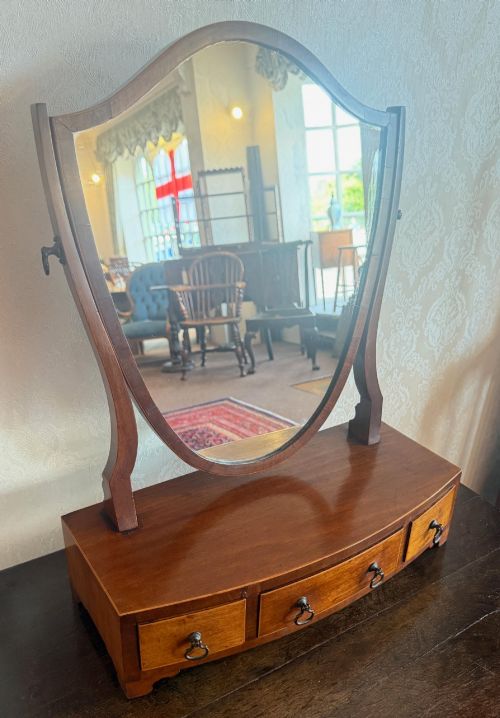
A georgian dressing box encompasses toilet mirrors, swing mirrors, and fitted vanity containers designed for personal grooming during the eighteenth and nineteenth centuries. These pieces sit upon dressing tables, chest tops, and lowboys, holding small valuables, cosmetics, and accessories within compartmentalised interiors or mounted drawers.
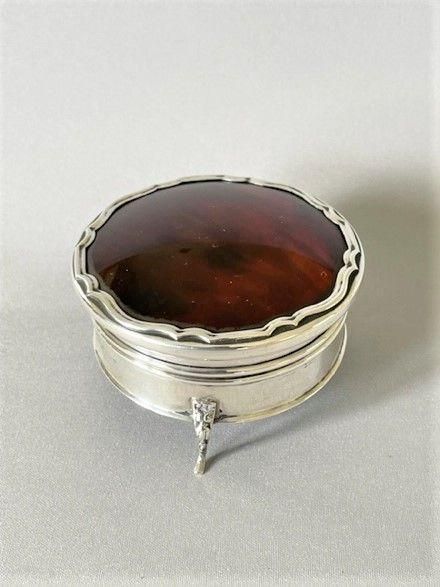
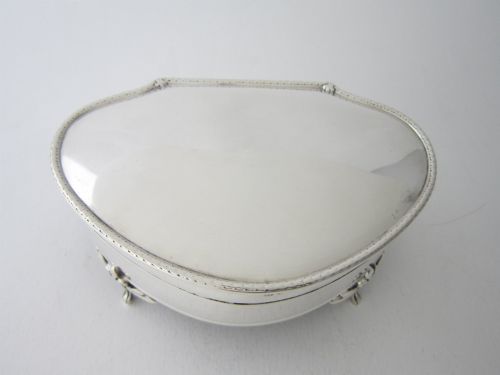
The selections encountered here span rectangular forms, oval glasses, shield-shaped mirrors, and serpentine fronts mounted on table frames. Mahogany and walnut predominate, often accompanied by smaller examples in rosewood, satinwood, and burr yew housing sterling silver fittings or glass jars.
Materials and Construction
Cabinet makers utilised solid and veneered timbers including mahogany, walnut, and kingwood, frequently applying crossbanding and stringing to drawer edges and mirror frames. Structural joints rely on fine dovetailing, particularly visible within the small box bases and drawer construction of toilet mirrors.
Fittings incorporate cast brass swing handles, escutcheons, and claw and ball feet, alongside hand-blown glass jars and hallmarked sterling silver lids. Leather bindings, bone inlay, and silk linings complete the interior organisation of portable vanity and writing boxes.
Georgian Dressing Box Retail Price Guide 2026
Typical asking prices for georgian dressing box among the pieces listed under this phrase on Sellingantiques today, from the lower quarter to the upper quarter. They describe what is for sale here now, not the wider market.
Secret drawers concealed behind false partitions guarded miniature fortunes and private letters away from prying eyes.
Assessing Quality and Execution
The standard of timber selection and grain matching distinguishes superior examples, notably where figured mahogany or burr yew wraps continuously around the exterior surfaces. Finer pieces display meticulous crossbanding, crisp boxwood stringing, and well-proportioned mirror frames that retain their original bevelled or flat glass plates.
Interior architecture reveals the maker's hand through precision-fitted partitions, secret compartments, and original brass hardware securely fastened without excessive timber splitting. Secondary woods and traditional hand-cut dovetails indicate period integrity and careful workshop assembly.
Paul Storr
The Georgian Dressing Box Glossary
- Toilet mirror
- A small adjustable looking glass mounted on a box base or frame, designed to stand upon a dressing table or chest.
- Crossbanding
- A decorative border of veneer laid so that the grain runs at right angles to the surrounding wood.
- Serpentine front
- A curved furniture front featuring a convex centre flanked by two concave sweeps.
- Escutcheon
- A small protective plate surrounding a keyhole, usually cast in brass.
- Lowboy
- A small side table with drawers, standing on four legs, often utilised to support a dressing mirror.
Georgian Dressing Box: Frequently Asked Questions
What is the difference between a toilet mirror and a dressing box?
A toilet mirror combines an adjustable swing glass with a small box base containing drawers or compartments for daily accessories. A dressing box functions primarily as a portable container for cosmetics, jewellery, and grooming bottles, sometimes incorporating a fold-out mirror within its lid.
While both serve personal grooming needs, toilet mirrors remain stationary furniture components meant for table placement, whereas dressing boxes prioritise secure transport and fitted internal compartments.
How do I identify a period piece from a later copy?
Examine the secondary woods inside the drawers and compartments, checking for hand-sawn dovetails and timber shrinkage consistent with age. Period pieces exhibit old fixings, hand-beaten brass screws, and natural timber oxidation beneath the finish.
Later reproductions often display uniform machine-cut joints, modern adhesives, and synthetic lining materials that lack the patination accumulated over centuries of use.
Were these boxes used by men or women?
Grooming boxes and mirrors served both gentlemen and ladies during the eighteenth and nineteenth centuries. Gentlemen utilised campaign shaving boxes and fitted dressing chests equipped with razors, shaving brushes, and soap containers.
Ladies kept jewellery, cosmetics, and trinkets within vanity boxes, table-top caskets, and delicate swing mirrors adorned with silver jars and tortoiseshell lids.
How should I care for timber and glass surfaces?
Maintain stable indoor humidity away from direct sunlight and heating vents to prevent timber shrinkage and veneer lifting. Clean wooden surfaces with a soft, dry cloth and apply a microcrystalline wax sparingly to preserve the polished patina.
Clean mirror glass with a mild, non-ammonia cleaner applied to a cloth rather than sprayed directly onto the frame, protecting the antique silvering at the rear of the glass plate.