



Antique Wooden Toilet Case
An antique wooden toilet case is a fitted travelling chest for personal grooming, bringing refined craftsmanship and clever compartmentalisation to the dressing table.
Antique Wooden Toilet Case
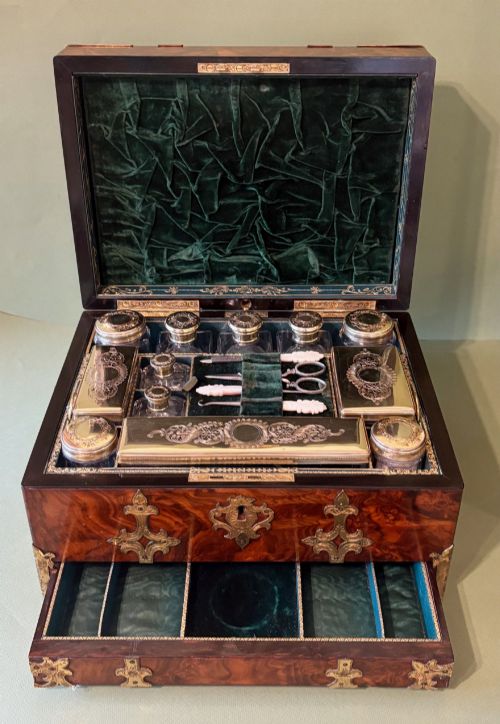
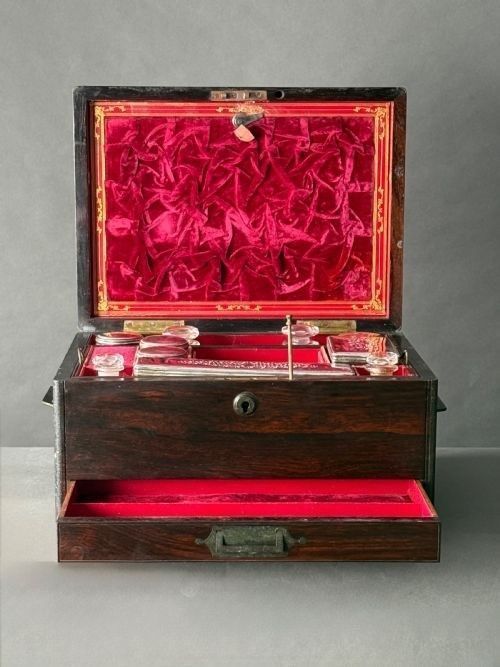
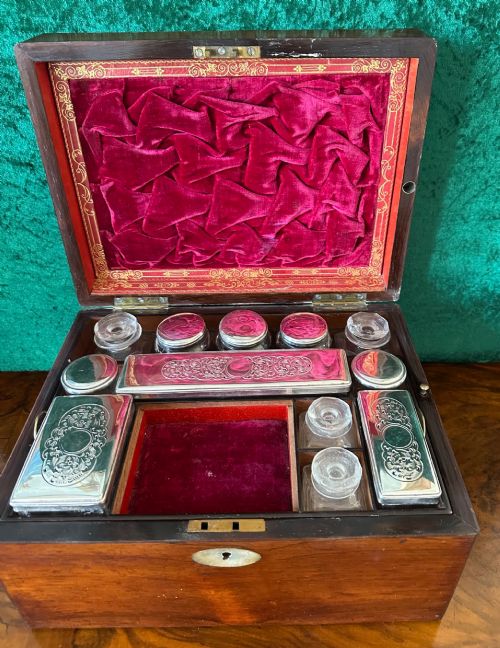
An antique wooden toilet case is a compartmentalised box designed to hold grooming implements, bottles, and personal valuables during travel or for use on a dressing table. The pieces available span the Georgian, Regency, and Victorian periods, showcasing forms such as dressing boxes, vanity cases, and jewellery boxes.
Makers housed these accessories in substantial timber carcases lined with fabrics like velvet, incorporating secure locks and working keys. Collectors encounter variations from simple travelling boxes to elaborate fitted cases housing silver and glass containers.
How they were made
Cabinetmakers constructed the main bodies of these boxes using dense exotic hardwoods such as rosewood, mahogany, burr walnut, and coromandel, often highlighting natural grain patterns. Surfaces were frequently embellished with brass banding, inlay, and fitted internal trays.
The interiors relied on precision joinery to create secret compartments, velvet-lined partitions, and dedicated slots for glass bottles with silver caps. High-grade brass hardware, including hinges, locks, and handles, secured the heavy lids and folding sections.
Antique Wooden Toilet Case Retail Price Guide 2026
Typical asking prices for wooden toilet case among the pieces listed under this phrase on Sellingantiques today, from the lower quarter to the upper quarter. They describe what is for sale here now, not the wider market.
What varies in quality
Quality separates cases by the choice of timber veneer and the complexity of the internal fitments. Superior examples utilise rich burr walnut or coromandel with meticulous brass stringing and complete sets of matched silver-topped glass bottles.
Finer boxes exhibit sophisticated mechanisms that raise hidden drawers or compartments simultaneously upon opening the main lid. The presence of maker signatures on lockplates or internal leather tooling further elevates the standing of a piece.
H Mitchell·Parkins and Grotto
The Antique Wooden Toilet Case Glossary
- Coromandel
- A dense, heavily figured Southeast Asian timber prized for its dark grain and used in luxury Victorian boxes.
- Burr walnut
- Wood taken from the growth excrescence of a walnut tree, producing swirling patterns that decorated high-end cabinet fronts.
- Dressing box
- A portable chest fitted with compartments for cosmetics, brushes, and jewellery, often including a fold-out mirror.
- Vanity case
- An alternative term for a fitted toilet box designed to transport personal grooming items safely during travel.
- Stringing
- Thin inlay work of contrasting wood or brass set into the surface of a box to create decorative borders.
Antique Wooden Toilet Case: Frequently Asked Questions
What is an antique wooden toilet case?
An antique wooden toilet case is a portable fitted box designed to hold grooming bottles, brushes, and personal valuables during travel or on a dressing table. These boxes date from the Georgian and Victorian eras and feature complex internal layouts.
Cabinetmakers built them using hardwoods like rosewood, mahogany, and coromandel, often lining the interiors with velvet and silk. They served wealthy travellers who required their personal comforts away from home.
How do I date a wooden vanity box?
Dating relies on observing the timber choices, brass hardware styles, and internal construction methods. Regency boxes often display simpler mahogany or rosewood exteriors with brass inlay, while Victorian examples frequently utilise coromandel or burr walnut.
Maker signatures stamped on locks or leather interiors provide precise chronological markers. The complexity of the internal silver and glass fittings also helps place a box within a specific decade.
What were the interior compartments used for?
The internal sections held glass bottles with silver tops for lotions and powders, alongside razors, brushes, and small trinkets. Many boxes included removable trays that revealed deeper storage spaces underneath.
Secret drawers hidden beneath the main compartments provided secure storage for jewellery and private documents. Spring-loaded mechanisms often operated these concealed spaces.
Are these cases suitable for modern jewellery?
These cases provide secure, velvet-lined storage compartments that suit modern rings, necklaces, and small accessories. The segmented trays help keep delicate items separated and protected.
Many boxes retain working locks and keys, allowing owners to secure their valuables. Their robust wooden construction ensures they function well on a modern dressing table.