

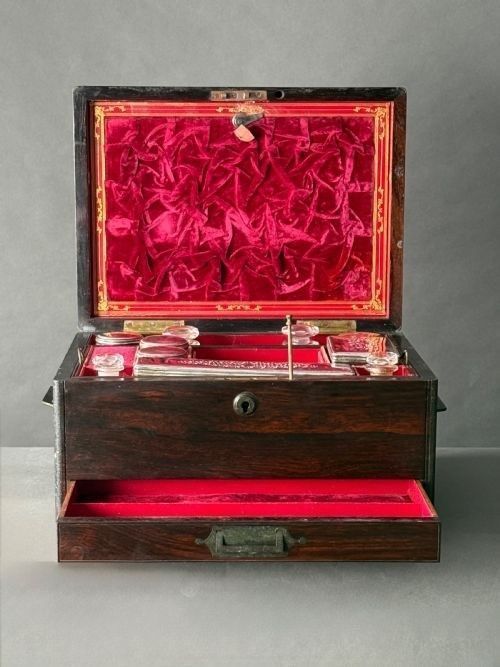


Antique Lockable Vanity Box
An antique lockable vanity box offers secure storage for valuables, combining timber construction with velvet linings and fitted compartments for daily use.
Antique Lockable Vanity Box
An antique lockable vanity box serves as a portable container for personal treasures, trinkets, and grooming accessories, securing contents with an integrated brass lock. These pieces appear in forms such as dressing boxes, jewellery cabinets, and travelling cases, frequently housing internal mirrors and removable trays.
The enduring appeal of an antique lockable vanity box lies in its dual function as both a practical organiser and a decorative object for the dressing table. Fitted interiors often include compartments lined in velvet alongside dedicated spaces for glass bottles and writing implements, reflecting the domestic habits of past eras.
How these pieces were made
Maker-craftsmen constructed the foundational carcases of an antique lockable vanity box using dense hardwoods such as rosewood, walnut, and coromandel, occasionally applying burr veneers for decorative grain patterns. These wooden structures were frequently inlaid with mother-of-pearl or fitted with brass corners and escutcheons to reinforce the edges and secure the lid.
Internal layouts required careful carpentry to create fitted trays, secret drawers, and segmented compartments tailored for specific items like jewellery, sewing tools, or glass jars. Silk and velvet linings were then glued into position to cushion delicate contents, completing a process that combined cabinet-making with fine upholstery.
Antique Lockable Vanity Box Retail Price Guide 2026
Typical asking prices for lockable vanity box among the pieces listed under this phrase on Sellingantiques today, from the lower quarter to the upper quarter. They describe what is for sale here now, not the wider market.
Periods represented in the selection span from the Georgian era through various Victorian decades up to the 1920s.
What varies in quality
The standard of an antique lockable vanity box depends heavily on the precision of its timber selection and the complexity of its internal fittings. Superior examples feature carefully matched wood veneers, intact mother-of-pearl inlay, and fully operational locking mechanisms complete with working keys.
The integrity of the interior compartments and the original fabric linings also define the grade of the piece, with higher-quality specimens retaining their fitted glass bottles, mirrors, and multi-tier removable trays without significant replacement or modern repair.
The Antique Lockable Vanity Box Glossary
- Escutcheon
- A flat plate of brass or other metal surrounding the keyhole of an antique lockable vanity box, designed to protect the surrounding wood from wear. These fixtures often feature engraved decoration.
- Coromandel
- A dense, heavily figured timber imported from Asia, frequently utilised for high-end Victorian boxes due to its rich dark brown colour and contrasting striations.
- Writing slope
- A hinged box interior that folds down to form an angled writing surface, a feature occasionally incorporated into multi-purpose dressing and travelling cases.
- Burr walnut
- Wood taken from the abnormal growth of a walnut tree, producing swirling, intricate grain patterns prized by cabinet-makers for exterior veneering.
- Fitted interior
- An arrangement of custom compartments, removable trays, and holders built into the box to organise specific personal items such as bottles, brushes, and jewellery.
Antique Lockable Vanity Box: Frequently Asked Questions
What fits inside an antique lockable vanity box?
These boxes accommodate small personal items such as rings, necklaces, pocket watches, and brooches within their velvet-lined compartments and trays. Many also house glass scent bottles and small grooming tools.
Larger versions include space for letters, documents, or sewing accessories, functioning as multi-purpose storage for the dressing table or desk.
How do I secure an antique lockable vanity box?
Security relies on the original brass mortise lock inset into the front edge of the box, which is operated by a small matching key. These mechanisms engage a metal bolt to hold the lid firmly shut.
Because original keys are easily misplaced over the decades, many surviving boxes require a specialist to fit a replacement key if the mechanism remains functional.
How do I date an antique lockable vanity box?
Dating involves examining the timber species, construction techniques, and hardware styles characteristic of different periods such as the Georgian era or the reign of Queen Victoria. Rosewood and heavy brass inlay are typical of mid-nineteenth-century production.
Later pieces from the twentieth century often display simpler lines, ebonised finishes, or smooth leather coverings without the elaborate decorative veneers of earlier decades.
Were these boxes used for travel?
Many examples were designated as travelling boxes or dressing cases, built with sturdy hardwood carcases and robust locks to withstand movement during transit. Leather-covered variants were particularly suited for carriage journeys.
Internal glass bottles often featured screw tops or tight stoppers to prevent spills while the box was being moved from one location to another.