
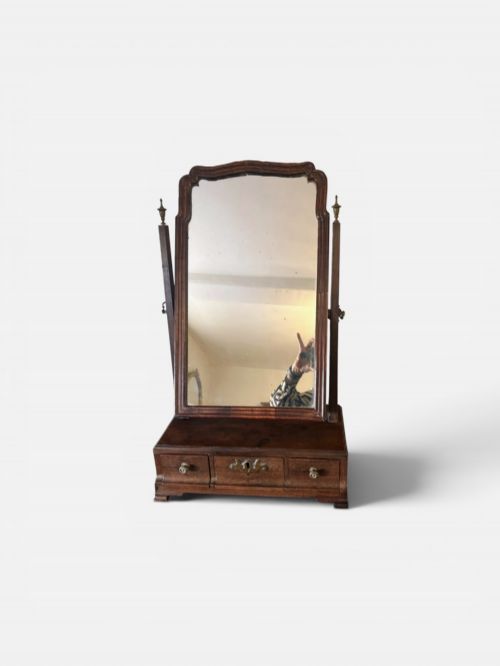
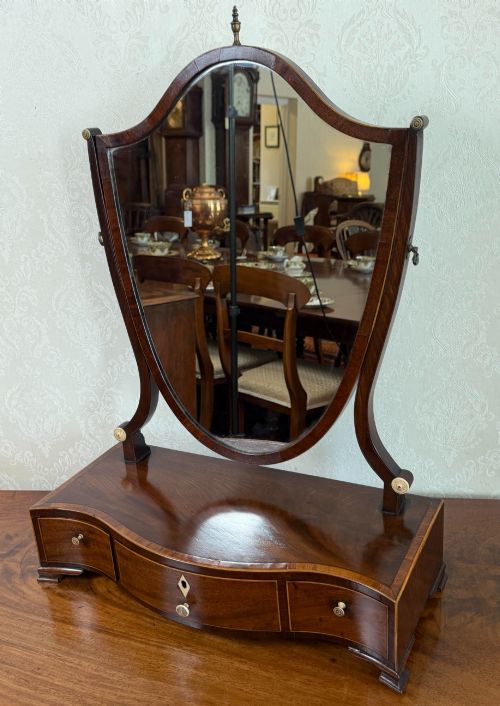
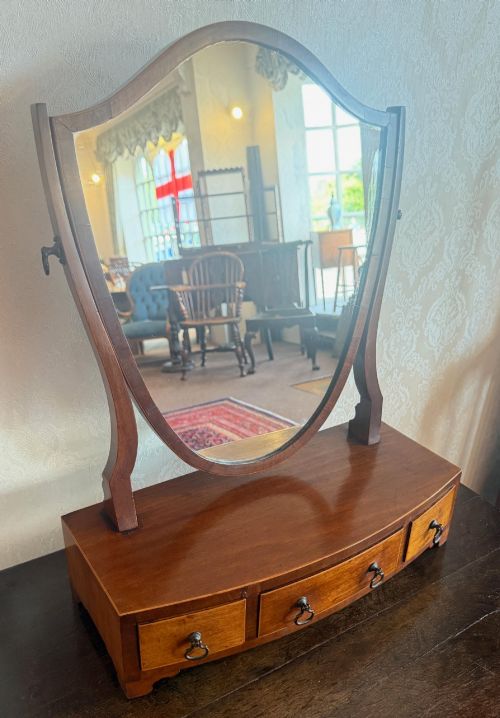
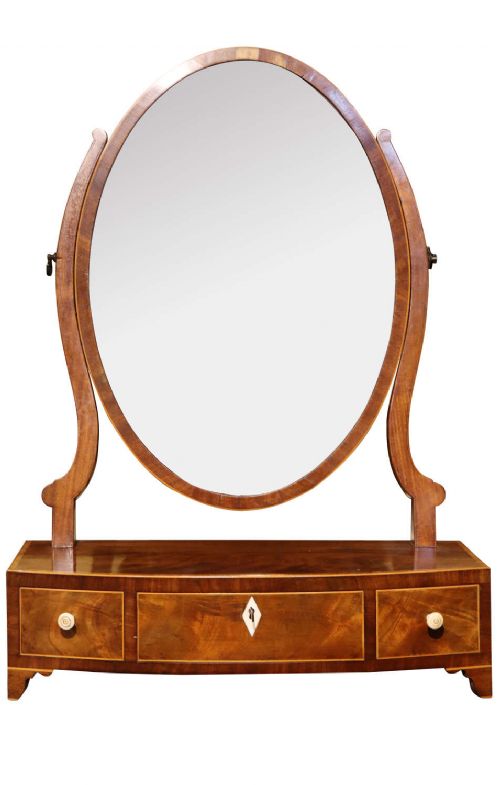
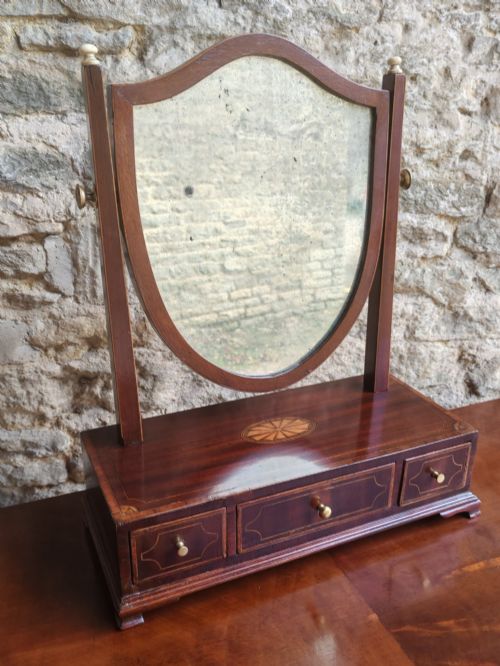


Georgian Dressing Box Mirror
A georgian dressing box mirror provides a compact, table-top reflection surface set atop a small drawer base for personal grooming and storage.
Georgian Dressing Box Mirror
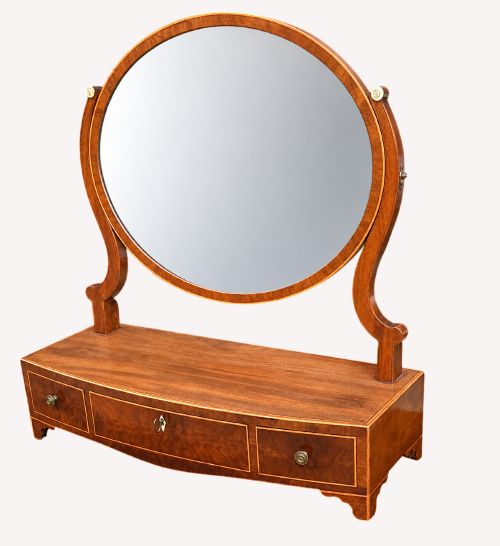
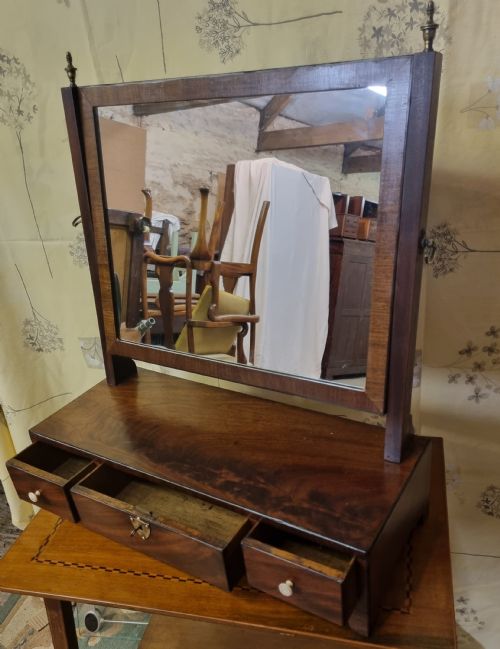
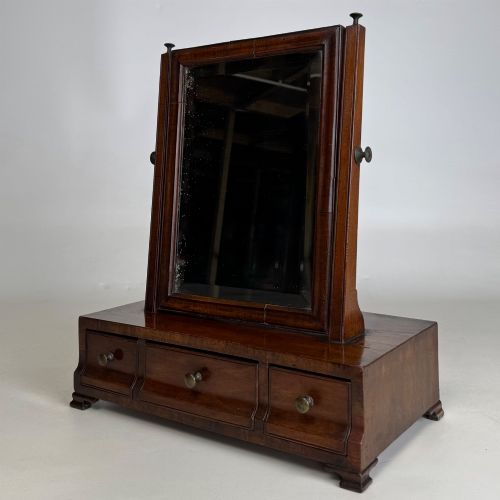
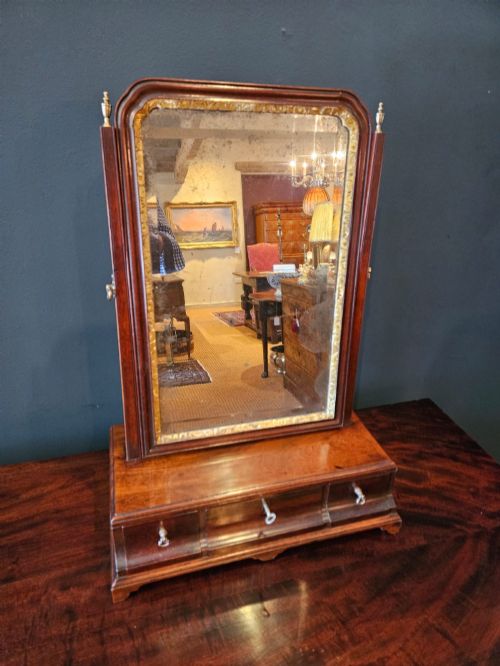
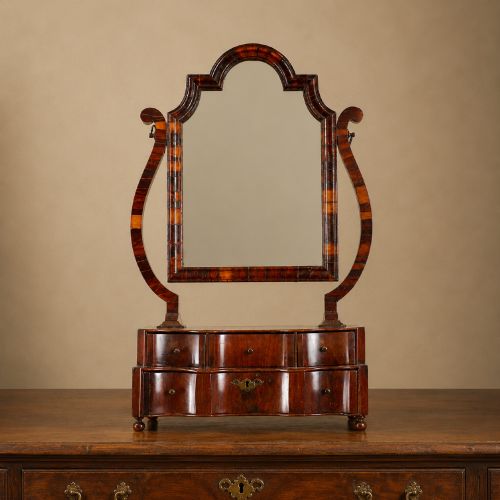
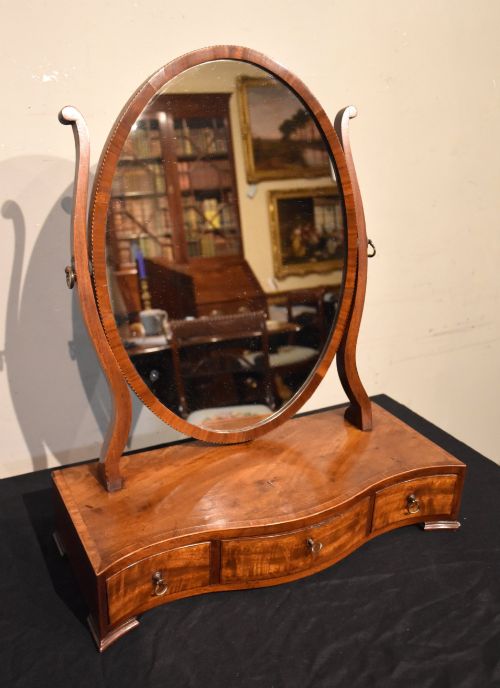
A georgian dressing box mirror sits upon a chest of drawers or dressing table, offering an adjustable swing glass mounted between two upright arms. The base typically incorporates small drawers for holding trinkets or shaving gear.
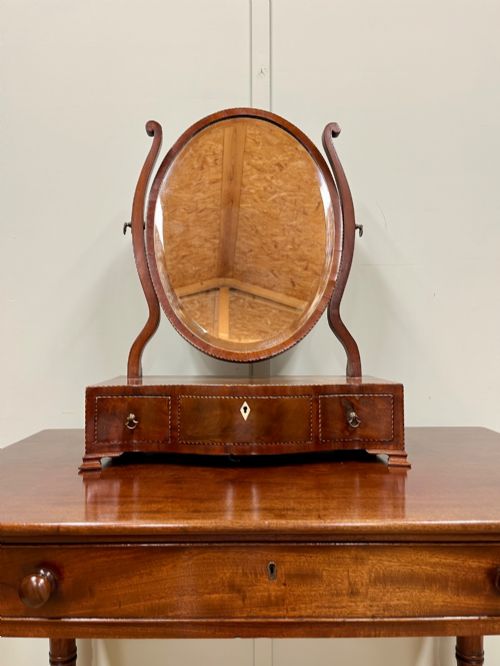
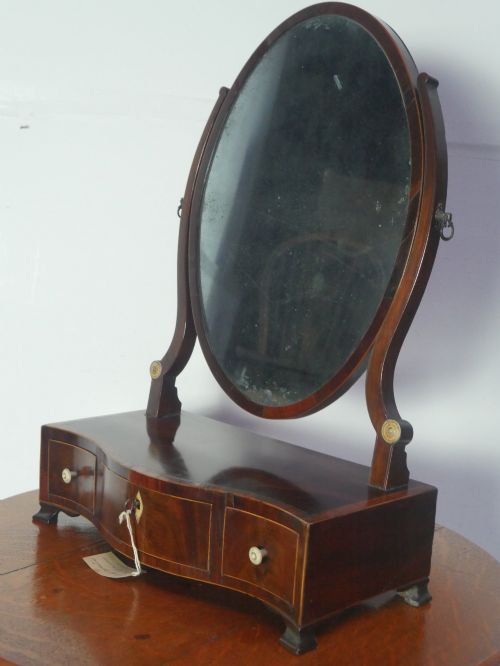
Most examples found here date from the eighteenth and nineteenth centuries, spanning periods from Queen Anne through to the Regency era. Formats range from simple shield shapes to serpentine fronts and bow-fronted box bases.
Craftsmen built these pieces primarily for domestic bedchambers, serving both men and women for daily toilette routines. The combination of a functional mirror and a lockable or compartmentalised base made them essential bedroom furniture.
How they were made
Cabinet makers constructed the box bases and upright supports using solid timber veneers, selecting rich woods such as mahogany and walnut. Crossbanding, inlay work, and contrasting lighter timbers like satinwood or harewood often decorate the drawer fronts and edges.
The mirror glass is held within a pivoted frame, allowing the user to tilt the reflection angle as required. Brass fittings, including adjustment screws and small drawer knobs, secure the moving parts alongside occasional bone details.
Materials documented in these listings include mahogany, walnut, laburnum, harewood, satinwood, brass, bone, and mirror glass.
What varies in quality
Quality rests in the choice of timber figure, the precision of the box dovetail joints, and the sophistication of the base contour, such as a smoothly shaped serpentine or bow front. Well-executed crossbanding and delicate inlay work elevate the visual harmony of the piece.
The proportion between the mirror plate and the supporting box structure dictates the overall elegance. Superior examples maintain balanced lines where the uprights and drawer sections complement the swing glass without appearing heavy.
The Georgian Dressing Box Mirror Glossary
- Toilet mirror
- A traditional term for a small dressing mirror designed to stand on a table or chest.
- Serpentine front
- A furniture front curving outward in the centre and inward at the sides, often seen on the drawer section of better mirrors.
- Crossbanding
- A narrow strip of veneer laid around the border of a drawer front or panel with the grain running perpendicular to the surrounding wood.
- Parcel-gilt
- Partly gilded with gold leaf, highlighting carved wooden details or mouldings against a dark wood ground.
- Swing mirror
- A mirror plate pivoted on horizontal pins between two upright posts so the glass tilts back and forth.
Georgian Dressing Box Mirror: Frequently Asked Questions
Where were these mirrors placed?
These mirrors sat upon dressing tables, tallboys, or chests of drawers within private bedchambers.
Their compact footprint allowed them to occupy minimal surface area while raising the reflective glass to a convenient height for sitting or standing.
How do I date a dressing mirror?
Dating relies upon observing the timber selection, cabinet construction methods, and the shaping of the mirror frame and base.
Earlier pieces often employ walnut with shaped plates, while later eighteenth-century examples favour mahogany with shield or rectangular swing frames and box drawers.
What were the drawers used for?
The small drawers built into the base held personal items, cosmetics, jewellery, and shaving equipment.
Keeping these implements close to the mirror surface kept dressing tables tidy during daily routines.
Are the mirror plates original?
Many mirrors retain their historic glass, though centuries of use mean some plates have been replaced.
Original glass frequently exhibits minor foxing, subtle warping, or silvering wear consistent with age.