

Georgian Dining Buffet
A georgian dining buffet anchors a formal dining room with ample surface and storage.
Georgian Dining Buffet
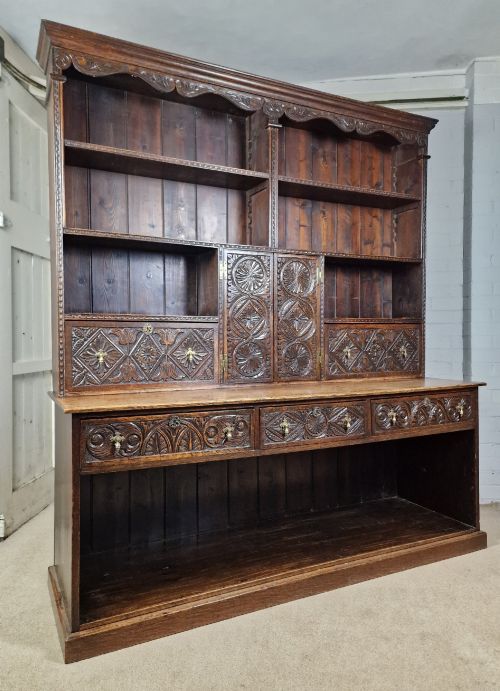
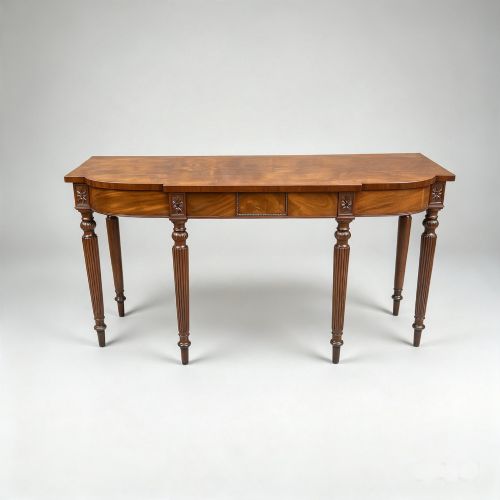
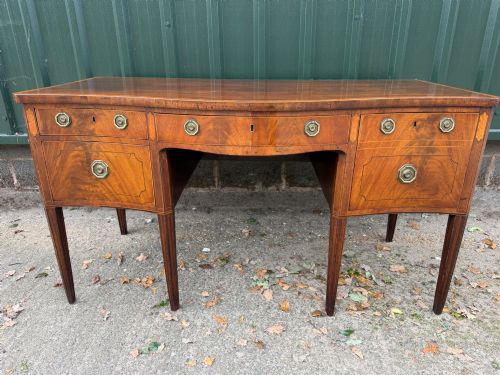
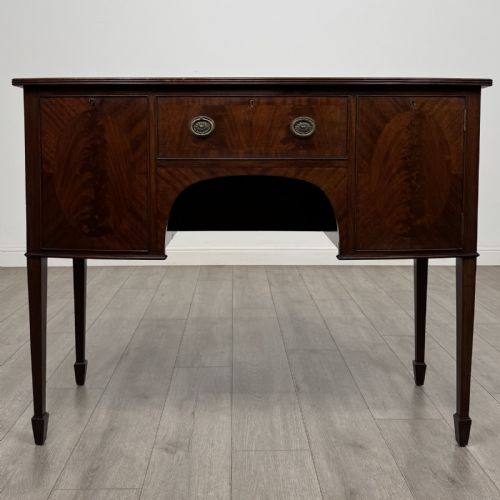
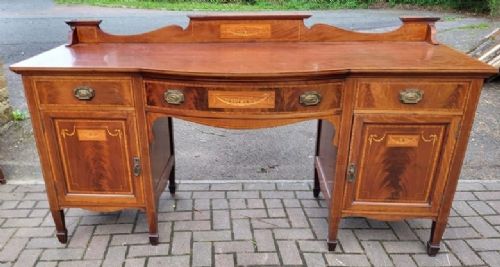
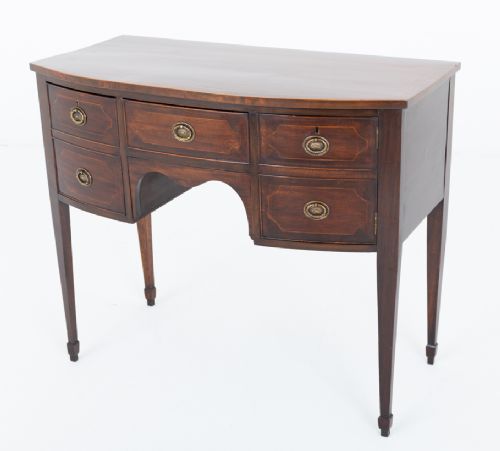
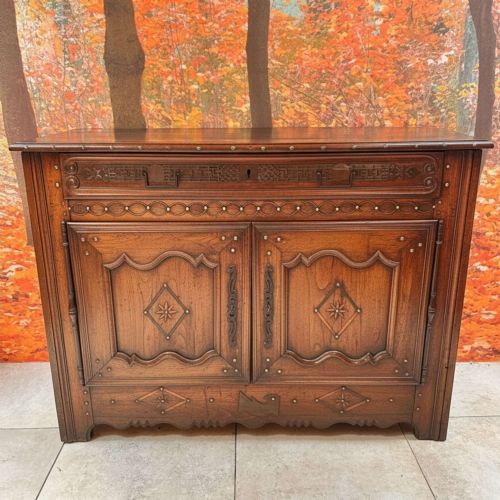
A georgian dining buffet encompasses server pieces, sideboards, side cabinets, and dresser bases created during the Georgian, Regency, and later revival periods. Buyers searching for a georgian dining buffet encounter formal dining room furniture designed for serving food and displaying silver.
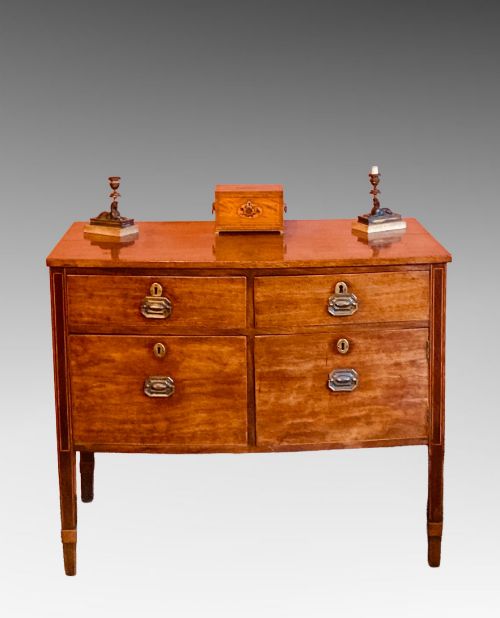
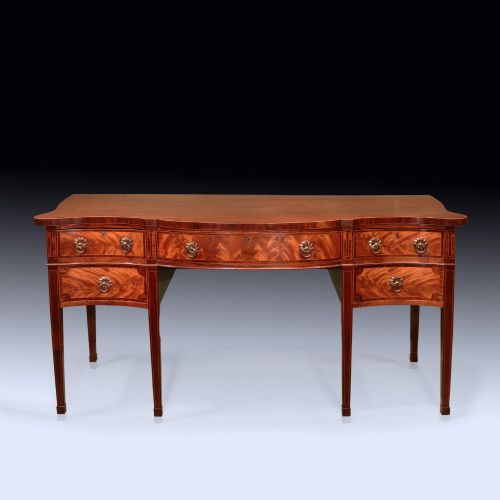
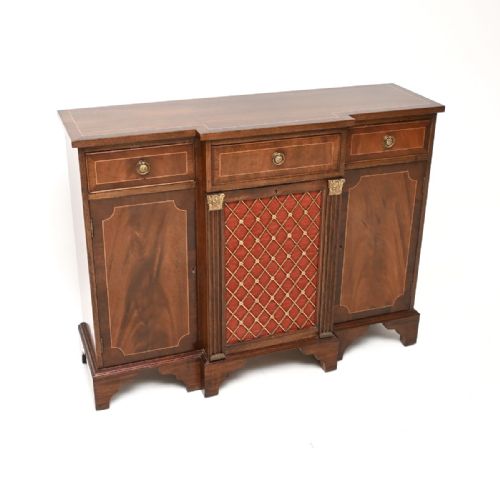
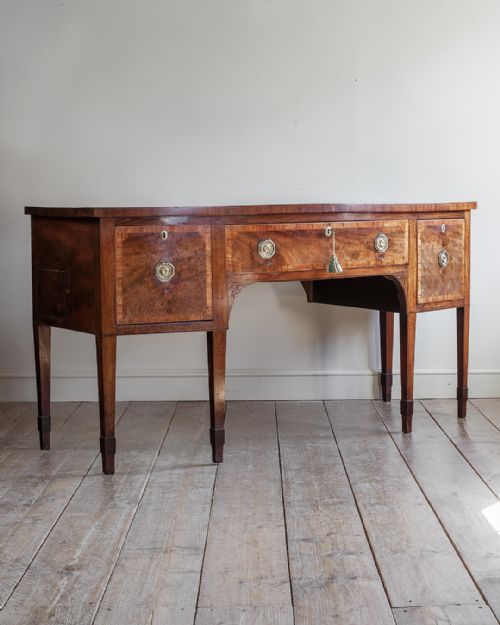
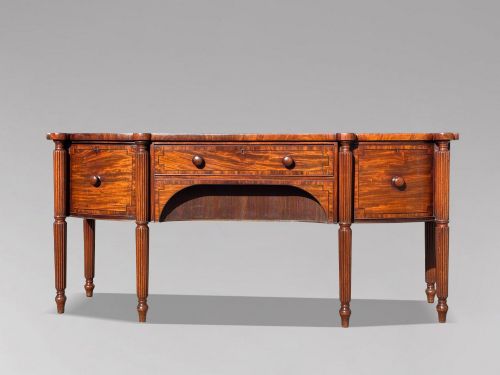
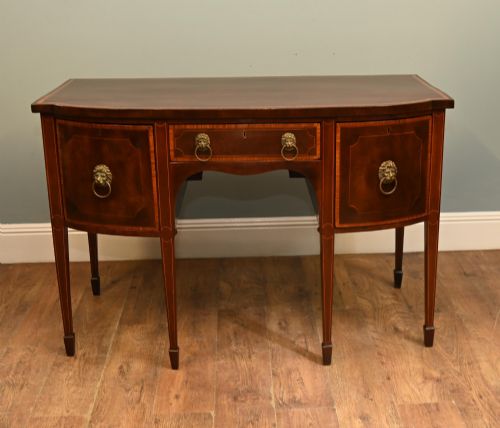
The pieces appearing on this page span genuine 18th century and early 19th century examples alongside Edwardian and later reproductions built in the Georgian style. Most items encountered are mahogany sideboards featuring bowfront, serpentine, or breakfront outlines.
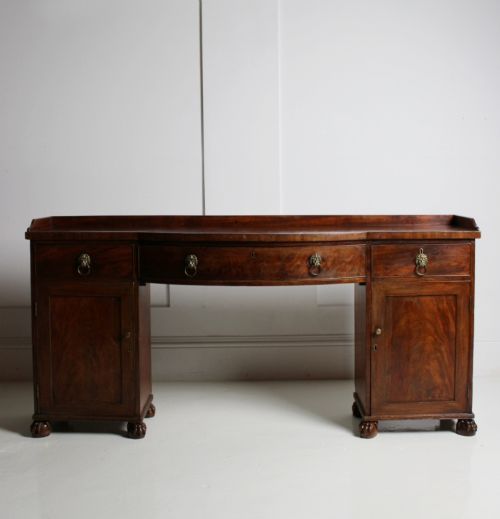
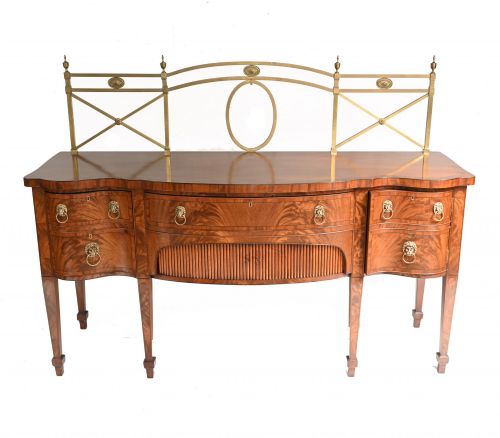
Makers and cabinetmakers of the Georgian and Regency eras utilised timber varieties such as flame mahogany, satinwood, and oak, often incorporating boxwood stringing and brass galleries or lion paw feet. Formats range from compact bowfront servers to large breakfront and pedestal sideboards with multiple drawers and cupboards.
Materials and construction methods
Cabinetmakers constructed these servers primarily from solid mahogany and flame mahogany veneer over secondary timbers, selecting cuts with strong figuring for the drawer fronts and top panels. Inlaid details utilise contrasting woods like boxwood and satinwood to create geometric stringing and decorative oval motifs.
Structural hardware includes cast brass handles, brass gallery rails, and occasionally brass inlay set directly into the timber surface. Support structures feature straight tapering legs, spade feet, claw and ball feet, or heavy carved lion paw feet on pedestal forms.
Georgian Dining Buffet Retail Price Guide 2026
Typical asking prices for georgian dining buffet among the pieces listed under this phrase on Sellingantiques today, from the lower quarter to the upper quarter. They describe what is for sale here now, not the wider market.
Listings feature mahogany, satinwood, and oak timbers across periods spanning the 18th century to Edwardian revival interpretations.
Distinctions in quality and execution
Quality separates pieces by the selection of figured timber veneers and the precision of the boxwood inlay work. Superior examples exhibit book-matched flame mahogany across the entire frontage rather than plain grain boards.
Construction refinement shows in the secondary woods used for drawer linings, hand-cut dovetail joints, and original brass hardware. Breakfront and serpentine shapes demand higher levels of joinery skill than standard straight or simple bowfront carcasses.
The Georgian Dining Buffet Glossary
- Bowfront
- A convex curved front profile popular on sideboards and servers from the late 18th century onward. This shape softens the room's angles while maintaining interior storage depth.
- Breakfront
- A cabinet front where the central section projects forward from the flanking outer sections. This architectural arrangement creates depth and visual hierarchy on larger dining room pieces.
- Serpentine
- A gently undulating front line featuring a convex centre flanked by concave curves. Executing this flowing contour required exceptional skill from the cabinetmaker.
- Stringing
- Thin inlaid lines of contrasting timber set flush into the primary surface for decoration. Boxwood stringing is frequently seen on mahogany furniture.
- Pedestal sideboard
- A form consisting of two distinct pedestals connected by a central serving section or table base. These grand pieces date primarily to the Regency period.
Georgian Dining Buffet: Frequently Asked Questions
How do I spot a genuine Georgian piece?
Examine the timber selection, drawer construction, and secondary woods visible inside the carcass. Hand-cut dovetails and mature timber shrinkage indicate period manufacture rather than later revival work.
Compare the overall proportions and inlay patterns with documented pieces from the 18th and early 19th centuries to confirm the stylistic period.
What is the difference between a sideboard and a buffet?
The terms describe similar dining room furniture designed for serving meals and storing tableware. Sideboards often feature a long top surface with multiple drawers and cupboards beneath.
Buffet variants may include stage-backs, brass galleries, or pedestal formations intended for displaying silver and serving dishes during formal dining.
How do I care for mahogany dining furniture?
Keep wooden furniture away from direct sunlight and heat sources to prevent the timber and veneers from drying out or splitting. Maintain consistent indoor humidity levels.
Apply traditional wax polish occasionally and buff with a soft cloth to preserve the natural sheen of the mahogany grain.
Can I use a antique server in a modern dining room?
These servers provide practical surface space and concealed storage that function well in contemporary interior schemes. Their classic timber tones and clean lines complement modern minimalist settings.
Measure the room and clearance space carefully before placement, particularly with breakfront or pedestal forms that require adequate room to breathe.