




Georgian Desktop Chest
A georgian desktop chest is a compact small-scale storage piece, prized for its intricate detail and practicality in restricted spaces.
Georgian Desktop Chest
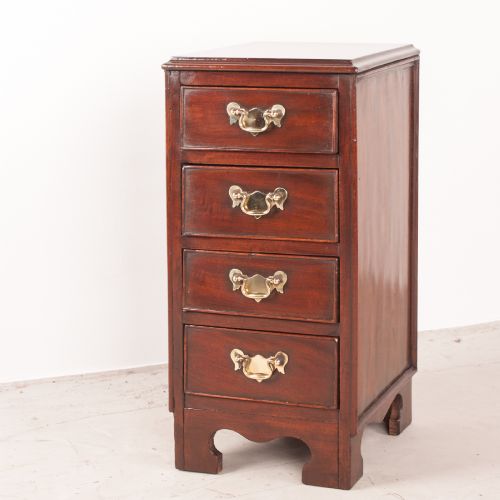
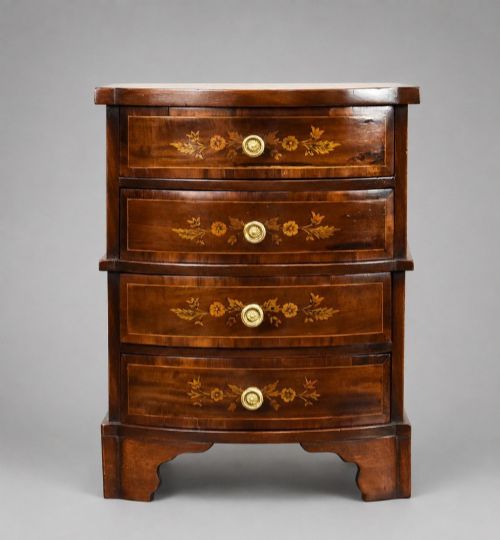
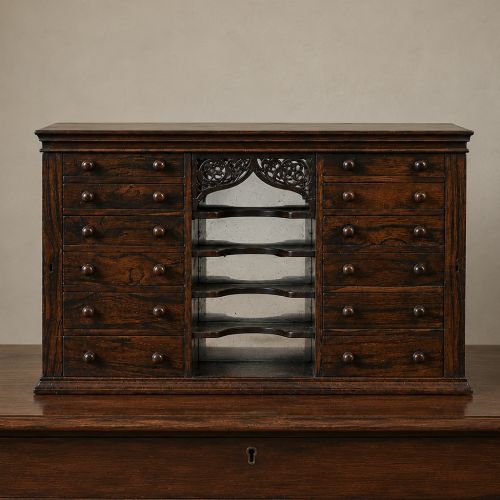
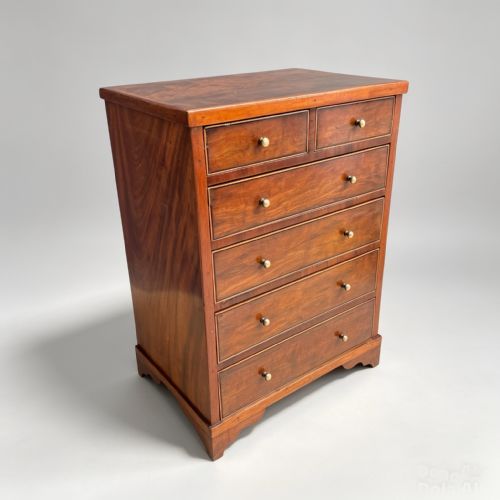
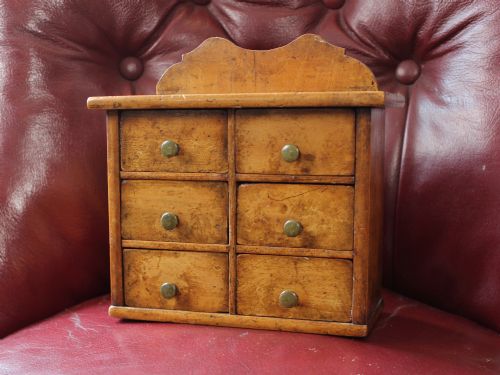
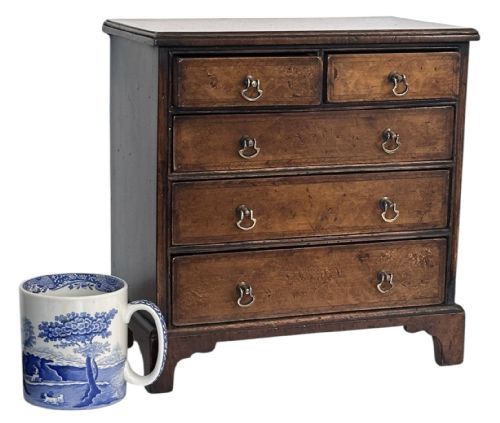
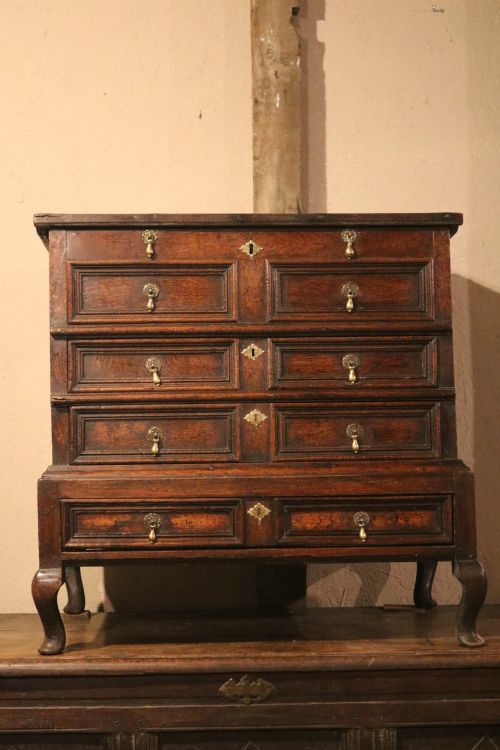
A georgian desktop chest encompasses miniature chests of drawers, spice cabinets, apprentice pieces, and small stationary boxes designed for tabletop use. These items emerge primarily from the eighteenth and nineteenth centuries, spanning Georgian, Regency, and Victorian periods.
Mahogany and oak dominate the surviving examples, alongside rosewood, walnut, elm, and fruitwood. Makers frequently utilised brass handles and wood inlay to finish these scaled-down utility items.
Miniature chests and collectors cabinets appear alongside wall-hanging cupboards, slope-front writing boxes, and miniature tallboys. The listings here centre on compact mahogany and oak drawer banks from these historical eras.
Materials and Technique
Cabinet makers constructed these small chests using dense hardwoods like mahogany, oak, and rosewood, often pairing them with secondary woods for internal drawer construction. Timber selection dictated the structural integrity of pieces meant for frequent desktop manipulation.
Surface decoration involved finely executed wood inlay, holly and bog oak stringing, marquetry, and mother of pearl details. Drawers were fitted with small brass drop handles or turned wooden knobs.
Joinery techniques mirrored full-scale furniture production, utilising dovetailed drawer boxes and panelled carcases scaled down with precision.
Object forms include spice cabinets, slope-front writing boxes, miniature tallboys, and collector cabinets.
Evaluating the Pieces
Proportion and scale separate master cabinet work from simpler utilitarian items, as miniaturisation requires exact adherence to full-size architectural rules. Pieces that maintain balanced drawer depths and correct cornice profiles demonstrate superior workshop origin.
The choice of timber grain and the crispness of inlaid details distinguish finer examples. Grain matching across drawer fronts and the restraint applied to decorative brass or wood inlay indicate the maker's intent and skill.
The Georgian Desktop Chest Glossary
- Apprentice piece
- A small-scale item created to demonstrate a craftsman's skill for guild admission or training completion. These pieces exhibit the same joinery standards as full-size furniture.
- Miniature chest
- A scaled-down version of a standard chest of drawers, built for desktop or tabletop storage. They replicate full-size Georgian and Regency forms in miniature proportions.
- Spice drawer
- A small compartment or bank of miniature drawers traditionally used for storing culinary spices or valuable powders. They frequently appear in oak or fruitwood from the eighteenth century.
- Wellington chest
- A tall, narrow chest of drawers secured by a locking side flap hinged to the vertical stile. This form appears in Regency rosewood and mahogany formats.
- Inlay
- A decorative technique where contrasting woods, metals, or shell are inserted into recesses carved into the primary wood surface. Holly and bog oak provide sharp monochrome contrast in Georgian examples.
Georgian Desktop Chest: Frequently Asked Questions
What were desktop chests used for?
These compact cabinets served multiple domestic and professional purposes, holding precious trinkets, writing stationery, letters, jewellery, or medicinal spices. Their tabletop footprint kept valuable items secure and organised within easy reach.
Craftsmen also produced miniature chests as trade samples or apprentice demonstration pieces to exhibit technical proficiency to potential patrons and guild masters.
How do I date a Georgian desktop chest?
Dating relies on examining the timber species, construction methods, hardware, and stylistic traits associated with Georgian, Regency, and Victorian eras. Mahogany and oak dominate the eighteenth century, while rosewood and elaborate inlay become prominent during the Regency period.
Drawer construction provides further evidence, as hand-cut dovetails and lining boards shift in profile and thickness across the decades from 1740 through the nineteenth century.
Where should I place a desktop chest at home?
These small chests suit placement on top of sideboards, desks, chests of drawers, or console tables where their detailed proportions can be viewed closely. Their shallow depth allows them to sit comfortably on narrower ledges and writing surfaces.
Avoid positioning them in direct sunlight or near heat sources to protect sensitive veneers like rosewood and mahogany from drying out and splitting.