


Rosewood Jewellery Chest
A rosewood jewellery chest holds small treasures securely, bringing rich timber grain and polished brass into daily use.
Rosewood Jewellery Chest
A rosewood jewellery chest is a compact receptacle designed for personal ornaments, featuring hinged lids, lift-out trays, or small stacked drawers. These pieces appear across several distinct eras, spanning Georgian, Regency, and Victorian periods alongside traditional Chinese forms.
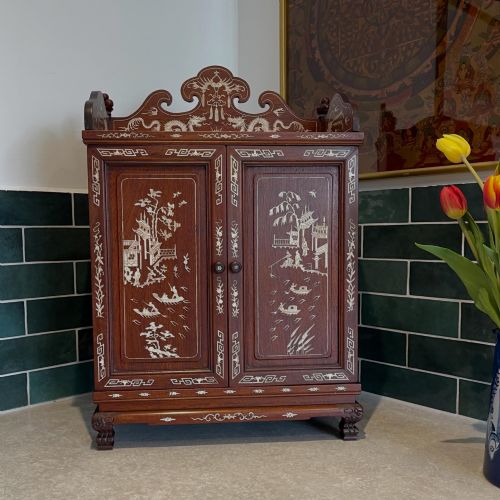
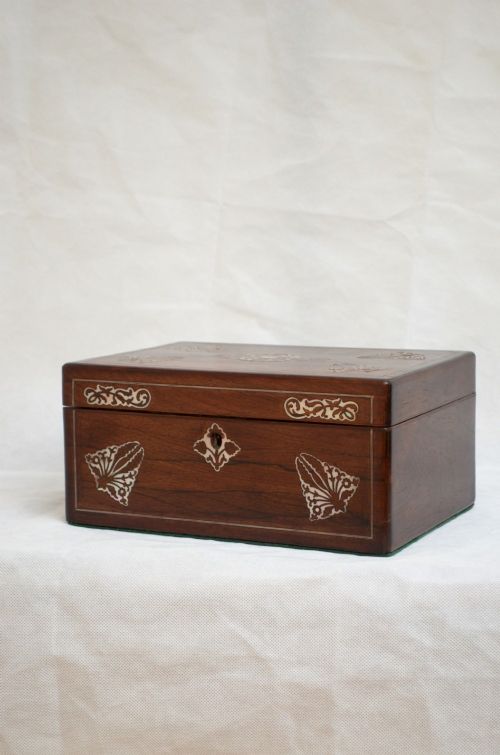
The version most commonly met on this page is the Victorian rosewood jewellery box or trinket keepsake box, often fitted with interior trays and lined compartments. Alongside British examples, one encounters Chinese table cabinets and travelling boxes constructed from rosewood and hardwood.
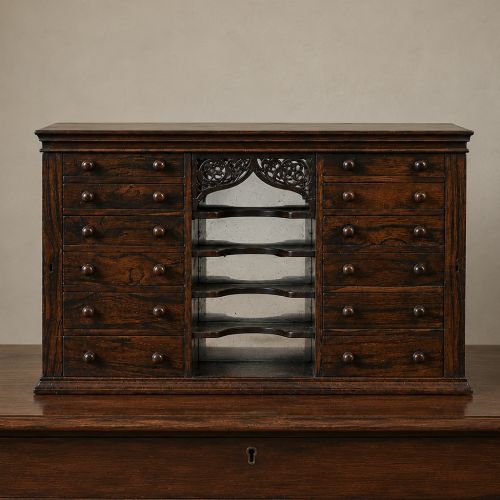
Forms vary from miniature chests of drawers and campaign boxes to table cabinets with mirrored elements or mother of pearl inlay. Buyers encounter both English dressing boxes and Far Eastern specimen cases designed to sit upon a table or dresser.
Materials and construction methods
Makers utilised dense rosewood timber as the primary structural and decorative medium, frequently selecting pieces with striking grain patterns. This hardwood took a high polish, providing a robust exterior for items subjected to frequent handling.
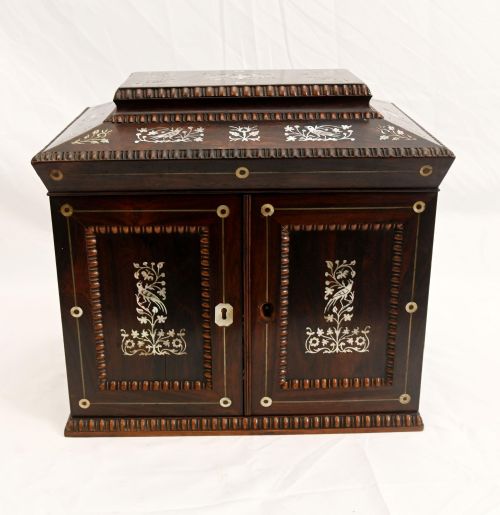
Surface enrichment relied on contrasting materials embedded into the timber, including mother of pearl, brass stringing, and boxwood inlay. Tunbridge ware examples incorporated mosaic work, while Chinese pieces utilised intricate bone and mother of pearl elements.
Interiors were constructed to organise specific personal items, incorporating fitted compartments, removable trays, and lined sections. Metal hardware such as brass escutcheons, campaign handles, and hinges secured the lids and drawers.
Several boxes contain hidden compartments that spring open only when you press a secret wooden peg.
Assessing quality in rosewood chests
Quality reveals itself in the precision of the joinery and the selection of the timber grain across the visible surfaces. Superior examples demonstrate careful book-matching of veneers and seamless integration of inlaid brass or mother of pearl.
Interior fittings distinguish the standard of production, particularly the complexity of the compartmentalisation and the preservation of original linings. Boxes retaining fitted trays, mirrors, and functional locking mechanisms command greater attention from collectors.
The Rosewood Jewellery Chest Glossary
- Rosewood
- A dense, heavily grained hardwood prized for its dark reddish-brown colour and contrasting black streaks. It forms the primary body of the chests found here.
- Mother of pearl
- The iridescent internal layer of certain mollusc shells, cut into thin plates and embedded into the timber surface for decoration. It creates shimmering geometric or floral motifs.
- Tunbridge ware
- Woodwork decorated with mosaic patterns created by gluing together tiny blocks of various coloured woods. These mosaics form intricate pictorial designs on the lids of boxes.
- Escutcheon
- A flat plate of brass or bone surrounding a keyhole. It protects the surrounding wood from wear and adds a decorative metallic accent.
- Campaign box
- A portable container built for travel, featuring recessed brass handles and reinforced corners. These pieces were constructed to withstand the rigours of transit.
Rosewood Jewellery Chest: Frequently Asked Questions
How do I clean a rosewood chest?
Dust the exterior gently with a soft, dry cloth to prevent accumulation in the carved or inlaid details. Avoid harsh liquid cleaners that might damage the polished timber surface or loosen delicate mother of pearl elements.
Condition the wood periodically using a suitable wax polish approved for antique furniture. Apply sparingly and buff gently to maintain the natural lustre of the rosewood grain.
Are these boxes suitable for daily use?
These chests accommodate modern trinkets and personal items securely within their original compartments and trays. Ensure that interior linings are clean and stable before storing delicate jewellery pieces inside.
Handle the lids and drawers with care, particularly on older Regency and Victorian models where hinges and locks experience natural fatigue over time. Lift removable trays gently by their edges to avoid straining the internal framework.
How do I date a rosewood jewellery box?
Examine the construction methods, hardware style, and secondary woods visible within the interior compartments. Georgian and Regency pieces often display clean carcase lines and brass campaign fittings, whereas Victorian examples frequently incorporate elaborate mother of pearl inlay and fitted velvet trays.
Consider the decorative motifs present on the exterior lid and escutcheons. Tunbridge mosaic work and specific inlay patterns align with mid-nineteenth-century manufacturing trends.
What is the difference between a tea caddy and a jewellery box?
Tea caddies were constructed specifically to store dry tea leaves, featuring internal lidded canisters and mixing bowls. Jewellery chests contain compartmentalised trays, ring rolls, and open spaces designed for personal adornments.
While both utilise rosewood timber and brass hardware, their internal layouts reflect entirely different domestic functions during the Georgian and Victorian eras.