

Georgian Demilune Console
A georgian demilune console brings the refined semicircle of the late eighteenth and early nineteenth centuries directly into a hallway or drawing room.
Georgian Demilune Console
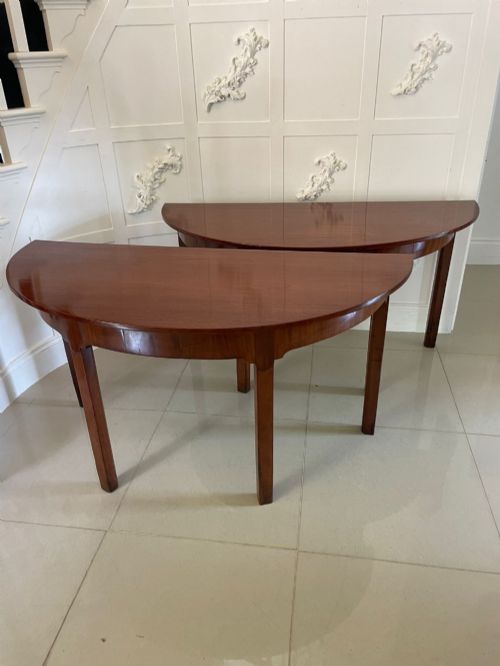
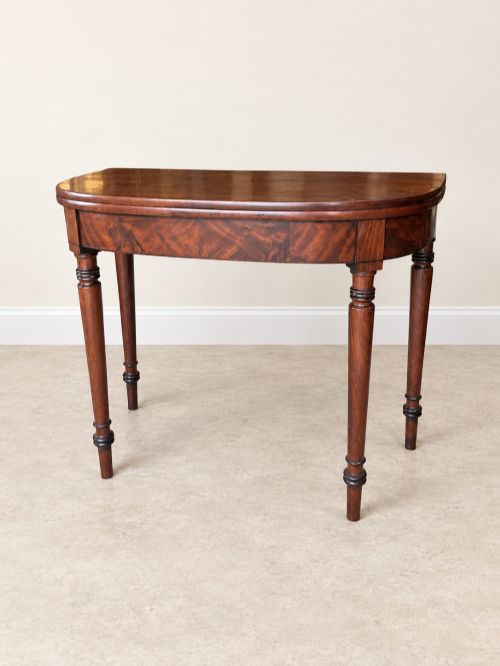
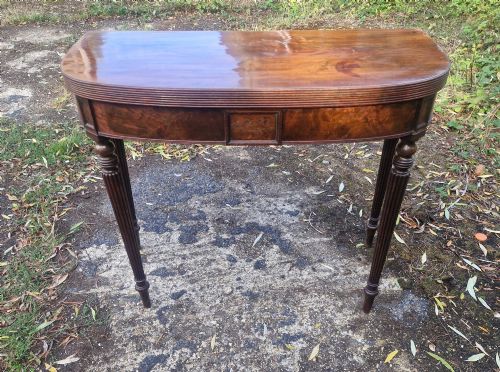
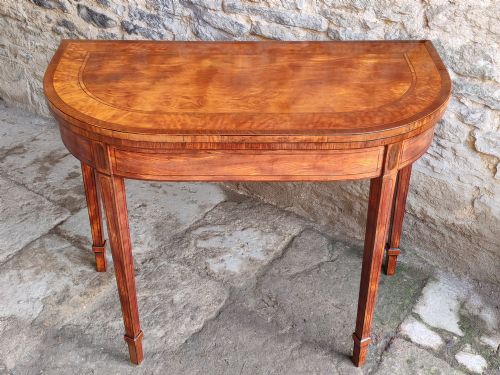
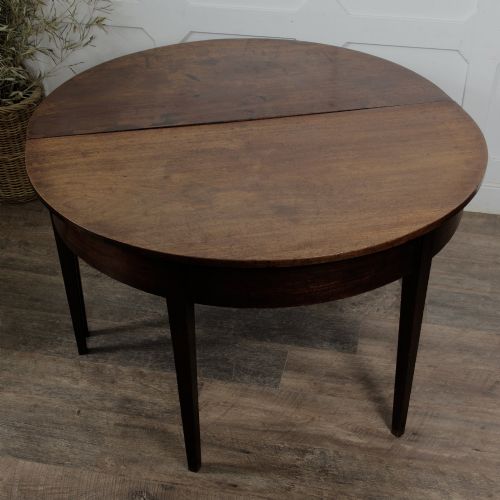
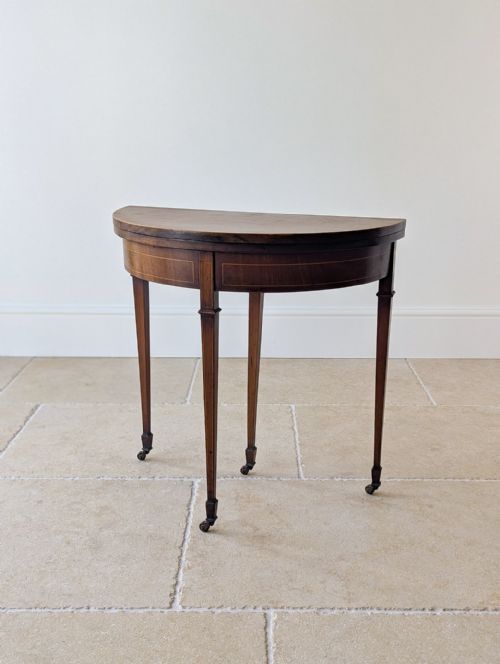
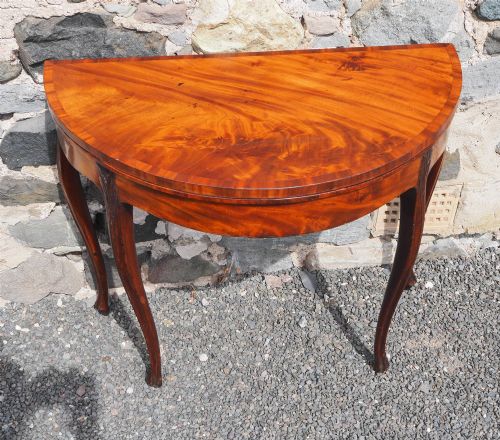
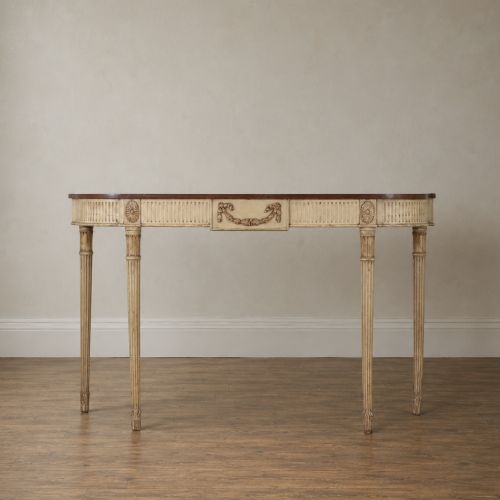
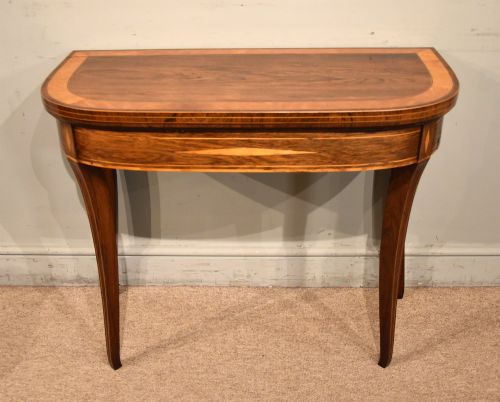
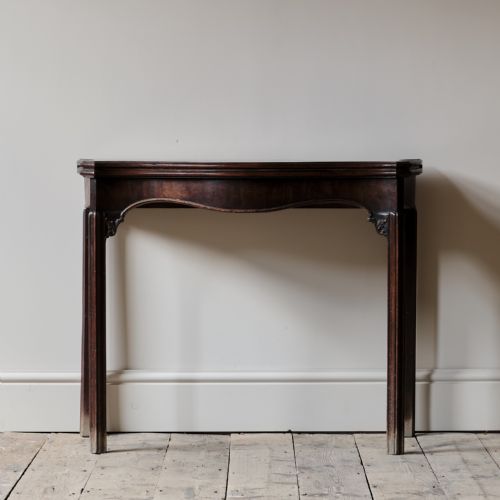
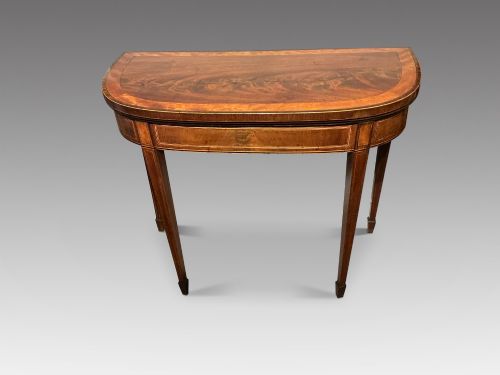
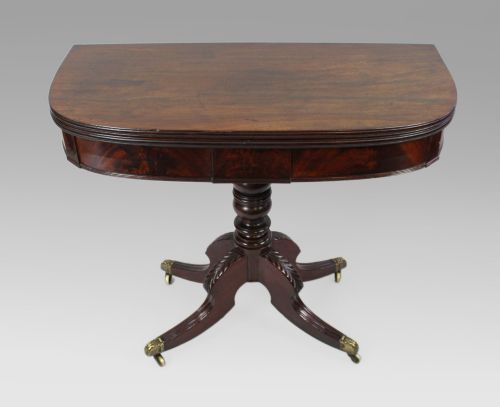
A georgian demilune console takes the form of a half-circle or D-shape, designed to sit flat against a wall in smaller spaces such as hallways and reception rooms. The pieces appearing here span from the eighteenth century into later revival periods, encompassing dedicated console tables alongside versatile fold-over card, games, and tea tables.
Many examples arrive as pairs, originally intended to flank a fireplace or a doorway in larger Georgian and Regency interiors. The selection also includes sideboards and occasional tables sharing the characteristic flat back and curved front of the half-round design.
How they were made
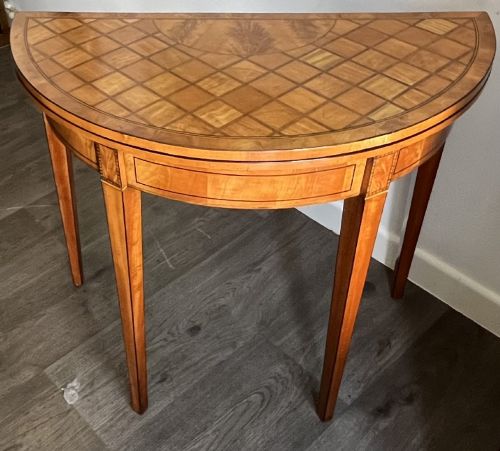
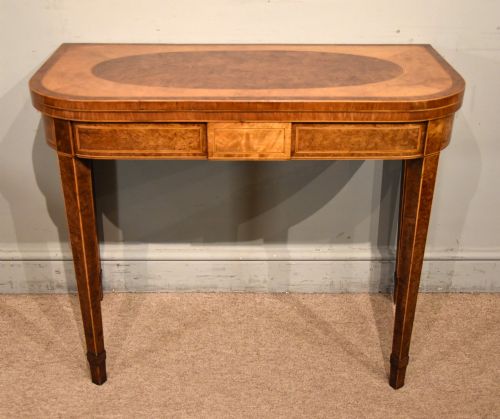
Cabinetmakers constructed these frames primarily in solid and veneered timbers, relying heavily on rich mahogany, figured satinwood, rosewood, and walnut. Artisans employed contrasting boxwood inlay and crossbanding to define the curved edges and accentuate the natural grain of the wood.
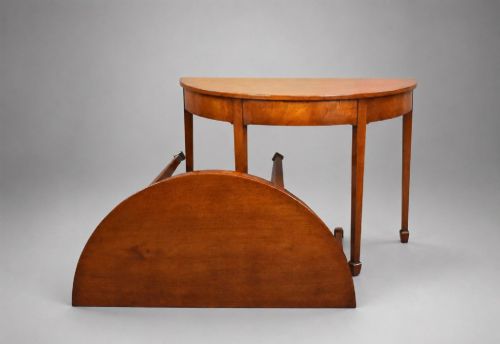
Structural support came from tapered legs, Gillows style legs, or concave legs that matched the prevailing neoclassical and Sheraton tastes of the period. Folding mechanisms utilised wooden hinges and pivots to transform console tables into functional playing surfaces.
The inventory spans the eighteenth and nineteenth centuries alongside Edwardian and later twentieth-century revival interpretations.
What varies in quality
The distinction between standard examples and superior pieces rests in the selection of the timber and the precision of the cabinetwork. Highly figured mahogany, burr yew, and delicately patterned satinwood veneers elevate the visual impact of the top surface.
Fine craftsmanship shows in the crispness of the boxwood inlay, the seamless operation of the fold-over hinges, and the harmonious proportion of the curved apron. Matched pairs demonstrating consistent timber grain and balanced proportions represent the peak of workshop production.
Bruce & Burns of Edinburgh
The Georgian Demilune Console Glossary
- Demilune
- Half-moon or semicircular in shape. This profile allowed tables to stand flush against a wall while projecting minimally into the room.
- Crossbanding
- A strip of veneer applied to the border of a tabletop with the grain running perpendicular to the central panel. It frames the main timber.
- Card table
- A folding table designed for evening gaming, featuring a baize-lined surface when opened. Many adopted the D-shape to function as console tables when closed.
- Satinwood
- A durable hardwood yielding a lustrous, golden-yellow timber favoured by eighteenth-century cabinetmakers. It takes a high polish.
- Pier table
- A table designed specifically to stand against the wall between two windows, often paired with a matching mirror above.
Georgian Demilune Console: Frequently Asked Questions
What is a demilune table?
A demilune table is a furniture piece featuring a semicircular or D-shaped top that sits flat against a wall. The form gained popularity in the Georgian and Regency periods for use in narrow spaces like hallways.
Many of these tables were constructed with folding leaves, allowing them to double as card or tea tables when entertaining guests.
How were folding card tables used?
Card tables served a social function in Georgian drawing rooms, remaining folded against the wall as side tables until required for evening games. When opened, the hinged top revealed a baize or fabric playing surface for cards.
Craftsmen often designed the rear legs to swing outward on a gate-leg action to support the unfolded leaf securely.
Where should I place a console table?
These tables suit narrow reception areas, hallways, and drawing rooms where floor space is limited. Their flat backs allow them to anchor securely against a wall without protruding too far into the walkway.
Pairs of tables are frequently placed flanking a fireplace or doorway to create a balanced, symmetrical interior arrangement.
How do I spot a Georgian piece?
Identifying a Georgian piece involves examining the timber selection, construction methods, and decorative styles such as neoclassical inlay or Sheraton proportions. Cabinetmakers of the era utilised solid mahogany, satinwood, and walnut with meticulous hand-cut joinery.
Later revival pieces from the Edwardian or twentieth century often replicate these forms but carry distinct secondary woods and modern finishing techniques.