
Georgian Decanter
A georgian decanter brings heavy lead crystal, deep cut glass, and bright silver labels directly to the dining table.
Georgian Decanter
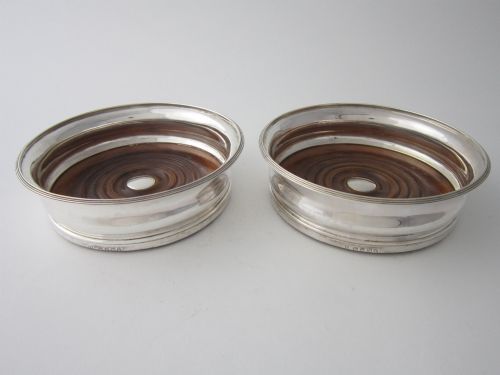
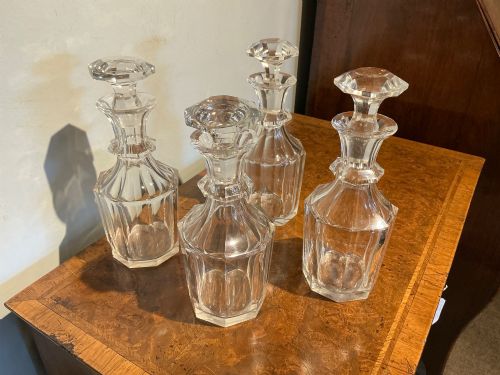
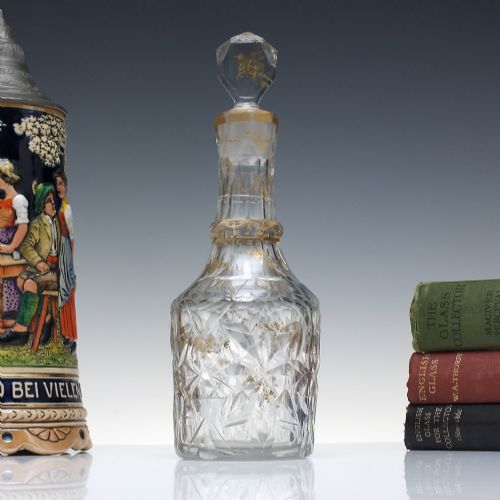
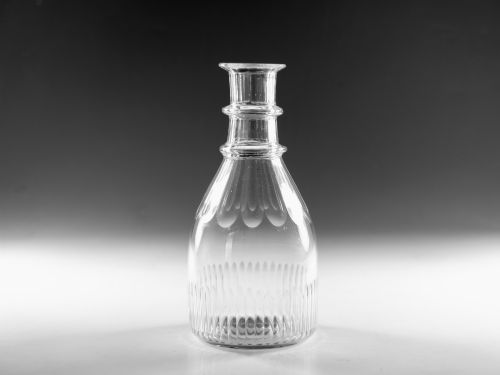
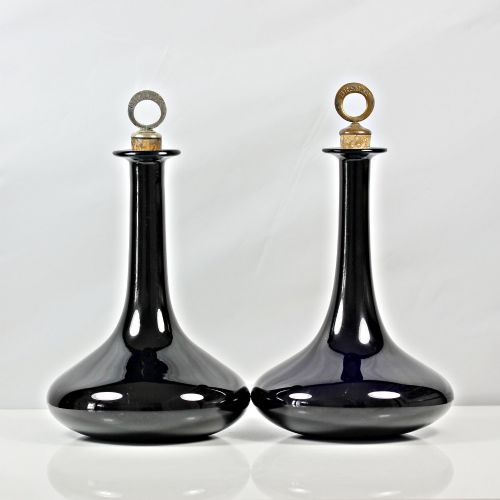
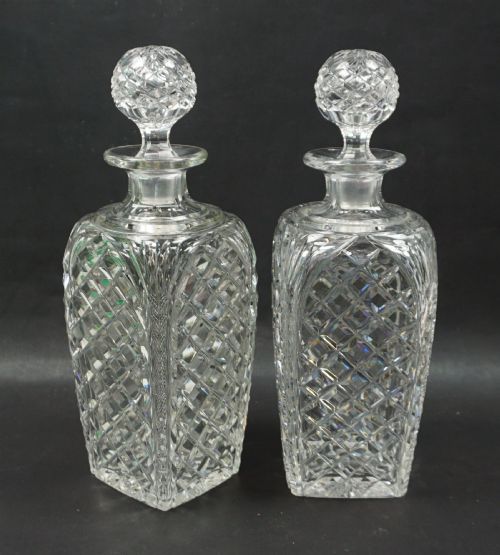
When searching for a georgian decanter, collectors encounter heavy lead crystal vessels shaped for wine, spirits, and cordials alongside matching silver labels and wooden cellarettes. The most frequent versions on this page are cut glass vessels from the Georgian and Regency periods, spanning shaft and globe profiles to Prussian forms with multiple neck rings.
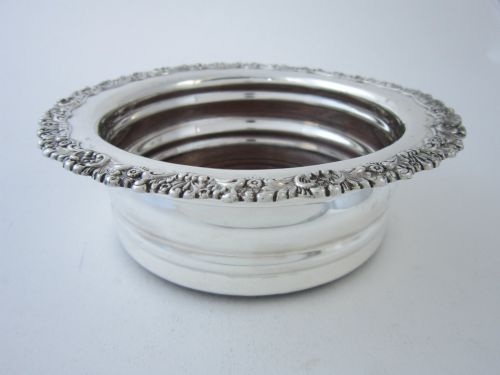
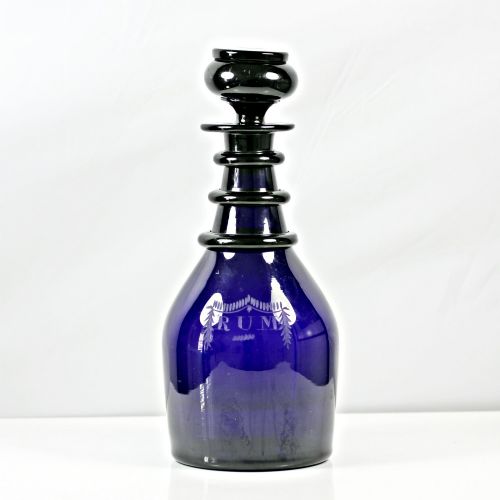
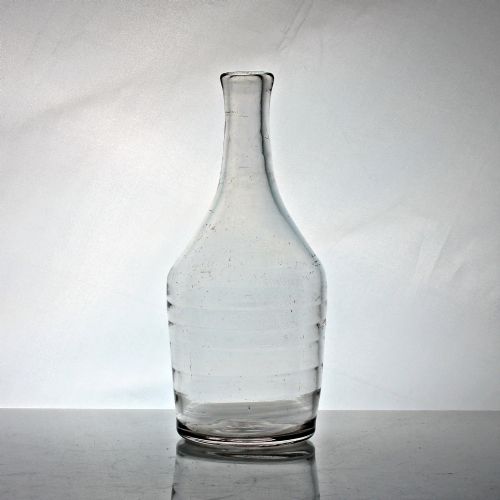
Vessels range from large shoulder decanters and Irish cut glass pieces to small taper spirit decanters rendered in clear glass or rich Bristol blue and green hues. Associated barware such as silver wine funnels, coasters, and engraved bottle tickets frequently accompany these primary glass pieces.
The material evidence bridges clear lead crystal, coloured glass, sterling silver, old Sheffield plate, mahogany, and padouk wood. These items reflect the dining customs of the eighteenth and nineteenth centuries, preserved through decades of domestic use.
Materials and Techniques
Glassmakers utilised lead crystal and hand-blown glass, shaping vessels through free-blowing or moulding before applying pillar, prism, and hobnail cutting techniques. Necks often feature three distinct rings or applied ridges formed while the glass was hot.
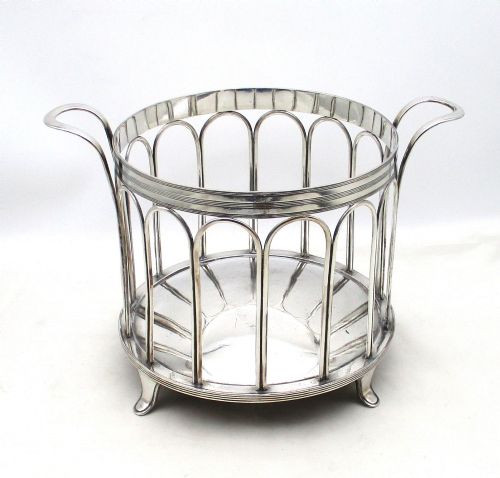
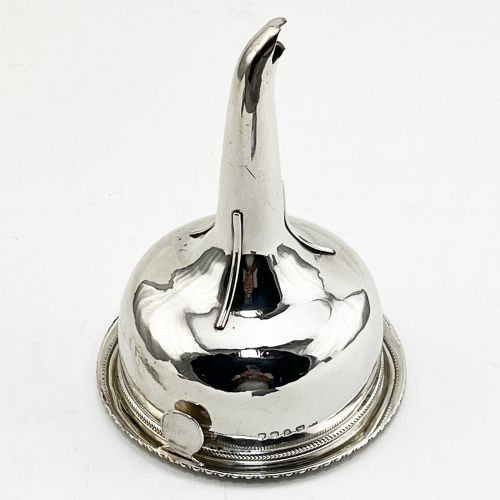
Silversmiths hammered and engraved sterling silver for neck labels, escutcheon shapes, and wine funnels, sometimes employing gilding or specialised plating such as old Sheffield plate for coasters. Cabinetmakers constructed cellarettes and decanter boxes using solid mahogany, padouk, and brass hardware.
Listings feature lead crystal, sterling silver, old Sheffield plate, mahogany, and Bristol blue glass across the Georgian and Regency periods.
Standards of Execution
Quality rests upon the crispness of the glass cutting, the weight of the lead crystal, and the clarity of the metal or coloured glass body. Sharp, deep facets catch the light differently than shallow, rounded grinding.
Silversmithing standards depend on the depth of the hand engraving upon labels and the substantial gauge of the silver used for funnels and coasters. Matching stoppers and original associated pieces elevate the integrity of the whole assembly.
Elizabeth Morley·James Giles·Digby Scott Benjamin Smith·John Reily·Solomon Hougham·Thomas Wallis II·Phipps & Robinson·Hester Bateman·William Sharp·John Heaney
The Georgian Decanter Glossary
- Prussian decanter
- A bottle form with a tapering body, wide base, and multiple neck rings designed to provide a secure grip during pouring. This practical shape remained popular throughout the Regency era.
- Cellarette
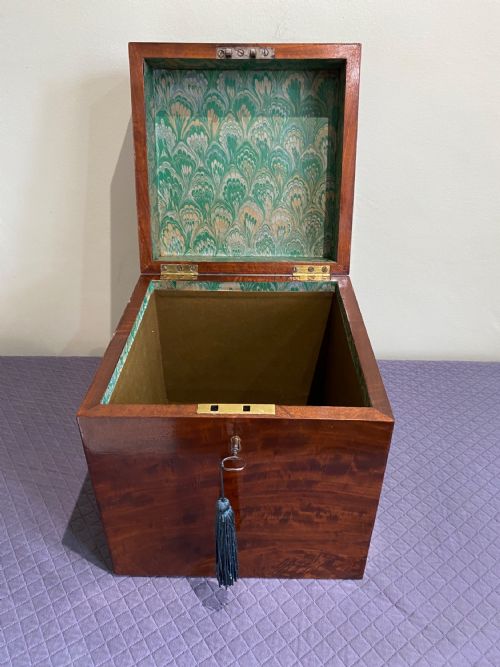
- A lockable wooden box, chest, or standalone piece of furniture lined to hold multiple decanters and bottles safely. They were kept beneath the dining table or beside the sideboard.
- Old Sheffield plate
- A composite material formed by fusing a thin sheet of sterling silver to a thicker copper base. It was widely used for bottle coasters and table stands before modern electroplating.
- Decanter label
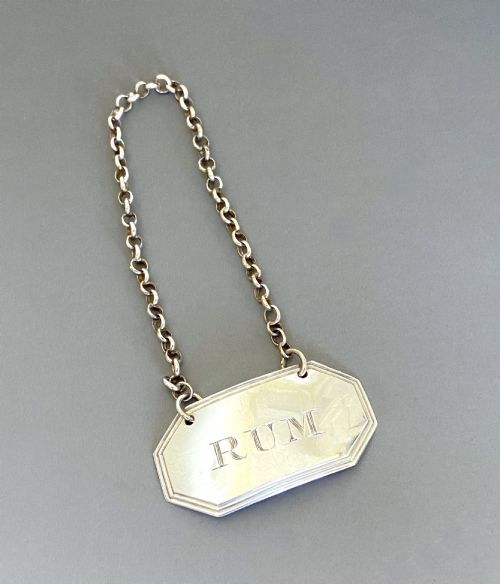
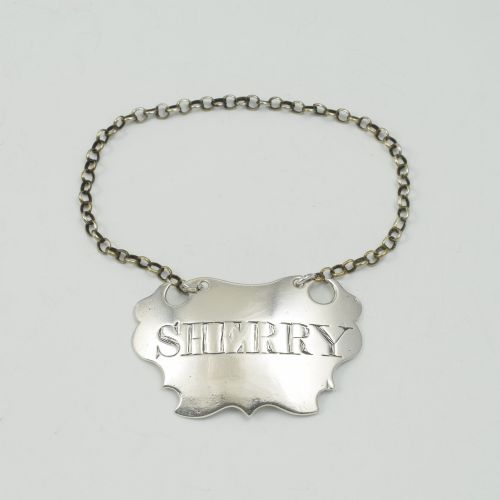
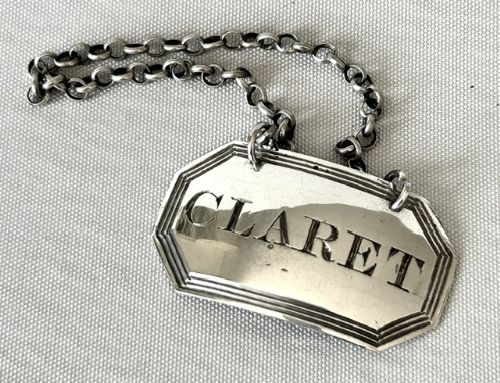
- A small silver or plated tag hung from the neck of a bottle on a chain to identify the contents. They often bear engraved names such as Port, Madeira, or Sherry.
- Wine funnel
- A specialised silver utensil fitted with a perforated strainer bowl used to decant wine while catching sediment. Examples often feature curved spouts to direct liquid against the inner walls of the vessel.
Georgian Decanter: Frequently Asked Questions
How do I identify a genuine period decanter?
Examine the base for a pontil mark left by the snapping-off rod during hand-blowing, alongside the deep hand-polished facets typical of early glass production.
Old lead crystal also displays a distinct heavy weight and a dark, resonant ring when tapped gently.
What are neck rings on glass decanters?
Neck rings are horizontal ridges formed on the neck of a bottle to provide a secure grip for wet hands during pouring at the table.
Prussian and spirit decanters commonly feature between one and five distinct applied rings.
How were silver labels used?
Silver labels, also known as bottle tickets, hung from chains around the necks of decanters to identify the specific wine or spirit held inside.
Silversmiths engraved titles like Madeira, Port, or Rum onto shaped escutcheons or swag designs.
Can I use these decanters for modern wine?
These vessels function well for serving modern wine and spirits, provided the interior is gently cleaned and inspected.
Avoid thermal shock by keeping temperature changes minimal when washing antique lead crystal.