
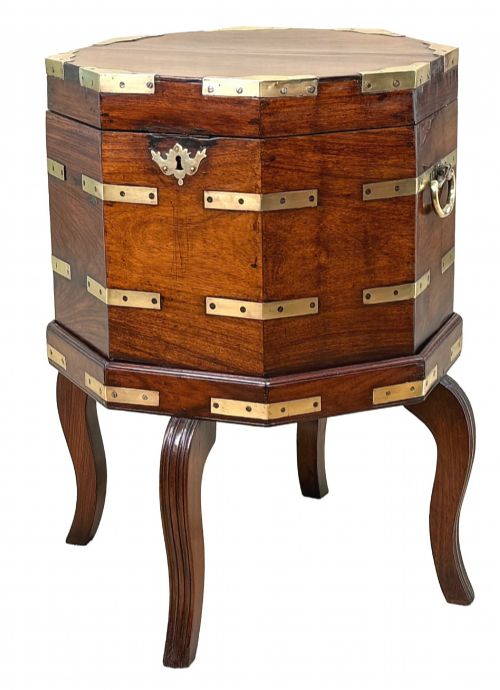
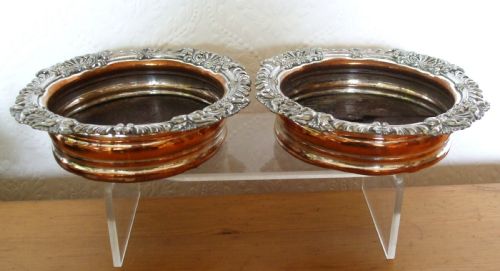


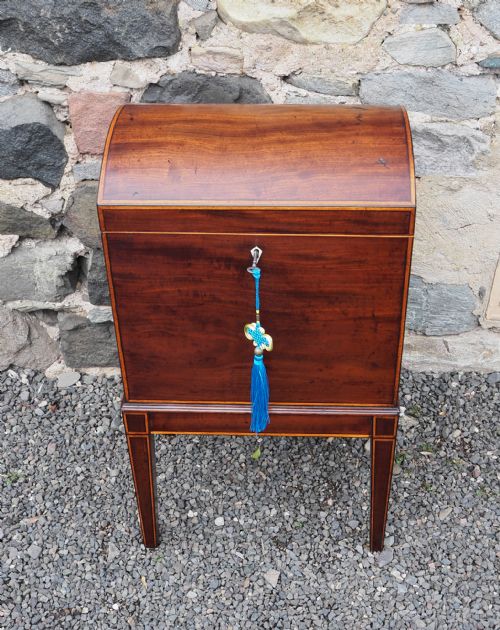


Georgian Decanter Stand
A georgian decanter stand gathers bottles and decanters on the dining table, protecting polished timber from rings and spills with silver, mahogany or papier-mâché.
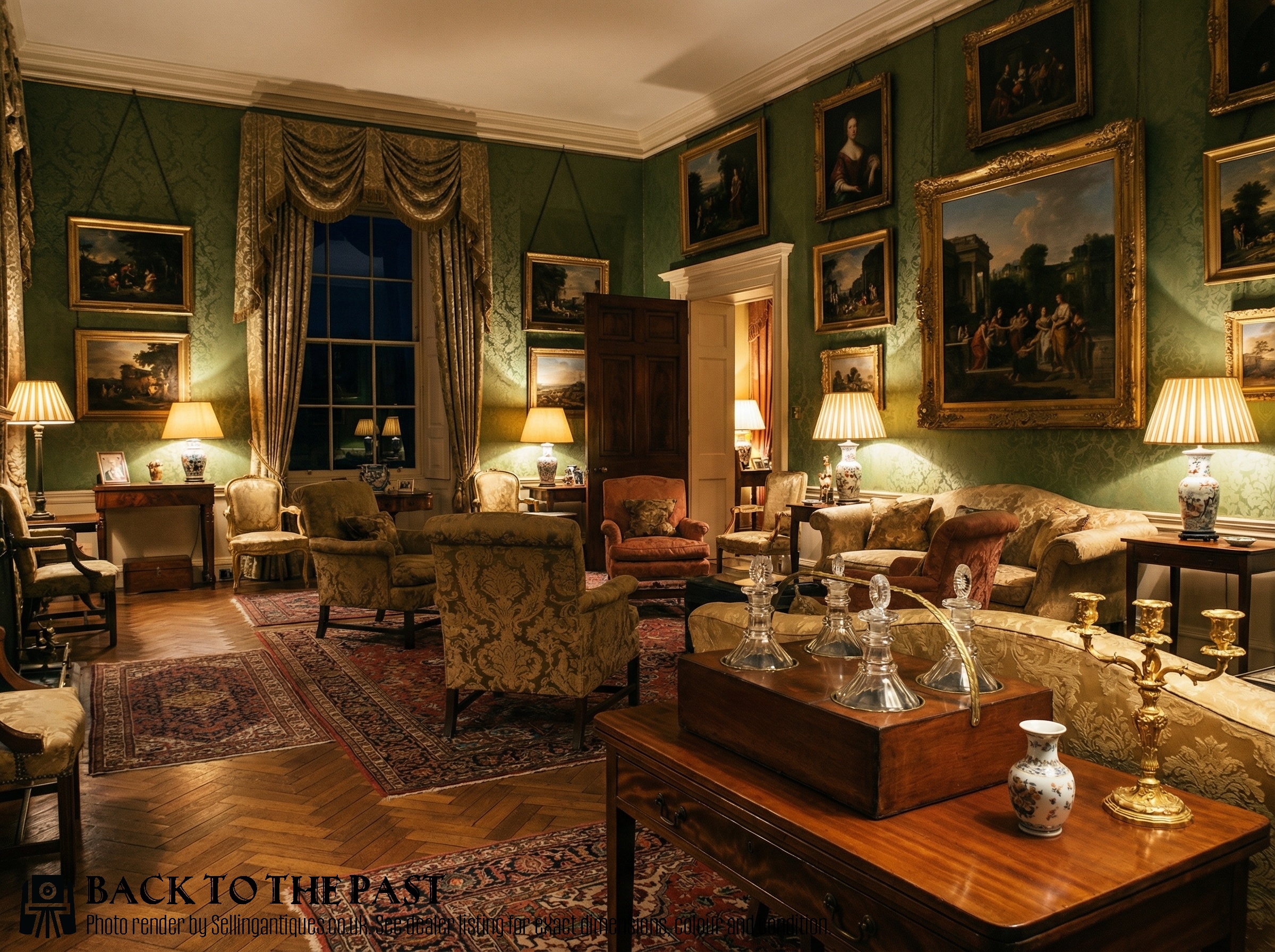
Georgian Decanter Stand
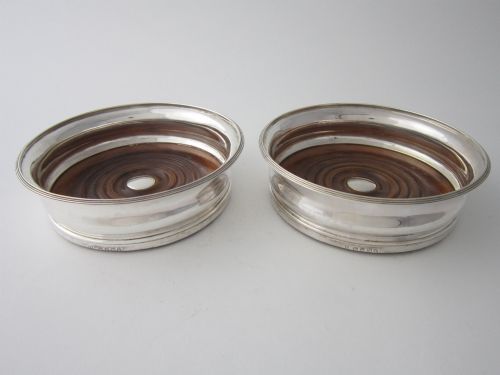
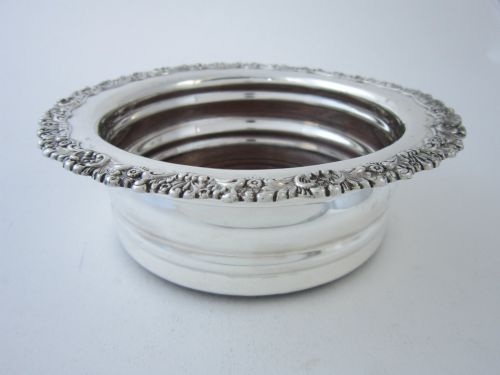
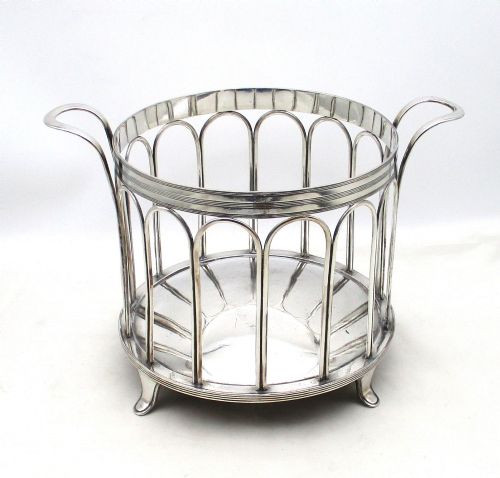
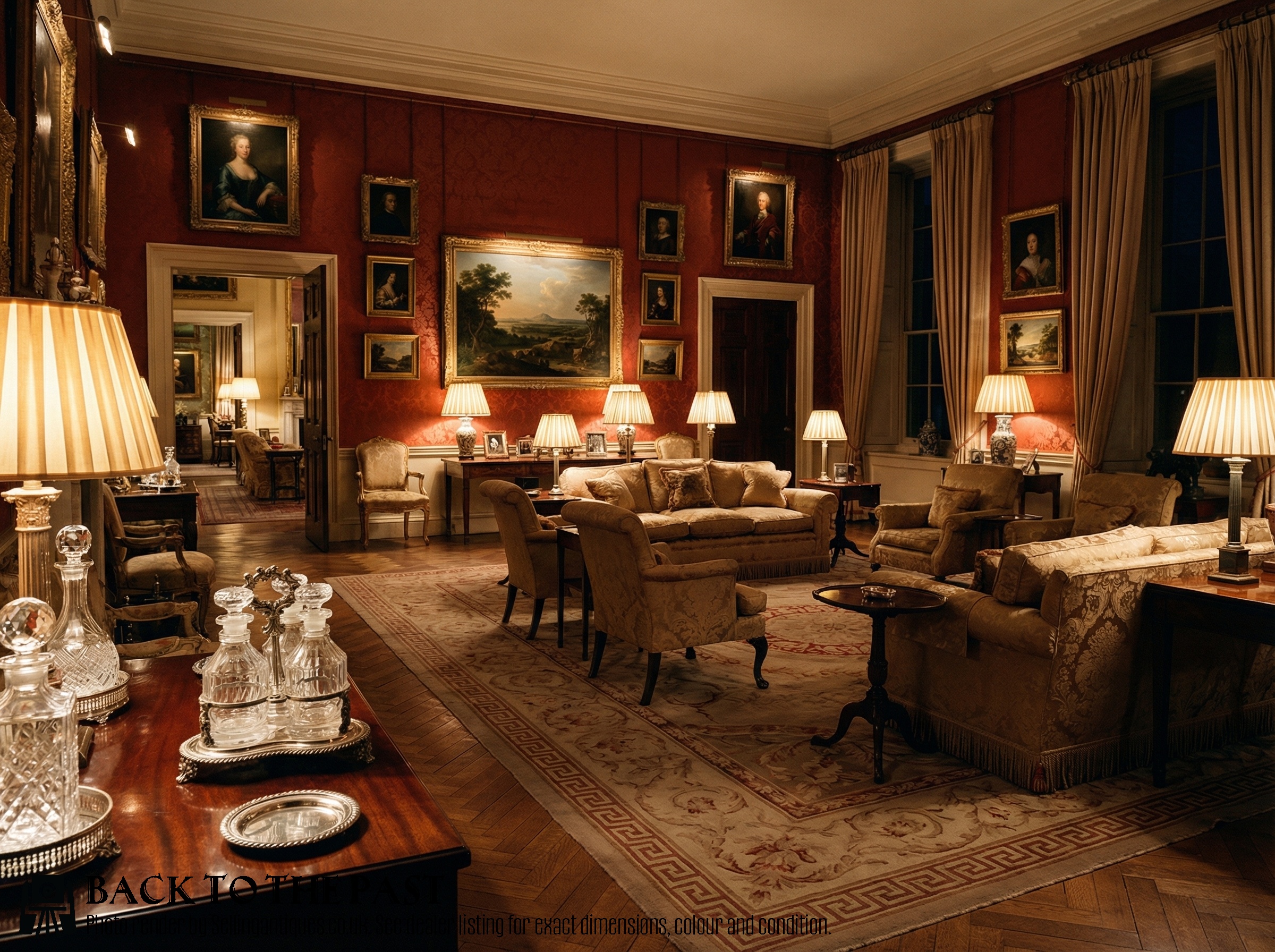
A georgian decanter stand appears on this page predominantly as a wine coaster or bottle stand, designed to slide across the dining surface between guests. These circular frames hold single bottles or multiple decanters, resting on wooden bases or mounted on small wheels.
The selection ranges from George III silver frames to larger cellarettes, cruet sets and mahogany wine boxes. Single coasters and pairs dominate the offerings, alongside multi-bottle cruet frames and occasional tantalus pieces from the eighteenth and nineteenth centuries.
How they were made
Silversmiths constructed sterling silver and old Sheffield plate coasters with pierced galleries, beaded rims and turned wooden inserts at the base. Plated items fused a thin layer of silver onto a copper core, leaving visible seams or characteristic copper lines beneath the wear.
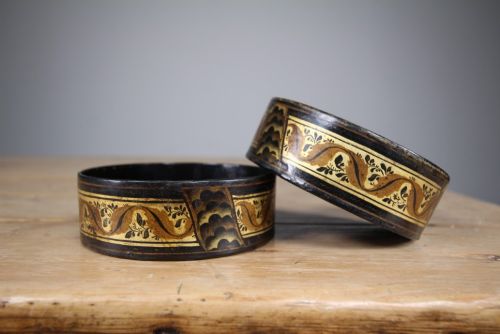
Cabinetmakers utilised mahogany, padouk and rosewood for wooden stands, wine boxes and cellarettes, often incorporating brass handles and inlaid decoration. Papier-mâché pieces relied on layered paper pressed into moulds and finished with black lacquer and gilded ornamentation.
What varies in quality
The crispness of the chased or pierced metalwork separates standard production from finer pieces, particularly in floral motifs and armorial engravings on silver and plate. Weight and gauge of the silver or copper plate also dictate the structural rigidity of the gallery walls.
Wooden stands depend on the figuring of the mahogany or rosewood and the retention of original turned wooden bases. The precision of the joinery in wine boxes and the preservation of gilded lacquer on papier-mâché determine the tier of the piece.
Charles Thomas Fox·Hester Bateman·Asprey·Matthew Boulton·John and Thomas Settle
The Georgian Decanter Stand Glossary
- Wine coaster
- A small circular tray with a raised gallery, designed to hold a wine bottle and protect the dining table. They often feature wooden bottoms lined with baize.
- Old Sheffield plate
- An early fusing technique where a sheet of silver was melted onto a thicker copper ingot before rolling. This composite metal shows hints of copper along exposed edges and wear points.
- Cruet set
- A matched collection of glass bottles for condiments or oil and vinegar, fitted into a metal or wooden stand. These frames often include a central carrying ring.
- Cellarette
- A lockable container or cabinet for storing multiple wine bottles securely near the dining table. Examples range from freestanding floor boxes to tabletop holders.
- Tantalus
- A wooden frame holding decanters in place with a locking metal bar that prevents removal of the bottles. This locking mechanism kept the contents secure from household staff.
Georgian Decanter Stand: Frequently Asked Questions
What is the difference between a coaster and a stand?
Coasters are individual small trays meant to hold a single bottle while circulating around the table after dinner. Stands and frames typically accommodate multiple bottles, cruets or decanters in a single fixed holder.
Single coasters feature wheels or smooth baize bases for sliding, whereas multi-bottle frames often incorporate central handles for lifting the entire collection together.
How do I identify old Sheffield plate?
Old Sheffield plate reveals a reddish copper hue along sheared edges, high points of relief and areas where heavy polishing has worn through the silver layer. This technique predates modern electroplating.
Examination with a loupe often shows the sandwich structure of silver over copper rather than the uniform greyish base metal typical of nineteenth-century electroplate.
Were papier-mâché coasters used for wine?
Papier-mâché coasters served to hold lighter bottles and decanters during dessert courses when heavy silver was not required. The pressed paper material provided a surprisingly sturdy and lightweight structure.
Craftsmen sealed the material with dark lacquer and decorated the surfaces with gold leaf or hand-painted details to match refined dining room interiors.
Why do some coasters have wooden bases?
Wooden inserts inside metal galleries absorbed moisture from chilled wine bottles and prevented condensation from reaching the polished mahogany dining table. These wooden bases were frequently lined with green baize on the underside.
Turned mahogany centres also provided a solid screw fixing for the central metal walls of the coaster.