

Georgian Cut Goblets
Georgian cut goblets are substantial drinking vessels defined by deep facet cutting and clear lead glass, prized for their weight and brilliance.
Georgian Cut Goblets
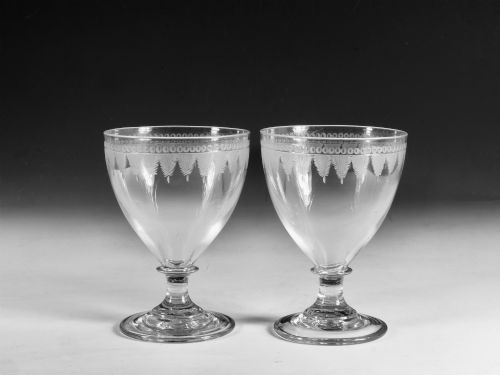
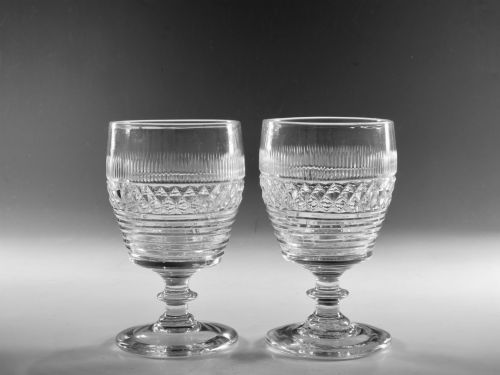
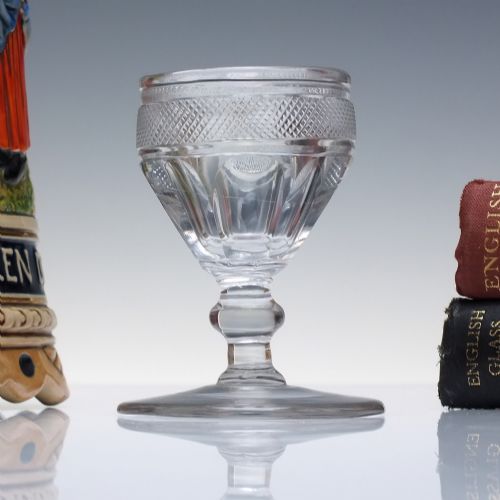
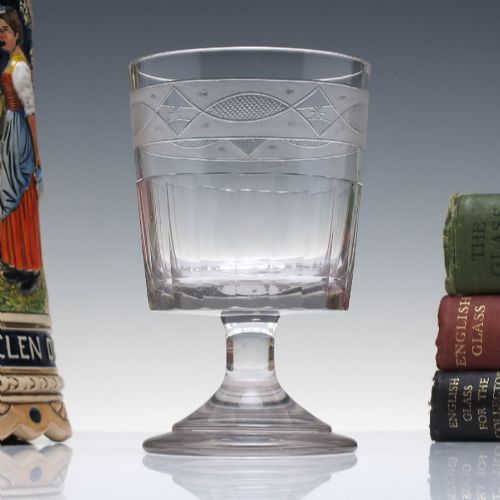
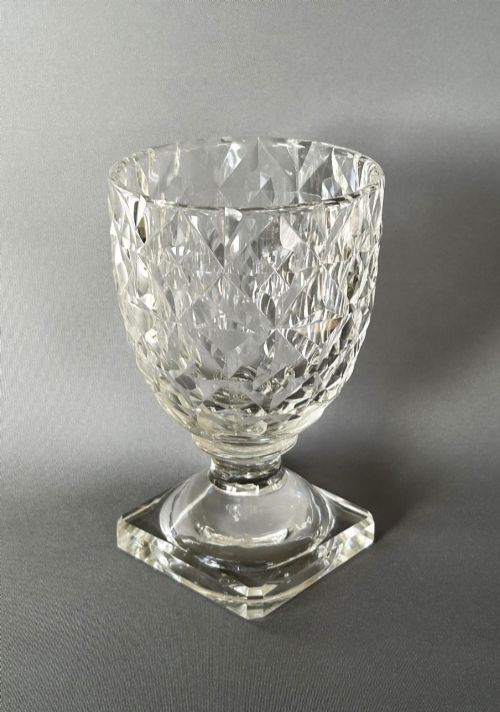
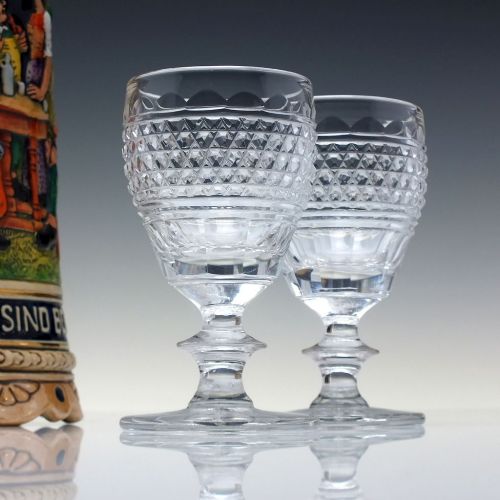
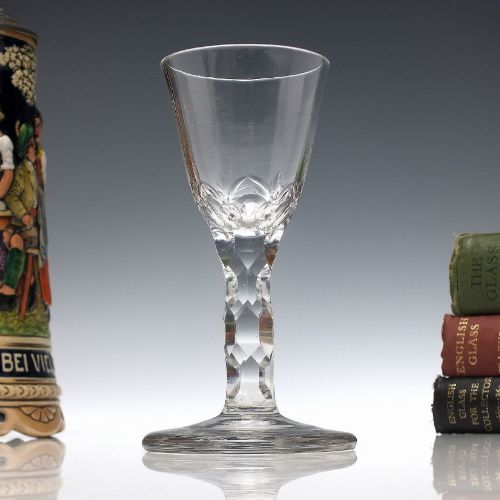
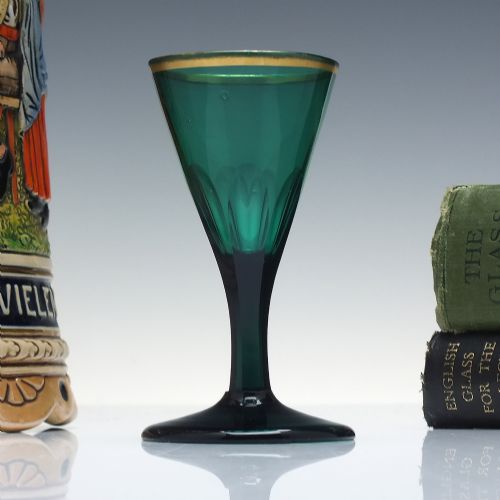
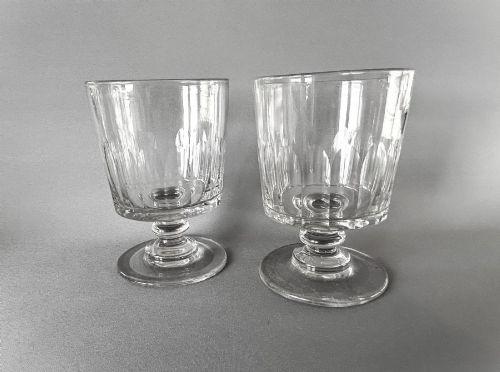
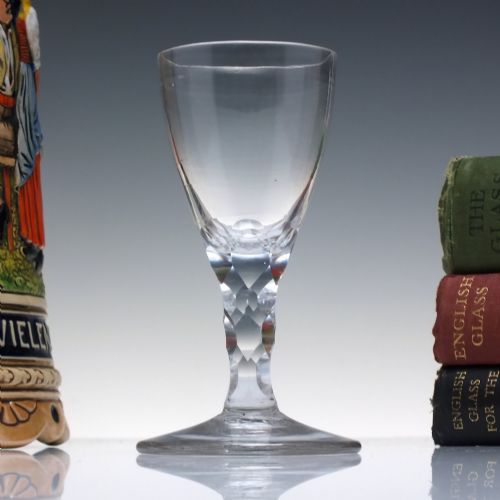
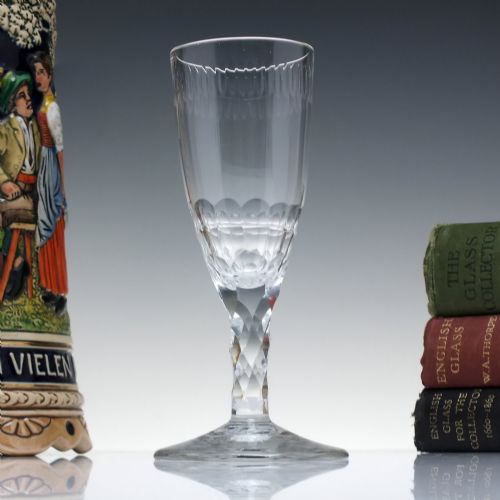
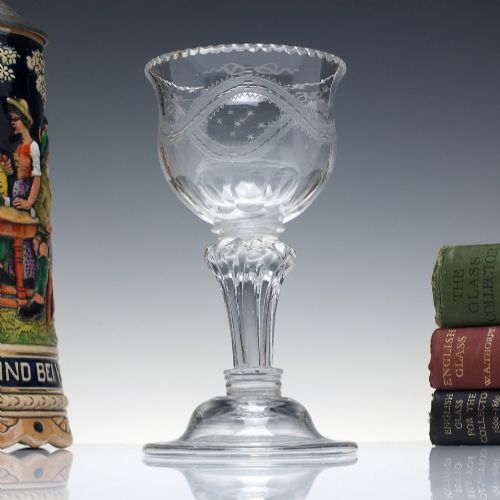
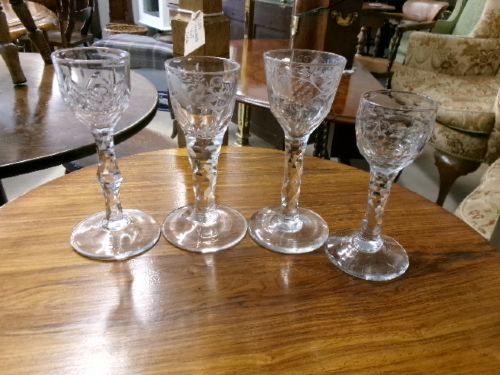
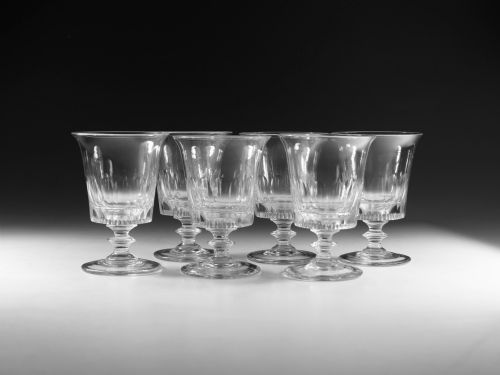
When you search for georgian cut goblets, you encounter drinking vessels and rummers originating primarily in the Georgian, Regency, and Victorian periods. These pieces include large rummers, facet-stemmed wine glasses, and port glasses fashioned from clear glass.
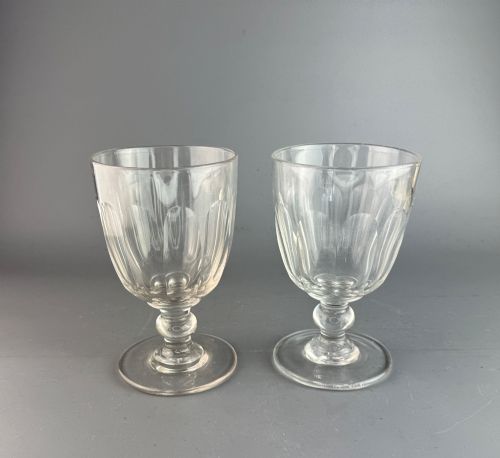
The items span various forms, from square lemon-squeezer footed rummers to bucket and pan rummers. Most examples on this page date to the eighteenth and early nineteenth centuries, reflecting the evolving domestic drinking habits of the era.
How they were made
Maker workshops utilised heavy lead crystal and lead glass, which allowed artisans to apply deep facet cuts and decorative engraving without compromising the structural integrity of the bowl. The high lead content provided the characteristic refractive sparkle associated with these drinking glasses.
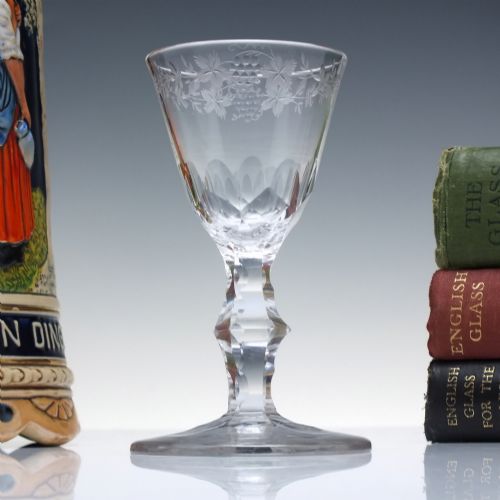
Techniques ranged from facet cutting on stems to wheel engraving on bowls, occasionally complemented by gilding or gold leaf application. Foot bases were shaped generously to support the heavy capacities of rummers and wine glasses.
Georgian Cut Goblets Retail Price Guide 2026
Typical asking prices for georgian cut goblets among the pieces listed under this phrase on Sellingantiques today, from the lower quarter to the upper quarter. They describe what is for sale here now, not the wider market.
Object forms include bucket rummers, pan rummers, and facet-stemmed wine glasses with wide foot bases.
What varies in quality
The standard of a piece rests upon the crispness of the facet cutting and the clarity of the lead crystal metal. Sharp, well-defined cutting lines across the bucket or rummer bowl indicate superior craftsmanship compared to soft, worn surfaces.
Proportion and weight also dictate the tier of an item, as substantial metal and balanced foot bases demonstrate advanced glasshouse skill. Engraved details, whether Jacobite motifs or floral patterns, show varying degrees of finesse from the hand that cut them.
James Giles
The Georgian Cut Goblets Glossary
- Lemon squeezer foot
- A square, pressed glass base with sloping sides resembling a kitchen lemon squeezer. It is frequently found on rummers and large wine glasses from the late eighteenth and early nineteenth centuries.
- Facet cut
- Geometric planes ground and polished onto the surface of the glass. This technique increases light refraction and enhances the sparkle of clear lead crystal.
- Pan rummer
- A specific bowl shape with straight, slightly flaring sides resembling a cooking pan. These vessels often sit above a short stem and wide foot base.
- Lead glass
- Glass containing lead oxide, which increases the weight, refractive index, and workability of the material. It forms the foundation of quality drinking vessels from this period.
Georgian Cut Goblets: Frequently Asked Questions
What is a rummer?
A rummer is a large, sturdy drinking glass designed for heavy table use during the Georgian and Regency periods. They were commonly used for ale, wine, or punch.
These vessels possess thick walls and heavy bases, distinguishing them from delicate contemporary stemware. Their robust construction allowed them to withstand daily tavern and dining room service.
How do I date a Georgian goblet?
Dating relies on examining the form, cutting style, and foot construction of the vessel. Eighteenth-century examples often feature facet-stemmed profiles and plain or engraved bowls.
Later Regency and Victorian pieces frequently incorporate heavier hobnail cutting or square lemon-squeezer feet. The weight and tint of the lead crystal also offer clues to the manufacturing decade.
What were these goblets used for?
Georgian cut goblets served multiple functions at the dining table, ranging from wine consumption to serving ale and spirits. Larger rummers functioned as communal or individual vessels for strong beverages.
Smaller variants, such as port and sherry glasses, accommodated fortified wines. Their substantial build suited the robust hospitality styles of the period.
Are these glasses safe to use?
While historic lead glass is chemically stable, collectors generally display these items rather than use them for daily dining. Hand washing in lukewarm water preserves the antique lead crystal metal.
Sudden temperature changes can stress old glass, making cautious handling essential for preservation. Modern dishwashers and harsh detergents should be avoided entirely.