
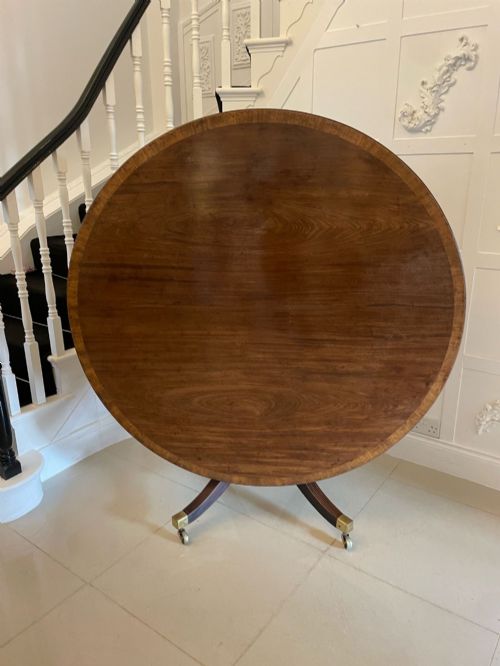
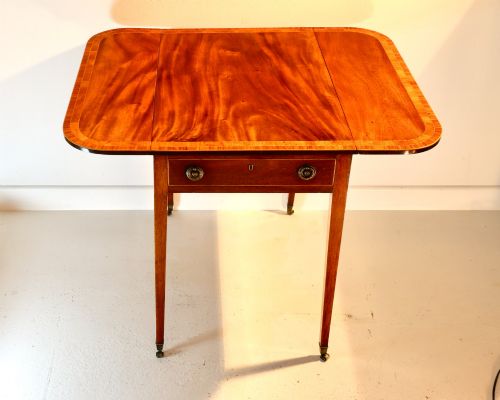


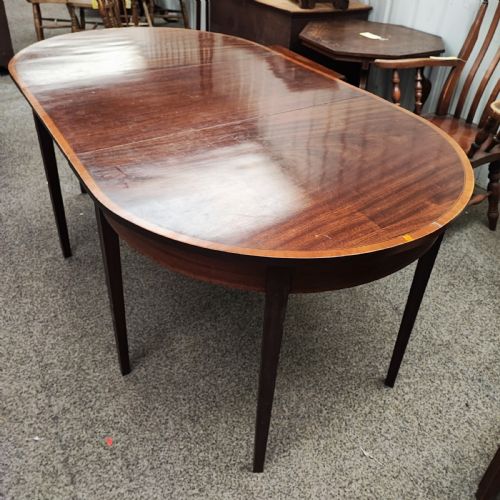


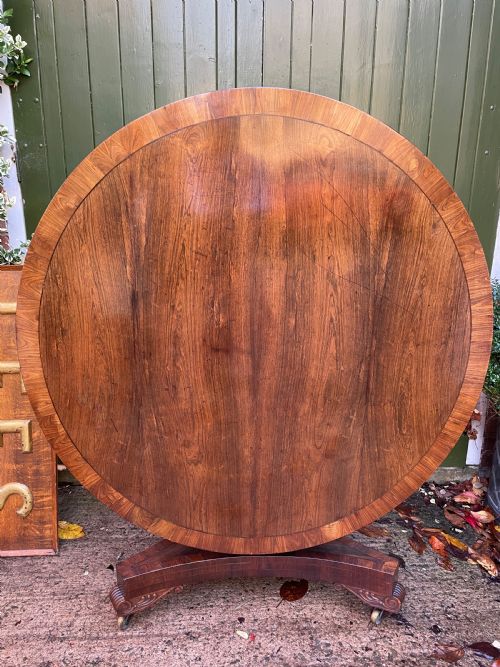
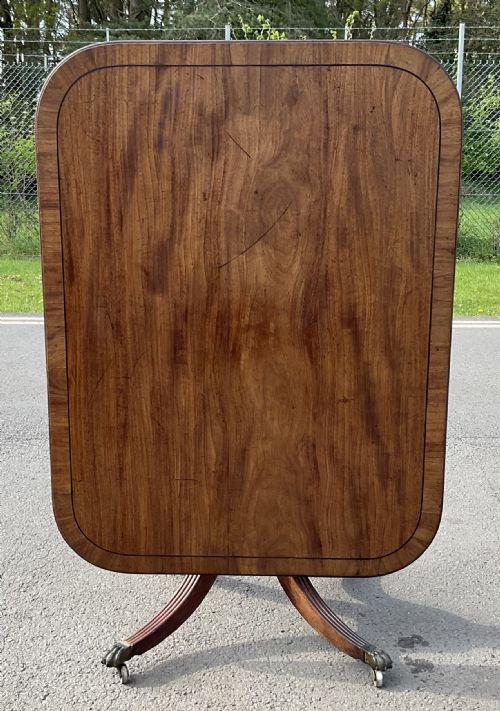
Georgian Crossbanded Dining Table
A georgian crossbanded dining table brings fine timber and contrasting borders to the room, built for gathering and dining.
Georgian Crossbanded Dining Table
A georgian crossbanded dining table represents the cabinetmaker's skill from the eighteenth and nineteenth centuries, spanning George III, Regency, and Sheraton periods. These pieces appear in forms such as circular, oval, rectangular, and pembroke tables designed for dining or occasional use.
The version most likely to be met on this page is the mahogany breakfast table featuring a tilt-top action and decorative borders. Examples extend from the eighteenth century into the Edwardian era with Sheraton revival influences.
Materials and construction
Makers utilised solid and figured mahogany as the primary timber, complemented by satinwood and rosewood veneers for contrasting borders and inlays. Brass components such as castors and tilt-top mechanisms provide functional support to the heavy timber tops.
Crossbanding involves laying veneer strips across the grain of the main surface to create a framed border effect. Cabinetmakers selected timbers with strong grain patterns to catch the light on circular and oval table tops.
Many breakfast tables feature a secret hinge mechanism designed to hide the table flat against the parlour wall between meals.
Assessing quality and execution
The selection of figured mahogany and the precision of the satinwood or rosewood inlay distinguish finer examples from simpler provincial pieces. Grain matching across the leaves and the border reveals the care taken in the workshop.
The robustness of the tilt-top mechanism and the integrity of the pillar and pedestal supports indicate the standard of construction. Original brass details and untouched patination on the timber elevate an item's standing.
The Georgian Crossbanded Dining Table Glossary
- Crossbanding
- A border of veneer laid with the grain running perpendicular to the main surface. This technique frames the top and highlights the central timber.
- Tilt-top
- A mechanism allowing the table top to pivot into a vertical position when not in use. This saved space in smaller rooms during the period.
- Satinwood
- A pale, durable exotic timber used for contrasting inlay and banding. It provides a bright visual edge against darker mahogany.
- Pembroke table
- A small table with hinged drop leaves on two opposing sides. These versatile tables served various domestic functions in the Georgian home.
Georgian Crossbanded Dining Table: Frequently Asked Questions
How do I use a tilt-top table?
Release the brass catch beneath the top to pivot the surface vertically. This allows the table to stand flat against a wall when not in use.
Return the top to the horizontal position and secure the catch firmly before placing items on the surface.
What is crossbanding?
Crossbanding is a decorative border technique where narrow strips of veneer are applied so the grain runs across the width of the band.
This frames the main timber panel and creates a distinct visual border around the edge of the table top.
How do I care for mahogany surfaces?
Dust the timber regularly with a soft, dry cloth to prevent dirt accumulation. Avoid placing tables in direct sunlight or near heat sources to protect the wood.
Apply a traditional wax polish occasionally to nourish the grain and maintain the natural lustre of the polish.
How do I tell George III from Regency pieces?
George III pieces generally display classical proportions and restrained mahogany veneers from the later eighteenth century. Regency items often incorporate bolder brass mounts, rosewood elements, and influences from the early nineteenth century.
Comparing the stretcher design and leg profiles helps distinguish between the two overlapping periods.