
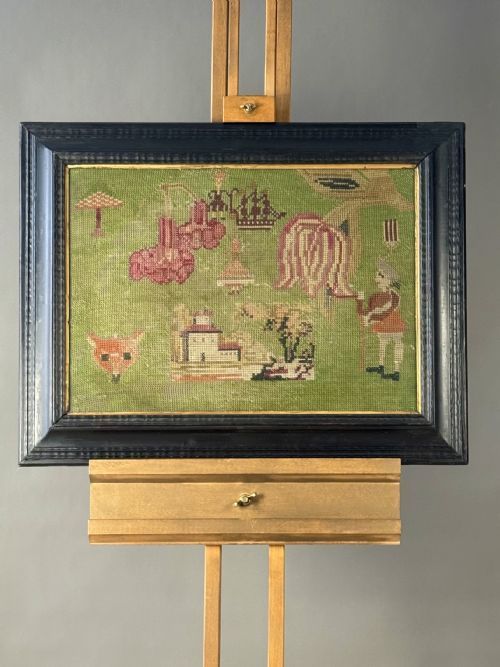
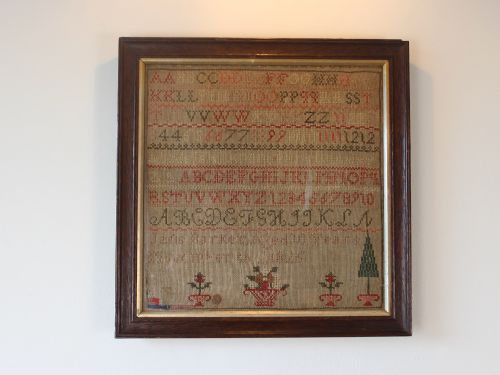
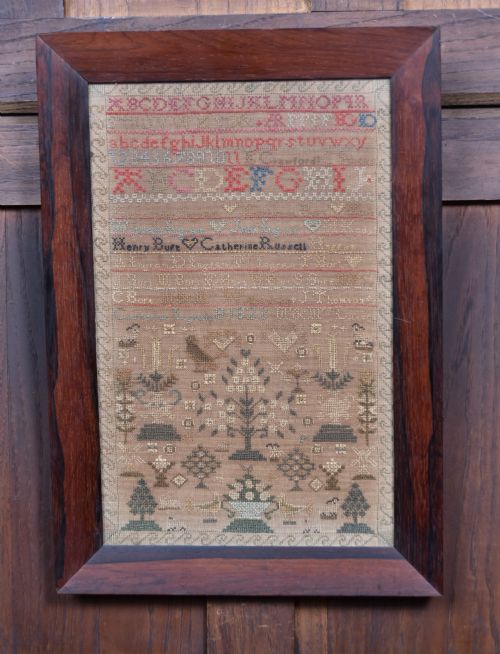


Georgian Cross Stitch Panel
A georgian cross stitch panel brings historic needlework into a room, offering stitched alphabets, verses, and pious texts framed in wood behind glass.
Georgian Cross Stitch Panel
A georgian cross stitch panel typically takes the form of a needlework sampler worked on a foundation of linen. These historic pieces record alphabets, religious verses, and familial records stitched by hand, often by young makers who included their age and a date.
The pieces on this page span the eighteenth and nineteenth centuries, incorporating styles from George II through to the Regency and Victorian eras. Alongside traditional alphabets, examples feature the Lord's Prayer and moral commandments executed in thread.
Framed textiles and needlework wall art dominate the selection, preserving delicate fabrics behind glass within wooden frames. Most examples originate from British hands, capturing domestic education and needle skills from centuries past.
How they were made
Makers stitched using silk thread and wool onto woven linen grounds, employing counted thread techniques to form letters, numerals, and pictorial motifs. The density of the stitching determines the crispness of the lettering and the stability of the overall textile.
Protecting these fragile works involved mounting the finished linen panel within a wooden frame, frequently secured behind glass to keep dust and moisture away from the historic threads.
The documented makers include young stitchers such as Louiss Elkins, Sarah Baker, and Jane Pattinson, often recording their ages.
What varies in quality
The distinction between ordinary and exceptional panels rests on the precision of the stitching and the ambition of the composition. Works featuring complex verses, decorative borders, and detailed pictorial elements demand greater skill than basic alphabet grids.
Condition and legibility define the appeal of each panel. Strong survival of the original thread colours and a clear, dated inscription identifying the maker elevate an example above anonymous or heavily faded fragments.
The Georgian Cross Stitch Panel Glossary
- Sampler
- A piece of needlework produced as a demonstration or test of skill in various stitches. These cloths often preserve alphabets and numbers for future reference.
- Linen
- A strong, durable textile woven from flax fibres. It served as the primary foundation fabric for needlework panels before cotton became dominant.
- Needlepoint
- A type of canvas work embroidery where yarn or thread is stitched through a stiff open-weave canvas. It creates a dense, durable surface covering.
- Textile Art
- Works created using plant, animal, or synthetic fibres to form decorative visual objects. Framed needlework falls squarely into this category.
Georgian Cross Stitch Panel: Frequently Asked Questions
How old is a georgian cross stitch panel?
These panels date primarily from the eighteenth and nineteenth centuries, spanning periods from George II through the Regency era and into Victorian times.
Many pieces bear stitched dates and the names of young makers, allowing collectors to establish their exact age with considerable precision.
Who made these needlework panels?
Young girls and students stitched these panels as part of their domestic education in needlecraft and literacy. Signing their work with an age and date was a common practice.
Names such as Sarah Reading, Elizabeth Horn, and Mary Street appear directly on the linen alongside their stitched alphabets and verses.
How should I hang a framed sampler?
Display these framed textiles away from direct sunlight to prevent the silk threads and linen grounds from fading. Keeping them out of damp rooms protects the organic fibres.
Ensure the frame hangs securely on a stable wall where temperature fluctuations remain minimal to preserve the fragile materials inside.
What subjects appear on these panels?
Alphabets and numbers form the foundational elements of most samplers, reflecting early educational exercises. Moral texts, religious verses, and biblical passages such as the Lord's Prayer also feature prominently.
Family registers, moral commandments, and instructional phrases like On Education appear alongside decorative borders and floral motifs.