
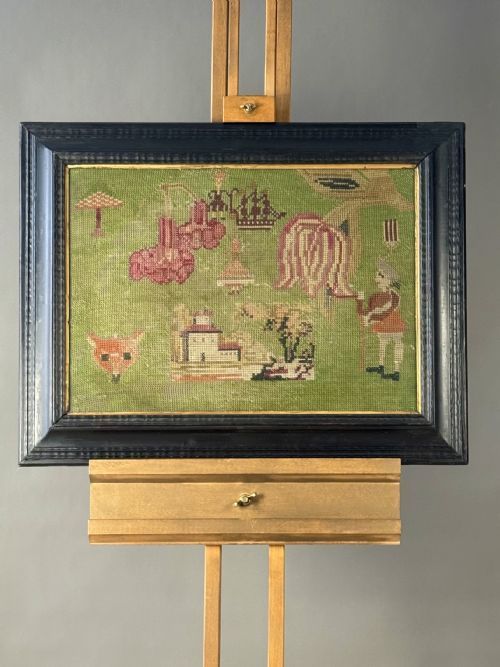
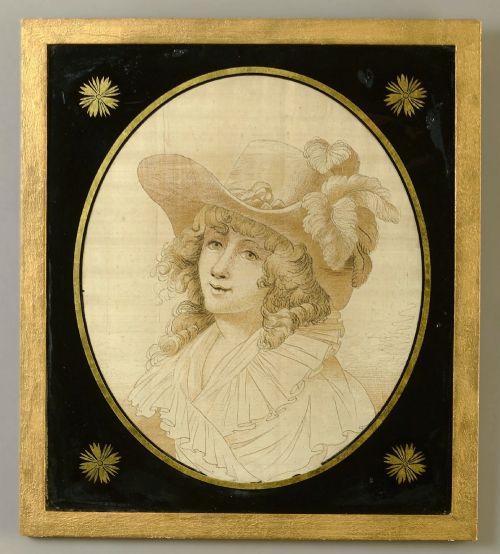
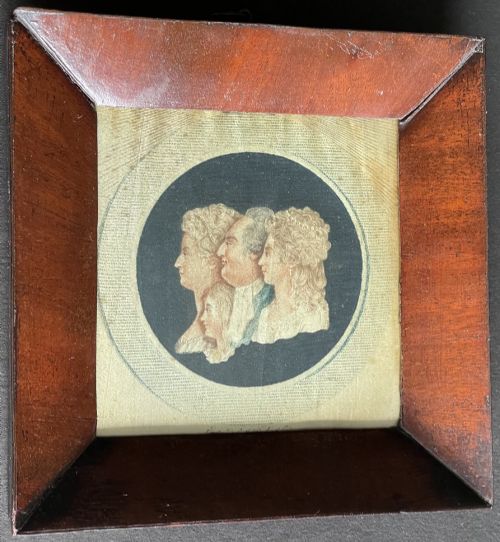
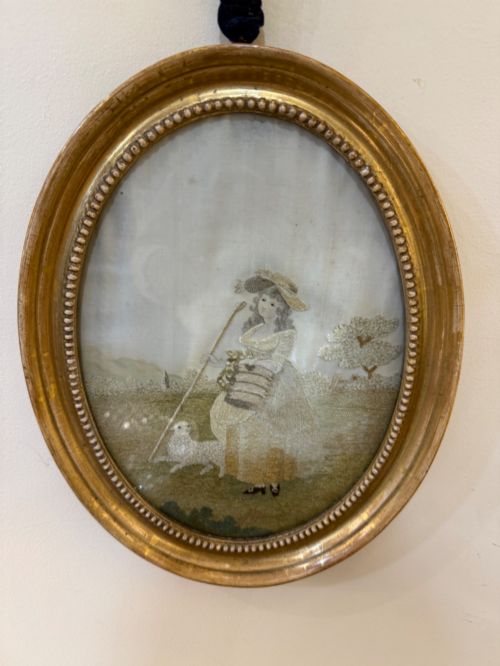




Framed Georgian Textile
A framed georgian textile brings centuries of needlework, silk embroidery, and map samplers behind glass for the wall.
Framed Georgian Textile
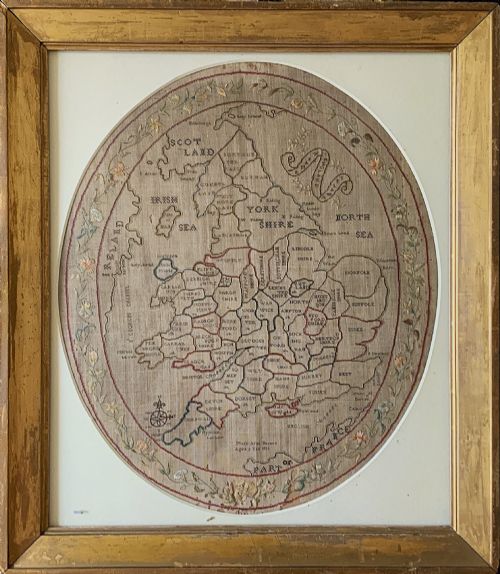
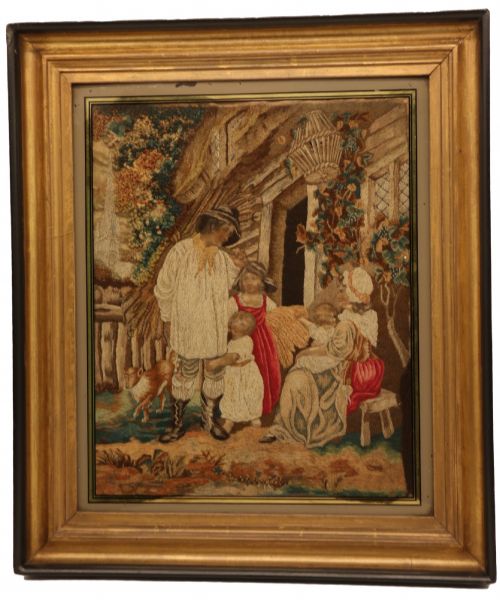
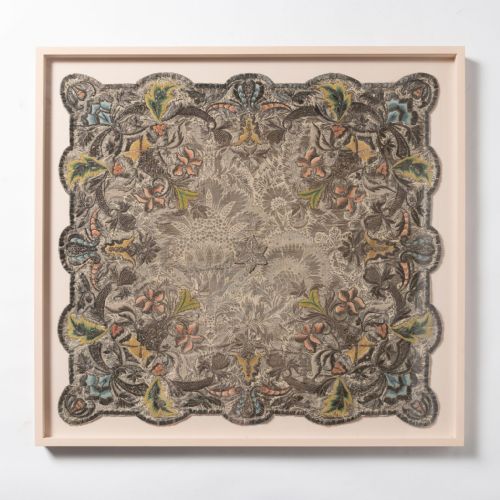
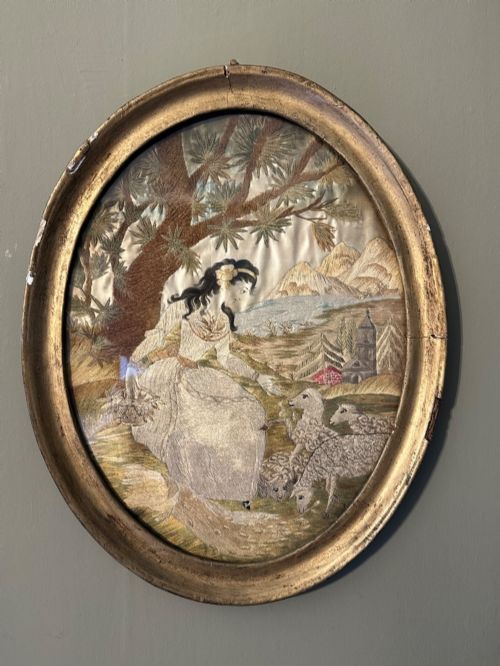
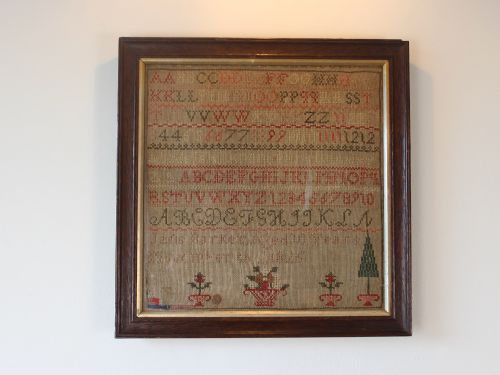
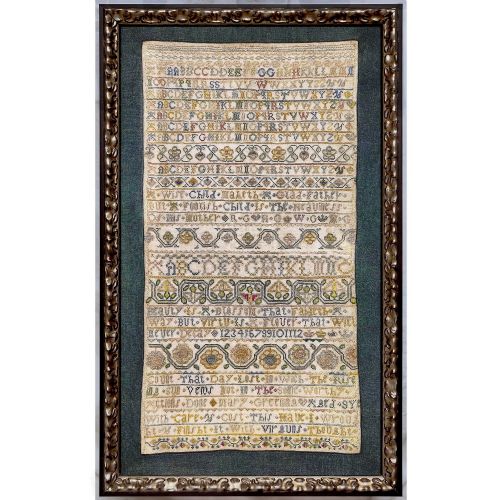
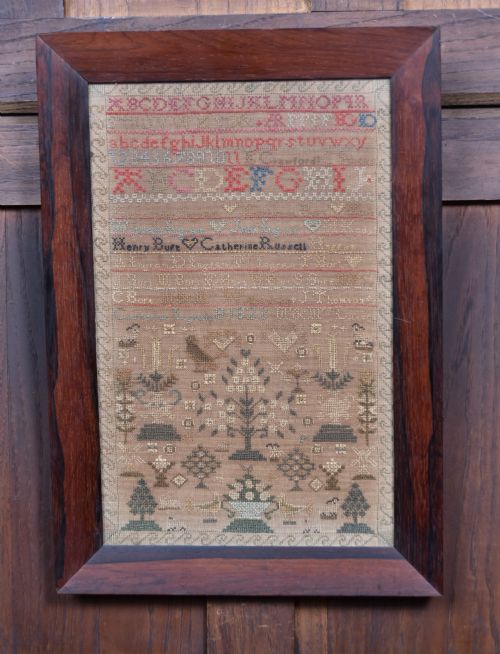
A framed georgian textile encompasses historical needlework pictures, embroidered wall panels, and alphabets stitched by young hands. These pieces capture domestic artistry from the eighteenth century into the nineteenth, often preserving maps, pastoral farming scenes, and portraits.
Sampler works dominate the selection, featuring names of makers alongside dates and geographic studies like England and Wales. Needlework pictures rendered in silk thread sit alongside crewel work and woven silk portraits under glass.
Origins stretch across English workshops and Scottish schools, maintaining the original fabric mount within period surrounds. The wall art ranges from religious devotional panels to narrative embroidery telling traditional stories.
How they were made
Makers stitched using silk thread, wool, and linen ground fabrics, employing needlepoint and embroidery techniques to build pictorial depth. Hand-painted silk details often combine with fine thread work to articulate faces and backgrounds.
Framing utilises glass to protect delicate textiles from atmospheric moisture, mounted inside wood, giltwood, or verre églomisé surrounds. These protective housings preserve fragile organic fibres against dust and handling over successive centuries.
Listings feature silk, wool, linen, and thread mounted behind glass within wood and giltwood frames across eighteenth and nineteenth-century periods.
What varies in quality
Execution of stitchwork separates routine schoolroom exercises from masterworks of needle art, visible in the precision of lettering and tonal shading of silk floss. Pictorial clarity in pastoral scenes or facial expressions dictates the aesthetic standing of each embroidered panel.
Originality of the surrounding frame and the survival state of the textile ground influence historical integrity. Intact glass and minimal fading to silk thread maintain the visual impact achieved by the original maker.
The Framed Georgian Textile Glossary
- Sampler
- A piece of needlework demonstrating various stitches and alphabets, often worked by young girls learning domestic skills. These exercises frequently record the maker's age and date.
- Crewel work
- Embroidery executed in wool yarn on a linen or cotton ground. This technique creates heavy, textured surface patterns in wall hangings and pictures.
- Verre églomisé
- A process of applying gold or silver leaf to glass combined with engraving and painting. Frames utilising this method frame pictures with decorative borders.
- Needlepoint
- Stitches worked through a stiff open-weave canvas backing to cover the entire ground in geometric or pictorial designs. This method provides structural rigidity to framed textile art.
- Silk floss
- Untwisted silk thread used for smooth, lustrous embroidery work. It allows makers to achieve subtle tonal gradients in figurative panels.
Framed Georgian Textile: Frequently Asked Questions
How are antique samplers dated?
Makers frequently stitched their names, ages, and exact years directly into the composition alongside alphabets and decorative motifs. Stylistic elements of the border and lettering further anchor the period of creation.
Secondary clues involve the type of linen ground fabric and the construction methods used in the original frame housing the textile.
What is the difference between a sampler and a silkwork picture?
Samplers primarily record alphabets, numerals, and repetitive stitches as proof of domestic education, occasionally mapping regions. Silkwork pictures focus entirely on pictorial scenes, portraits, or pastoral landscapes using fine thread.
Both forms utilise glass protection, but pictorial panels emphasise shading and narrative composition over technical stitch registries.
How should framed textiles be hung?
Display these works away from direct sunlight to prevent silk threads and wool from fading or losing their original colour tones. Stable indoor humidity levels protect the underlying linen and wood frames from environmental stress.
Glazing should remain sealed to keep dust and atmospheric pollutants away from the fragile antique fibres inside.
Are map samplers historically accurate?
Schoolgirl cartography maps reflect the geographical knowledge taught in classrooms during the Georgian era, displaying borders and towns as understood at the time. Cartographic layouts show regional boundaries that evolved long after the needlework was finished.
These pieces serve as social history documents rather than precise navigational tools.