
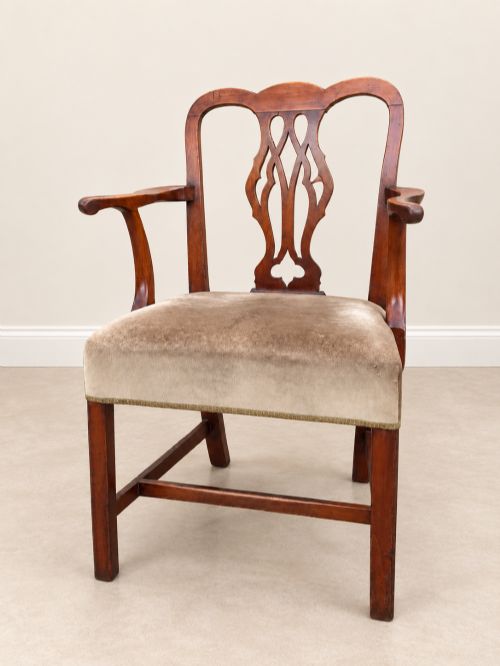
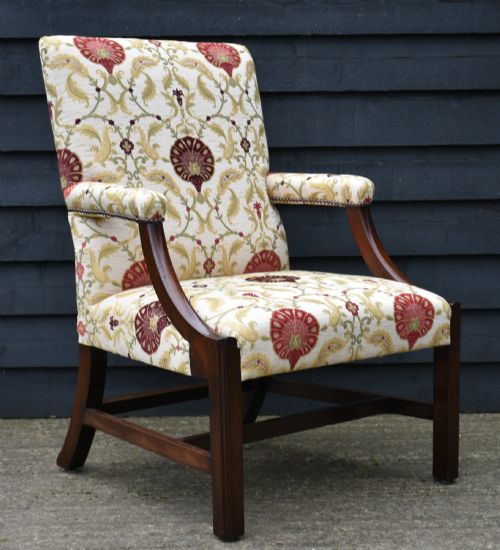
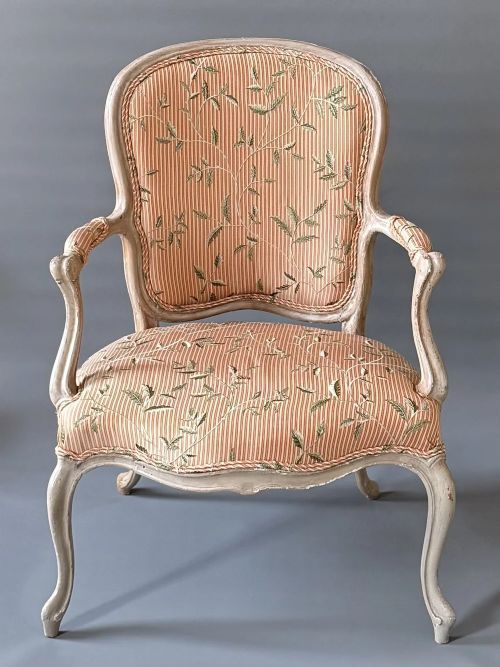
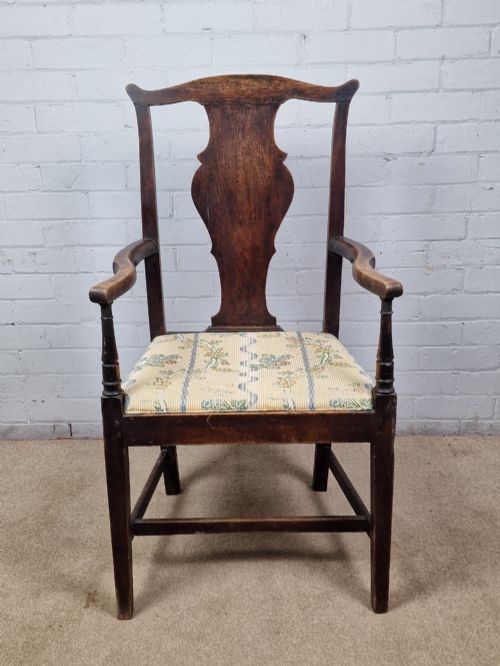
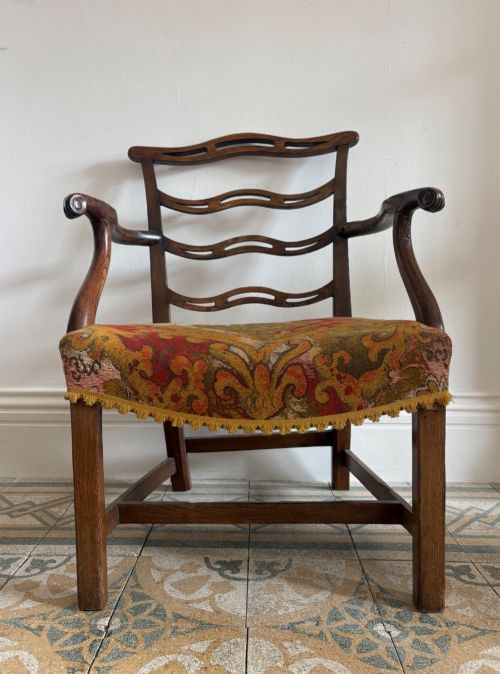
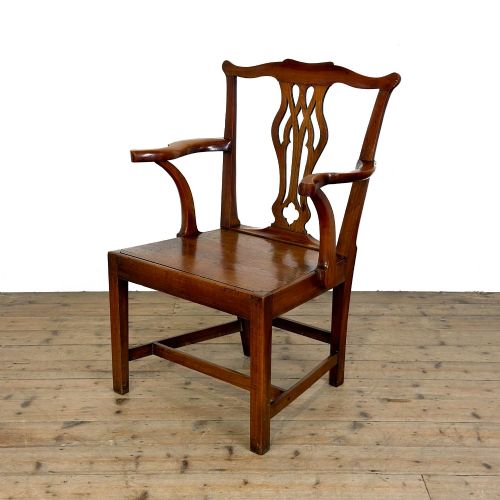
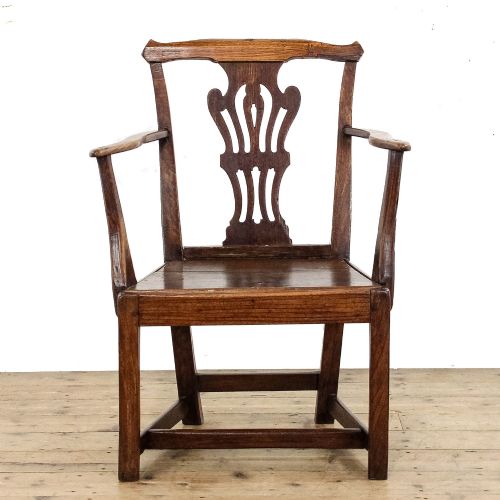
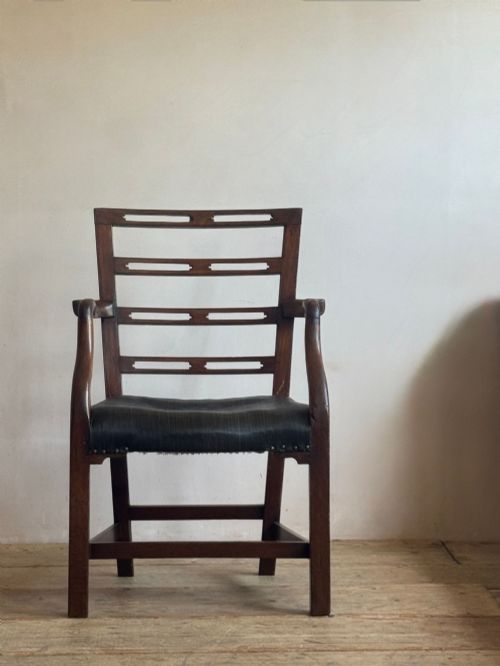
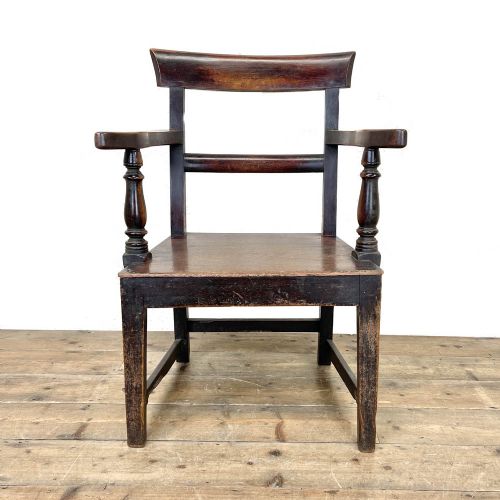
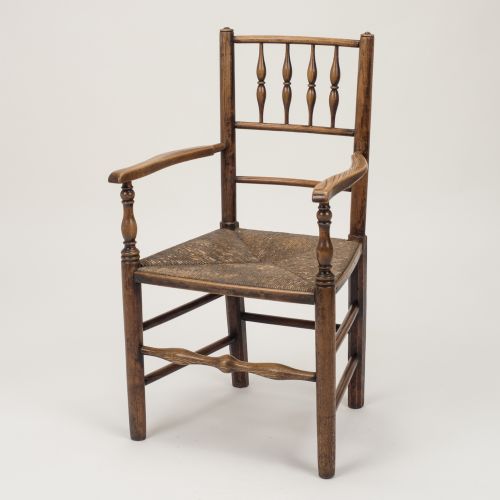


Georgian Country Open Armchair
A georgian country open armchair brings robust vernacular character to a room, offering sturdy timber frames and generous proportions shaped by rural makers.
Georgian Country Open Armchair
A georgian country open armchair is a seating form constructed in provincial workshops during the eighteenth and nineteenth centuries, distinct from urban London pieces through its heavier timber framing and regional design traits. Buyers encounter sturdy models featuring ladder-backs, spindle-backs, and solid panelled construction originating from English and Welsh localities.
The materials reflect local woodland resources, with regional makers relying heavily on native timbers such as oak, elm, ash, and fruitwood rather than imported mahogany. Seats frequently utilise rush, woven tapestry, or simple wood, prioritising daily utility and durability above salon display.
Regional variations span from Welsh wainscot armchairs to ladder-back carvers built around eighteen hundred, showing how rural joiners adapted prevailing Chippendale or Hepplewhite fashions to local vernacular methods. These chairs suit everyday seating in domestic interiors where structural honesty and tactile timber grain matter most.
Materials and construction
Makers fashioned frames using native hardwoods, combining solid oak or elm for storable main structures with flexible ash or fruitwood for spindles and bent components. Joinery relied on pegged mortise and tenon joints designed to withstand heavy daily use in farmhouses and country homes.
Seat platforms were integrated directly into the framing, either through solid planking, turned spindles supporting rush seating, or drop-in frames upholstered in tapestry, fabric, or leather. Surfaces remained relatively simple, often finished with plain wax over the natural grain, though occasional examples received painted treatments or simulated wood grains.
Several chairs include woven tapestry seats that have quietly absorbed centuries of country fireside chatter.
What distinguishes finer examples
Quality rests upon the integrity of the timber selection and the retention of original structural components without excessive later replacement. Chairs retaining their early surface patination, original rush or timber seats, and tight joinery command higher regard among collectors.
Proportion and regional distinctiveness also separate standard utilitarian seating from superior workshop production. Pieces displaying thoughtful carved details, well-turned arm supports, or regional flourishes like unusual block feet demonstrate the maker's elevated skill within a vernacular tradition.
The Georgian Country Open Armchair Glossary
- Carver
- A traditional term for an armchair, often used to describe vernacular dining chairs built with open arms to match a set of side chairs. They frequently sat at the head of a table.
- Ladderback
- A chair back featuring several horizontal curved slats rising between two upright posts. This form was common in country workshops for its straightforward construction and comfortable support.
- Spindleback
- A chair back filled with numerous thin turned wooden rods rather than solid splats or horizontal rails. Makers utilised this technique to reduce weight while maintaining robust back support.
- Wainscot armchair
- A heavy wooden chair constructed largely from solid panels, particularly in the backrest, harking back to seventeenth-century traditions. These forms persisted in Welsh and English rural districts well into the Georgian era.
- Rush seat
- A seating platform woven from dried marsh rushes twisted around a frame. Country makers favoured this material for its resilience and comfort during extended periods of sitting.
Georgian Country Open Armchair: Frequently Asked Questions
What defines a country armchair?
A country armchair is a vernacular seating piece built by regional makers using local timbers like oak, elm, and ash, rather than following strict urban London workshop canons.
These chairs prioritise structural utility and regional design traditions, resulting in sturdy proportions and unpretentious joinery that suited rural domestic life.
How do I care for antique timber?
Maintain antique wooden frames by keeping them away from direct heat sources and sudden humidity shifts, which cause timber to dry and split.
Apply a traditional beeswax polish sparingly to nourish the grain and preserve the historic surface patination without building up heavy chemical layers.
Are rush seats durable?
Rush seats made from twisted marsh grasses offer surprising resilience under normal domestic use if kept in dry environments.
Avoid placing them in damp rooms or exposing them to excessive moisture, which rots the natural fibres and weakens the weave over time.
How do I distinguish regional styles?
Regional attribution relies on timber choices, local construction quirks, and characteristic back designs like Welsh ladder-backs or spindle arrangements.
Comparing the specific turning patterns on arm supports and legs often reveals the particular district or workshop tradition where the chair originated.