



Georgian Corner Basin Stand
A georgian corner basin stand makes clever use of awkward domestic spaces, offering neat tiers designed to hold bowls and jugs in period bedchambers.
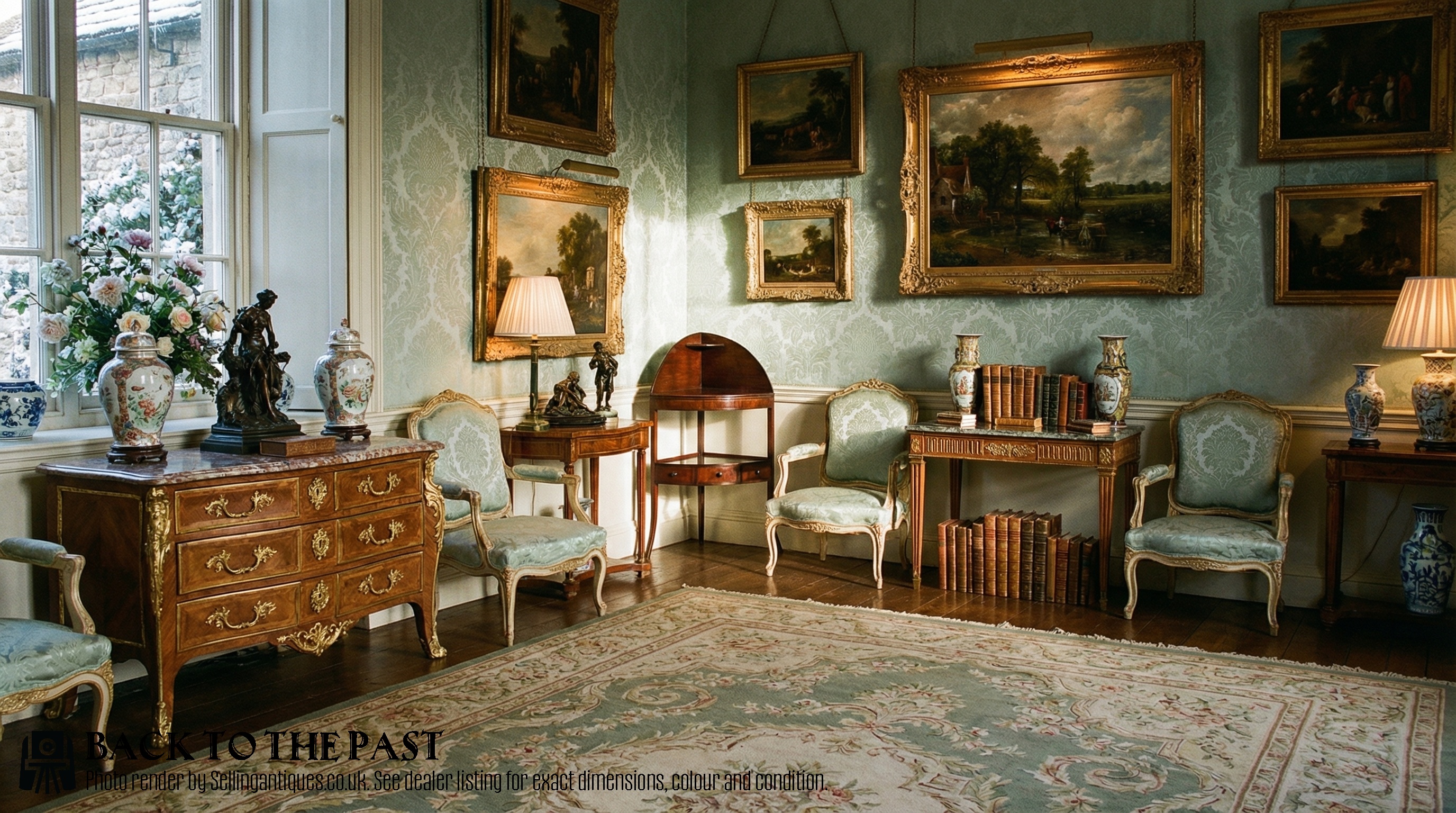
Georgian Corner Basin Stand
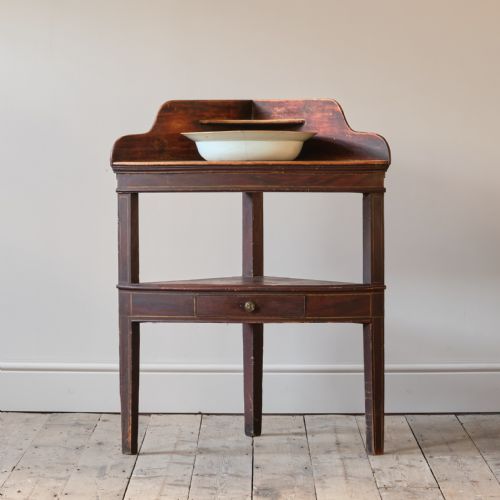
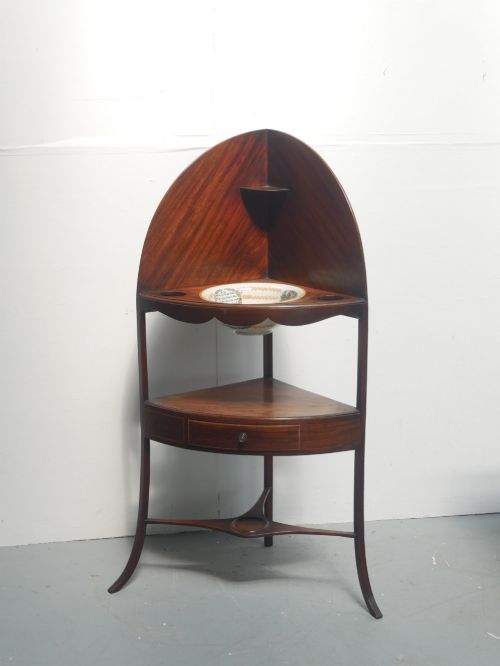
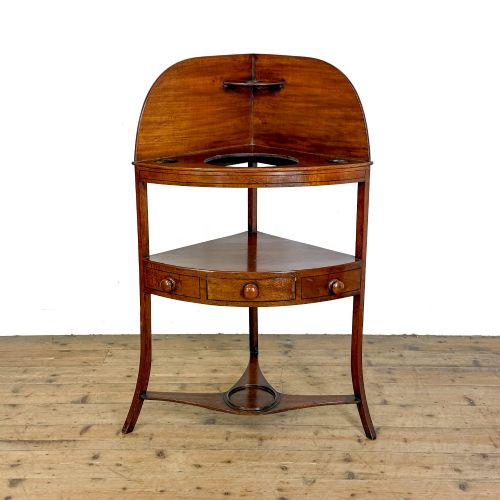
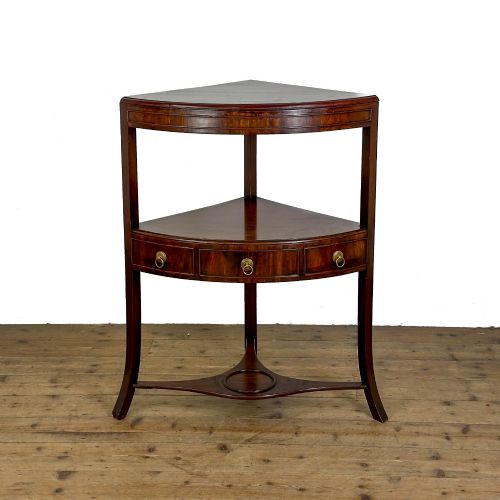
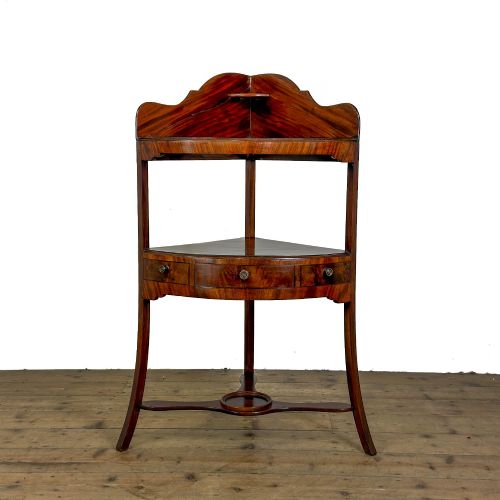
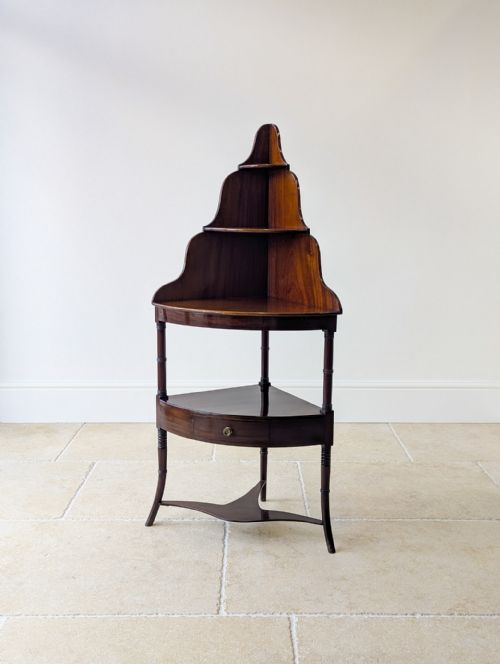
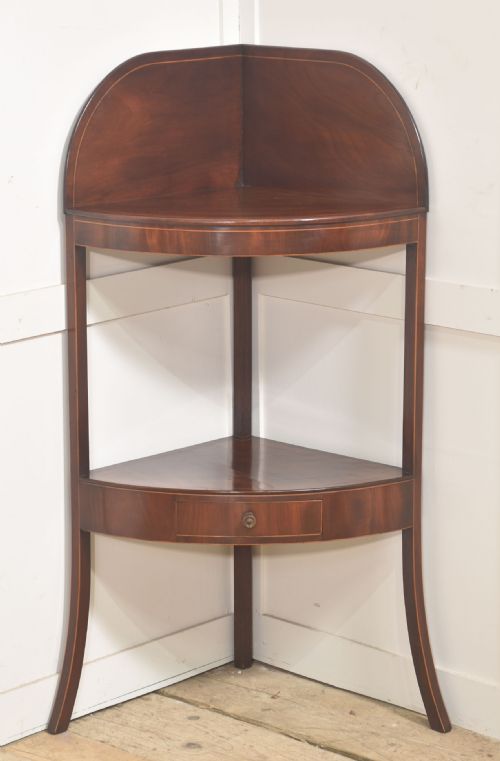
A georgian corner basin stand usually takes the form of a tiered triangular structure designed to fit snugly into the angle of a room. Most examples on this page are fashioned from rich mahogany, often featuring a shaped splashback and a circular aperture at the top level to receive a wash basin.
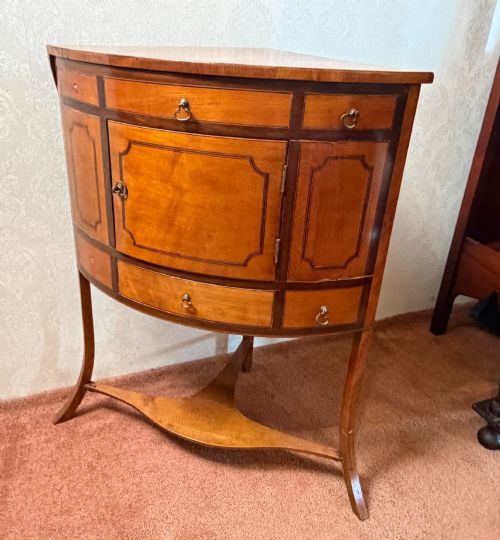
Beyond the standard washstand, buyers encounter related variants such as pot cupboards enclosed behind doors, bow front models, and specialised wig or shaving stands. These pieces span the eighteenth century into the Regency and Victorian eras, shifting from functional dressing furniture to occasional tables or plant stands in modern homes.
Materials and Construction
Cabinetmakers relied heavily upon solid and veneered mahogany, frequently accented with contrasting boxwood inlay or delicate satinwood panels. Supporting secondary carcases in pine appear on painted Regency pieces, whilst brass fittings and ceramic elements provide functional detailing for basins and drawers.
Construction methods focus on stability within a corner, using tiered platforms connected by slender turned uprights or enclosed lower cabinets. Master workshops employed precision joinery to create folding tops and bow fronts that concealed plumbing vessels when not in use.
Listings span the Georgian, Regency, and Victorian periods, predominantly constructed from mahogany with occasional painted pine and satinwood inlay.
Assessing Craftsmanship
Quality rests upon the selection of timber grain, the crispness of boxwood inlay, and the retention of original surfaces such as early paint or polished mahogany. Pieces displaying maker stamps or sophisticated mechanisms like fold down tops command greater appreciation.
Proportion and structural integrity distinguish superior examples from simpler utilitarian items. The finesse found in turned supports and the clever integration of drawers or cupboard doors separate standard chamber furniture from exceptional cabinetmaking.
Gillows Lancaster
The Georgian Corner Basin Stand Glossary
- Bow front
- A convex curved cabinet front that projects outward from the corner. This curved profile adds elegance and requires advanced woodworking skill.
- Wig stand
- A small specialised pedestal or stand used historically for powdering and resting wigs. These share similar tiered triangular footprints with basin stands.
- Pot cupboard
- A small enclosed cabinet integrated into the lower section of a stand. It typically conceals a chamber pot behind a panel door.
- Boxwood inlay
- Contrasting pale wood inserted into dark mahogany surfaces to create decorative geometric lines. It highlights the edges of tiers and drawers.
Georgian Corner Basin Stand: Frequently Asked Questions
What was a corner basin stand used for?
These stands served as personal washing stations in bedrooms before the widespread installation of indoor plumbing.
The top tier held a ceramic basin, whilst lower shelves accommodated water jugs and soap containers for morning hygiene routines.
How do I date a georgian washstand?
Dating relies upon observing timber characteristics, hardware, and stylistic traits typical of the eighteenth and early nineteenth centuries.
Earlier pieces often display simple mahogany framing, whereas Regency examples introduce bow fronts, painted finishes, and satinwood details.
Can I use these as modern plant stands?
The triangular footprint makes these stands ideal for placing in unused room angles to display trailing plants or decorative objects.
Their sturdy tiered construction easily supports lamps, books, or ceramics in contemporary living spaces.
What is the difference between a washstand and a wig stand?
While both share triangular corner designs, basin stands feature circular cutouts specifically sized to hold washing bowls.
Wig stands instead focus on small platforms or heads designed to hold gentleman hairpieces.