
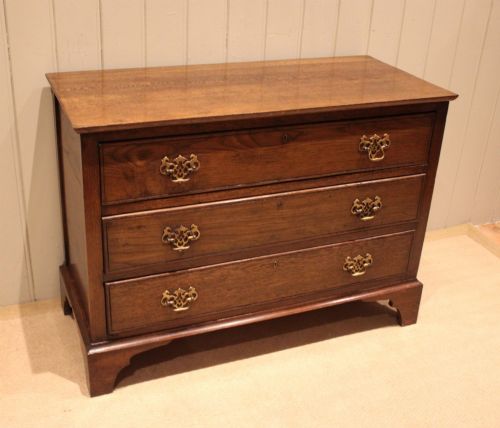
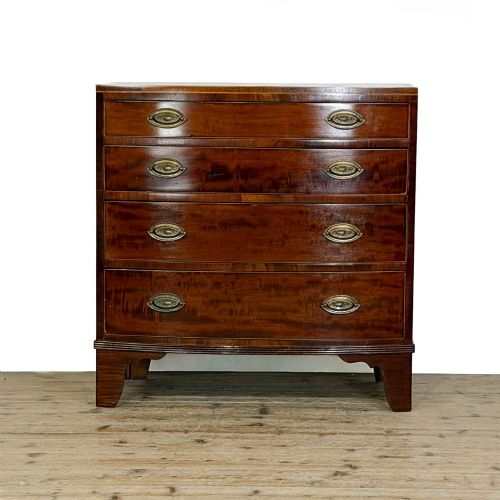
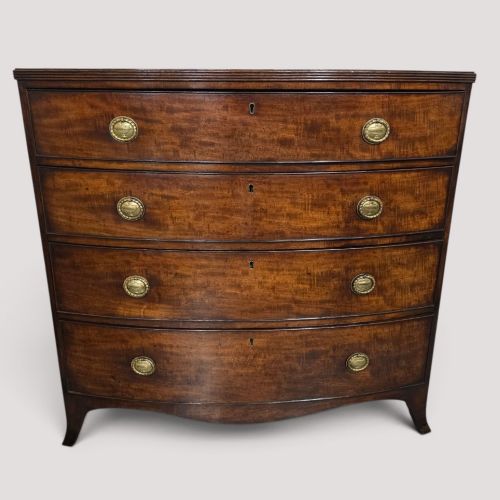
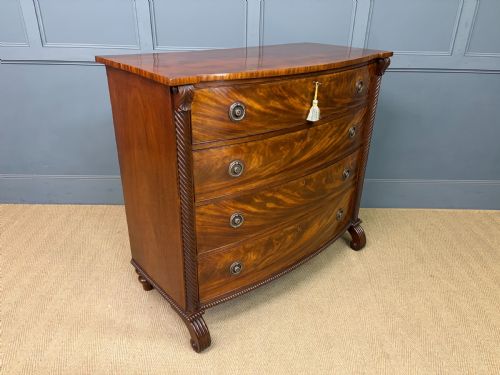
Georgian Commode Drawers
These georgian commode drawers offer practical storage grounded in eighteenth-century proportions and cabinet-making traditions.
Georgian Commode Drawers
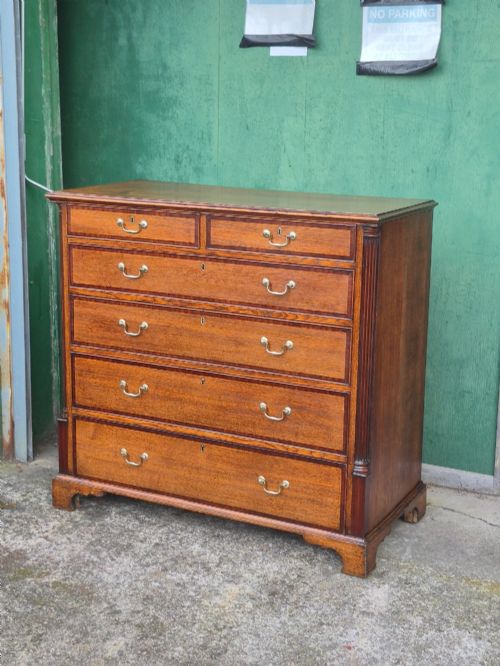
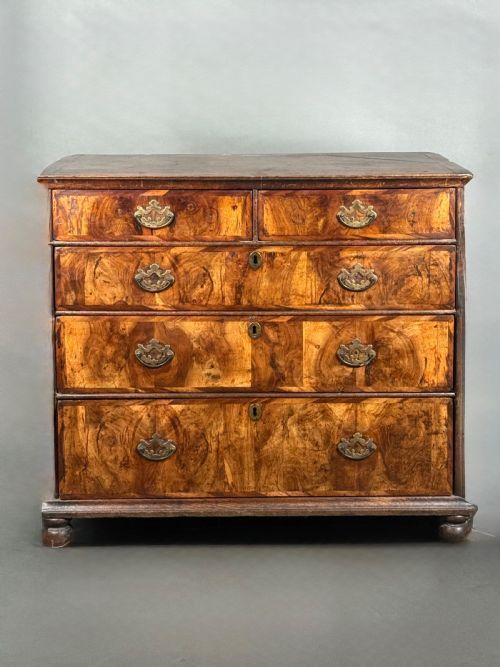
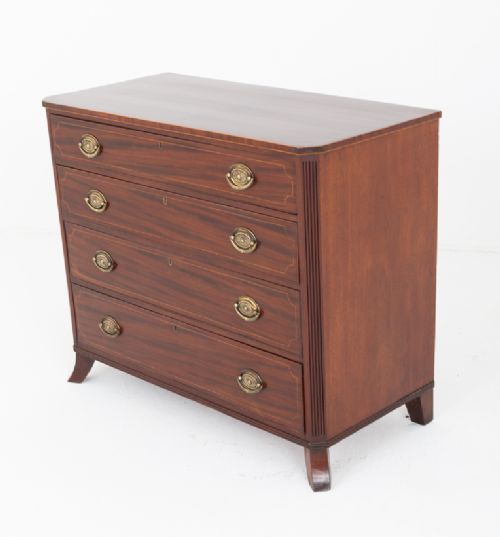
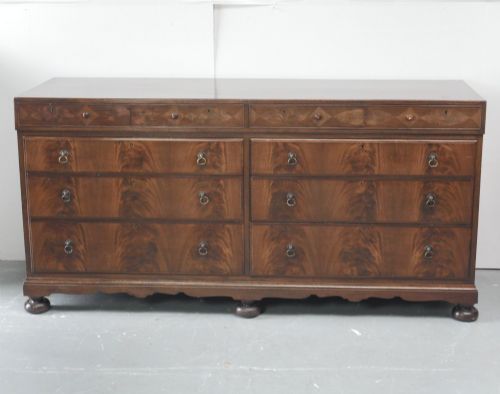
When searching for georgian commode drawers, buyers encounter substantial case furniture primarily constructed as chests of drawers, often referred to interchangeably as commodes. The pieces span the eighteenth and nineteenth centuries, with later revivals appearing alongside authentic period examples.
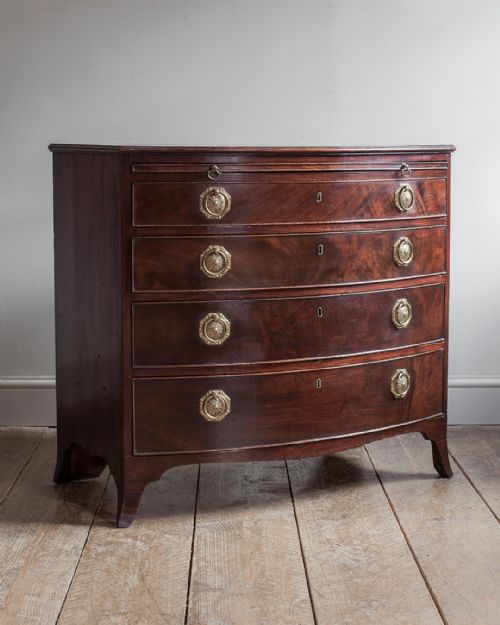
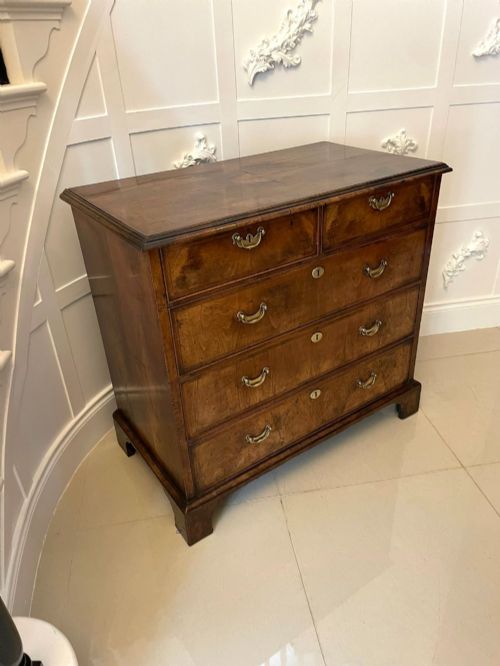
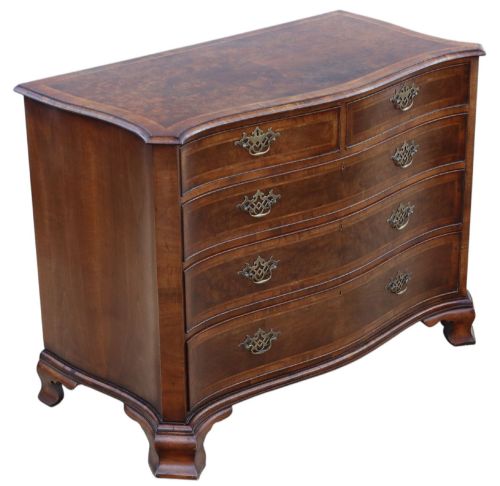
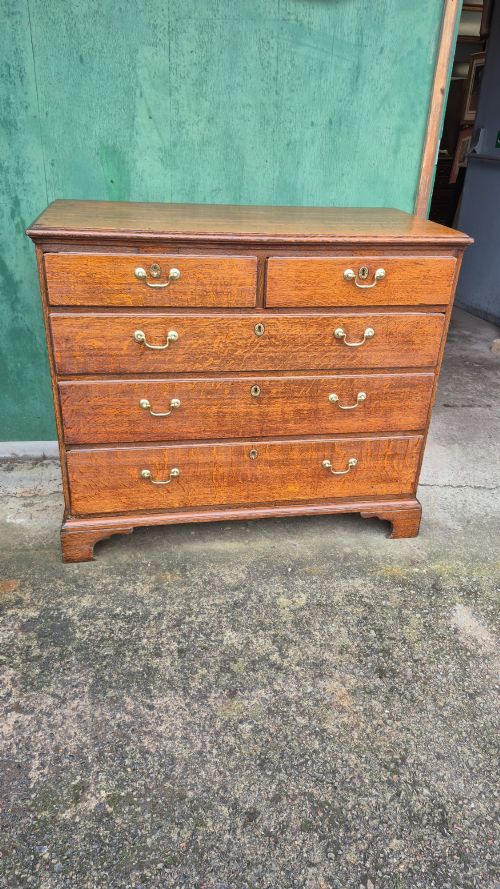
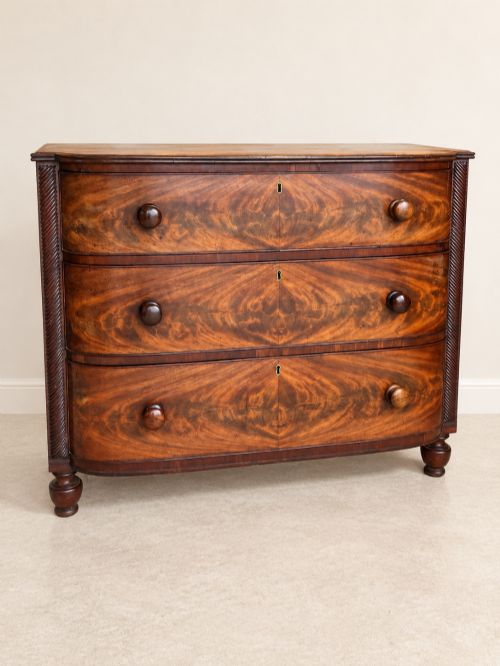
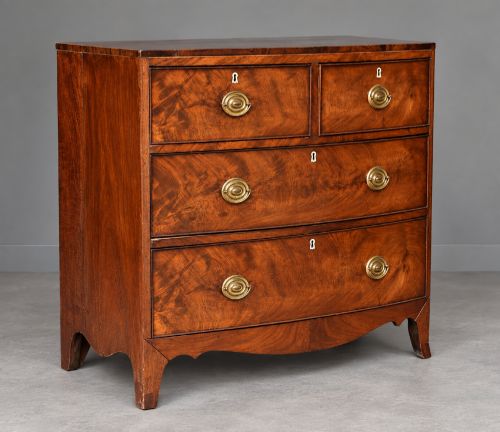
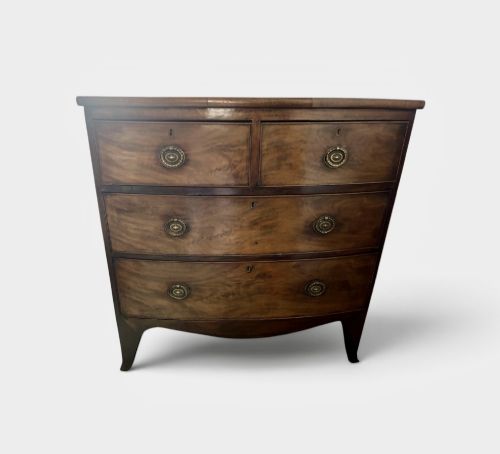
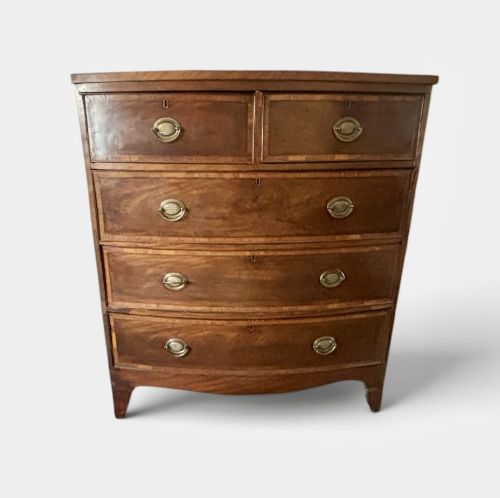
Most items on this page take the form of chest of drawers, ranging from small four-drawer formats to larger serpentine and bow front designs. Oak, walnut and mahogany dominate the structural forms, occasionally incorporating brushing slides or specialised compartments.
Origins stretch across English workshops, Scottish makers such as Whytock & Reid, and continental examples including Dutch baroque interpretations. Buyers find both straight-fronted practical units and curved serpentine shapes intended for principal rooms.
How they were made
Cabinet-makers relied heavily on solid hardwoods like oak for internal framing and drawer carcassing, pairing them with decorative outer faces. Mahogany and walnut provide the primary exterior surfaces, often selected as figured veneers or flame mahogany.
Surface enrichment involved crossbanding in satinwood and applying elaborate grain patterns such as burr walnut and burr veneers. Brass hardware, including drop handles and backplates, completes the construction alongside dovetailed drawer joints.
Some chests moonlighted as clandestine drinks cabinets, proving that Georgian storage had a very sociable secret.
What varies in quality
The sophistication of the timber selection dictates much of the visual distinction, separating plain utility pieces from highly figured burr walnut and flame mahogany examples. Master craftsmanship shows in the precise alignment of crossbanding and the fluid execution of serpentine fronts.
Internal integrity also separates tiers of production, visible in the hand-cut dovetailing of drawers and the preservation of original brass handles. Secondary woods like oak used within drawer linings indicate the regional origin and overall standard of the workshop.
Whytock & Reid
The Georgian Commode Drawers Glossary
- Serpentine
- A front contour characterised by a convex central section flanked by concave curves, demanding high skill from the cabinet-maker. This shape appears frequently on finer eighteenth-century commodes.
- Bow front
- A convex curved front that projects outward in a smooth arc. This profile gained popularity during the Regency period.
- Brushing slide
- A pull-out shelf integrated above the top drawers, historically used for folding clothes or writing. These appear on better quality George III pieces.
- Crossbanding
- A narrow strip of veneer laid around the border of a drawer front or top with the grain running perpendicular to the main panel. It provides a neat framing effect on mahogany and walnut surfaces.
- Flame mahogany
- A veneer cut from timber where the branch meets the trunk, producing a distinctive flickering flame pattern. This material was favoured for high-end Regency chests.
Georgian Commode Drawers: Frequently Asked Questions
What is a commode chest?
A commode chest is a low cabinet featuring multiple drawers, originally serving as a stylish storage piece for bedrooms or reception rooms. The term often overlaps with traditional chests of drawers in eighteenth-century furniture.
These pieces combine decorative wood veneers like mahogany or walnut with functional proportions designed for everyday use.
How do I date a chest?
Dating relies on examining construction methods, timber choices, and overall hardware styles. Eighteenth-century examples often feature oak drawer linings and hand-cut dovetails.
Later nineteenth-century and revival pieces introduce different secondary woods and machine-sawn components while retaining earlier stylistic influences.
Where were they placed?
These chests functioned primarily in bedrooms, dressing rooms, and formal parlours for storing linens and garments. Smaller bow front versions fit easily into narrower hallways or intimate chambers.
Their decorative fronts ensured they sat in prominent household locations rather than purely utilitarian spaces.
What woods were used?
Primary construction timbers include mahogany, walnut, and oak, supplemented by decorative veneers like burr walnut and flame mahogany. Satinwood often appears as contrasting inlay.
Internal framing typically relies on sturdy native oak or deal depending on the workshop and region of origin.