
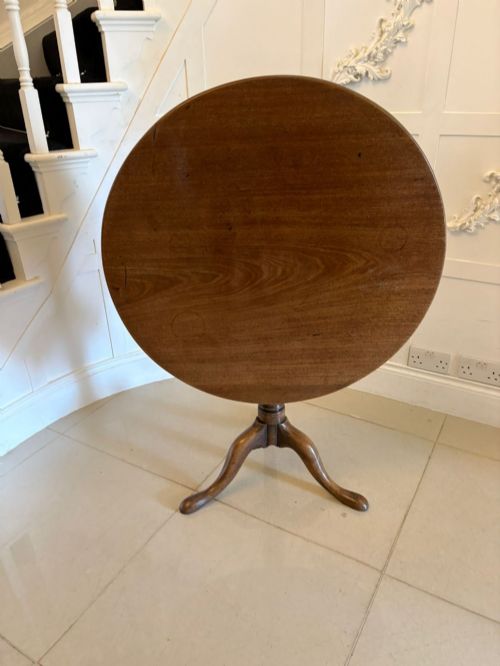
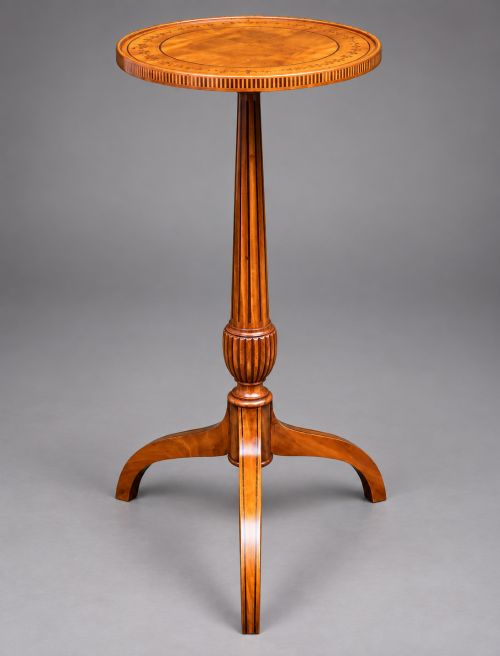
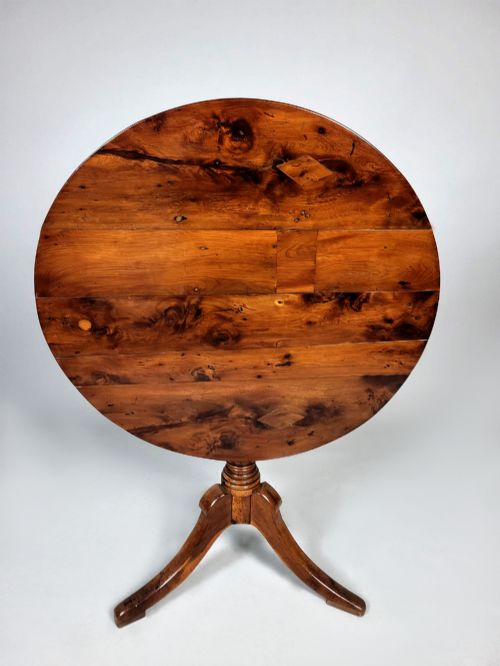
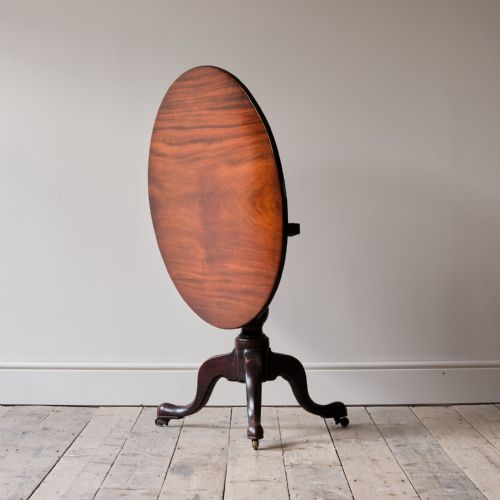
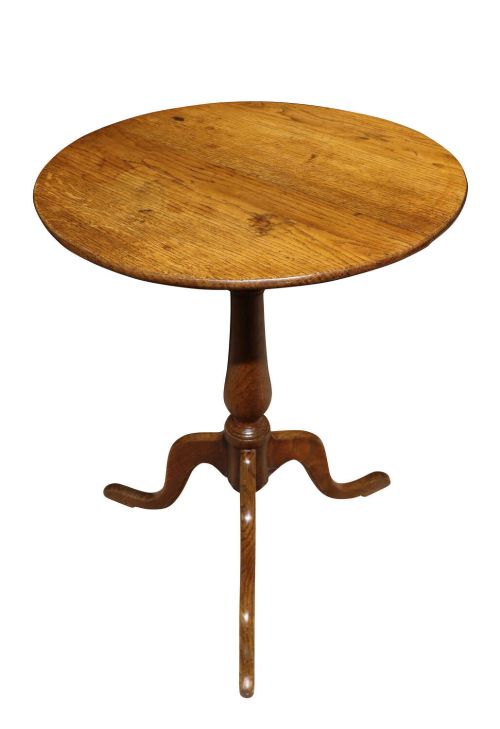
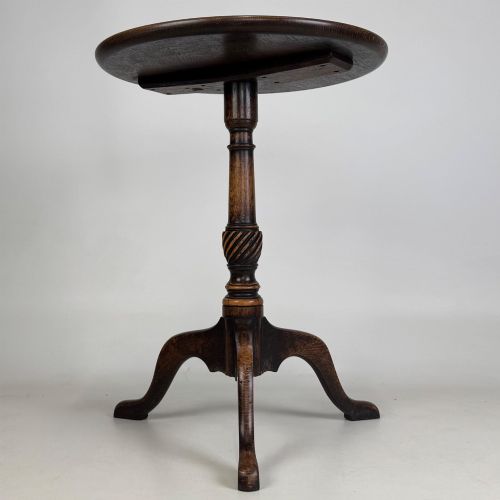
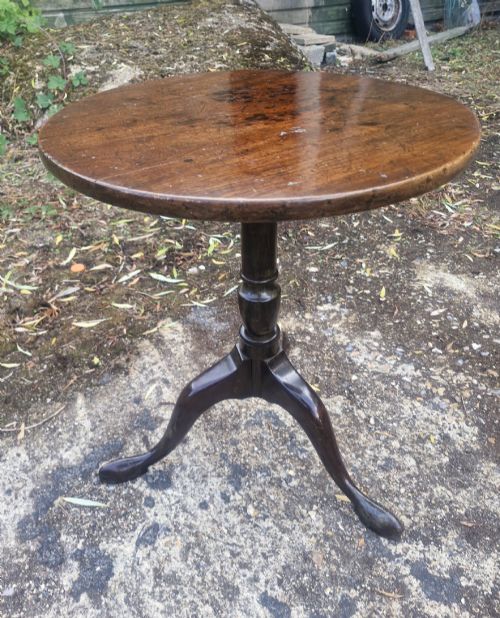
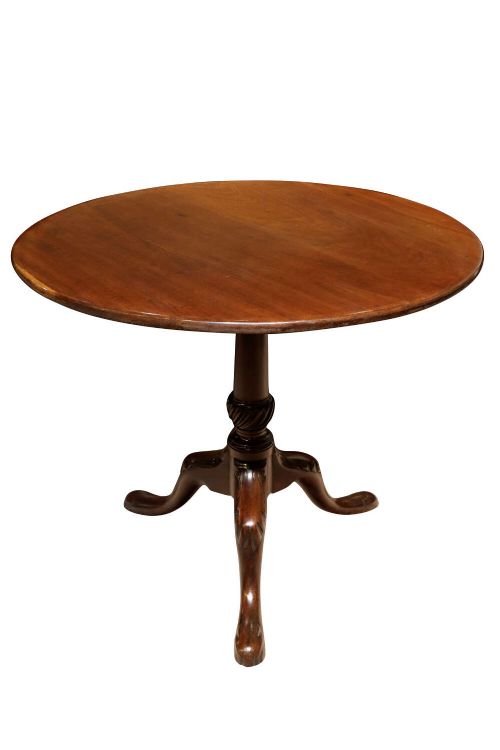
Georgian Circular Wine Table
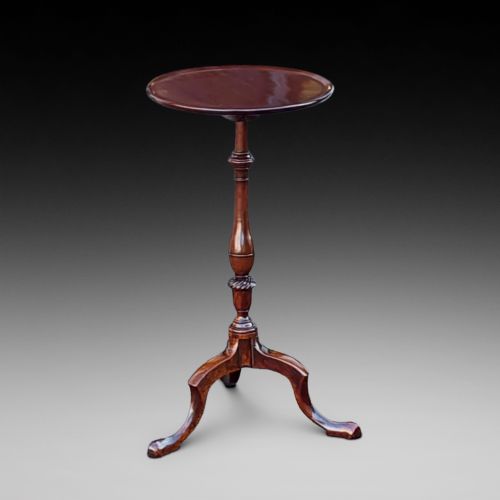
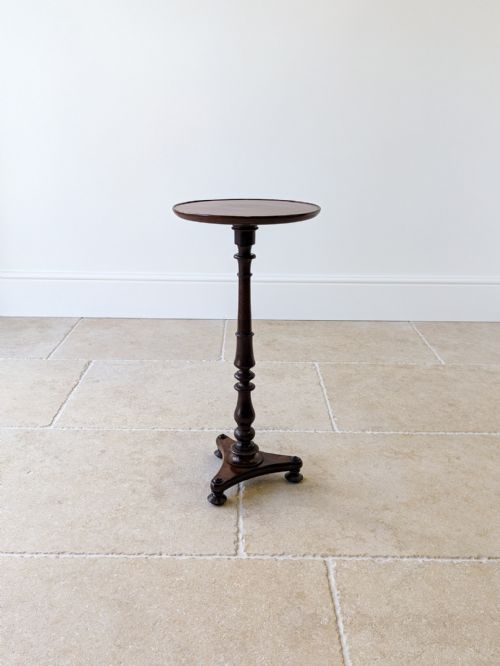
A georgian circular wine table provides a compact surface raised on a pillar and three splayed legs, prized for small spaces.
Georgian Circular Wine Table
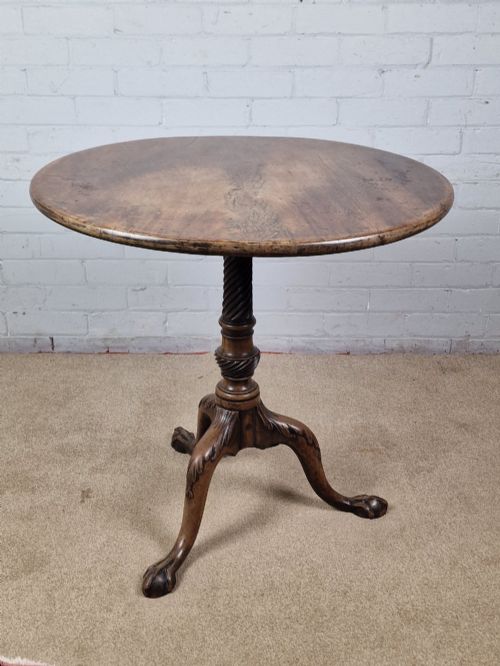
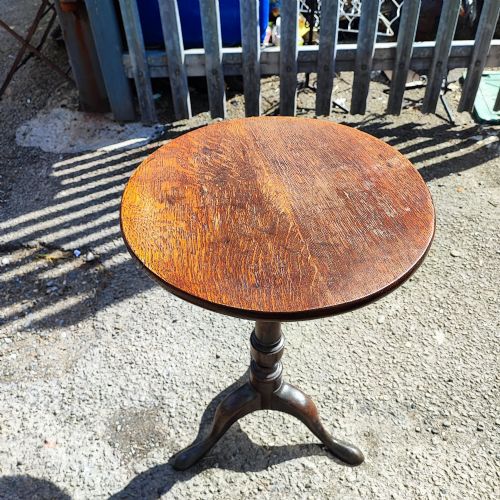
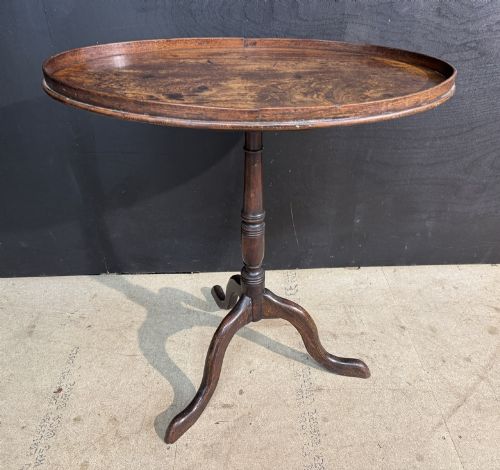
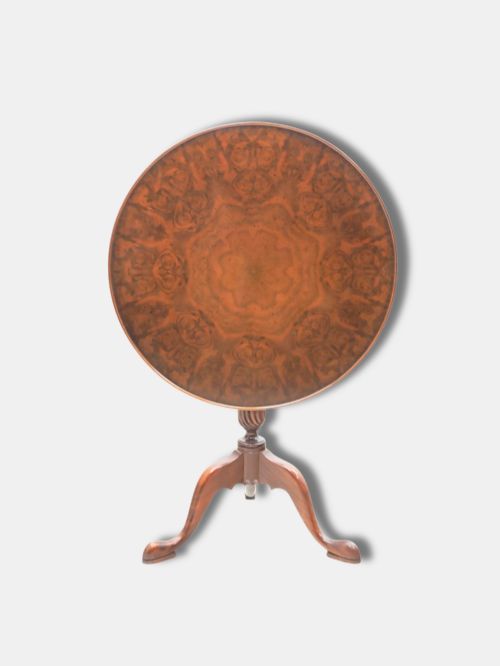
A georgian circular wine table is a small occasional piece designed with a round top supported by a central pillar and a tripod base. These tables frequently appear from the eighteenth century into the nineteenth century, built to serve beside a chair or in a corner.
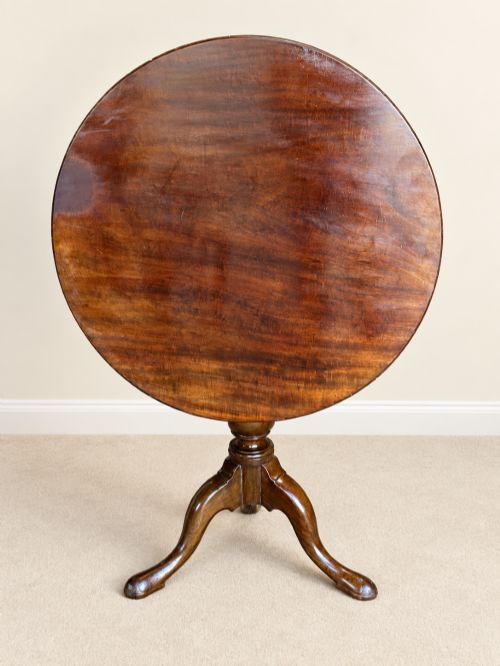
Mahogany and oak dominate the pieces seen, alongside walnut, elm, fruitwood, and rosewood. Makers constructed many with a tilt top or snap top mechanism, allowing the surface to fold vertically when not in use.
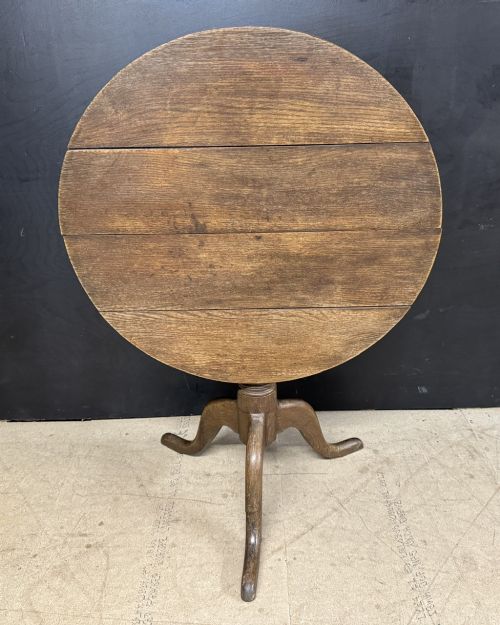
The forms range from plain country examples in oak or elm to sophisticated urban designs in mahogany with birdcage movements. Later revival pieces from the twentieth century also appear, following the proportions of earlier models.
Materials and Construction
Cabinet makers joined solid timbers and veneers using traditional joints, mounting circular tops onto turned central pedestals. The base typically consists of three legs jointed securely into the lower pillar to provide stable three-point contact on uneven floors.
Tilt top and snap top tables incorporate wooden catches or metal latches beneath the surface, enabling the top to pivot and lock flat or upright. Birdcage variations add a rotating box frame between the top and the pillar, allowing the surface to turn as well as tilt.
The listings span the eighteenth, nineteenth, and early twentieth centuries, featuring mahogany, oak, walnut, rosewood, and elm.
Evaluating the Pieces
Quality rests on the selection of timber and the crispness of the turning on the pillar and legs. Finely figured mahogany or red walnut indicates a workshop of higher standing, whereas country oak or elm pieces rely on honest utility and simple proportions.
The integrity of the tilting mechanism and the tightness of the joints in the tripod base dictate mechanical survival. Smooth movement in the catch and a flat, unwarped circular top separate superior examples from routine ones.
Gillow
The Georgian Circular Wine Table Glossary
- Tripod table
- A small table supported by a central pillar resting on three legs. This construction prevents rocking on uneven floorboards.
- Tilt top table
- A table with a hinged surface that pivots to a vertical position. This allows the piece to store flat against a wall.
- Birdcage
- A revolving wooden framework beneath the table top that permits the surface to turn and tilt. It uses small vertical spindles resembling a cage.
- Snap top
- A spring-loaded or latched mechanism that locks a tilting table top securely into the horizontal position. It prevents the top from tipping accidentally during use.
- Pie crust edge
- A raised, carved moulding along the perimeter of a circular table top shaped in undulating curves. It resembles the decorative crust of a pastry.
Georgian Circular Wine Table: Frequently Asked Questions
What is a birdcage mechanism?
A birdcage is a revolving wooden frame fitted beneath the table top that allows the surface to rotate horizontally and tilt vertically. This clever engineering combined two movements in sophisticated eighteenth-century pieces.
Cabinet makers used small turned spindles within the frame, which visually suggested a birdcage while providing smooth rotation for the user.
Why do some tops tilt?
Tilting tops allowed servants to store the tables flat against room perimeters when not holding drinks or books. This saved floor space in smaller domestic interiors.
The hinge mechanism enabled the heavy timber surface to lock securely into either a vertical or horizontal position as needed.
How do I spot a later revival table?
Twentieth-century revival pieces often display machine-turned components and standardised timber selections without the patina of age. Examining the underside reveals modern screw fixings or dry wood lacking historical wear.
Earlier eighteenth and nineteenth-century examples show hand-cut joinery, timber shrinkage, and surface marks accumulated over generations of domestic use.
Are tripod tables stable?
Tripod tables rely on three legs to maintain solid contact on uneven floors without wobbling. This engineering makes them well suited for older houses with irregular floorboards.
The splayed arrangement of the feet provides a wide enough base to support small items placed on the circular top.