
Georgian Carved Tripod Table
A georgian carved tripod table combines solid timber, a pivoting top, and three supporting legs to serve drinks, supper, or candles.
Georgian Carved Tripod Table
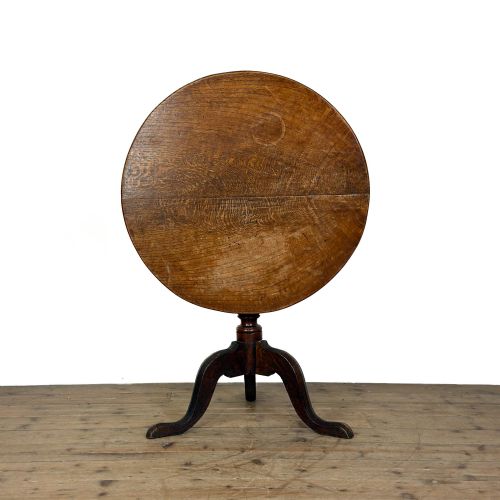
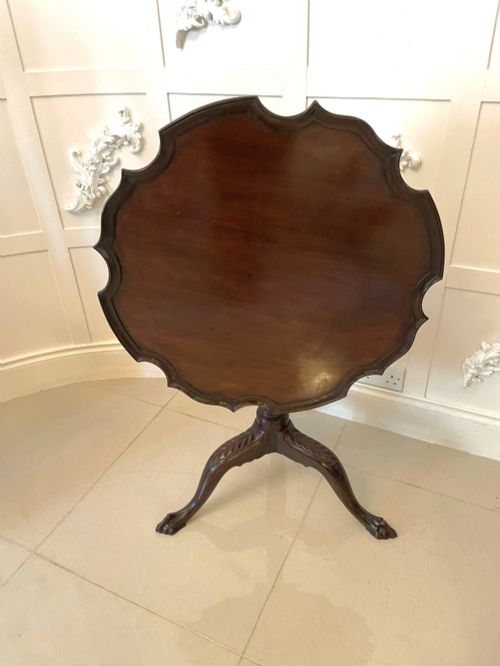
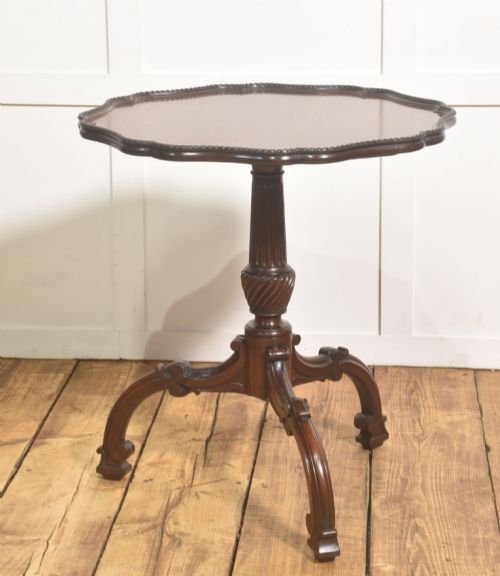
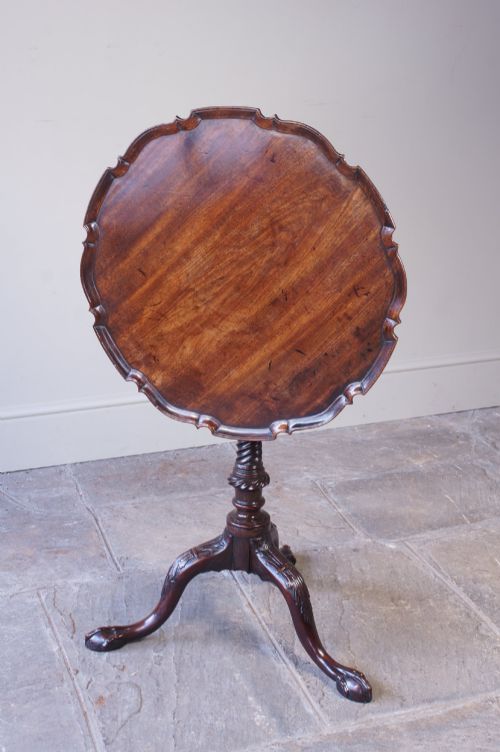
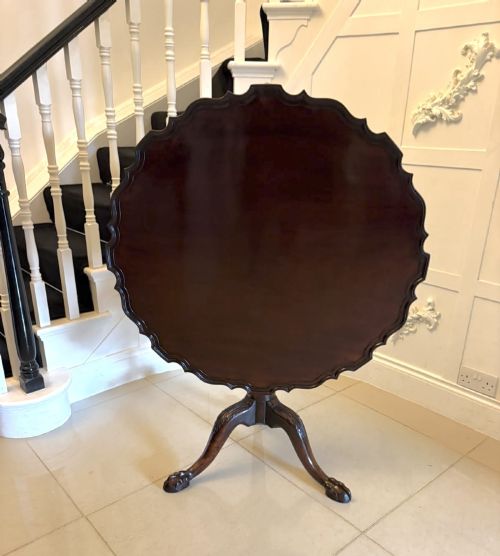
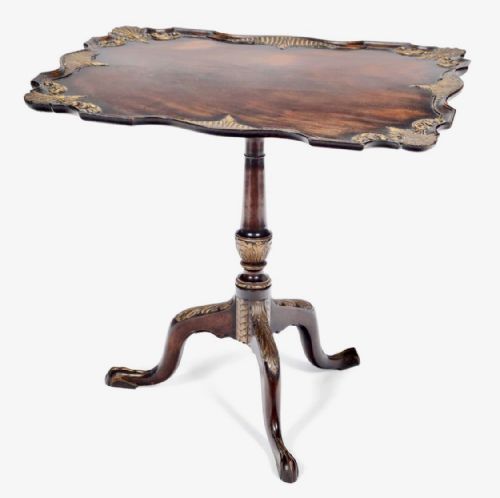
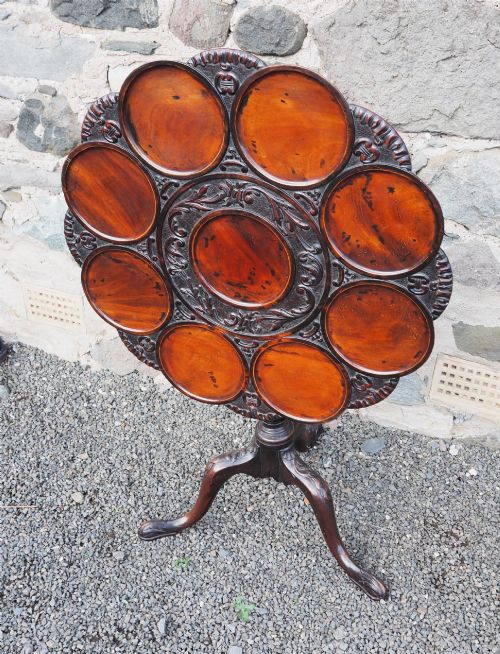
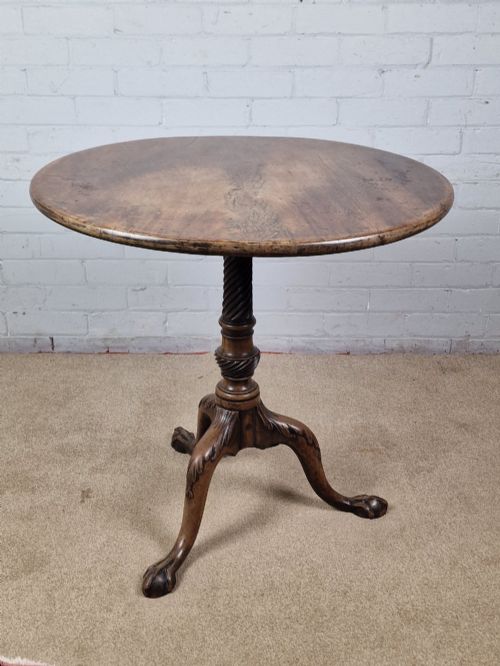
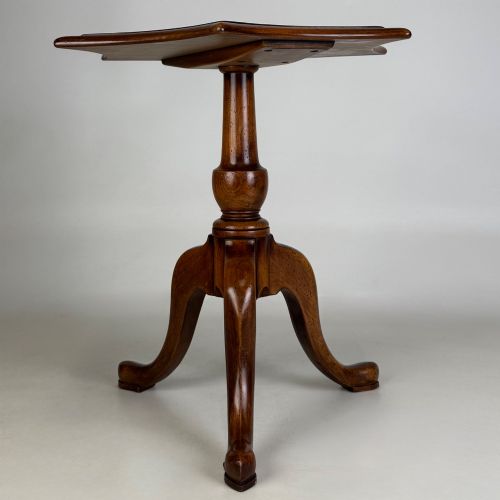
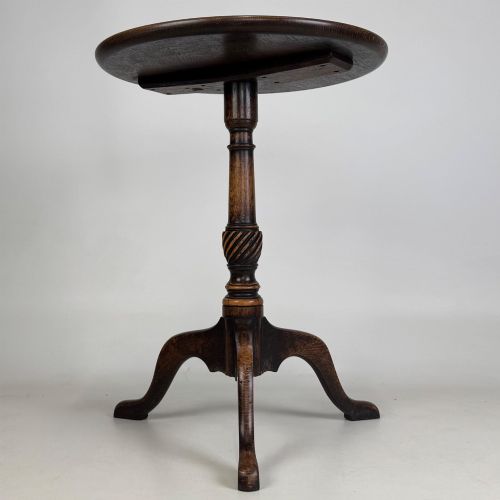
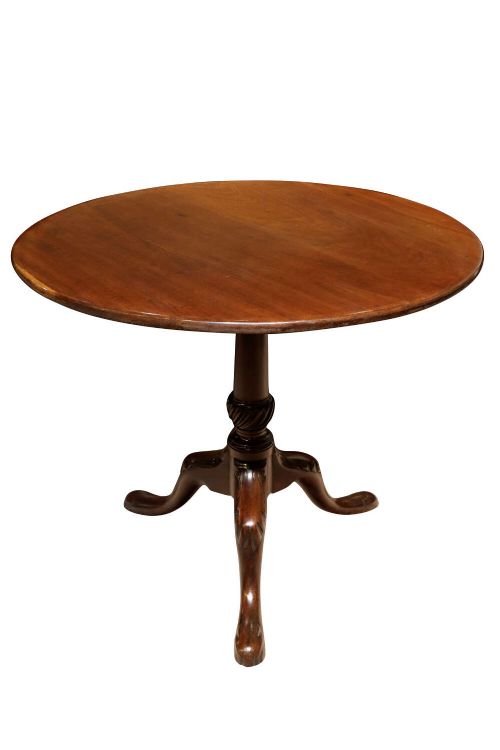
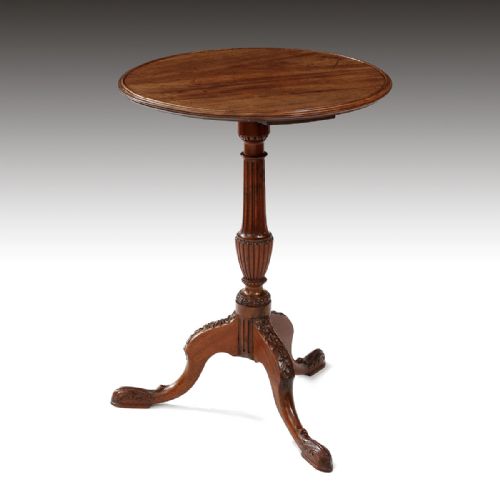
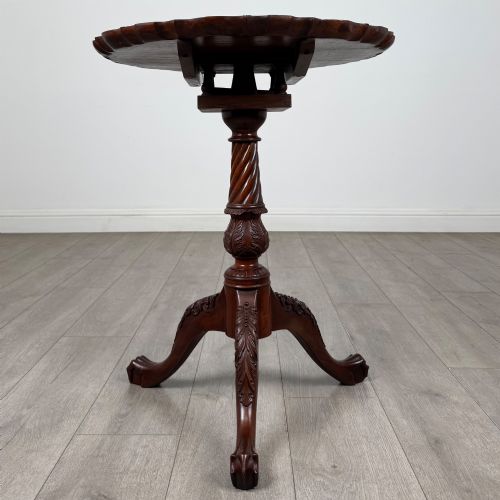
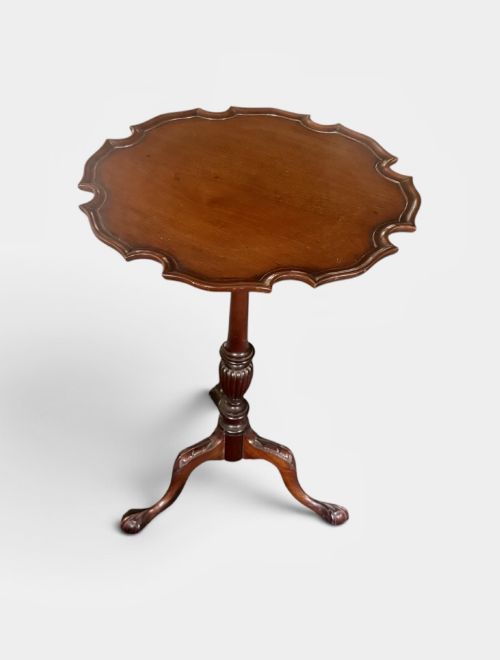
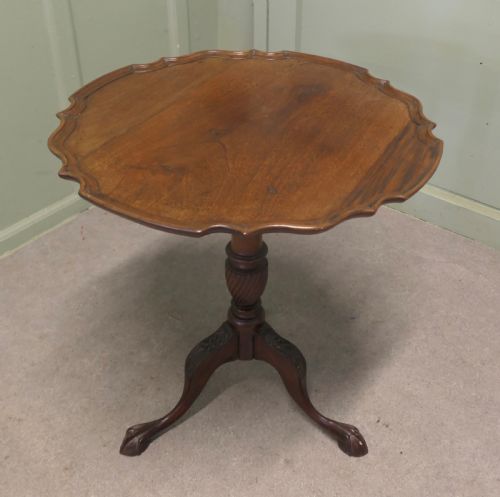
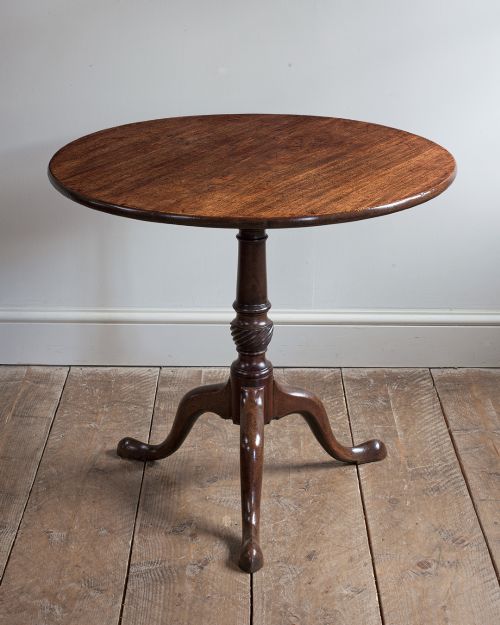
A georgian carved tripod table takes the form of a small, portable stand supported by three legs radiating from a central pillar. These tables appear across eighteenth, nineteenth, and early twentieth century periods in mahogany, walnut, oak, and rosewood. The listings show forms ranging from plain occasional tables to tilt-top supper tables, wine tables, and kettlestands.
The version most commonly met on this page is the tilt-top table, which allows the top to pivot upright against the pillar when not in use. Many examples incorporate a birdcage mechanism beneath the top, permitting the surface to rotate as well as tilt. Edge treatments vary from simple moulded rims to shaped pie crust designs and raised dishtops.
Makers and cabinetmakers produced these items for domestic use beside seating or in corners of reception rooms. Surviving examples demonstrate the enduring utility of a compact stand that can be moved easily around a room. The structural layout remains consistent across the georgian, regency, and later revival periods represented in the archive.
How they were made
Cabinetmakers constructed these pieces primarily using solid mahogany, walnut, and oak, frequently applying flame mahogany veneer or rosewood to the top surfaces. Timber selection governed the strength of the central column and the three splayed legs. Parcel gilt accents and carved details appear on specific examples from the eighteenth and nineteenth centuries.
Turning lathes shaped the central pillars, while hand-carving defined the knees and feet of the tripod base, often featuring ball and claw or pad forms. The tilt-top mechanism relied on wooden catches and brass hinges to secure the surface horizontally. Birdcage mechanisms utilised small wooden assemblies placed beneath the table top to permit independent rotation.
One exceptional nineteenth century example includes a metamorphic function, transforming the modest wine table into a planter and figure stand.
What varies in quality
Quality depends upon the crispness of the carving on the knees and feet, and the depth of figure in the timber utilised for the top. Superior examples display thoughtful proportion between the diameter of the top and the spread of the tripod base, ensuring stability. Original surfaces and rich patination distinguish pieces that retain their character over centuries from those stripped or heavily restored.
The precision of the birdcage mechanism and the snugness of the tilt-top catch indicate the standard of original craftsmanship. Secondary woods used for the underside framework reveal the workshop practices behind each table. Consistency in timber matching across the top and pillar separates workshop pieces from utilitarian production.
Gillow
The Georgian Carved Tripod Table Glossary
- Birdcage mechanism
- A wooden assembly placed beneath a table top allowing it to rotate and tilt. This construction uses two parallel discs connected by small vertical spindles.
- Tilt top
- A tabletop hinged to the central pillar so it can pivot to a vertical position. This feature allowed tables to be stored flat against a wall when not in use.
- Pie crust rim
- A raised, undulating edge carved directly into the solid timber of the tabletop. Makers shaped these borders with alternating curves and lobes.
- Tripod base
- A support structure consisting of three legs radiating from a central turned pillar. The legs frequently terminate in pad, claw and ball, or snake foot designs.
- Supper table
- A larger form of tripod table utilised for dining or taking tea. These surfaces often measured greater in diameter to accommodate serving dishes.
Georgian Carved Tripod Table: Frequently Asked Questions
What was a tripod table used for?
These tables served primarily as movable stands for holding candles, wine glasses, or supper dishes in parlours and drawing rooms. Their lightweight construction allowed occupants to shift them closer to a fire or seating area as needed.
Tilt-top variants provided the additional benefit of vertical storage against a wall, freeing up floor space when the room was not in use for dining or entertainment.
How do I identify a tilt top table?
Look underneath the circular surface for a wooden block or pivot mechanism connecting the tabletop to the central pillar. A functional catch or release pin usually secures the top in a flat horizontal position.
When released, the surface pivots upward ninety degrees to rest parallel with the central column. This movement distinguishes the form from fixed-top occasional tables.
What is a birdcage mechanism?
A birdcage is a rotating frame fitted between the tabletop and the top of the central pillar. It consists of small turned wooden columns resembling the bars of a cage.
This construction enables the table surface to spin horizontally without tilting, adding flexibility when serving guests in a tight space.
How do I care for a mahogany wine table?
Keep the timber away from direct heat sources and strong sunlight to prevent the wood from drying out or the polish from fading. Dust the surface regularly with a soft, dry cloth rather than applying modern silicone sprays.
Apply a traditional beeswax polish occasionally to nourish the grain and maintain the natural lustre of the finish. Avoid placing damp glasses directly on antique timber surfaces.