
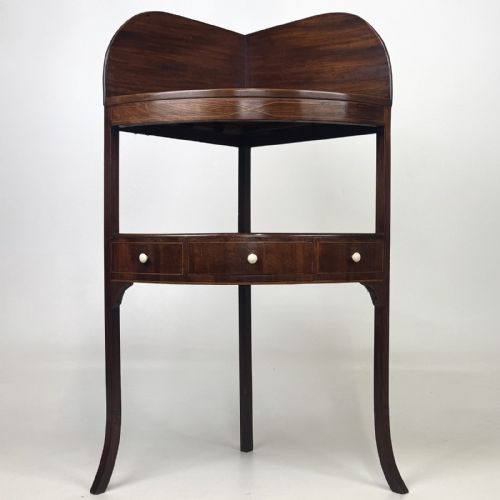
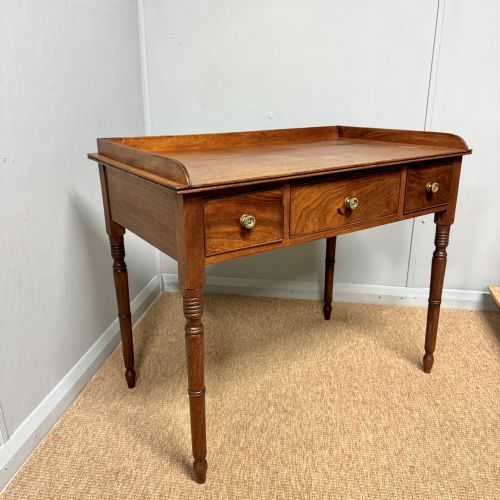
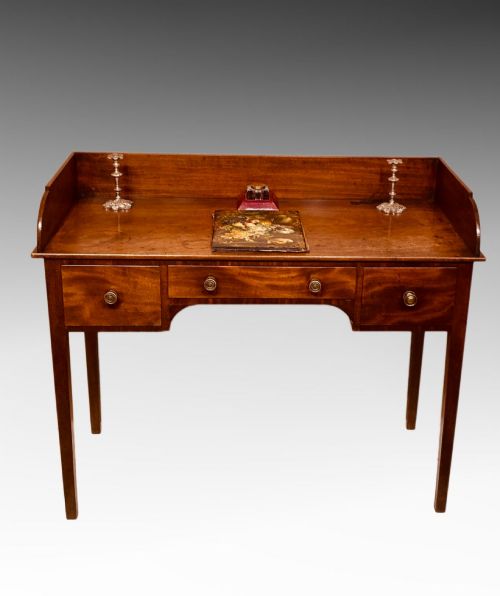
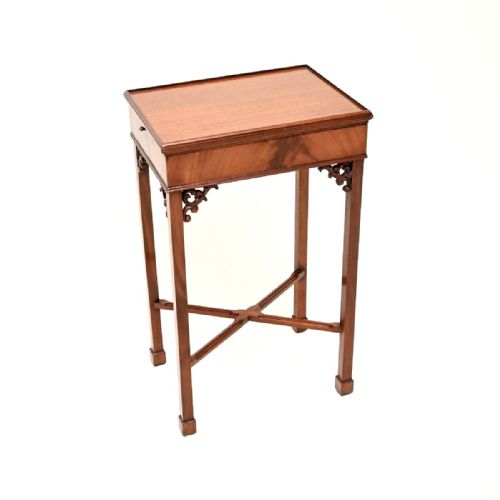
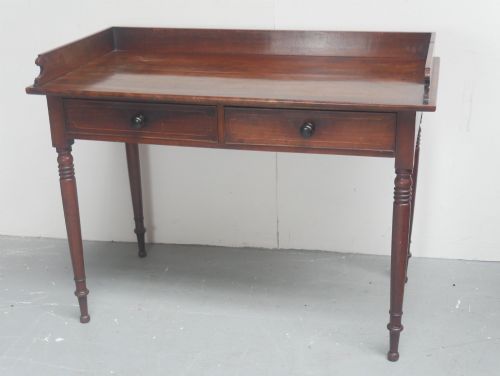
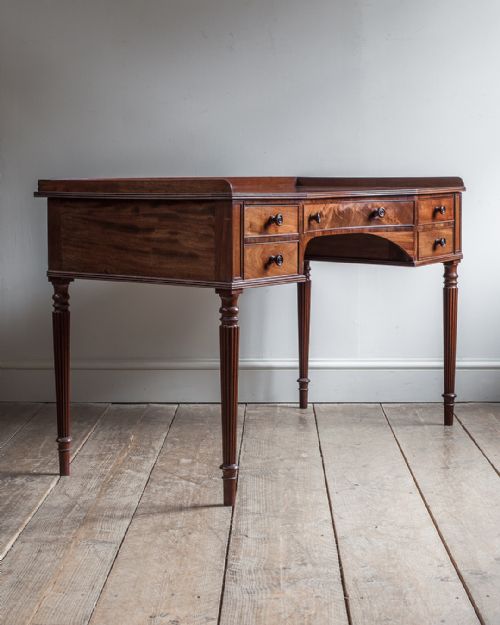
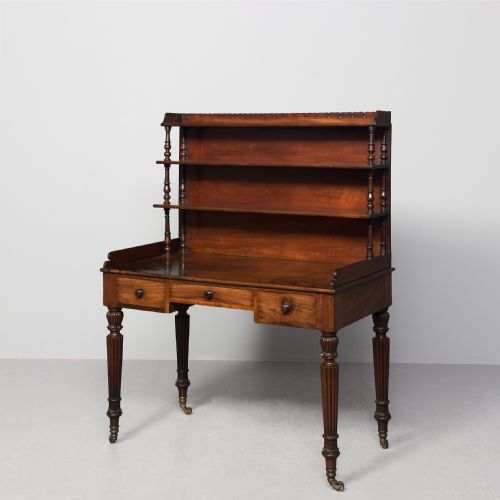
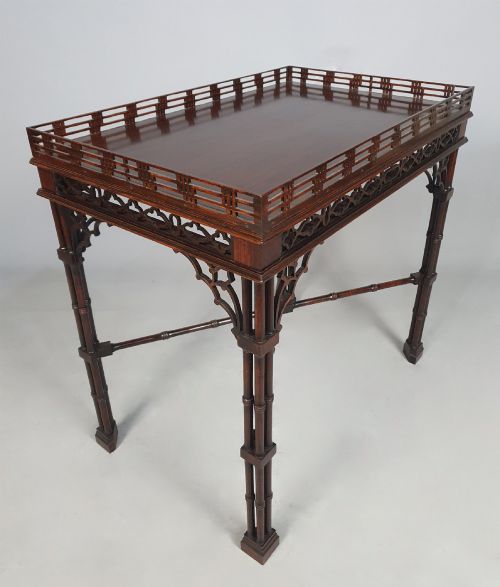

Georgian Gallery Table
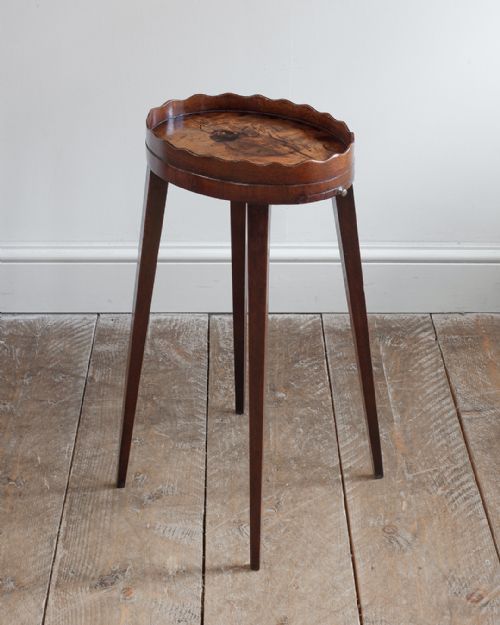
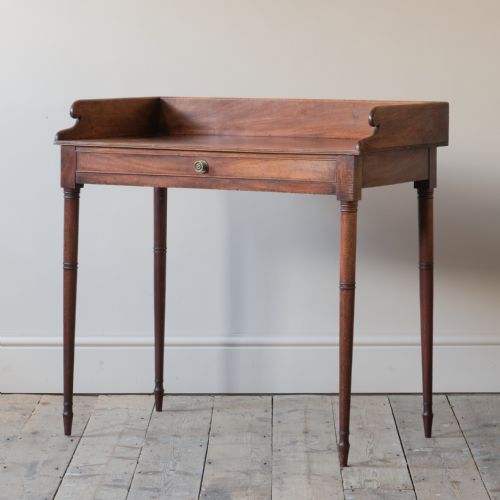
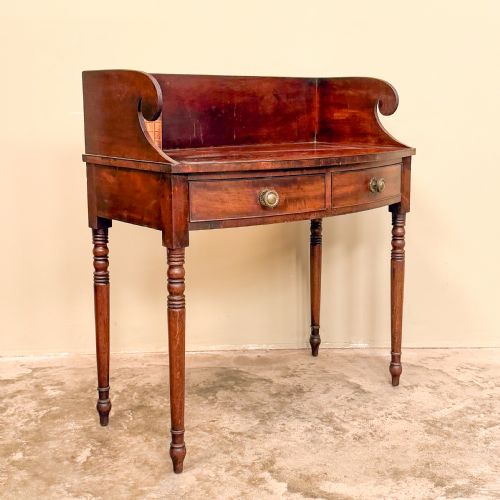
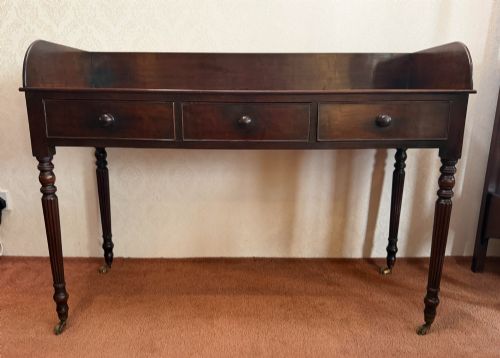
Georgian gallery table examples combine timber framing with raised raised borders, offering surfaces suited to holding small objects securely.
How they were made
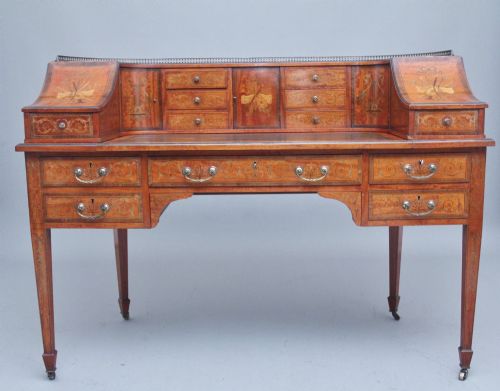
Cabinet makers constructed frames primarily from solid mahogany, walnut, and padauk, often incorporating satinwood for decorative inlay work. Timber sections were joined using traditional woodworking joints suited to supporting upright loads.
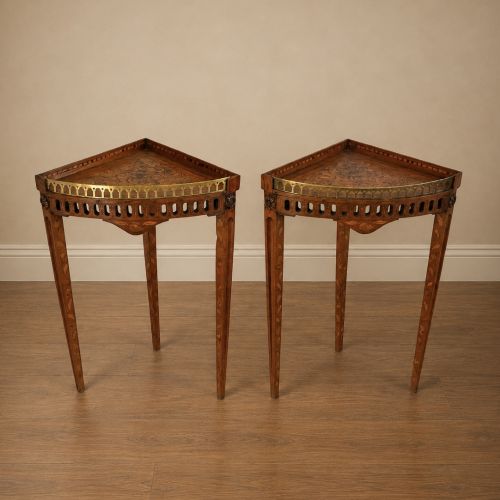
Raised galleries utilised fretwork, pierced brass, or turned spindle structures affixed to the table perimeter. Brass bound decoration and leather writing surfaces appear on specific utilitarian forms.
Finishes applied to the timber relied on traditional polishing methods that emphasised natural grain patterns without synthetic coatings.
What varies in quality
The standard of timber selection and the precision of joinery determine the integrity of each piece. Superior examples exhibit tightly grained mahogany and meticulously fitted drawer components.
The execution of the gallery edge distinguishes simpler utilitarian items from finer work. Pierced brass galleries and intricate fretwork demand greater skill than plain raised wooden borders.
Proportion and the preservation of original surfaces dictate overall desirability. Pieces retaining undisturbed timber patination command greater interest among collectors.
Several tables feature galleries explicitly built to keep precious tea wares from sliding onto the floor during lively Georgian drawing-room conversations.
James Mein of Kelso·Gillows
The Georgian Gallery Table Glossary
- Gallery
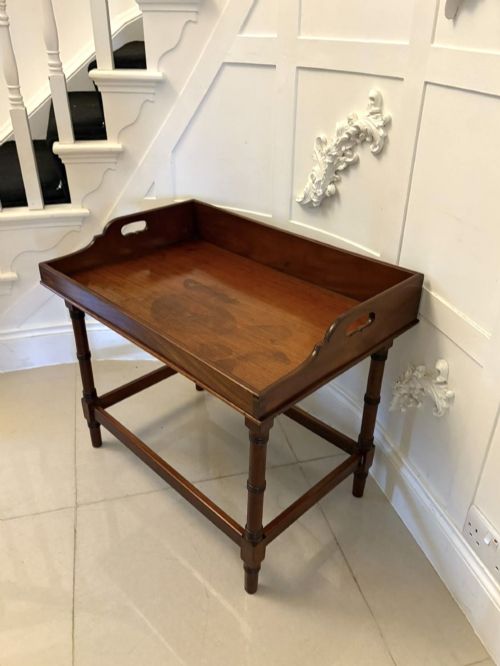
- A raised rim or border around the edge of a table top, designed to prevent objects from sliding off. These can be formed from solid wood, pierced brass, or fretted timber.
- Tray top
- A removable or fixed table surface designed with raised edges resembling a serving tray. This form often sits upon a folding or rigid support stand.
- Marquetry
- Decorative veneer work arranged in geometric or pictorial patterns using various coloured woods. Satinwood and darker timbers frequently appear in this technique.
- Tripod table
- A small freestanding table supported by a central pillar resting on three legs. These items served various occasional functions in domestic interiors.
- Chippendale
- A style of furniture influenced by the designs of Thomas Chippendale, characterised by specific carving motifs and proportions. Pieces in this tradition often date from the eighteenth century or later revivals.
Georgian Gallery Table: Frequently Asked Questions
What is a georgian gallery table used for?
These tables functioned primarily as bedside surfaces, lamp stands, or small writing desks within period interiors. The raised edge kept items secure when the furniture was moved or used for serving.
Today, they serve similar occasional roles in modern rooms, functioning as bedside cabinets, side tables, or display surfaces for decorative objects.
How do I identify a genuine period piece?
Examine the timber construction methods, drawer linings, and overall wear patterns to assess age. Eighteenth-century pieces exhibit hand-cut joinery and timber characteristics consistent with period cabinet making.
Compare the proportions and hardware with documented examples from the same era. Subsequent revivals often display subtle differences in manufacturing technique.
Are brass galleries original?
Many tables retain their original pierced or solid brass gallery rails attached to the top surface. Inspect the fixing points and surrounding timber to determine whether the gallery dates from the original construction.
Replacement galleries sometimes occur due to the fragile nature of the delicate fretwork or rail components over centuries of use.
Which woods were used for these tables?
Mahogany forms the vast majority of surviving examples, valued for its stability and rich dark tone. Walnut, satinwood, padauk, and oak appear less frequently in specific regional or decorative pieces.
Inlays often incorporate contrasting light and dark timbers to create geometric borders or central medallions across the table top.