




Eighteenth Century Walnut Table
An eighteenth century walnut table brings warmth and rich grain to a room, offering practical utility through designs spanning from side tables to grand dining pieces.
Eighteenth Century Walnut Table
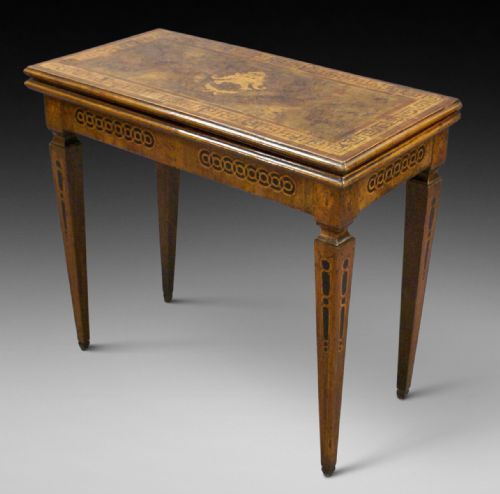
When you search for an eighteenth century walnut table, you encounter a variety of forms including side tables, dining tables, desks, occasional tables, console tables, lowboys, and games tables. These items originate predominantly from the 18th century, with additional examples spanning the Georgian and 19th century periods.
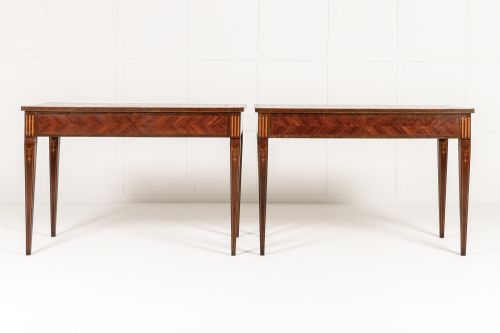
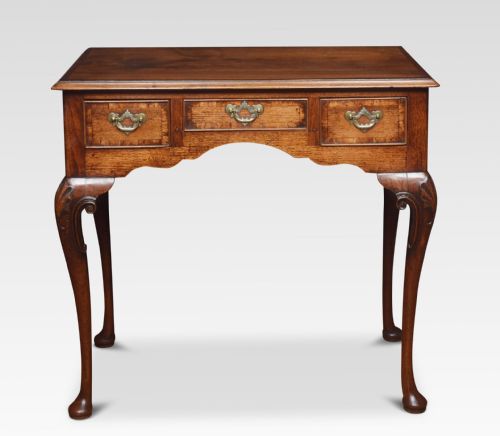
The pieces you are most likely to meet on this page include versatile lowboys featuring single drawers, side tables with clean lines, and formal console tables. Styles range from Queen Anne and George I to George III, French Provincial, and Neoclassical Italian designs, reflecting diverse regional craftsmanship.
Makers and artisans built these tables to serve specific domestic functions, from card playing and writing to serving meals or displaying decorative objects. The survival of such varied forms demonstrates the enduring appeal of walnut as a primary timber for fine furniture.
How they were made
Craftsmen utilised solid walnut alongside supporting secondary timbers such as oak and fruitwood to construct stable frames for tables and desks. Artisans often applied decorative veneers, boxwood inlay, and kingwood borders to enhance visual depth on table tops and drawer fronts.
Structural elements frequently incorporated brass handles on drawers, alongside characteristic cabriole legs and trilobe feet on lowboys and side tables. Joinery techniques ensured that tilt-top mechanisms, gateleg frames, and pedestal supports functioned smoothly while maintaining structural integrity.
Object forms span dining tables, games tables, desks, console tables, and lowboys across the 18th, Georgian, and 19th centuries.
What varies in quality
The refinement of the timber grain largely separates standard examples from exceptional pieces, particularly where figured walnut or intricate inlay work is present. Master carvers demonstrated superior skill in the shaping of cabriole legs and the precise execution of decorative borders.
Proportion and stylistic coherence define the upper tier of these tables, where regional characteristics like French provincial moulding or Italian neoclassical detailing are executed with absolute clarity. The integration of secondary woods and original brass hardware further distinguishes higher-grade furniture.
The Eighteenth Century Walnut Table Glossary
- Lowboy
- A small dressing table or side table featuring a low waist and one or more rows of drawers, typically raised on cabriole legs. These pieces were popular throughout the Georgian period for domestic use.
- Gateleg table
- A table with hinged leaves supported by swing-out legs that resemble a gate, allowing the surface area to expand or contract. This practical design dates back centuries and remains highly adaptable.
- Kneehole desk
- A compact writing desk featuring a recessed central cupboard flanked by pedestals of drawers, designed to allow the user's knees to fit comfortably underneath. They frequently date to the early eighteenth century.
- Console table
- A table designed to stand against a wall, often secured with brackets, appearing prominently in neoclassical and French provincial interiors. They frequently served decorative display purposes in grand hallways.
- Cabriole leg
- A furniture leg featuring a double curve, stepping outward at the knee and tapering inward at the ankle, commonly ending in a pad or trilobe foot. This shape became a defining feature of early eighteenth-century design.
Eighteenth Century Walnut Table: Frequently Asked Questions
How were these tables used?
These tables served a wide range of daily household tasks, from dining and writing to playing games on specialised folding surfaces.
Smaller forms like side tables and lowboys functioned as convenient surface spaces in hallways and private rooms, while console tables provided decorative display areas against interior walls.
How do I live with walnut furniture?
Living with antique walnut involves placing pieces away from direct heat sources and strong sunlight to protect the timber and delicate veneers from drying out.
Routine care requires gentle dusting with a soft cloth and avoiding moisture, allowing the rich grain and natural patina of the wood to develop over time.
How do I tell periods apart?
Distinguishing periods relies on observing shifts in decorative style, structural hardware, and leg forms, such as the transition from early cabriole shapes to later neoclassical lines.
Comparing construction methods and secondary timbers like fruitwood, boxwood, or oak also helps contextualise whether a piece belongs to the early, mid, or late eighteenth century.