
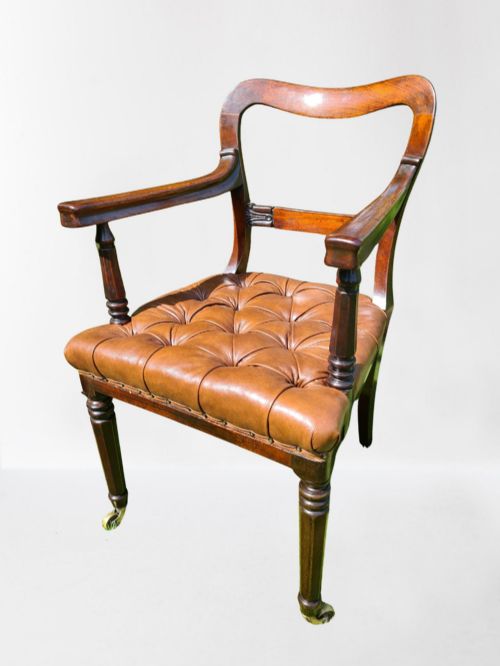
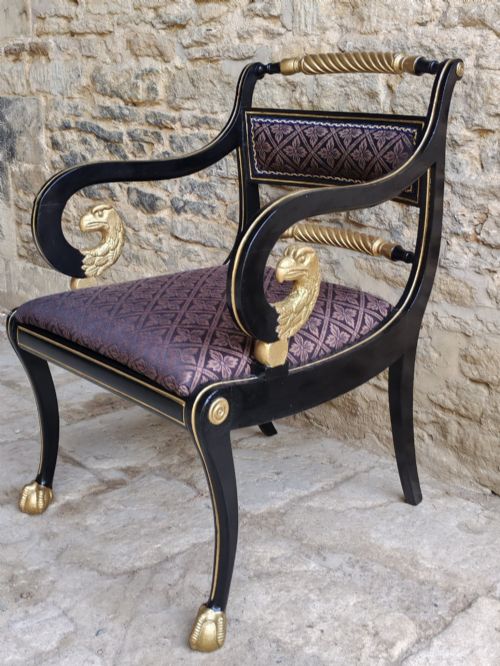
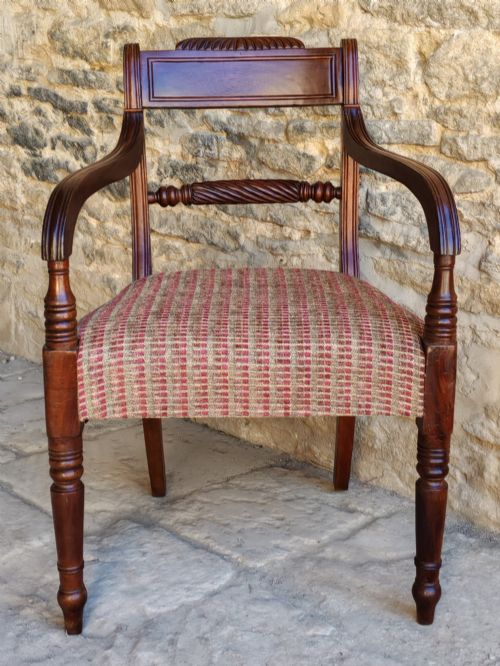
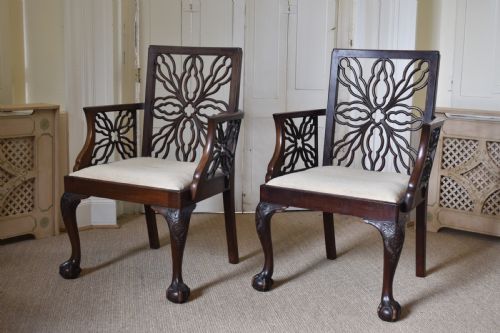
Georgian Carved Elbow Chair
A georgian carved elbow chair brings solid mahogany and considered proportions to a desk or dining table.
Georgian Carved Elbow Chair
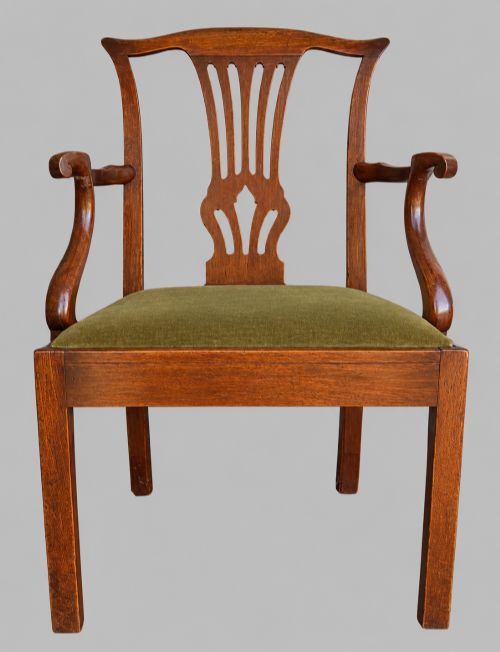
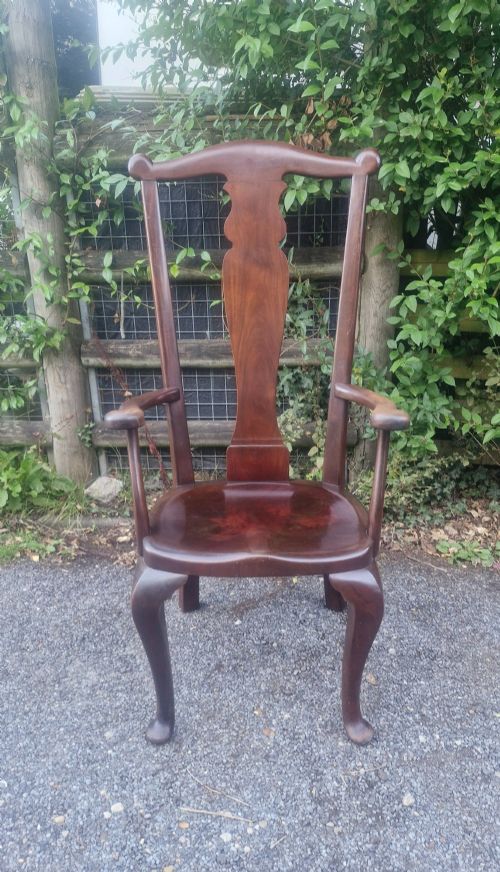
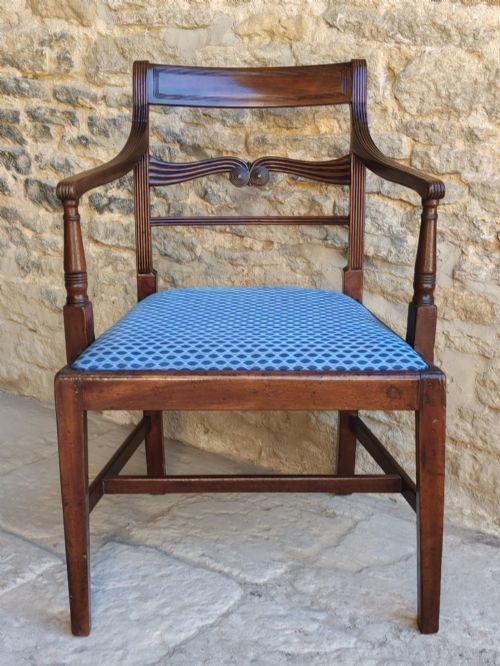
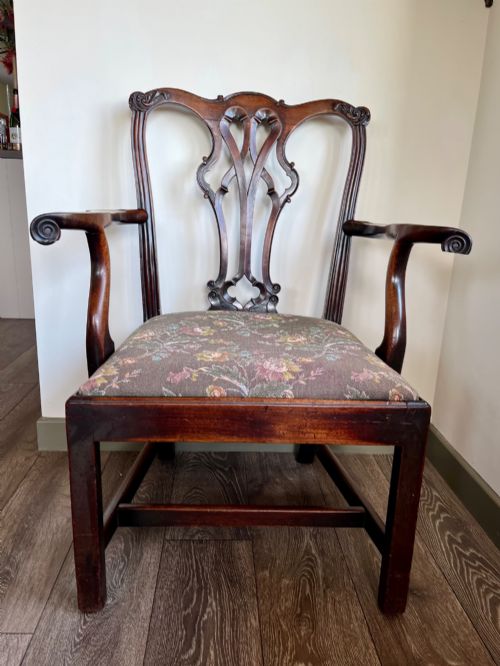
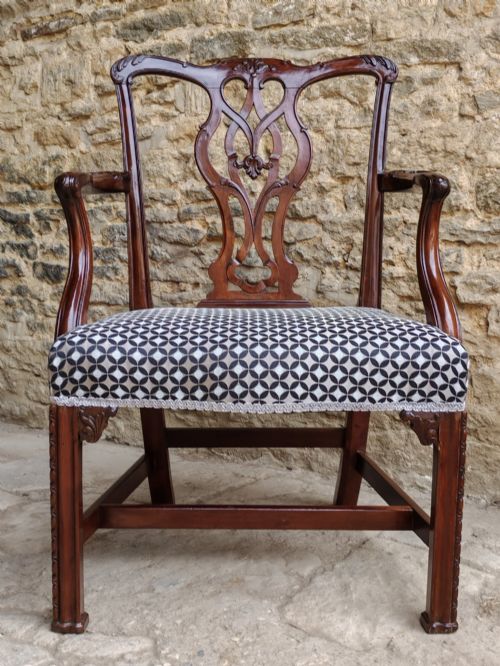
A georgian carved elbow chair encompasses seating designed with supportive armrests, originating across the eighteenth and early nineteenth centuries. These pieces function as library chairs, desk chairs, and carvers meant to sit at the ends of dining tables.
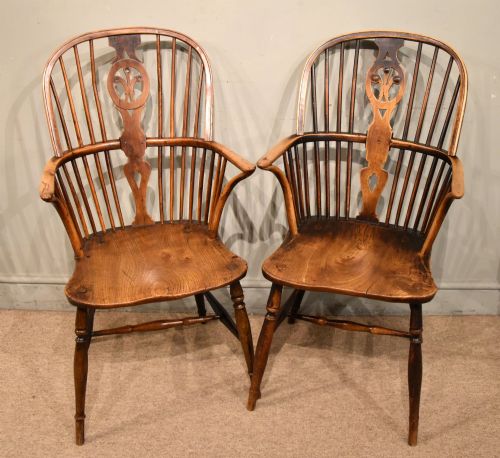
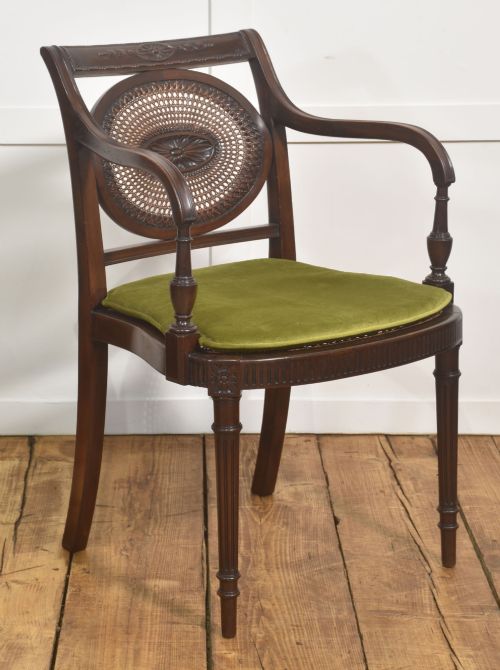
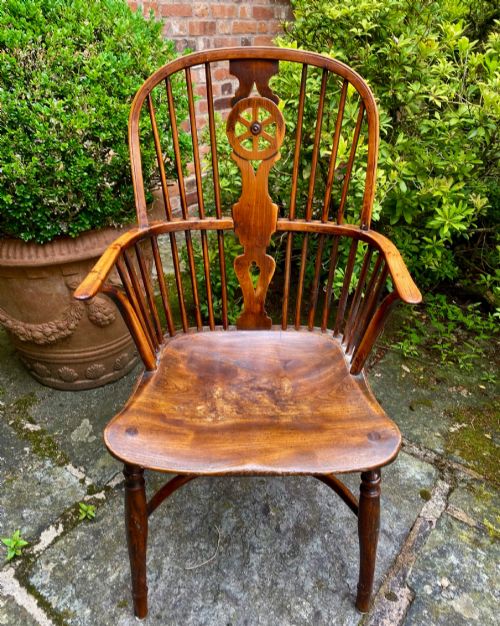
The selections here span from authentic mid-eighteenth-century examples to later revival interpretations made around nineteen hundred. Mahogany dominates the forms, accompanied by regional variations in elm, ash, yew, and walnut.
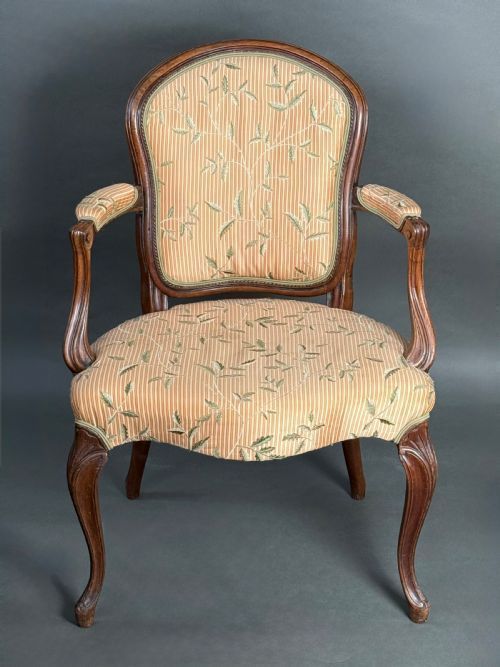
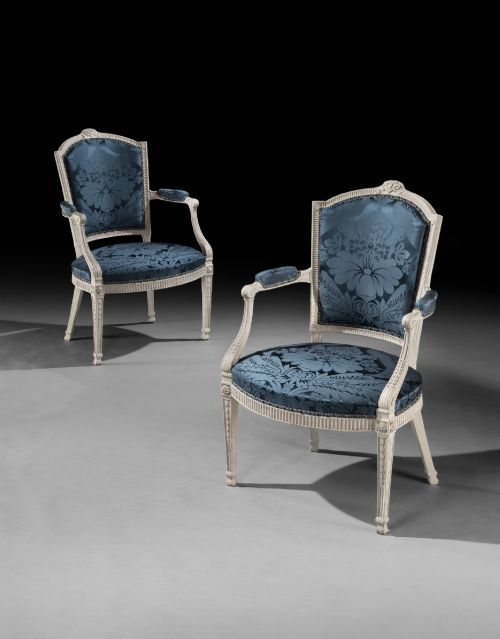
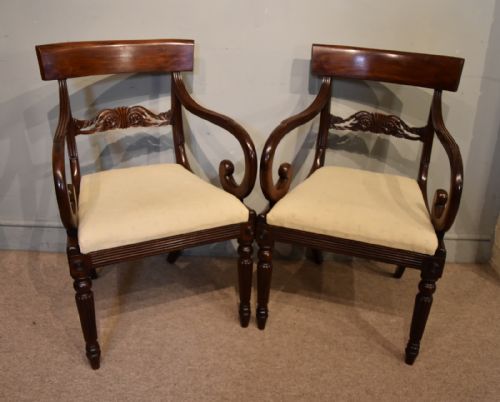
Buyers frequently encounter Chippendale and Hepplewhite influences alongside Regency and Windsor frameworks. These seating options offer structural presence and varied upholstery ranging from plain leather to velvet and silk.
Materials and construction methods
Cabinetmakers relied heavily on dense tropical hardwoods, chiefly mahogany, which tolerated crisp chisel work on splats and arm terminals. Secondary timbers appeared in seat frames and underpinnings where durability mattered more than surface grain.
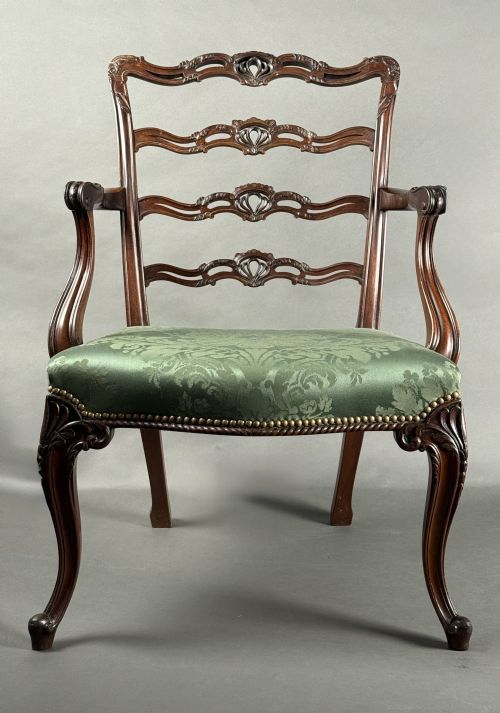
Joinery combined pinned mortise and tenon joints with shaped elbow supports secured directly to the seat rails. Brass inlay, carved ropebacks, and turned spindles added decorative articulation to otherwise utilitarian frames.
Listings feature mahogany predominantly, alongside walnut, rosewood, elm, ash, and yew across multiple periods.
Distinctions in craftsmanship
Quality reveals itself in the crispness of the hand-carved detail and the selection of timber figures for prominent crest rails. Superior pieces display harmonious proportions where the rake of the back matches the curve of the arms.
Original seat frames with intact blocking and minimal timber replacement command greater respect among collectors than heavily restored examples. The integrity of the timber and the subtlety of the joinery dictate the standing of each piece.
Waring and Gillow
The Georgian Carved Elbow Chair Glossary
- Carver
- An armchair designed to match a set of single dining chairs, traditionally placed at the head of the table. These items feature integrated armrests to accommodate formal dress.
- Elbow chair
- A domestic seat fitted with armrests, often used informally at a desk or in a library. The term frequently overlaps with carver and armchair in older inventories.
- Splat
- The vertical central strip of wood within the back of a chair, often pierced and carved in the Chippendale manner. It provides lumbar support while displaying the cabinetmaker's decorative vocabulary.
- Drop-in seat
- A removable wooden frame upholstered separately and dropped into a rebate in the chair rails. This construction allowed for easier reupholstery without dismantling the main frame.
- Ropeback
- A chair back featuring carved decoration resembling twisted rope, popular during the Regency period. This motif reflects neoclassical influences popular in British furniture design.
Georgian Carved Elbow Chair: Frequently Asked Questions
What is a georgian carved elbow chair?
A georgian carved elbow chair is a wooden seat featuring armrests, constructed during the eighteenth or early nineteenth century or styled after that era. These items served various domestic roles, from library seating to dining table carvers.
Craftsmen utilised sturdy timbers like mahogany and walnut, applying hand-carved details to the splats, arms, and legs. Their durable construction allows them to continue functioning as practical seating today.
How were these chairs used originally?
These armchairs served multiple domestic functions in wealthy households, including desk work, reading in libraries, and seating at dining tables. Chairs with broader proportions accommodated formal eighteenth-century clothing.
Library and desk variants often incorporated leather inserts on the seats or sturdy frames designed for daily administrative tasks. Dining carvers matched simpler single chairs to denote hierarchy around the table.
How do I live with one?
Living with a historic armchair involves balancing daily utility with sensible conservation practices. Placing timber seating away from direct heat sources prevents the wood from drying and splitting.
Upholstered variants suit studies, living rooms, and bedrooms where traffic remains moderate. Regular dusting keeps the carved mahogany surfaces conditioned without damaging the underlying polish.
How do I tell periods apart?
Differentiating periods relies on observing shifts in decorative vocabulary, from the elaborate carved ribbon backs of mid-eighteenth-century Chippendale pieces to the restrained classical lines of the Regency era. Earlier items often display heavier proportions and rich mahogany grain.
Later nineteenth-century revivals borrow these earlier motifs but frequently employ machine-assisted cutting rather than purely hand-cut joinery. Examining the timber beneath the seat often reveals the age of the underlying construction.