

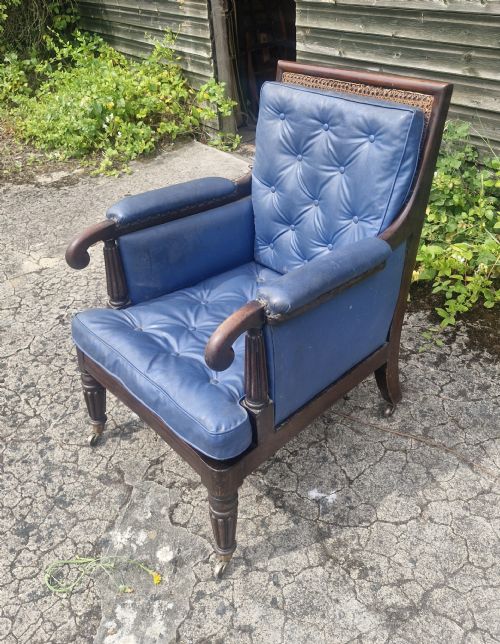
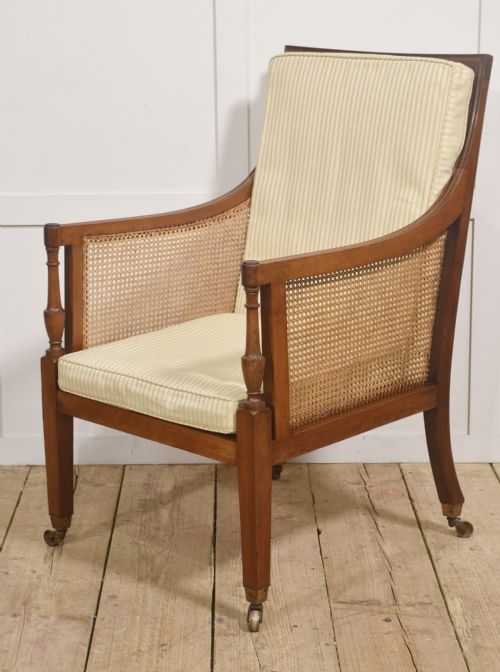


Georgian Cane Armchair
A georgian cane armchair offers deep-seated comfort and architectural presence, pairing resilient woven plant fibres with substantial timber frames.

Georgian Cane Armchair
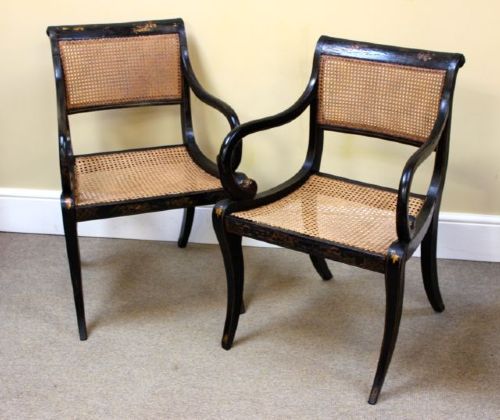
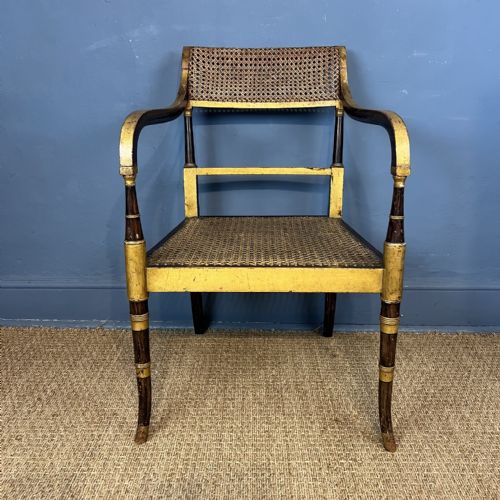
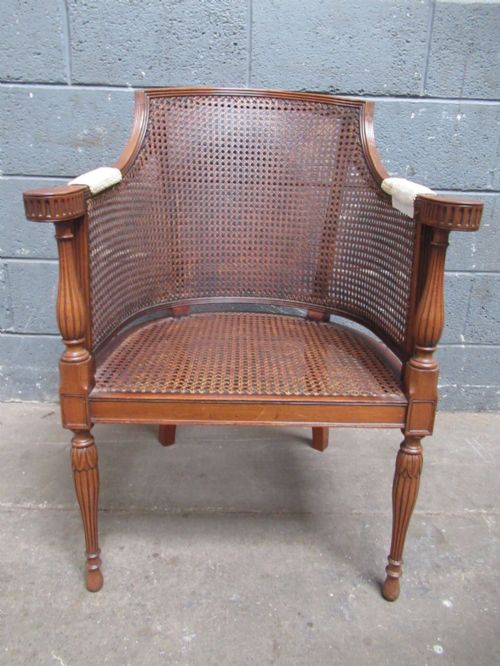
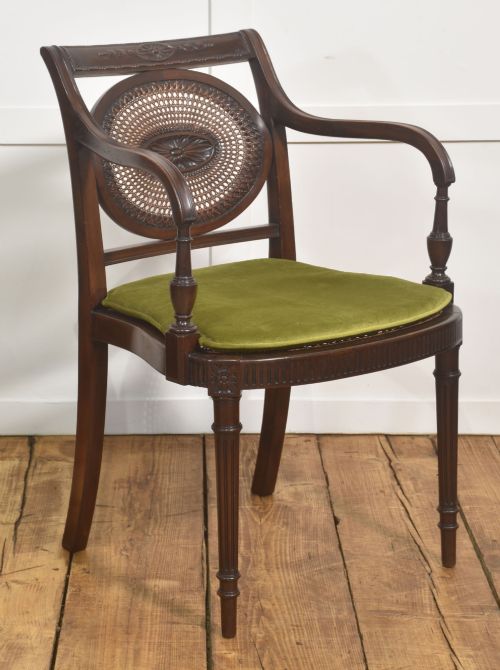
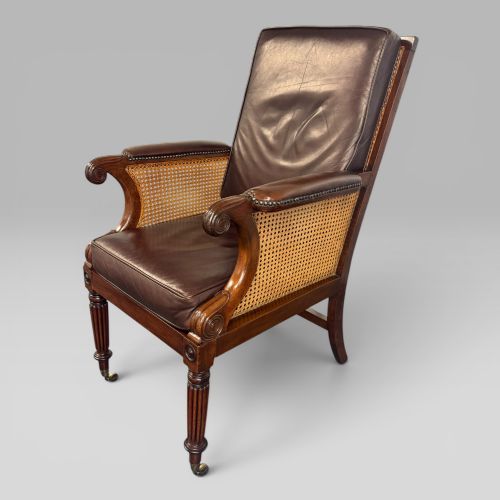
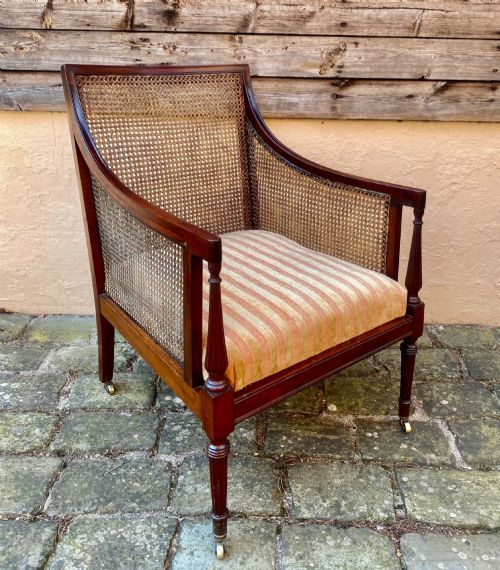
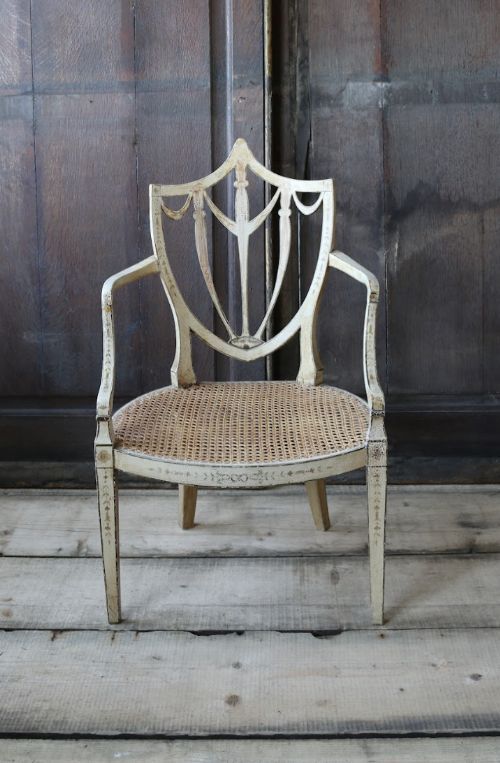
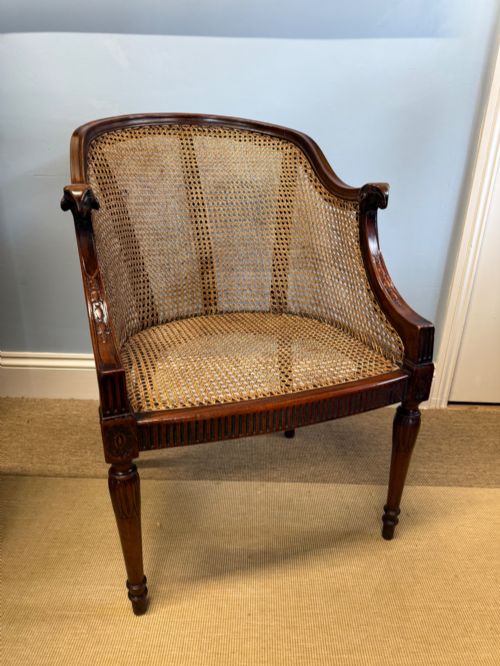
A georgian cane armchair combines wooden frames with woven plant panels to create a seating form suited to both formal libraries and drawing rooms. Buyers seeking this phrase encounter examples ranging from late eighteenth-century painted shield-back models to robust Regency library bergères.
The selections on this page span several stylistic evolutions, including William IV period productions, Sheraton Revival interpretations, and Edwardian iterations. Alongside standard seating, the listings incorporate specialist forms such as childs armchairs and metamorphic library chairs that convert into steps.
Materials and construction
Cabinetmakers built the foundational frames using dense timbers like mahogany, alongside alternative treatments such as simulated or faux rosewood, painted finishes, and japanned lacquering. These solid structures were designed to support the tension of interwoven natural plant fibres.
Caning and rattan cane were threaded through drilled channels or fixed frames to create breathable, flexible seating and back panels. Makers incorporated supplementary details including brass mounts, parcel gilding, leather upholstery, and velvet squab cushions.
Georgian Cane Armchair Retail Price Guide 2026
Typical asking prices for georgian cane armchair among the pieces listed under this phrase on Sellingantiques today, from the lower quarter to the upper quarter. They describe what is for sale here now, not the wider market.
Listings feature mahogany, cane, rattan, brass, leather, and fabric across Georgian, Regency, and Edwardian periods.
Assessing quality in construction
Quality rests in the precision of the timber frame joinery and the integrity of the woven panels. Finer examples display well-drawn proportions, careful turning, and original painted or parcel gilt decoration rather than later restorations.
The distinction between standard production and superior craftsmanship often lies in the depth of the carving and the cleverness of mechanical elements, such as folding library steps integrated into the chair structure.
Gillows
The Georgian Cane Armchair Glossary
- Bergère
- An enclosed upholstered armchair with solid sides filled with cane or upholstery. This French-inspired form became a staple of English library seating during the Regency period.
- Caning
- A method of weaving rattan or cane plant material into decorative mesh panels. It provides a resilient, ventilated surface for seats and backs.
- Metamorphic furniture
- Pieces engineered to transform into entirely different functional items, such as an armchair that unfolds into a set of library steps.
- Shield-back
- A chair back shaped in the outline of a heraldic shield. This distinctive form gained popularity in the late eighteenth century.
Georgian Cane Armchair: Frequently Asked Questions
What is a bergere armchair?
A bergere is a fully or partially enclosed armchair featuring solid upholstered or caned sides. The design originated in France and was widely adopted by English cabinetmakers for library and drawing room use.
These chairs typically include a loose squab cushion for the seat and generous proportions designed for relaxation.
How do I use a metamorphic chair?
Metamorphic chairs are dual-purpose pieces engineered with hidden hinges and pivots that allow the seating frame to transform into library steps. They were built for domestic utility in high-ceilinged Georgian and Regency rooms.
To operate them, gently release the locking mechanism and unfold the wooden sections according to their designed path.
Where were these armchairs placed?
These armchairs primarily served in domestic libraries, studies, and formal drawing rooms. Their sturdy timber frames and breathable cane panels made them suitable for prolonged reading and writing.
Pairs often flanked fireplaces or writing tables, while single chairs stood beside bookcases.
How do I care for cane seating?
Cane requires moderate humidity to prevent the natural plant fibres from becoming brittle and snapping. Avoid placing these chairs near direct heat sources or strong sunlight.
Dust the woven panels gently with a soft brush and wipe the wooden frames with a dry cloth.