

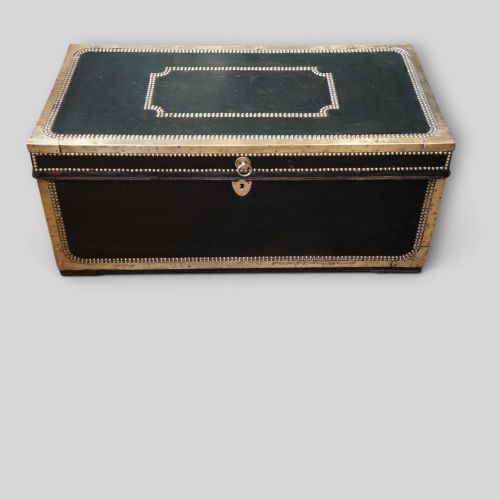
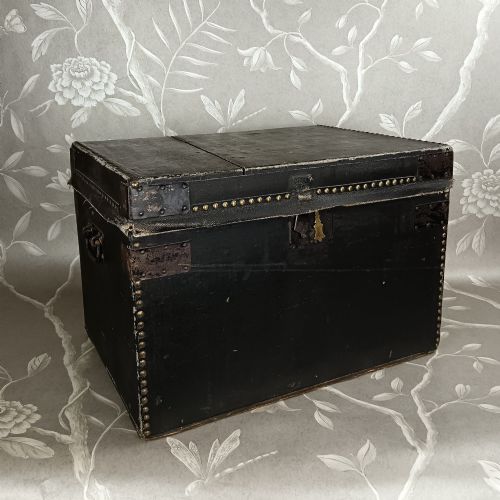
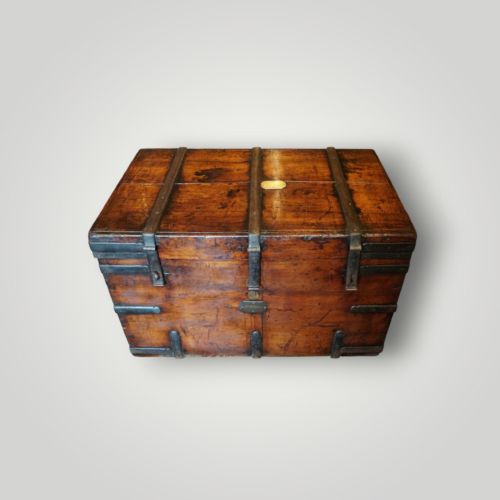
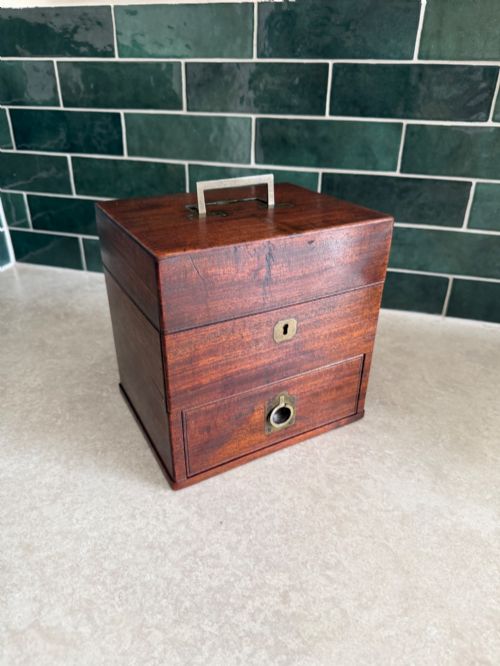
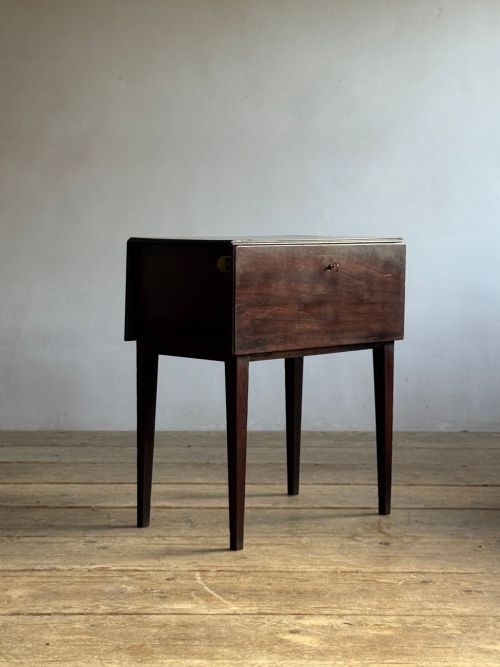


Georgian Campaign Box
A georgian campaign box offers portable luxury and rugged practicality, built to travel across continents for officers and gentlemen on the move.
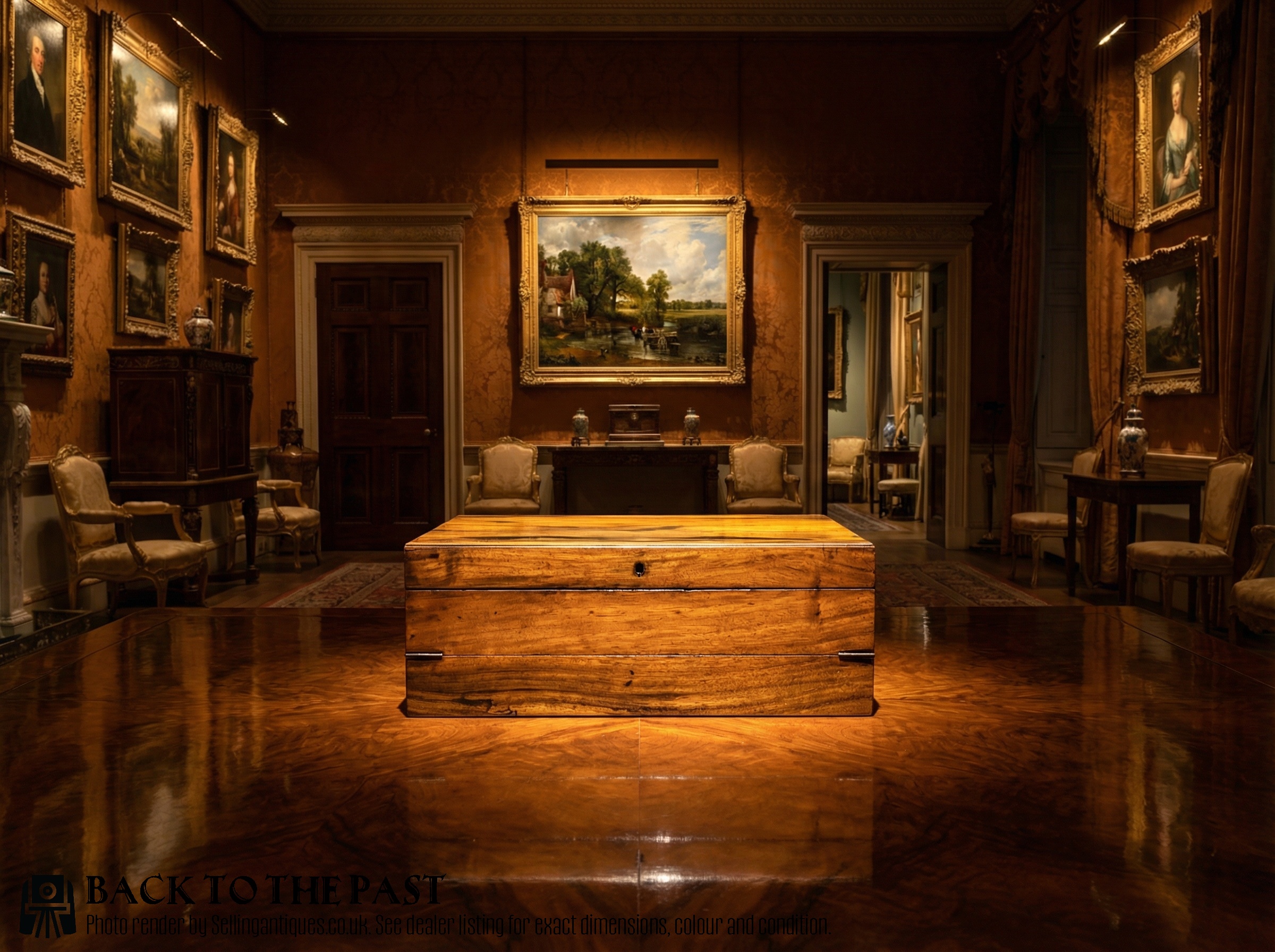
What the pieces are
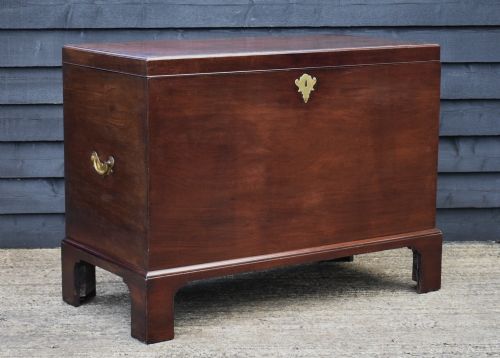
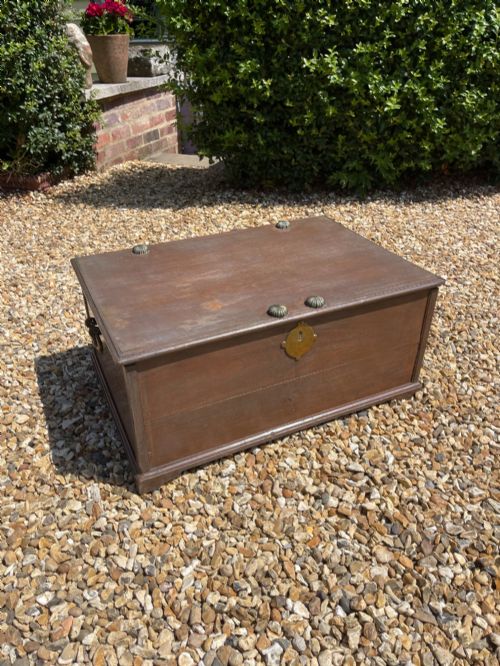
A georgian campaign box encompasses writing slopes, apothecary cases, shaving chests, correspondence boxes, and document holders designed for travel. These portable chests span from the late eighteenth century through the early nineteenth century.
The version most commonly met on this page is the brass-bound writing slope, hinged to open into a sloping desk surface for field correspondence. Shaving boxes, cigar cabinets, and jewellery chests also appear among these portable containers.
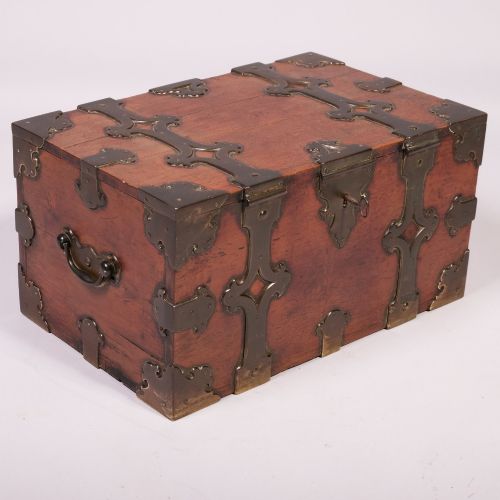
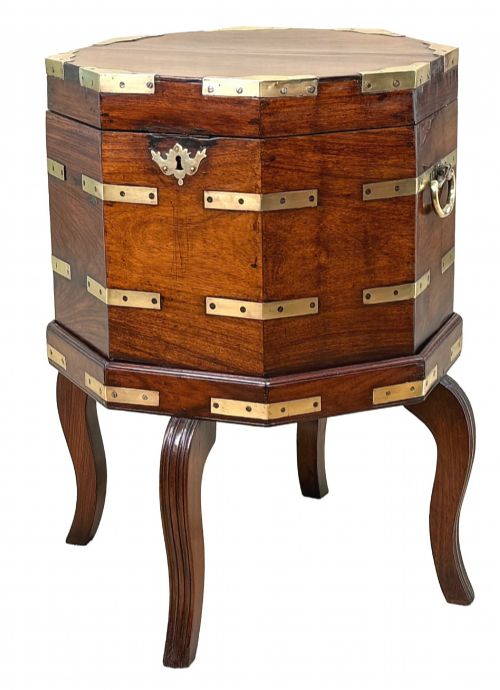
Materials originate primarily in mahogany, rosewood, walnut, kingwood, and teak timbers. Many examples incorporate brass binding to protect the corners and edges during transport.
How they were made
Cabinet makers utilised dense hardwoods including mahogany, rosewood, and teak to withstand the rigours of military travel. Timber panels were selected for stability and fitted with brass corners, straps, and flush-fitting carrying handles.
Interiors required intricate carpentry to house inkwells, secret compartments, pop-up mechanisms, and fitted glass bottles. Woodwork incorporated dovetail joints and precise internal partitions designed to secure contents during motion.
Retail Price Guide 2026
Typical UK retail prices for georgian campaign box, calculated from the Sellingantiques database of over a million retail prices indexed since 2003. This retail price guide relies exclusively on Sellingantiques data; no external sources or auction records are used, so the figures do not describe the wider market.
Some correspondence boxes hide secret compartments behind dummy drawer fronts that require sliding a hidden wooden peg to release.
What varies in quality
Quality rests in the precision of the brass hardware, the grain selection of the timber, and the complexity of the interior fittings. Superior examples display fine parquetry, secret drawers, and robust pop-up mechanisms that operate smoothly.
Simpler containers rely on plain mahogany with basic brass stringing, whereas finer pieces utilise kingwood or rosewood veneers paired with heavy brass corner reinforcement and comprehensive compartmentalisation.
The Georgian Campaign Box Glossary
- Writing slope
- A portable box with a hinged, slanted lid that folds down to create a writing surface. These slope-top containers typically house compartments for stationery, nibs, and inkwells.
- Brass bound
- The technique of reinforcing box edges and corners with inset brass strips and plates. This metalwork protected the timber from knocks during military transit.
- Flush handle
- A recessed metal handle set into the side of a box so it does not protrude during packing. These handles lift out only when required for carrying.
- Secret compartment
- A hidden drawer or concealed space accessed by removing a false panel or pressing a hidden spring. These secure compartments were used for valuables and confidential documents.
- Apothecary box
- A fitted chest containing glass bottles, scales, and pestles for administering medicine in the field. These medical cases feature specialised internal shelving.
Frequently Asked Questions
What is a campaign box?
A campaign box is a portable wooden chest made for officers and travellers during the Georgian era. These containers held writing materials, medical supplies, shaving gear, or documents while on the move.
Built to withstand rough transport, they feature sturdy timbers and protective brass hardware. Their folding designs allowed travellers to set up a functional desk or workstation anywhere.
How were writing slopes used?
Writing slopes served as portable desks for drafting letters, keeping journals, and managing correspondence on journeys. The hinged lid opened to reveal a slanted writing surface lined with leather or velvet.
Inside, dedicated compartments stored inkwells, pens, sealing wax, and paper. Secret drawers often provided a hidden space for money and personal letters.
What woods are most common?
Mahogany is the primary timber found in these portable chests, prized for its durability and resistance to warping. Rosewood, walnut, kingwood, and teak also appear across various examples.
Finer boxes utilise exotic veneers and decorative parquetry top designs. Hardwood selection depended on the intended destination and the status of the original owner.
Why do they have brass corners?
Brass binding protected the vulnerable wooden edges and corners of the box from impact during military transport. The metal plates absorbed knocks when boxes were loaded onto carriages and ships.
Cabinet makers recessed the brass flush into the wood to maintain a smooth exterior surface. This combination of timber and metal defined the utilitarian aesthetic of campaign equipment.