



Georgian Brass Wine Cooler
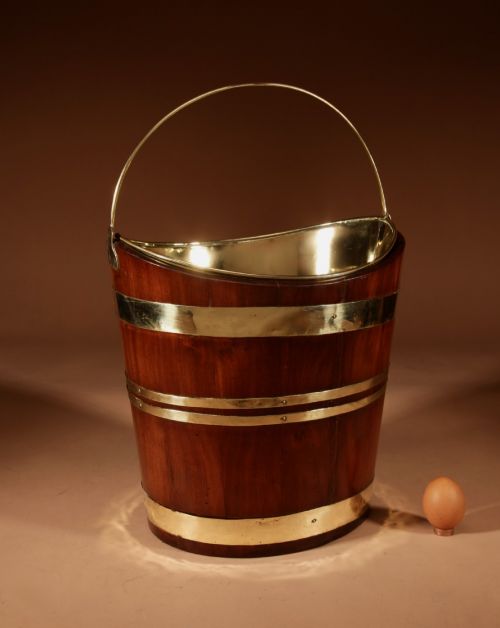
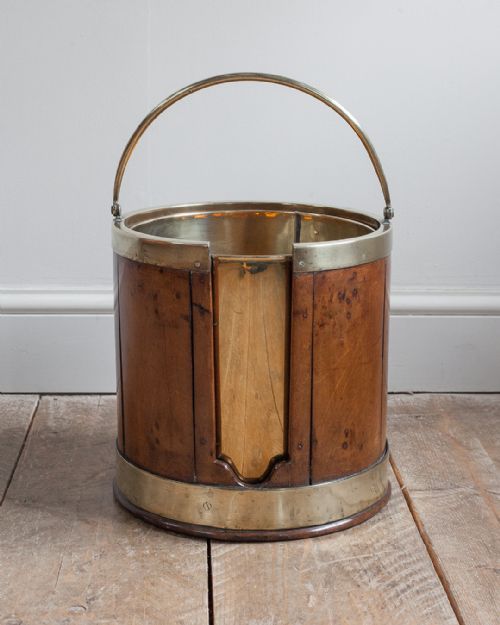
A georgian brass wine cooler is a timber vessel bound in metal hoops, designed to chill bottles for the dining table.
Georgian Brass Wine Cooler
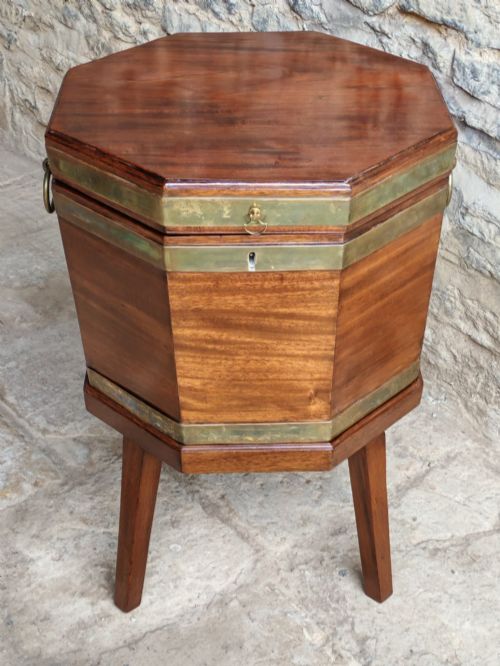
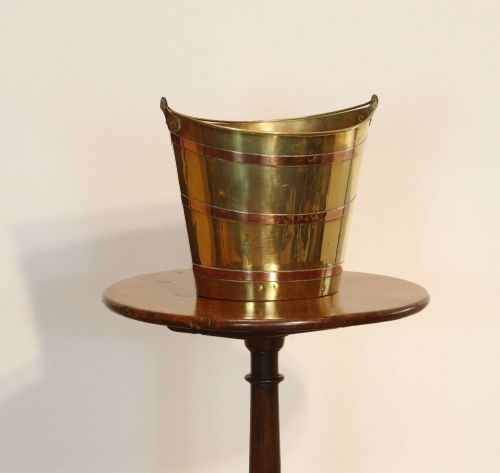
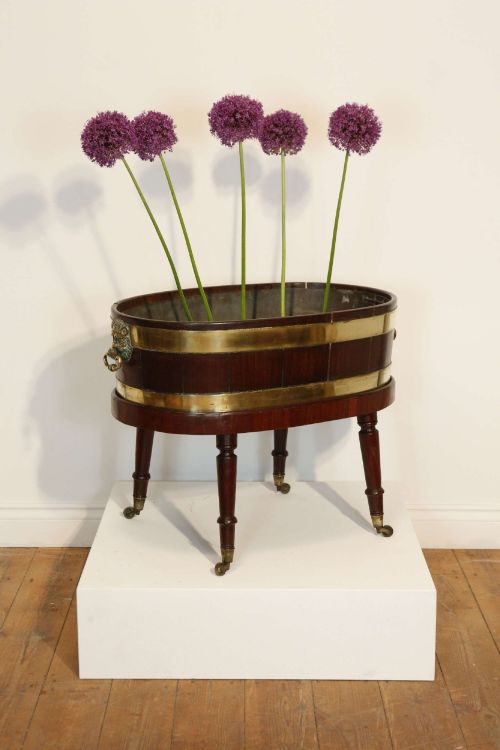
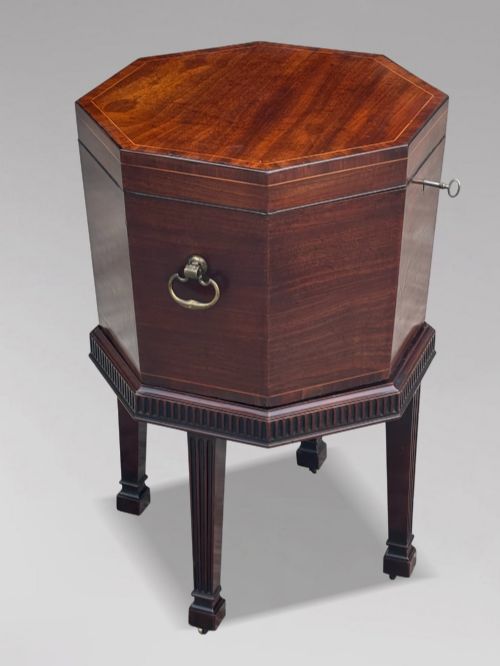
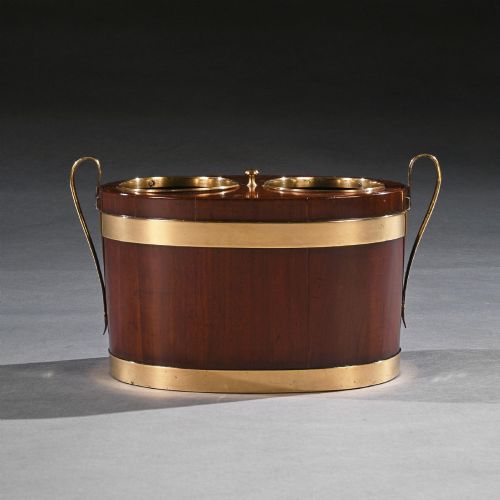
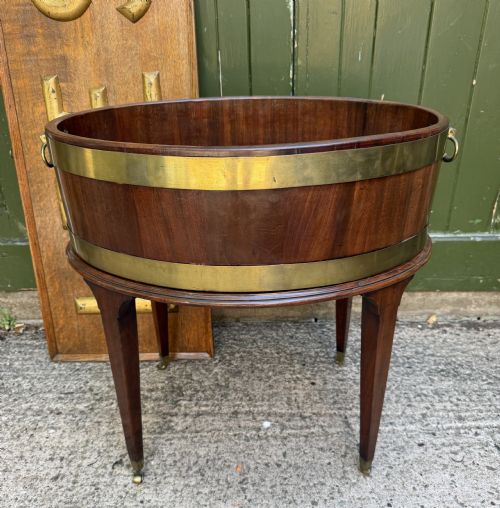
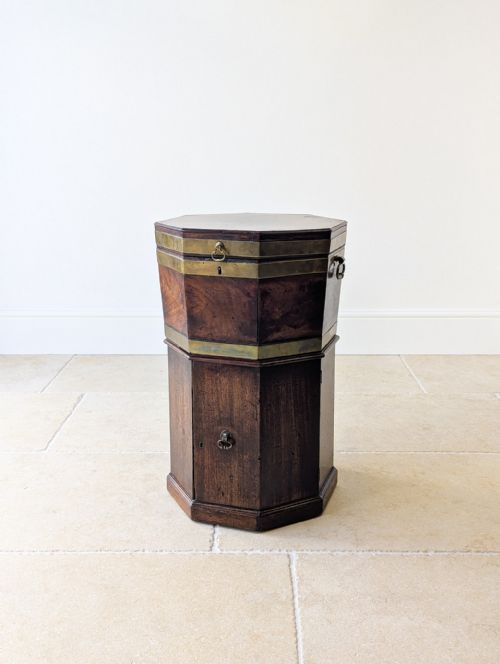
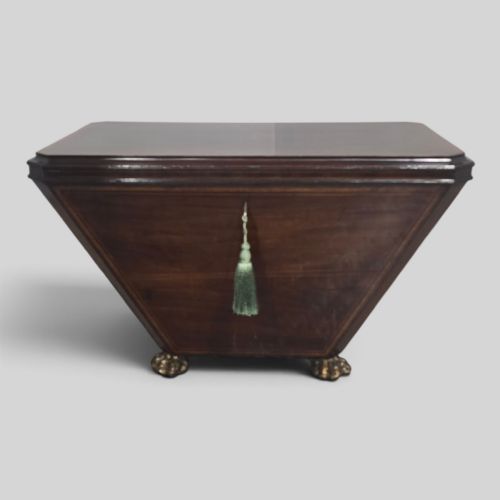
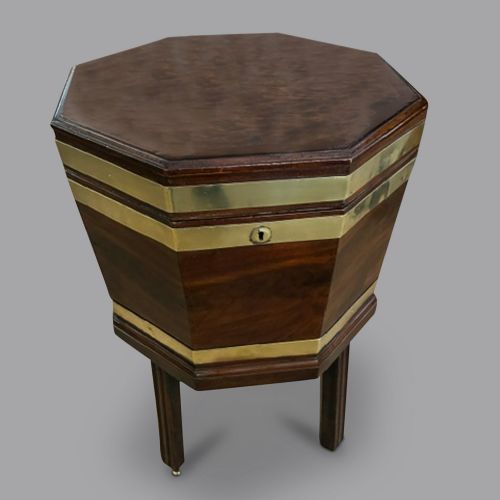
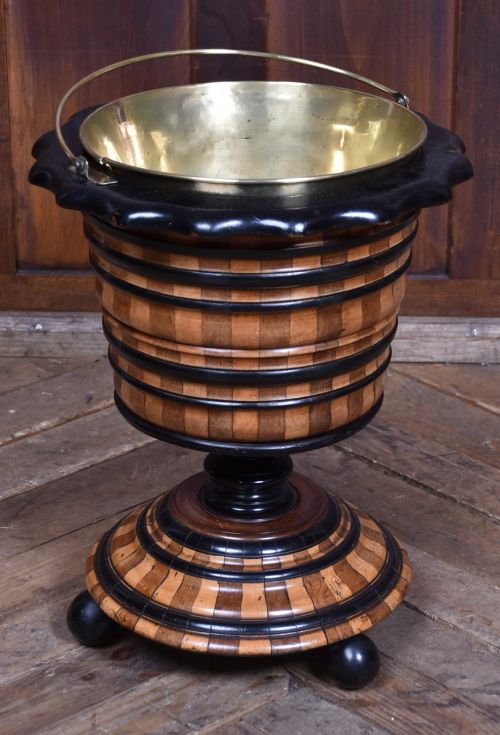
A georgian brass wine cooler primarily takes the form of an oval or octagonal bucket, often bound with heavy brass hoops and equipped with handles or a matching stand. Buyers encounter these vessels alongside related cellarettes, peat buckets, and tea stoves dating from the eighteenth and nineteenth centuries.
The dominant material combination found in this selection is solid mahogany mounted with brass bands, alongside variants in satinwood, walnut, and kingwood. Coopered construction techniques unite these pieces, utilising tight wooden staves bound tightly together just like a traditional cask.
Many examples retain interior metal linings made of zinc, intended to hold ice safely against wine bottles without damaging the surrounding timber structure. Regional variations include Dutch peat buckets and Anglo-Indian padouk pieces, expanding the range beyond standard domestic British dining rooms.
Materials and Technique
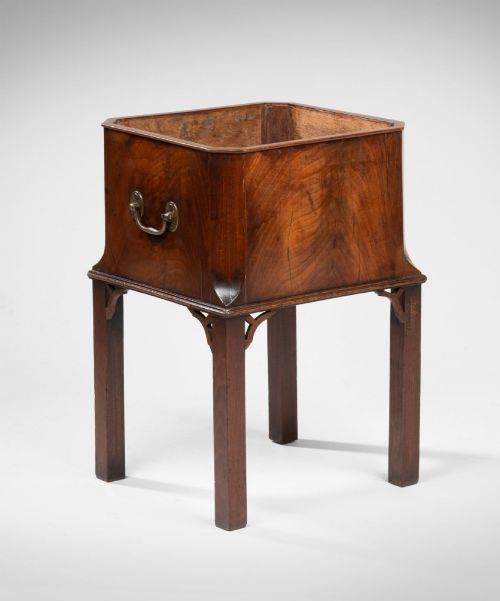
Cabinetmakers built these vessels using dense tropical hardwoods, predominantly mahogany, shaped into vertical staves or joined panels to form oval, round, or octagonal bodies. The wood receives a smooth polished finish that highlights the natural grain and colour.
Heavy brass bands provide structural reinforcement around the timber body, secured with closely spaced brass tacks or screws. Drop handles and occasional lion mask mounts add functional grip and decorative weight to the exterior.
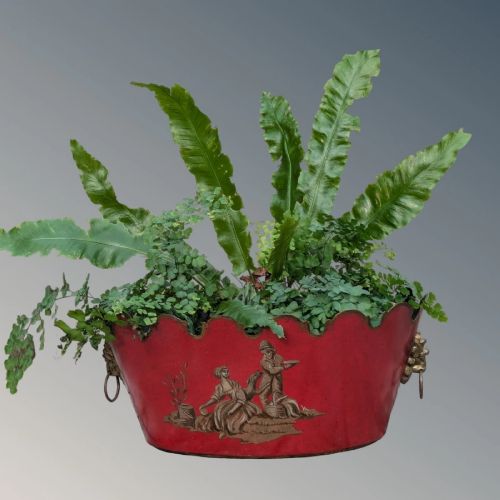
Internal zinc liners protect the wooden staves from moisture and melting ice, providing a watertight compartment for chilling beverages or holding plants.
Georgian Brass Wine Cooler Retail Price Guide 2026
Typical asking prices for georgian brass wine cooler among the pieces listed under this phrase on Sellingantiques today, from the lower quarter to the upper quarter. They describe what is for sale here now, not the wider market.
Several versatile vessels served multiple domestic roles, doubling as wine coolers, peat buckets, knitting baskets, and tea stoves.
Craftsmanship and Proportion
The distinction between standard examples and superior pieces rests on the precision of the cooperage and the quality of the timber figure. Finely figured mahogany grain and crisp, heavy cast brass mounts indicate a workshop of higher ambition.
Proportion and the presence of original matching stands separate ordinary vessels from exceptional collector items. Pieces retaining their original legs or stands show greater architectural harmony than those altered or separated over time.
Edwards and Roberts
The Georgian Brass Wine Cooler Glossary
- Cellarette
- A lockable container used for storing wine bottles near the dining table. They frequently share the same brass-bound timber construction as wine coolers.
- Coopered
- Built using curved wooden staves fitted together edge-to-edge and held by encircling metal bands. This technique derives directly from traditional cask and barrel making.
- Jardiniere
- An ornamental pot or stand designed to hold plants and flowers. Many wine coolers were later adapted for this domestic purpose.
- Teestoof
- A Dutch foot warmer or small heating stove, often incorporated into the design of antique peat buckets and carriers. These vessels utilised metal liners and perforated covers.
- Padouk
- A dense tropical timber valued for its rich red-brown colour and durability. It appears in colonial furniture pieces.
Georgian Brass Wine Cooler: Frequently Asked Questions
How were they used?
Servants filled the internal metal liner with ice and placed wine bottles inside the wooden bucket. The heavy brass bands and staves contained the cold moisture safely.
Later in their lifecycle, many found alternative use in the drawing room as planters or jardiniere stands.
How do I identify a period piece?
Examine the timber construction methods, noting hand-cut dovetails, traditional coopered staves, and the patina of the mahogany. Genuine eighteenth and nineteenth-century examples show authentic wear around the base and handles.
Check for period-appropriate brass fixings and cast mounts rather than modern replacement screws.
Can I use it today?
These vessels function well in modern interiors as drinks buckets, umbrella stands, or large planters for house plants. Their robust timber and metal construction handles domestic use.
Protect the interior wood by using the original metal liner or a modern plastic insert if adding moisture.