

Georgian Brass Box
When you handle a Georgian brass box, you touch the sturdy hardware and rich timber of an era when travelling containers doubled as portable desks and strongrooms.
Georgian Brass Box
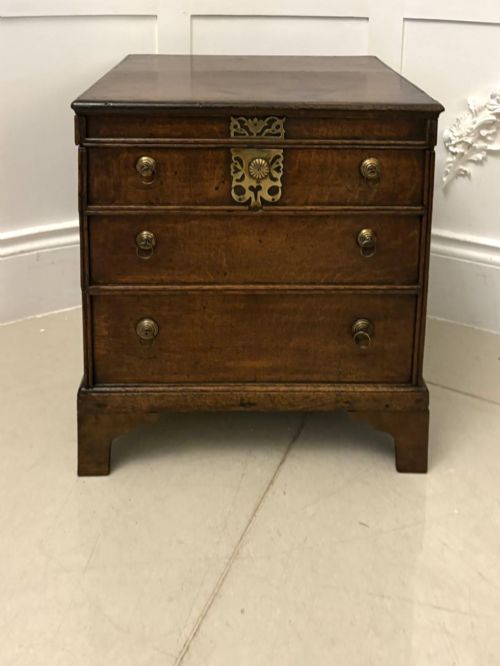
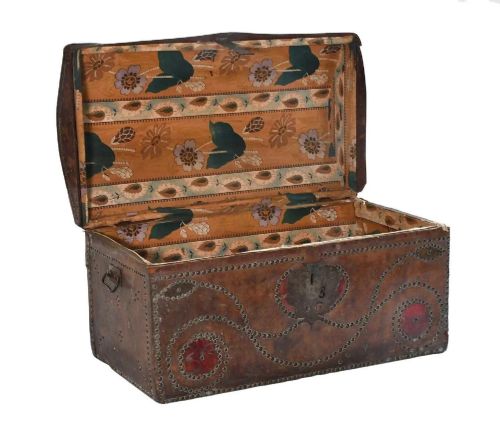
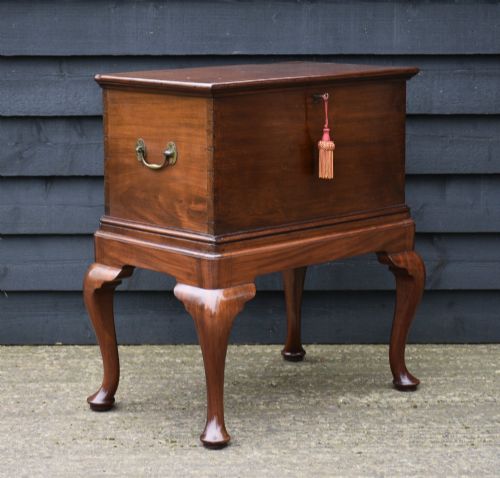
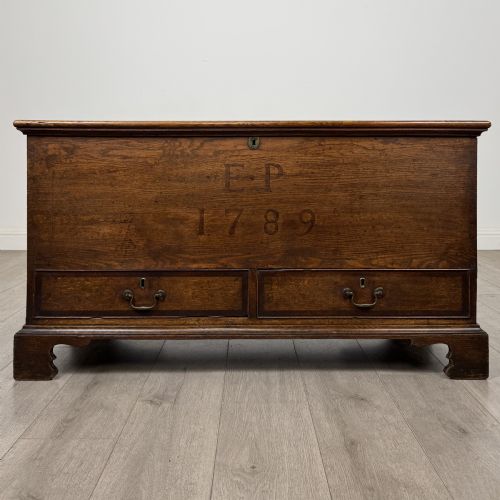
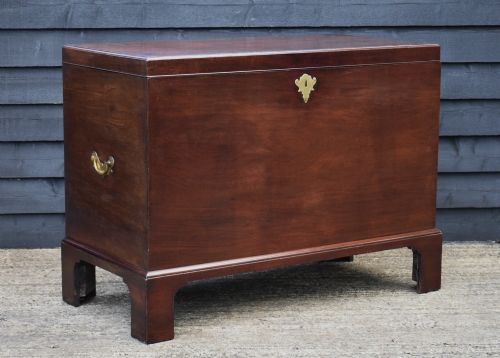
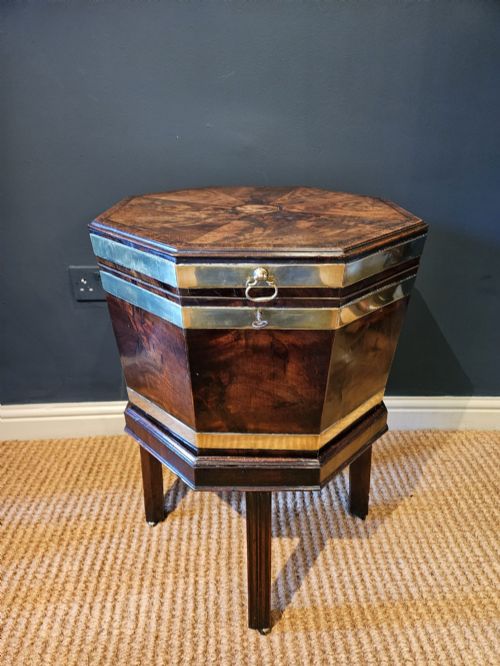
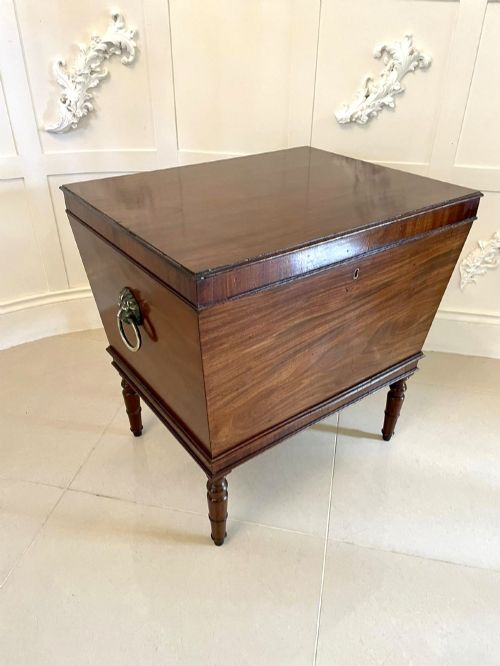
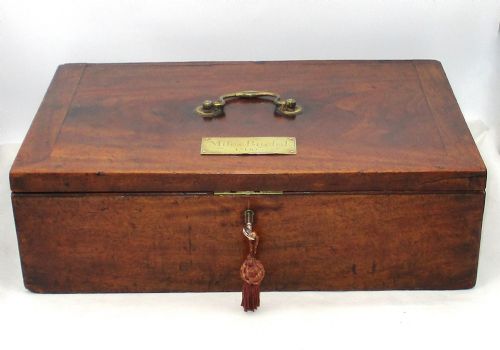
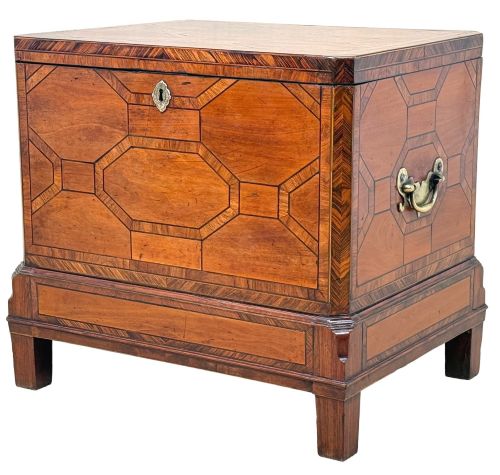
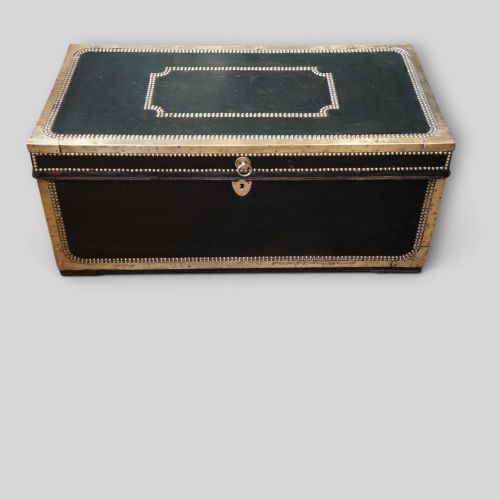
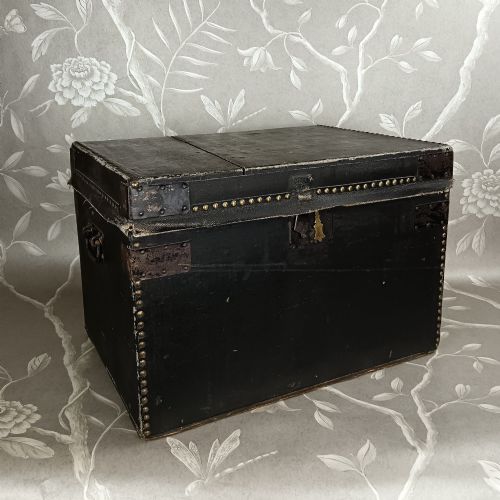
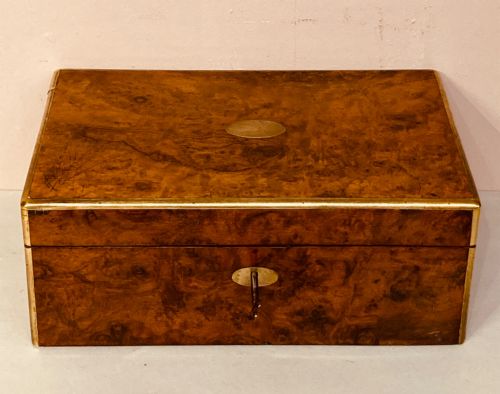
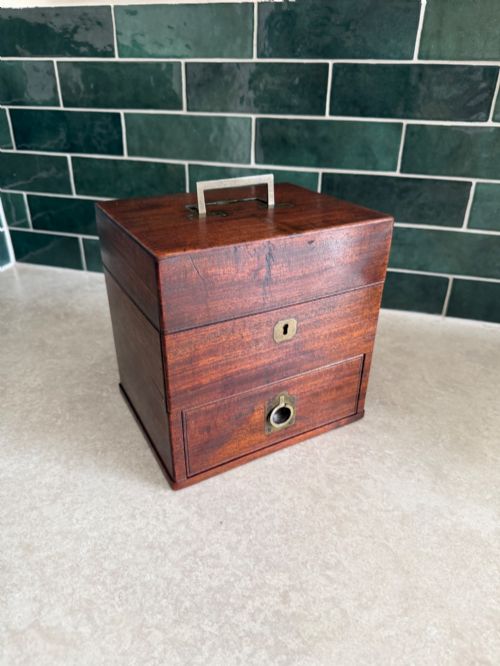
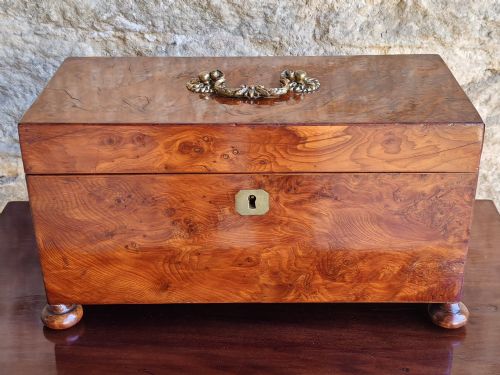
A georgian brass box serves multiple domestic and travel functions, appearing on this page as tea caddies, cellarettes, writing slopes, campaign chests, and pocket tobacco or snuff containers. These pieces cross the eighteenth and nineteenth centuries, showing standard British forms from modest country house deed boxes to heavy iron-bound trunks.
The mahogany, walnut, rosewood, and oak bodies house intricate interior fittings, including secret drawers, apothecary bottles, and velvet-lined compartments. Walnut and mahogany dominate the timber selection, frequently reinforced with countersunk brass corners, strapwork, and carrying handles designed for rough transit.
Smaller pocket examples in brass, horn, and fruitwood demonstrate everyday utility among smokers and travellers, featuring hinged lids and engraved decoration. Larger table models and document caskets display fine dovetail construction and flush-fitting campaign hardware meant to withstand moisture and impact.
How they were made
Cabinetmakers constructed the primary carcases from dense tropical hardwoods like mahogany and padouk, alongside native timber like oak and walnut, joined with tight dovetails. They reinforced these joints with heavy brass banding, corner plates, and strapwork secured by numerous small screws.
Surfaces received multiple coats of wax over polished grain, while finer items incorporated boxwood stringing, ivory escutcheons, and mother-of-pearl inlay. Specialised containers featured internal compartments lined with velvet, leather, or marbled paper to protect fragile instruments and documents.
Listings combine dense tropical hardwoods like mahogany and padouk with native timbers including oak, walnut, and fruitwood across campaign trunks, tea caddies, and writing slopes.
What varies in quality
The standard of timber selection largely dictates value, with figured flame mahogany, burr walnut, and exotic rosewood sitting above plain oak or deal carcases. Better workshops chose grain patterns carefully across the lid and sides to create symmetrical panels.
Hardware execution separates utilitarian campaign items from luxury pieces, seen in heavy cast brass carrying handles, flush-fitting escutcheons, and original working locks with matching keys. Hand-cut dovetailing and neatly mitred brass bindings indicate superior carpentry over hasty mass production.
Samuel Pratt·Wm. Insall of Bristol·Edwards and Roberts·Holtzapffel and Co·T.J. Morris
The Georgian Brass Box Glossary
- Cellarette
- A lockable container used for storing wine bottles and spirits safely in the dining room. These vessels frequently feature lead linings or fitted internal partitions.
- Escutcheon
- A small plate surrounding a keyhole that protects the surrounding wood from damage. They are commonly fashioned from brass, bone, or ivory.
- Campaign box
- Portable furniture designed for military officers and travellers on the move. They incorporate sturdy brass corners and recessed drop handles to resist rough handling.
- Tea caddy
- A lidded box built to store valuable tea leaves securely under lock and key. Many examples include internal mixing bowls and twin foil-lined compartments.
- Stringing
- A thin inlay of contrasting wood inserted into channels cut into the surface of a box. It outlines panels and drawers to provide geometric visual definition.
Georgian Brass Box: Frequently Asked Questions
What is a campaign box?
A campaign box is a portable container built for military officers and travellers on the move. These pieces feature robust timber frames reinforced with brass corners and recessed handles.
Such construction allowed officers to transport uniforms, documents, and valuables across rough terrain without damaging the contents. The hardware sits flush to prevent snagging during transport.
How were tea caddies used?
Tea caddies served as secure storage vessels for expensive tea leaves when tea was a luxury commodity. Servants kept them locked in the parlour and doled out leaves as needed.
Many caddies contain two separate compartments for green and black tea alongside a central mixing bowl. The lock ensured domestic staff did not pilfer the contents.
What is an apothecary box?
An apothecary box is a specialised compartmented case designed to hold medical drugs, vials, and scales. Doctors and wealthy households used them for treating common ailments at home.
They contain snug slots for glass bottles and small drawers for powders and pill-making tools. Surviving examples often retain their original glass phials and contents.
How do you date a brass bound box?
Dating relies on timber choices, construction methods, and the style of the brass hardware. Eighteenth-century pieces generally show hand-cut dovetails and thick brass straps.
Nineteenth-century examples often introduce machine-rolled brass, rosewood veneers, and different lock mechanisms. Maker marks and engraved signatures on the brass plates help narrow down the decade.