


Vintage Brass Desk Box
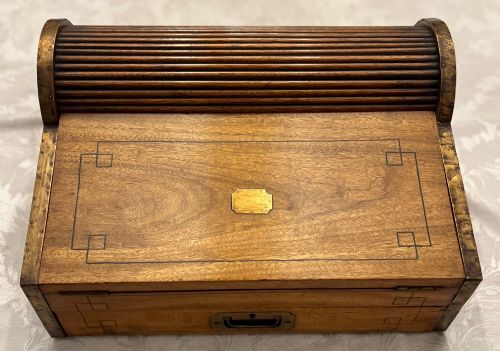
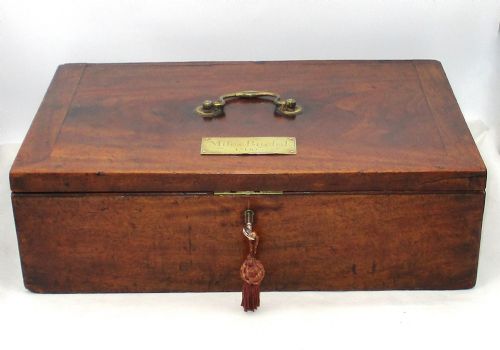
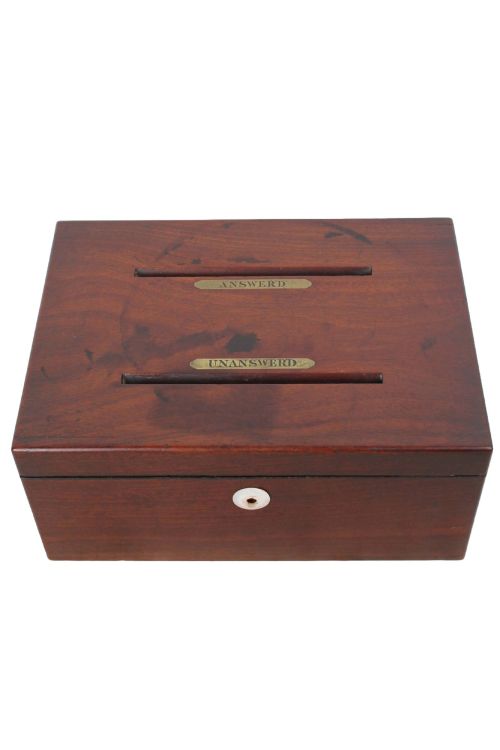
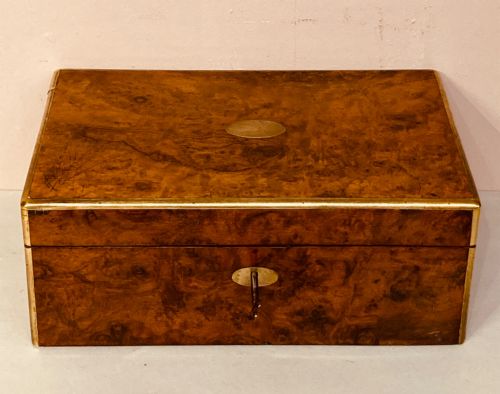
A vintage brass desk box brings solid construction and rich timber to a study, keeping papers and correspondence neatly contained.
Vintage Brass Desk Box
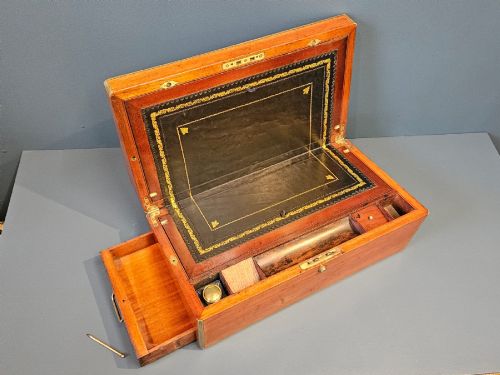
A vintage brass desk box unites utilitarian desk storage with robust metalwork, appearing frequently as campaign writing slopes, letter boxes, and correspondence chests. These items span the Georgian, Victorian, and Edwardian periods, reflecting the heavy correspondence needs of past centuries.
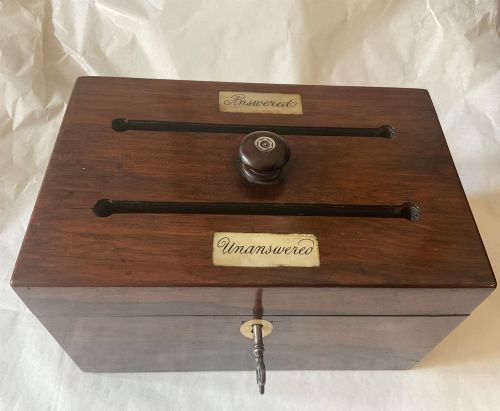
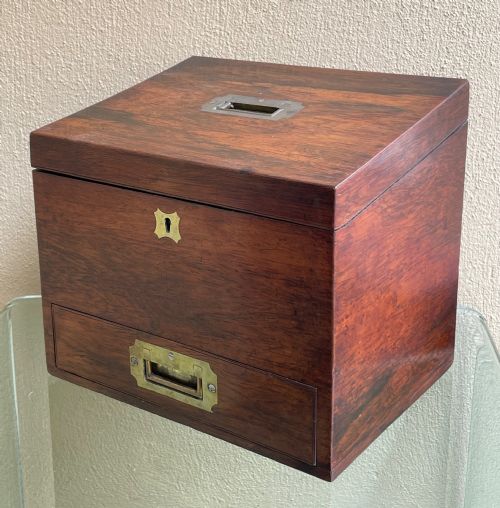
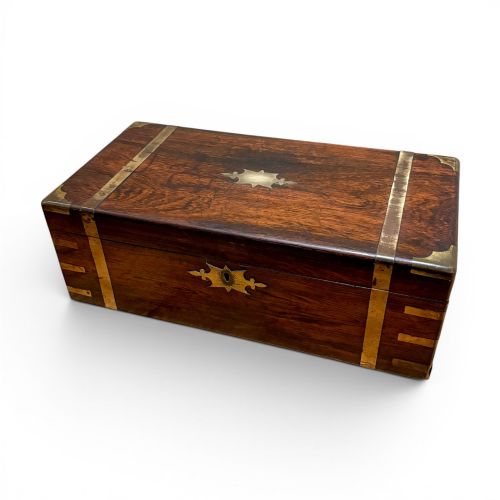
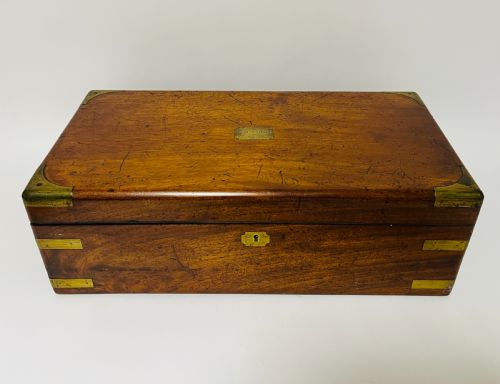
The dominant forms on this page include mahogany, walnut, and rosewood boxes strengthened with brass corners, straps, and inlay. Buyers encounter both portable campaign styles designed for travel and stationary country house letter boxes intended for heavy use on a desk.
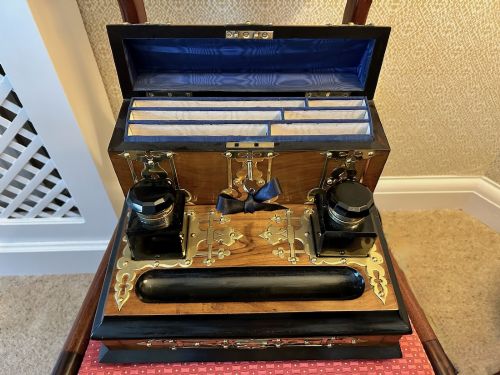
Makers and craftsmen utilised dense hardwoods to house papers, pens, and ink, mounting them with secure brass hinges and locks. Many incorporate clever interior compartments, secret drawers, and fitted ledges that demonstrate the period's ingenuity.
How they were made
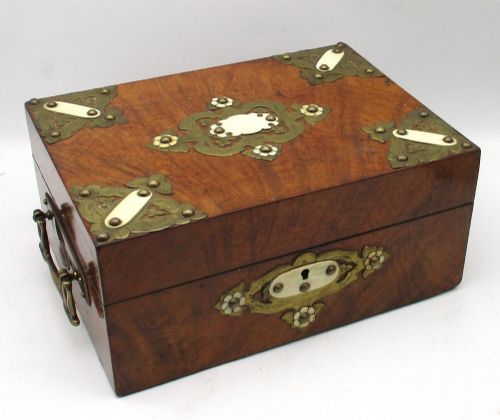
Cabinetmakers constructed these boxes from sturdy timbers such as mahogany, walnut, burr walnut, and rosewood, often selecting figured grains for visual impact. They integrated sheet brass and cast brass fittings, including corner braces, carrying handles, and escutcheons, to reinforce the joints and edges against heavy travel or daily handling.
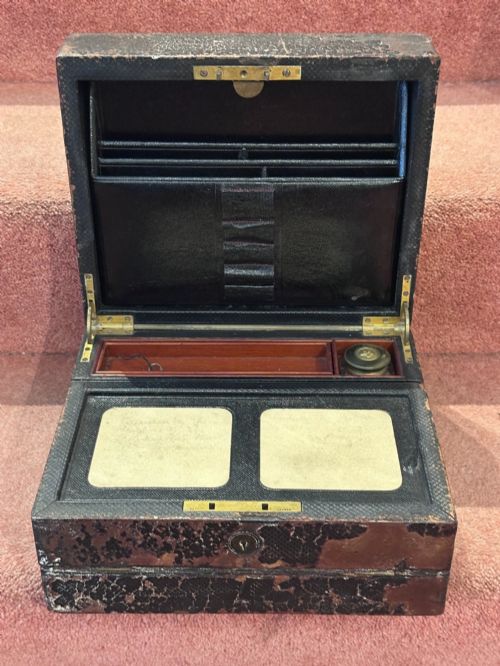
Surfaces were finished with leather, tooled accents, and inlays of bone or mother-of-pearl, while interior fittings involved precise joinery for secret drawers and inkwell slots. Metal components were secured with small flush-fitting brass screws, demonstrating meticulous hand-assembly during the Victorian and Georgian eras.
Listings feature items spanning the 18th, 19th, and 20th centuries, utilising brass, mahogany, walnut, rosewood, leather, and bone.
What varies in quality
The distinction between ordinary and superior examples lies in the selection of timber veneers, the precision of the brass inlay, and the complexity of the interior architecture. Finely made boxes display tightly fitted secret drawers, substantial gauge brass mounts, and well-preserved leather writing surfaces.
Execution of hardware and secondary woods also separates standard pieces from high-end items. Boxes retaining original working keys, robust brass campaign handles, and unwarped timber carcasses demonstrate superior initial manufacture and careful ownership through the centuries.
William Austin·L Epee
The Vintage Brass Desk Box Glossary
- Campaign slope
- A portable writing desk constructed to fold shut and travel securely with officers or travellers. These units feature recessed brass handles and corner brackets to withstand rough transit.
- Escutcheon
- A protective brass plate surrounding a keyhole. It prevents the surrounding timber from splitting when the key is turned.
- Burr walnut
- A highly figured timber harvested from the burl growth of a walnut tree. Cabinetmakers prized this material for its swirling, decorative grain patterns on box lids.
- Navette
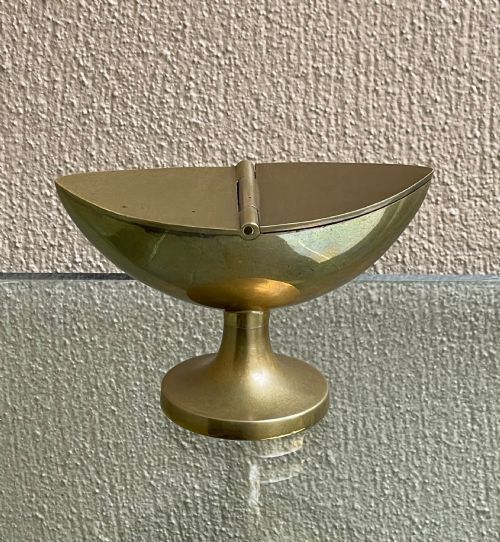
- A pointed, boat-shaped form frequently seen on Georgian table snuff boxes and small desk containers. The symmetrical shape typifies late eighteenth-century decorative design.
- Secretaire
- A desk feature incorporating concealed drawers or hidden compartments. These compartments opened via secret release mechanisms built into the woodwork.
Vintage Brass Desk Box: Frequently Asked Questions
What is a campaign writing slope?
A campaign writing slope is a portable box that folds open to provide an angled writing surface and storage for paper and pens. These items were built to travel easily and withstand frequent movement.
They often include flush brass handles, reinforced corners, and internal compartments designed to secure inkwells and stationery during journeys.
How are letter boxes used today?
Letter boxes and correspondence chests provide practical storage for modern mail, notebooks, and small desk accessories. They keep surfaces tidy while adding period character to a workspace.
Many examples feature hinged lids or fall fronts that allow easy access while concealing everyday clutter inside sturdy timber walls.
How do I spot a Victorian box?
Victorian pieces often feature heavy mahogany or walnut construction paired with extensive brass banding and escutcheons. Interior details frequently include tooled leather panels and partitioned spaces for stationery.
Examining the construction methods, such as hand-cut dovetails and brass screw fixings, helps confirm the mid to late nineteenth-century origin.
What woods were used for these boxes?
Cabinetmakers relied on dense, durable hardwoods including mahogany, walnut, burr walnut, rosewood, and golden oak. These timbers provided the structural strength needed for travel and daily desktop use.
Exotic veneers and contrasting inlays were frequently applied to box lids to enhance the visual appeal of the piece.