




Georgian Bracket Feet Desk
When you search georgian bracket feet desk, you find writing furniture raised on shaped wooden supports.
Georgian Bracket Feet Desk
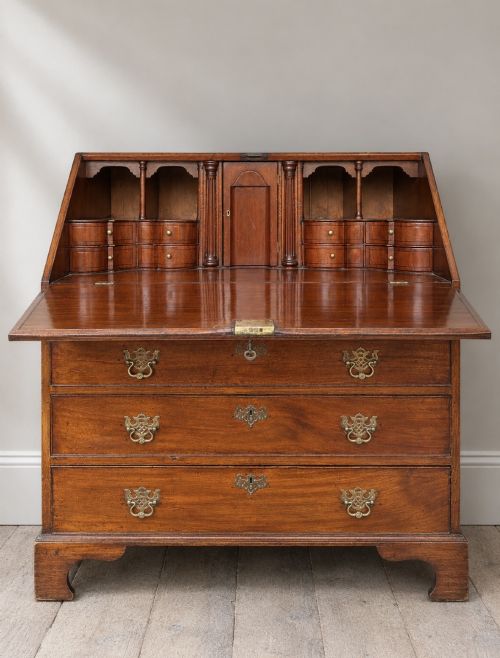
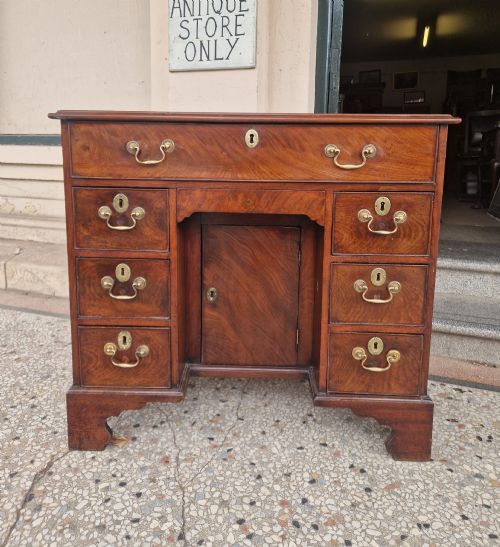
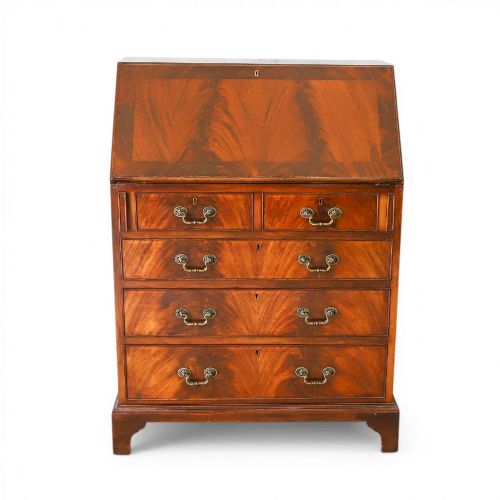
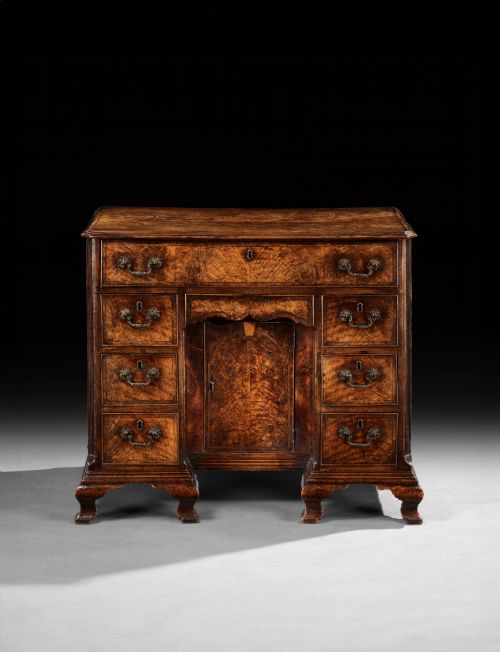
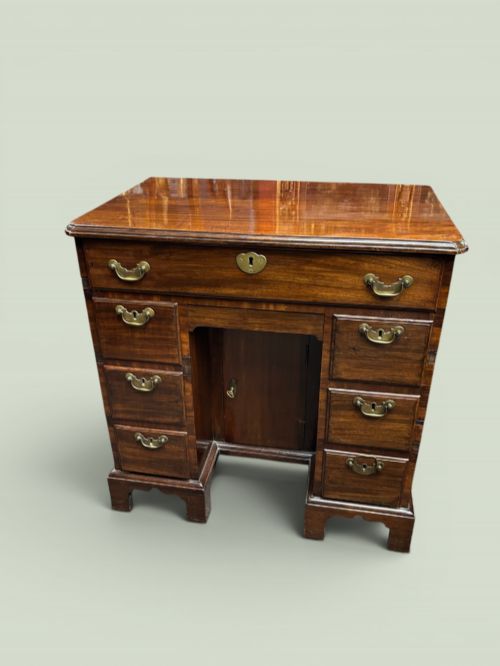
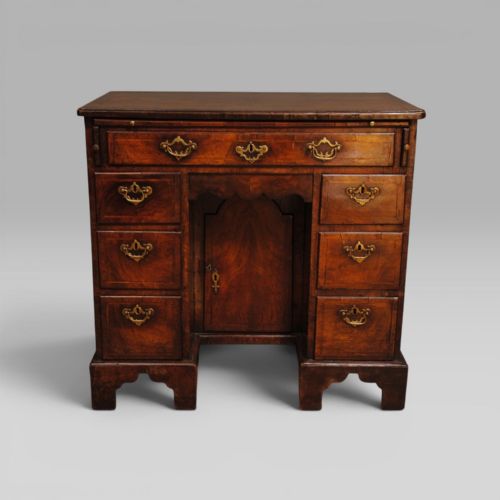
A georgian bracket feet desk typically takes the form of a bureau with a fall front or a kneehole desk with a central recess. These pieces emerge predominantly from the eighteenth century, spanning periods such as the reigns of George II and George III.
The materials seen in these listings range from mahogany and walnut to elm and oak, sometimes finished with burr veneers. Makers construct them primarily as working furniture for libraries, studies and offices.
How they were made
Carpenters shape dense timbers like mahogany and walnut, frequently applying fine veneers such as burr walnut and yew over secondary woods. They incorporate solid brass handles and keyhole escutcheons to secure drawers and fall fronts.
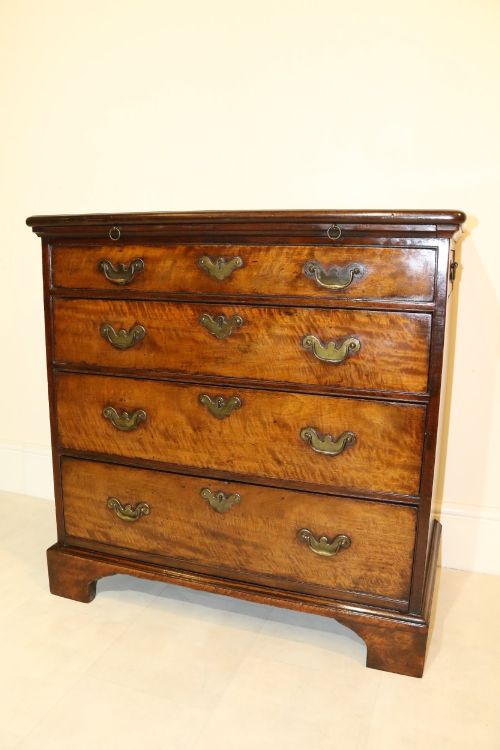
Joiners construct the signature feet by mitring wooden brackets at the base corners of the carcase, supporting the weight of the desk evenly. Drawer linings often utilise secondary timbers assembled with hand-cut dovetails.
Several desks come equipped with a key, offering access to secret compartments tucked away behind miniature drawers.
What varies in quality
The refinement of the timber selection dictates much of the visual distinction, particularly where figured mahogany, fiddleback walnut or burr veneers display complex grain patterns. Grain matching across drawer fronts and fall fronts requires precise carpentry.
Internal complexity also separates standard pieces from finer examples, especially within bureau interiors that incorporate secret compartments, pigeonholes and small drawers. The crispness of the bracket feet profiles and the retention of original brass hardware contribute further to the standing of a piece.
Bush of London·Plumbly and Tupman
The Georgian Bracket Feet Desk Glossary
- Bracket foot
- A simple, corner support shaped like a bracket, commonly found on eighteenth-century case furniture. This foot style elevates the carcase slightly off the floor.
- Bureau
- A desk featuring a sloping flap that opens to reveal a writing surface and small interior compartments. Many examples stand upon bracket feet.
- Kneehole desk
- A compact desk with a central recessed space for the user's legs, flanked by pedestals of small drawers. These frequently date from the eighteenth century.
- Fiddleback walnut
- Walnut timber showing a wavy, undulating grain pattern resembling the back of a violin. Cabinetmakers select this figure for decorative impact.
- Featherbanding
- A decorative inlay technique using veneer strips arranged in a chevron or herringbone pattern around drawer perimeters. This frames the primary timber surface.
Georgian Bracket Feet Desk: Frequently Asked Questions
What is a bracket foot desk?
A bracket foot desk is a writing piece raised on shaped wooden corner supports rather than traditional legs or a plinth. These supports lift the main body while maintaining a stable, low profile.
Most examples date from the eighteenth century and use dense hardwoods like mahogany or walnut. The feet themselves are mitred at the corners to complement the proportions of the desk carcase.
How do I use a bureau desk?
A bureau desk provides a fold-down writing flap that rests at an angle when closed and horizontal when supported by internal bearers. Opening this flap reveals a fitted interior with small drawers and pigeonholes for correspondence.
When you finish writing, you return your papers to the interior compartments and lift the flap upward to conceal the workspace. This keeps writing materials contained within the furniture piece.
How do I date a Georgian desk?
Dating a Georgian desk involves examining the construction methods of the drawer linings, the choice of timber and the specific style of the hardware. Eighteenth-century pieces typically display hand-cut dovetails and solid primary woods like mahogany or walnut.
Secondary characteristics such as the profile of the bracket feet and the presence of featherbanding offer further chronological clues. Later revival pieces often reveal machine-sawn timber and different interior construction details.
Where should I place a kneehole desk?
A kneehole desk fits well against a wall or within a study where floor space is limited, as the pedestal design offers storage drawers on both sides of the central recess. Because many eighteenth-century examples feature finished backs, some pieces can stand away from the wall.
Keep the timber away from direct heat sources and strong sunlight to protect the polished surface and veneers. Regular light dusting helps preserve the natural finish of the mahogany or walnut.